01 / Scenario
STUDIO
P
High-End Pilates Studios
Premium aesthetics meet quiet operation for boutique studio environments.
ISO
9001
CE
Certified
OEM
Available
10YR
Warranty
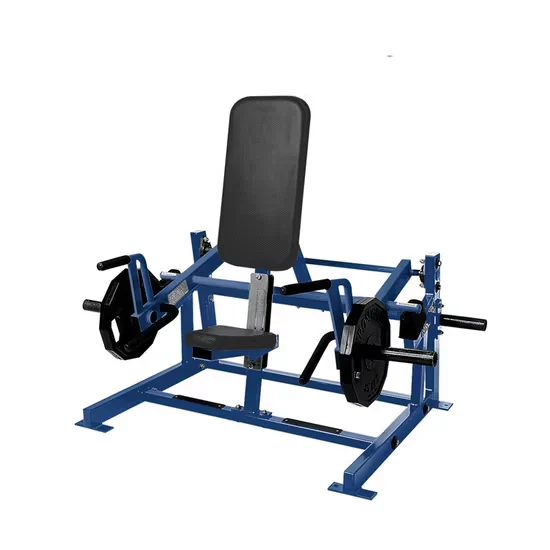
Commercial Seated Standing Shrug Machine, 3×3 inch Frame Tube, 86kg Net Weight — built with Q235/Q345 industrial steel and robotic MIG continuous welding to eliminate spot-weld fatigue under heavy plate loading. Sealed industrial bearings paired with aircraft-cable pulleys prevent play and binding during high-rep shrug movements. Every unit undergoes full load testing before shipment, backed by a 10-year frame warranty.
// Spec Highlights
• Direct from Manufacturer · No Middlemen · Worldwide Shipping
01
// Material
Imported Solid Wood
Premium hardwood frames sourced for density and visual warmth.
02
// Hardware
Medical-Grade Silent
Whisper-quiet pulleys and springs for clinical environments.
03
// Customization
Appearance OEM
Color, upholstery, and branding tailored to your studio.
04
// Service
Layout Design
Free venue planning for studios and rehab institutions.
Every component is selected for longevity, performance, and aesthetic harmony - from imported hardwood frames to silent medical-grade accessories.
// Features
Traceable 11-gauge steel resists shrug deformation — Every frame tube is milled from Q235/Q345 coil stock with certification tied back to the heat number, ensuring the 3×3 inch uprights hold geometry under off-center plate loading.
| Parameter | Value |
|---|---|
| Product Type | Plate Loaded Shrug Machine |
| Frame Tube Size | 3×3 inch |
| Steel Grade | Q235 / Q345 |
| Welding Type | Robotic MIG, continuous weld |
| Loading Type | Plate loaded |
| Powder Coating | 200μm scratch-resistant, sandblast pretreatment |
| Product Dimensions | 1060×1550×1190 mm |
| Net Weight | 86 kg |
| Certification | ISO 9001:2015, CE, SGS verified |
| OEM/ODM | Available |
| Facility Type | Typical Use |
|---|---|
| Commercial gym strength floor | High-volume trap and shoulder isolation for general membership |
| University strength and conditioning room | Overload shrug work for contact-sport athletes |
| Hotel fitness center | Compact footprint shrug station for limited floor plans |
| Rehabilitation and performance center | Controlled axial loading for post-injury trap rebuilding |
Continuous robotic MIG welding eliminates the crack path that spot welds create under repetitive shrug loading.
When operators load plates asymmetrically on a shrug handle, the frame experiences torsional shear that a spot-welded joint simply cannot survive long-term. Spot welds pass visual QC on day one but develop micro-fractures after thousands of load cycles, eventually splitting at the heat-affected zone [NEED_CITE: weld classification and fatigue performance in structural steel]. The result is a handle that shifts under load, a safety liability, and a frame that must be scrapped rather than repaired.
This commercial plate loaded shrug machine occupies the vertical-pull isolation slot on a commercial gym strength floor, complementing rack-based shrugs and dedicated trap bars. The fixed movement path removes the stabilization demand that free-weight shrugs impose on the lumbar spine, making it suitable for high-repetition hypertrophy blocks where spinal fatigue would otherwise limit trap volume. The dual-handle grip positions accommodate a wide range of shoulder widths, from smaller-frame lifters to heavyweight athletes, without requiring mechanical adjustment.
Shrug machines experience a unique loading profile: the weight is borne entirely by the upper frame and handle brackets, with no seat or pad to distribute force downward. Every repetition cycles the uprights through eccentric tension as the operator dips and drives the shoulders upward, concentrating stress at the handle-to-upright junction and the base gusset plates. Sealed industrial bearings at the pivot points resist the chalk dust, sweat, and rubber debris that destroy open bushings within months. The 200μm powder coating, applied over sandblast-etched steel, prevents the chloride and urea in sweat from reaching bare metal at grip contact zones [NEED_CITE: powder coating adhesion and corrosion resistance on structural steel].
The 3×3 inch, 11-gauge frame tube is not arbitrary — the wall thickness determines the buckling threshold when the loaded handles are pulled laterally during an off-center shrug. A thinner wall will flex visibly before yielding, giving a false sense of stability while the welds absorb the cyclic strain. Robotic MIG welding deposits a continuous fillet along every joint, distributing load across the full seam rather than concentrating it at discrete spot locations. This directly extends fatigue life under the millions of load reversals a commercial floor generates. Sealed bearings, unlike open bushings, retain grease and exclude contaminants, maintaining smooth handle rotation without the play that develops when dust infiltrates the bearing race. The 200μm coating thickness, verified by mil-meter measurement, provides a physical barrier that thin 60–80μm finishes cannot match at high-contact grip areas.
Switching to thin-wall tubing to hit a price point creates a frame that flexes under load long before it breaks — the operator feels instability, confidence drops, and the machine is underused or returned. Spot-welded joints crack without warning, turning a warranty claim into a potential injury incident. Open bushings require frequent disassembly and regreasing, pulling the machine off the floor for maintenance that sealed bearings simply do not need. Low-density upholstery compresses permanently under daily use, exposing the substrate and requiring replacement within a single equipment lifecycle. Thin powder coating chips at contact points, allowing rust to bloom beneath the surface and forcing a full refinishing or unit replacement [NEED_CITE: long-term corrosion progression on fitness equipment frames].
The 11-gauge steel frame is mill-certified and traceable to the original coil, so the gauge claim is verifiable rather than marketing language. Robotic MIG welding produces continuous joints on every unit, not just on sample pieces pulled for audit. Each commercial plate loaded shrug machine undergoes individual load testing before shipment — not batch sampling — confirming that the welds and frame geometry hold under rated capacity. The 200μm industrial powder coating is applied after full sandblast pretreatment, ensuring adhesion that survives commercial cleaning chemicals and daily grip contact. A 10-year frame warranty backs the structural claim. BICKFIT also provides 2D-3D CAD layout support, positioning this shrug station with correct clearance from adjacent equipment to maintain safe traffic flow on the strength floor. OEM private-label options allow gym chains to integrate the machine into a unified equipment aesthetic.
Provide your strength zone floor dimensions and current equipment list to receive a 2D-3D layout plan showing optimal shrug machine placement and traffic clearance. Specify your average daily user volume so the structural grade can be matched to actual demand. If your facility serves a wide range of athlete body sizes, confirm the handle grip span needed to accommodate your user profile. Custom color, logo, and upholstery options are available for multi-site rollouts.
Q: How do I verify that the frame steel is truly 11-gauge and not a lighter commercial-grade tube?
A: Request the mill certificate from the supplier, which traces the steel grade and wall thickness back to the original coil batch. A legitimate manufacturer will provide this document without hesitation, and the certificate should specify Q235 or Q345 grade with measured wall dimensions matching 11-gauge standards for the 3×3 inch tube profile.
Q: What is the functional difference between plate loaded and selectorized shrug machines for a commercial gym?
A: Plate loaded machines allow incremental loading beyond fixed stack weights, which matters for strong athletes who outgrow standard 150kg stacks. They also simplify maintenance since there are no cables, pulleys, or guide rods to service. Selectorized stacks offer faster weight changes for high-turnover facilities where plate swapping slows traffic flow between users.
Q: How should I plan floor spacing around a shrug machine to maintain safe traffic patterns?
A: Position the machine with at least 600 mm of clear space on all sides so users can load and remove plates without stepping into adjacent workout zones. The 1060×1550 mm footprint of this shrug station fits standard commercial strength floor grids, and a 2D-3D CAD layout from the manufacturer will confirm exact clearances relative to your existing equipment placement.
Q: What maintenance differences exist between sealed industrial bearings and standard bushings on shrug equipment?
A: Sealed bearings retain factory grease and exclude dust, sweat, and debris, requiring no routine maintenance beyond periodic visual inspection for smooth rotation. Standard open bushings allow contaminants to enter the bearing surface, causing accelerated wear, play development, and the need for frequent disassembly, cleaning, and relubrication to maintain smooth handle movement.
Premium aesthetics meet quiet operation for boutique studio environments.
Medical-grade silence and precision for sports & postpartum recovery.
Furniture-grade craftsmanship for premium residential installations.
Compact premium setups for one-on-one and small-group training.
Aesthetic Pilates integration for hybrid wellness studio programming.
Multi-unit deployment with instructor-grade reliability for certification programs.
Tell us about your project. Our team will respond within 24 hours with pricing, customization options, and shipping details.
// Sales Director
William
+86 132 2531 1800
// Export Manager
Bella
+86 198 5412 8032
william@bickfit.com