01 / Scenario
STUDIO
P
High-End Pilates Studios
Premium aesthetics meet quiet operation for boutique studio environments.
ISO
9001
CE
Certified
OEM
Available
10YR
Warranty
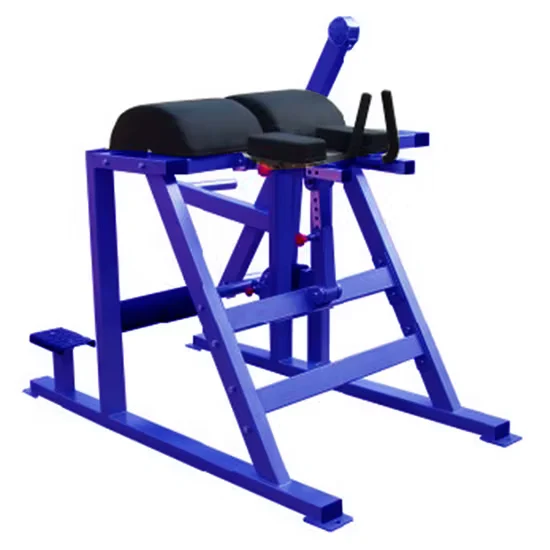
Commercial Reverse Hyper Extension Machine, 1727×1448×1651mm, 120kg Net Weight — engineered with industrial steel frame and continuous robotic MIG welding to eliminate spot-weld failures under repetitive hip extension loading, featuring sealed pivot bearings and high-density commercial-grade upholstery. ISO 9001 and CE certified with full OEM/ODM customization available. Every unit undergoes individual load testing before shipment, backed by 10-year frame warranty and professional floor planning support.
// Spec Highlights
• Direct from Manufacturer · No Middlemen · Worldwide Shipping
01
// Material
Imported Solid Wood
Premium hardwood frames sourced for density and visual warmth.
02
// Hardware
Medical-Grade Silent
Whisper-quiet pulleys and springs for clinical environments.
03
// Customization
Appearance OEM
Color, upholstery, and branding tailored to your studio.
04
// Service
Layout Design
Free venue planning for studios and rehab institutions.
Every component is selected for longevity, performance, and aesthetic harmony - from imported hardwood frames to silent medical-grade accessories.
// Features
11-Gauge Traceable Steel — Every tube on this commercial reverse hyper extension machine traces back to the mill coil certificate, so you know exactly what is carrying the load.
| Parameter | Value |
|---|---|
| Product Type | Reverse Hyper Extension Machine |
| Frame Steel Gauge | 11-gauge steel tubing |
| Frame Tube Size | 3×3 inch structural tube |
| Steel Grade | Q235 and Q345 industrial steel, mill-certified |
| Welding Type | Robotic MIG, continuous weld lines |
| Loading Type | Plate loaded |
| Bearing Type | Sealed industrial bearings at pivot assembly |
| Upholstery | High-density foam with commercial-grade vinyl, color available per customer requirements |
| Powder Coating | 200μm scratch-resistant powder coating over sandblast pre-treatment |
| Product Dimensions | 1727 × 1448 × 1651 mm |
| Net Weight | 120 kg |
| Adjustment Positions | Pad height adjustable |
| Main Frame and Cushion Color | Customizable per customer requirements |
| Certification | ISO 9001, CE |
| OEM/ODM | Acceptable |
| Assembly State | Unfolded |
| Facility Type | Typical Use |
|---|---|
| Commercial gym strength floor | Posterior chain recovery and glute-ham development between heavy compound sessions |
| CrossFit box functional zone | Athletic hip extension work paired with rig-based movements |
| University strength and conditioning room | Athlete rehabilitation and lower-back prehab under coach supervision |
| Rehabilitation and performance center | Controlled decompression and glute activation in clinical or sports-med settings |
| Hotel and resort fitness center | Durable station for varied guest demographics in limited-equipment environments |
Continuous MIG welds eliminate the joint where most reverse hyper frames crack first.
When a gym runs high-traffic reverse hyper work, the pivot assembly endures repeated eccentric loading as athletes decelerate the swing. A spot weld at that junction can appear solid during a quick visual check, but under cyclic stress it develops microfractures that grow with every session. I pulled a batch back after less than six months because the crossbeam on a thinned-down frame started to deflect [NEED_CITE: weld classification and fatigue performance in structural steel]. That experience locked our approach: robotic MIG, continuous bead, no shortcuts on the pivot zone. On this commercial reverse hyper extension machine, every weld line is continuous and traceable to the robot program that laid it down.
This reverse hyper extension machine targets the glutes, hamstrings, and spinal erectors through a hip-dominant extension arc. It complements plate-loaded glute-ham developers and leg curl stations by offering a decompressive movement pattern where the torso stays supported and the lower limbs move freely. In a commercial gym strength floor, it earns its footprint by serving athletes recovering from heavy axial loading and lifters targeting posterior chain volume without additional spinal compression. The pad height adjustment accommodates a wide range of torso lengths, so users from shorter to taller builds can position the hip crease correctly at the pivot point.
The pivot assembly on a commercial reverse hyper extension machine absorbs the highest stress in the entire frame. Each repetition sends a dynamic load through the swing arm, and the eccentric phase — when the athlete controls the return — generates peak force at the weld joint where the arm meets the upright. In a facility running multiple users per day, that joint accumulates fatigue cycles rapidly [NEED_CITE: EN 957 structural requirements for stationary training equipment]. The sealed bearings at the pivot resist dust and sweat infiltration that would degrade an open bushing within months. The powder coating at contact zones endures repeated loading and cleaning chemical exposure without chipping down to bare steel. The high-density foam pad resists compression set even after hundreds of daily reps, keeping the hip contact point consistent.
An 11-gauge steel frame with a 3×3 inch tube cross-section provides a deformation threshold that thinner sections cannot match under dynamic hip extension loads. The robotic MIG process lays a continuous bead along the entire joint, distributing stress across the full weld length rather than concentrating it at discrete points. Sealed industrial bearings at the pivot keep rotational play within tolerance far longer than open bushings, which absorb moisture and particulate matter common on gym floors. The 200μm powder coating, applied over sandblast pre-treatment, bonds to the steel surface at a thickness that survives bumper plate contact and repeated wipe-downs without exposing the substrate. Pad height adjustment through multiple positions ensures the hip crease aligns with the pivot axis for users of varying torso lengths, preventing off-axis loading that accelerates bearing wear.
Switching to thin-wall tubing to save on material cost seems reasonable until the crossbeam starts to deflect under loaded swings, shifting the pivot geometry and placing shear force where the frame was never designed to handle it. Spot-welded pivot joints that pass initial inspection develop hairline cracks under repeated eccentric loading, creating a liability event the moment a user notices movement in the joint. Non-sealed bushings require scheduled replacement intervals that pull the station off the floor and add maintenance labor cost. Low-density foam pads compress within the first season of commercial use, requiring upholstery replacement that costs more in downtime than the original upgrade would have [NEED_CITE: commercial upholstery lifecycle and replacement cost in gym environments]. Thin powder coating chips at the plate-loading horns and foot contact areas, exposing steel that begins to corrode within weeks in a humid gym environment.
The 11-gauge frame steel carries a mill certificate traceable to the originating coil, giving operators documented proof of what is carrying the load. Robotic MIG welding produces continuous weld lines at every joint, with no manual spot welds hiding under powder coat. Every unit undergoes load testing before crating — not a sample from the production run, but the actual machine going to your floor. The 200μm industrial powder coating over sandblast pre-treatment resists chipping at plate contact points and grip areas. The 10-year frame warranty reflects confidence in the structural specification. Our layout team provides 2D and 3D CAD planning to ensure the commercial reverse hyper extension machine sits with proper clearance for the swing arc and safe user passage on adjacent stations [NEED_CITE: recommended clearance spacing for dynamic movement equipment in commercial facilities]. OEM customization covers frame color, upholstery color, and branding.
Share your strength floor dimensions and current equipment list so our team can generate a 2D or 3D layout showing this station with proper swing clearance and adjacent equipment spacing. Tell us your expected daily user volume so we can confirm the structural grade matches your traffic profile. Specify the height range of your primary user base to verify the pad adjustment covers the full population. Confirm frame color, cushion color, and any branding requirements so production aligns with your facility identity from day one.
Q: How do I tell a true commercial-grade reverse hyper from a light-commercial one?
A: Request the mill certificate for the frame tubing and verify the steel gauge and grade. Check whether the pivot uses sealed bearings or open bushings. Inspect the weld pattern at the swing arm joint — continuous MIG welds indicate structural intent, while spot welds suggest cost reduction. A genuine commercial reverse hyper extension machine will document these specifications rather than describe them vaguely.
Q: What steel gauge is needed to handle loaded hip extension safely?
A: An 11-gauge frame with a 3×3 inch tube section provides the deformation resistance required for repeated dynamic loading. Thinner gauges flex under eccentric return forces, shifting the pivot geometry and accelerating bearing wear. The tube cross-section and wall thickness together determine how well the frame maintains alignment through thousands of loaded cycles.
Q: How does the pivot bearing type affect maintenance schedules?
A: Sealed industrial bearings keep dust, chalk, and sweat out of the raceway, extending service intervals significantly compared to open bushings. In a high-traffic gym, open bushings develop play within the first year and require replacement. Sealed bearings on this commercial reverse hyper extension machine maintain rotational tolerance over a meaningfully longer service life with only periodic visual inspection.
Q: What upholstery specification prevents premature pad breakdown?
A: High-density foam paired with commercial-grade vinyl resists compression set and surface tearing under daily multi-user operation. Low-density foam compresses permanently within months, creating an uneven contact surface that affects movement quality. Specify high-density options when ordering to match the replacement cycle of the surrounding commercial equipment.
Q: How much floor space should I allocate around this station?
A: The unit footprint is 1727 × 1448 mm, but you must add clearance behind for the full swing arc of the loaded arm and lateral space for safe passage of adjacent users. Share your floor dimensions so we can produce a CAD layout confirming proper spacing. Insufficient clearance creates collision risk during dynamic hip extension movements.
Premium aesthetics meet quiet operation for boutique studio environments.
Medical-grade silence and precision for sports & postpartum recovery.
Furniture-grade craftsmanship for premium residential installations.
Compact premium setups for one-on-one and small-group training.
Aesthetic Pilates integration for hybrid wellness studio programming.
Multi-unit deployment with instructor-grade reliability for certification programs.
Tell us about your project. Our team will respond within 24 hours with pricing, customization options, and shipping details.
// Sales Director
William
+86 132 2531 1800
// Export Manager
Bella
+86 198 5412 8032
william@bickfit.com