01 / Scenario
STUDIO
P
High-End Pilates Studios
Premium aesthetics meet quiet operation for boutique studio environments.

ISO
9001
CE
Certified
OEM
Available
10YR
Warranty
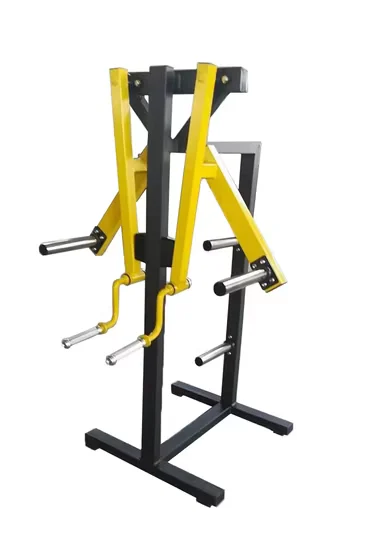
Commercial Seated Dip Machine, Pin-Select Triceps Extension, 1833×1492×1110mm, 163kg — engineered with industrial-grade steel framing and sealed bearing pulley systems for high-repetition commercial use. ISO9001 and CE certified for global facility compliance. Every unit undergoes full load testing prior to shipment, backed by a 10-year frame warranty and CAD-based floor planning support.
// Spec Highlights
• Direct from Manufacturer · No Middlemen · Worldwide Shipping
01
// Material
Imported Solid Wood
Premium hardwood frames sourced for density and visual warmth.
02
// Hardware
Medical-Grade Silent
Whisper-quiet pulleys and springs for clinical environments.
03
// Customization
Appearance OEM
Color, upholstery, and branding tailored to your studio.
04
// Service
Layout Design
Free venue planning for studios and rehab institutions.
Every component is selected for longevity, performance, and aesthetic harmony - from imported hardwood frames to silent medical-grade accessories.
// Features
Mill-Traceable Steel Frames — every Commercial Seated Dip Machine Osh014 chassis is fabricated from Q235/Q345 coils with full rolling-mill documentation, so structural claims survive audit.
| Parameter | Value |
|---|---|
| Product Type | Selectorized Triceps Extension Machine |
| Frame Steel Gauge | 11-gauge (verify against order spec sheet) |
| Frame Tube Size | 3×3 inch rectangular (verify against order spec sheet) |
| Steel Grade | Q235 / Q345 industrial carbon steel |
| Welding Type | Robotic continuous MIG weld |
| Loading Type | Pin-select weight stack |
| Bearing Type | Sealed industrial bearing (verify against order spec sheet) |
| Pulley System | Aircraft-cable with precision pulleys |
| Powder Coating | 200μm scratch-resistant, sandblast pre-treated |
| Upholstery | Available in standard or high-density options |
| Product Dimensions | 1833×1492×1110 mm |
| Net Weight | 163 kg |
| Certification | ISO 9001, CE |
| Warranty | 10-year frame |
| Facility Type | Typical Use |
|---|---|
| Commercial gym strength floor | High-traffic triceps isolation station in selectorized row |
| Hotel and resort fitness center | Durable arm development station for 24-hour member access |
| University strength and conditioning room | Supplementary pressing-muscle work for athletic programs |
| Rehabilitation and performance center | Controlled-load elbow extension for late-stage return-to-play |
| CrossFit box functional zone | Bodybuilding accessory station flanking rig and free-weight areas |
Continuous MIG welds outlast the parent tube on a Commercial Seated Dip Machine Osh014 under repeated eccentric loading.
When a member drives a heavy stack downward and releases it abruptly, the lever arm transmits shock through the main pivot and into the upright welds. Spot welds concentrate that stress at discrete nuggets; under thousands of daily cycles those nuggets initiate micro-cracks that propagate until the joint opens [NEED_CITE: weld classification and fatigue performance in structural steel]. Robotic MIG lays a continuous bead along the full tube perimeter, distributing load and delaying crack initiation. That difference separates a machine that runs a decade from one that needs re-welding during its second year.
The selectorized triceps extension isolates the elbow extensors through a converging arc, complementing chest-press and shoulder-press stations already occupying the pressing row. Because the movement path is fixed, novice members can train triceps without the stabilization demands of free-weight dips. The footprint accommodates two units side-by-side in high-density layouts, and the seat-pad adjustment range fits users from roughly the fifth-percentile female to the ninety-fifth-percentile male.
Each repetition imposes a bending moment on the horizontal beam, a shear load on the pivot bolt, and a cyclic tension-release on the aircraft cable. In a busy facility the stack may cycle hundreds of times daily, meaning bearings and pulleys must handle millions of rotations without developing play [NEED_CITE: EN 957 structural requirements for stationary training equipment]. Sweat and cleaning chemicals attack the powder coat at grip-contact zones, and the upholstery endures compression set from continuous body-weight loading. Every interface—weld, bearing, cable, pad—must survive these overlapping fatigue paths simultaneously.
An 11-gauge wall thickness paired with a 3×3 inch rectangular section provides a high section modulus, resisting deflection where the lever arm meets the upright. Continuous robotic MIG welds remove the weak-link effect of intermittent tack points, so the heat-affected zone remains uniform. Sealed bearings keep abrasive gym dust and perspiration out of the race, preserving low-friction rotation far longer than open bushings. The 200μm powder coat, applied after abrasive blast, anchors mechanically to the steel, delaying rust creep when plates or dumbbells nick the finish.
Substituting a 14-gauge tube for an 11-gauge one reduces wall thickness enough to invite visible sway when a heavy member loads the stack. Spot-weld shortcuts shorten fabrication time but create single-point failures that can release a loaded lever arm. Non-sealed bearings demand quarterly teardowns, and the labor compounds across a fifty-unit floor [NEED_CITE: planned maintenance intervals for selectorized strength equipment]. Thin powder coating chips at handle contact zones within months, exposing bare steel to sweat-driven corrosion and forcing cosmetic touch-ups that never match the original finish.
The frame relies on 11-gauge Q235/Q345 tubing traceable to the coil certificate, so every beam can be audited back to its heat number. Robotic continuous MIG welding removes operator variability, and each unit undergoes a full-load test before crating—not a sample check. The 200μm sandblast-prep powder coat resists the daily wipe-down chemicals common in commercial environments. A ten-year frame warranty underwrites the engineering margin, and a 2D-3D CAD layout service confirms the 1833×1492 mm footprint leaves compliant clearance aisles around the station.
Provide the overall strength-zone area and current equipment list so the layout team can slot the Commercial Seated Dip Machine Osh014 beside complementary pressing stations. State projected daily user count to confirm whether standard or high-density upholstery is specified. Share member anthropometric data if an extended adjustment range is needed, and indicate any color, logo, or pad-finish preferences for brand consistency.
Q: How do I distinguish genuine commercial-grade selectorized equipment from light-commercial variants?
A: Request the frame steel gauge and wall thickness in writing; light-commercial units often use thinner tubing. Ask whether welding is continuous MIG or intermittent spot, and verify that load testing is performed on every shipped unit rather than on a sample basis. These structural and process details define real commercial durability.
Q: What difference does 11-gauge versus 14-gauge steel make under heavy loading?
A: The thicker wall of 11-gauge tubing raises the section modulus, so the frame resists bending when the stack is loaded near its maximum. Under repeated eccentric release cycles, that added stiffness limits deflection at welded joints, reducing crack initiation and extending the fatigue life of the structure noticeably.
Q: How should I choose between selectorized and plate-loaded triceps machines for my facility?
A: Selectorized units speed weight changes, suiting high-turnover floors where members rotate quickly. Plate-loaded machines allow finer increments and appeal to advanced lifters. Consider member demographics, peak-hour throughput, and whether your layout already has sufficient plate-storage capacity before deciding.
Q: What clearance spacing should I plan around a selectorized triceps station?
A: Maintain minimum aisle width on all sides for safe entry and exit, and allow extra room where the lever arm sweeps through its full arc. Provide a 2D-3D CAD layout to the equipment supplier so they can confirm compliant spacing against adjacent racks and cable units.
Q: What maintenance intervals apply to sealed bearings and pulleys on selectorized machines?
A: Sealed bearings typically need visual inspection for play twice yearly and replacement only when axial wobble appears. Aircraft-cable pulleys should be checked for groove wear and cable fraying on the same schedule. Keeping cleaning chemicals off bearing faces prolongs service life substantially.
Premium aesthetics meet quiet operation for boutique studio environments.
Medical-grade silence and precision for sports & postpartum recovery.
Furniture-grade craftsmanship for premium residential installations.
Compact premium setups for one-on-one and small-group training.
Aesthetic Pilates integration for hybrid wellness studio programming.
Multi-unit deployment with instructor-grade reliability for certification programs.
Tell us about your project. Our team will respond within 24 hours with pricing, customization options, and shipping details.
// Sales Director
William
+86 132 2531 1800
// Export Manager
Bella
+86 198 5412 8032
william@bickfit.com