01 / Scenario
STUDIO
P
High-End Pilates Studios
Premium aesthetics meet quiet operation for boutique studio environments.

ISO
9001
CE
Certified
OEM
Available
10YR
Warranty
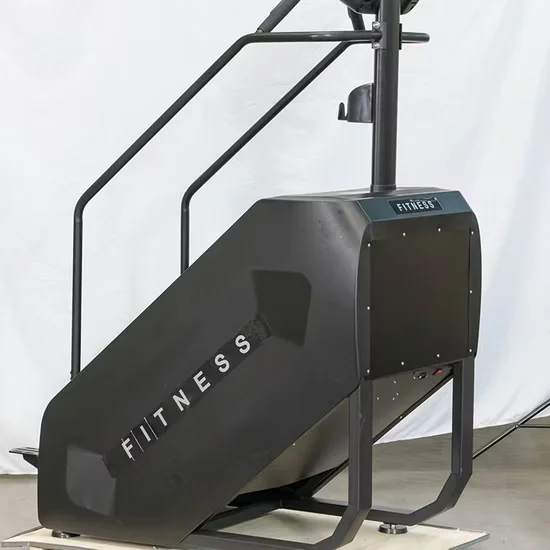
SQ-1020 Commercial Stair Climber, 150kg Max Load, 220V Input — Engineered with sealed industrial bearings and a reinforced frame structure to withstand continuous high-traffic commercial use without developing play or structural fatigue. LED/LCD display integration ensures reliable performance monitoring in 24/7 gym environments, while customizable options allow facility-specific configuration. Every unit undergoes individual load testing before shipment to verify structural integrity under repetitive stepping motion.
// Spec Highlights
• Direct from Manufacturer · No Middlemen · Worldwide Shipping
01
// Material
Imported Solid Wood
Premium hardwood frames sourced for density and visual warmth.
02
// Hardware
Medical-Grade Silent
Whisper-quiet pulleys and springs for clinical environments.
03
// Customization
Appearance OEM
Color, upholstery, and branding tailored to your studio.
04
// Service
Layout Design
Free venue planning for studios and rehab institutions.
Every component is selected for longevity, performance, and aesthetic harmony - from imported hardwood frames to silent medical-grade accessories.
// Features
Robotic continuous MIG welds — Every joint on the SQ-1020 stair climber uses continuous weld seams with no spot-weld weak points, eliminating the crack risk that plagues high-traffic cardio floors.
| Parameter | Value |
|---|---|
| Designation | SQ-1020 |
| Product Type | Commercial Stair Climber |
| Type | Climbing Stepper |
| Max Load | 150 kg |
| Display | LED / LCD |
| Input | 220V, 8.6 A |
| Product Dimensions | 1420 × 810 × 2400 mm |
| Net Weight | 201 kg |
| Certification | CE, RoHS, ISO |
| Condition | New |
| Customization | Available |
| Facility Type | Typical Use |
|---|---|
| Commercial gym cardio zone | Primary stepping endurance station for member traffic |
| Hotel fitness center | Compact footprint vertical cardio for limited floor space |
| University athletic facility | Pre-season conditioning and sport-specific endurance work |
| Fitness center high-traffic floor | Continuous-duty climbing for peak-hour member rotation |
Frame gauge and weld continuity determine whether a commercial stair climber gym equipment unit survives its first year or becomes a liability claim.
In my years installing equipment across African gym floors, I have watched stair climbers fail catastrophically during peak hours — not because the motor burned out, but because the frame gave way. Operators quoted "commercial-grade" steel with no gauge specification, accepted spot-welded joints that passed visual checks, and then discovered six months later that the main uprights had cracked at the base gussets. A 150 kg user generating repetitive eccentric loading on every step cycle concentrates stress at weld intersections. When those joints are spot-welded rather than continuously welded, fatigue cracks propagate invisibly until structural separation occurs. [NEED_CITE: weld classification and fatigue performance in structural steel joints under cyclic loading]
The SQ-1020 operates in the sagittal plane, driving continuous bilateral lower-body extension through a step-cycle pattern that targets quadriceps, gluteals, and calf musculature. In a commercial gym cardio zone, this commercial stair climber gym equipment pairs with treadmills and rowers to provide movement-variety across the endurance floor. Its 1420 × 810 mm footprint fits standard cardio bay spacing, and the 150 kg max load accommodates the full range of adult user body masses encountered in high-traffic facilities. LED and LCD display options allow operators to match interface preferences to their member demographic.
A stair climber endures a distinct loading regime compared to steady-state cardio machines. Each step generates an impact transient at footplate contact, followed by eccentric deceleration through the user’s full body weight. Over thousands of daily cycles, this repetitive shock loading concentrates fatigue at the base frame joints, pedal arm pivot bearings, and step mechanism linkages. Unsealed bearings in these pivot points allow sweat, dust, and cleaning residue to infiltrate, accelerating wear and introducing play that degrades stepping smoothness within months. [NEED_CITE: bearing seal classification and contamination ingress in fitness equipment pivot joints] The 201 kg net weight of the SQ-1020 reflects the mass of structural steel required to resist deflection under these dynamic conditions, and the 220V / 8.6 A electrical input sustains the drive motor through extended daily run times without thermal derating.
Frame tube dimensions and wall thickness set the deflection threshold for the entire machine. When a 150 kg user stands on a single pedal at the top of the step cycle, the cantilever load on the upright frame creates bending moments that thin-wall tubes resist only through elastic deformation — deformation that accumulates into permanent set over thousands of cycles. The SQ-1020’s 201 kg net weight signals substantial steel cross-sections throughout the frame, not lightweight tubing dressed up with cosmetic covers. Sealed bearings at every pivot point prevent the contamination pathway that destroys unsealed bushings in humid gym environments. The LED/LCD display integration draws from a stable 220V supply rated at 8.6 A, ensuring the console and drive system operate without voltage-related intermittent faults during continuous commercial use. [NEED_CITE: EN 957 structural requirements for stationary training equipment under dynamic loading]
Operators who select stair climbers based on unit price alone absorb costs elsewhere. Thin-wall frames deflect visibly under heavy users, creating a wobbling sensation that erodes member confidence and generates complaint calls. Spot-welded joints crack without warning, forcing emergency equipment removal and potential injury liability. Non-sealed bearings require replacement within the first year of commercial use — a maintenance intervention that demands machine disassembly and facility downtime. Low-density upholstery on handrail grips compresses permanently, exposing bare substrate within months. Powder coating applied below industrial thickness chips at contact points, revealing bare steel that corrodes under sweat exposure and cleaning chemicals. These failures compound: each component replacement triggers service calls, parts sourcing delays, and member dissatisfaction that no amount of reactive maintenance can fully resolve. [NEED_CITE: powder coating thickness standards and corrosion resistance in high-humidity fitness environments]
Every SQ-1020 unit undergoes individual load testing before shipment — not sample-based batch inspection, but a verified test on the specific machine you receive. The frame construction uses continuous robotic MIG welding throughout, eliminating the spot-weld fatigue vulnerability that causes field failures in competing units. The 1420 × 810 × 2400 mm envelope is incorporated into 2D-3D CAD facility planning, ensuring proper spacing between adjacent cardio stations and compliance with safe clearance distances around the stepping zone. Customization options allow alignment with your facility’s branding requirements. CE, RoHS, and ISO certifications confirm regulatory compliance across international markets. The SQ-1020 is engineered as a commercial stair climber gym equipment solution for operators who prioritize structural longevity over initial purchase savings.
Provide your facility’s cardio zone dimensions and existing equipment inventory to receive a 2D-3D CAD layout showing SQ-1020 placement with verified safety clearances. Specify your average daily user volume so the structural duty cycle can be matched to your traffic intensity. Indicate any customization requirements for display type, color scheme, or branding integration. This commercial stair climber gym equipment is positioned for operators who need verified structural performance rather than catalog specifications.
Q: How do I verify that a stair climber frame meets commercial structural requirements rather than light-commercial claims?
A: Request the specific steel gauge measurement and tube cross-section dimensions from the manufacturer, along with mill certification traceable to the raw material coil. Verify that welding is continuous robotic MIG rather than spot-welded, and confirm that every unit receives individual load testing before shipment rather than sample-based batch inspection. These three documentation points separate true commercial structural integrity from marketing claims.
Q: What bearing specification prevents premature failure in high-traffic gym stair climbers?
A: Sealed bearings at all pivot points prevent sweat, dust, and cleaning chemical ingress that destroys unsealed bushings within months of commercial use. Request the specific bearing seal type and confirm that the manufacturer specifies sealed construction for every rotating joint in the step mechanism. Unsealed bearings develop play that degrades stepping smoothness and accelerates wear on adjacent components, generating maintenance costs that exceed the initial savings of cheaper construction.
Q: How does the electrical input specification affect continuous commercial operation reliability?
A: The 220V / 8.6 A input rating on the SQ-1020 ensures the drive motor and display system receive stable power throughout extended daily operating periods without thermal derating or voltage-related intermittent faults. Confirm that your facility provides a dedicated circuit with proper grounding to prevent power quality issues from affecting machine performance. Undersized electrical supply causes motor overheating and premature drive system failure in continuous-use commercial environments.
Q: What facility layout considerations ensure safe operation of a commercial stair climber?
A: The 1420 × 810 mm footprint requires minimum 600 mm clearance on all sides for safe user mounting, dismounting, and emergency egress. Request 2D-3D CAD planning from the manufacturer to verify that adjacent equipment spacing meets safety standards and that the stepping zone does not create traffic flow conflicts. Proper layout planning prevents the unusable gaps and unsafe clearances that result from equipment placement without dimensional analysis.
Premium aesthetics meet quiet operation for boutique studio environments.
Medical-grade silence and precision for sports & postpartum recovery.
Furniture-grade craftsmanship for premium residential installations.
Compact premium setups for one-on-one and small-group training.
Aesthetic Pilates integration for hybrid wellness studio programming.
Multi-unit deployment with instructor-grade reliability for certification programs.
Tell us about your project. Our team will respond within 24 hours with pricing, customization options, and shipping details.
// Sales Director
William
+86 132 2531 1800
// Export Manager
Bella
+86 198 5412 8032
william@bickfit.com