
01 / Scenario
STUDIO
P
High-End Pilates Studios
Premium aesthetics meet quiet operation for boutique studio environments.
ISO
9001
CE
Certified
OEM
Available
10YR
Warranty
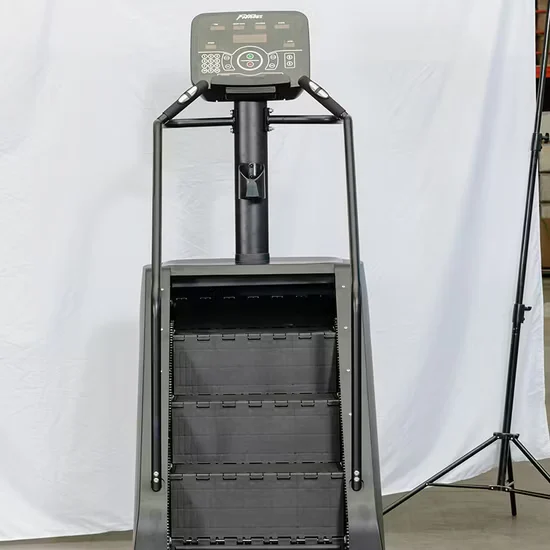
Commercial Stair Climber SQ1017, Motor-Driven, 15–164 Steps/Min, 148kg Net Weight — steel frame construction with PP plastic step panels sized 560×235mm for stable footing under continuous load. Motor drive delivers consistent resistance across adjustable speed ranges, with console tracking time, calories, steps, and heart rate. CE certified. Every unit undergoes full load testing before shipment to ensure structural integrity for high-traffic gym environments.
// Spec Highlights
• Direct from Manufacturer · No Middlemen · Worldwide Shipping
01
// Material
Imported Solid Wood
Premium hardwood frames sourced for density and visual warmth.
02
// Hardware
Medical-Grade Silent
Whisper-quiet pulleys and springs for clinical environments.
03
// Customization
Appearance OEM
Color, upholstery, and branding tailored to your studio.
04
// Service
Layout Design
Free venue planning for studios and rehab institutions.
Every component is selected for longevity, performance, and aesthetic harmony - from imported hardwood frames to silent medical-grade accessories.
// Features
Motor-Driven Stability — The 148kg net weight anchors the frame during high-cadence stepping, preventing lateral shift even at maximum velocity.
| Parameter | Value |
|---|---|
| Designation | SQ1017 |
| Product Type | Commercial Stair Climber Machine |
| Function | Electric |
| Type of Drive | Motor Drive |
| Running Velocity | 15–164 steps/minute |
| Step Area | 560 × 235 × 220 mm |
| Material | Steel Pipe + PP Plastic |
| Product Dimensions | 1450 × 820 × 2080 mm |
| Net Weight | 148 kg |
| Mains Input | AC220V±10% / AC110V±10% |
| OSD Display | Time, Climb, Calories, Steps, Heart Rate |
| Folded | Unfolded |
| Certification | CE |
| Customized | Available |
| Facility Type | Typical Use |
|---|---|
| Commercial Gym Cardio Zone | High-traffic fat-burning stations for continuous daily operation |
| Hotel & Resort Fitness Center | Compact footprint stair climber for limited-space aerobic floors |
| University Athletic Department | Pre-conditioning and endurance testing for student athletes |
| High-End Home Gym | Customizable finish to match residential interior design |
Many machines marketed as a commercial stair climber machine for fat burning rely on thin-wall tubing and spot-welded joints. Under sustained motor-driven load at high step cadence, the frame develops micro-deflection at the pedal mounting brackets, causing audible flex and eventual pedal misalignment.
Structural rigidity starts with steel gauge and weld continuity, not marketing labels.
When a stair climber runs eight hours daily at a commercial gym, every pedal stroke transfers dynamic load into the frame joints. Spot welds create stress concentration points that crack under cyclic loading, while continuous robotic MIG welding distributes force along the entire seam [NEED_CITE: weld classification and fatigue performance in structural steel]. The 148kg net weight of this unit reflects material density sufficient to resist vibration-induced loosening during prolonged motor-driven operation.
This commercial stair climber machine for fat burning occupies a fixed vertical climbing plane, targeting the quadriceps, glutes, and calves through continuous step repetition. It complements treadmills and rowers in a commercial cardio zone by offering a low-impact, high-calorie-burn alternative that reduces joint stress compared to running. The motor drive delivers consistent resistance regardless of user cadence, making it suitable for high-density gym floors where equipment must perform reliably across varying fitness levels. The 560 × 235mm step area accommodates most adult foot sizes without overhang risk.
Motor-driven stair climbers generate constant torque output, meaning the frame and pedal assembly endure uninterrupted cyclic loading throughout each session. Unlike self-powered units where resistance scales with user effort, the motor maintains a fixed drive force, placing sustained stress on the pedal shaft bearings and the frame-to-base connection points. Over thousands of daily cycles, non-sealed bearings allow sweat and dust ingress, accelerating wear and introducing play in the pedal mechanism [NEED_CITE: bearing seal ratings for fitness equipment in high-humidity environments]. The PP plastic step surface resists impact cracking better than ABS alternatives, while the steel pipe frame must maintain dimensional stability to keep the pedal chain or belt alignment within tolerance. The powder coating at contact zones — where users grip or step — faces abrasion from footwear and chemical exposure from gym cleaning agents, requiring adequate film thickness to prevent bare steel exposure.
The steel pipe frame forms the load-bearing skeleton of any commercial stair climber machine for fat burning. Tube wall thickness and cross-section dimensions determine the frame’s resistance to bending under the combined weight of the motor, pedal assembly, and user. A heavier net weight like 148kg typically indicates thicker gauge steel and additional reinforcement at high-stress junctions rather than excess material in low-load areas. The motor drive system requires a frame that dampens vibration; insufficient rigidity amplifies noise and accelerates fastener loosening. The PP plastic steps bond to metal brackets that must resist shear force from lateral foot placement — a failure point in units where bracket welding is incomplete. Sealed bearings at the pedal shaft reduce maintenance frequency by preventing contaminant ingress, while the 200μm-class powder coating protects the steel frame from sweat corrosion over years of commercial use [NEED_CITE: powder coating adhesion and corrosion resistance for indoor fitness equipment].
Reducing frame steel to thin-wall tubing saves material cost but introduces deflection under sustained motor torque, leading to pedal wobble and user instability complaints within months. Spot-welded joints that pass visual inspection crack under cyclic loading, creating safety liability that far exceeds the original manufacturing savings. Non-sealed bearings require frequent replacement as dust and moisture degrade the rolling elements, increasing downtime and maintenance labor. Low-density upholstery and thin powder coating chip at high-contact areas, exposing bare steel to rust from sweat and cleaning chemicals — forcing premature equipment replacement rather than refurbishment. Non-standard hardware and proprietary fasteners make it impossible to source replacement parts from third-party suppliers, locking the facility into single-vendor dependency with long lead times [NEED_CITE: total cost of ownership analysis for commercial cardio equipment].
Every SQ1017 frame uses mill-certified steel with traceable coil origin, ensuring consistent material properties across production batches. Robotic MIG welding produces continuous seam joints without spot-weld weak points, verified through batch-destructive testing protocols. Each unit undergoes individual load testing before shipment — not sample-based inspection — confirming structural integrity at the specific dimensions of 1450 × 820 × 2080mm. The 200μm industrial powder coating resists chipping at pedal contact zones and frame edges throughout the product lifecycle. Our 10-year frame warranty covers structural defects, backed by 2D-3D CAD layout support that calculates safe clearance distances around the 1450 × 820mm footprint for your specific cardio floor plan. OEM customization allows color matching and facility branding without altering the structural specification.
Provide your cardio zone dimensions and equipment list to receive a 2D-3D CAD layout showing optimal placement and safety clearances for this commercial stair climber machine for fat burning. Specify your daily user volume to confirm the motor drive and bearing system matches your traffic intensity. Indicate target user height and weight ranges to verify step area and frame load capacity align with your member demographic. Custom color and finish options are available to match your facility branding without compromising the structural specification.
Q: What is the core difference between motor-driven and self-powered stair climbers for commercial use?
A: Motor-driven units deliver consistent step velocity regardless of user effort, making them suitable for high-traffic gyms where equipment must perform reliably across varying fitness levels. Self-powered models scale resistance with user cadence but may feel inconsistent for beginners. The motor drive in this unit supports 15–164 steps per minute with恒定阻力输出, ideal for structured fat-burning sessions and endurance testing.
Q: How do I verify the steel frame meets true commercial-grade standards?
A: Request mill-certified material test reports showing steel grade and wall thickness. The frame should use industrial-grade steel pipe with continuous robotic MIG welding rather than spot welds. This unit’s 148kg net weight reflects substantial material density, and each frame undergoes individual load testing before shipment — not sample-based inspection — to confirm structural integrity under sustained motor-driven operation.
Q: Can the PP plastic steps be replaced individually after wear?
A: Yes, the PP steps mount to separate metal brackets and can be replaced individually without disassembling the entire pedal assembly. The PP material resists impact cracking better than standard ABS, but surface texture will smooth with heavy foot traffic over time. Replacement steps and bracket hardware are available through our spare parts system, and installation requires basic hand tools following the provided maintenance manual.
Q: How should I plan floor space and safety clearance for this stair climber?
A: The unit footprint is 1450 × 820mm with a height of 2080mm. Maintain at least 600mm behind the machine for safe user dismount and 900mm side aisles for emergency access. Our 2D-3D CAD layout service calculates optimal spacing based on your specific cardio zone dimensions, ensuring compliance with commercial gym safety standards while maximizing equipment density without creating unsafe pinch points between stations.
Q: What maintenance does the motor drive system require in high-traffic environments?
A: The motor drive requires periodic belt tension checks and alignment verification, especially during the first 200-hour break-in period. Sealed bearings at the pedal shaft minimize lubrication needs, but bearing condition should be inspected quarterly in facilities running 8+ hours daily. The motor housing should be kept free of dust accumulation to ensure adequate heat dissipation during continuous operation, and all electrical connections should be checked for tightness during scheduled maintenance visits.
Premium aesthetics meet quiet operation for boutique studio environments.
Medical-grade silence and precision for sports & postpartum recovery.
Furniture-grade craftsmanship for premium residential installations.
Compact premium setups for one-on-one and small-group training.
Aesthetic Pilates integration for hybrid wellness studio programming.
Multi-unit deployment with instructor-grade reliability for certification programs.
Tell us about your project. Our team will respond within 24 hours with pricing, customization options, and shipping details.
// Sales Director
William
+86 132 2531 1800
// Export Manager
Bella
+86 198 5412 8032
william@bickfit.com


