01 / Scenario
STUDIO
P
High-End Pilates Studios
Premium aesthetics meet quiet operation for boutique studio environments.

ISO
9001
CE
Certified
OEM
Available
10YR
Warranty
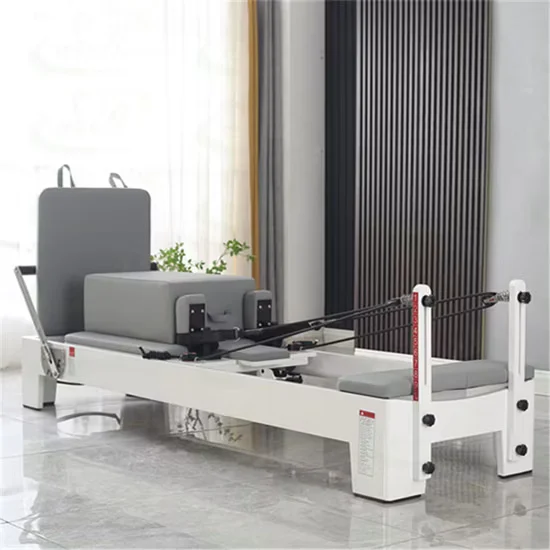
Two-Way Ladder Reformer Core Align Pilates Reformer, 2460×730×1900mm, 150kg Net Weight — engineered with a reinforced frame for high-traffic commercial studio environments, featuring a dual-direction ladder tower system with modular accessory compatibility including Long Box, Jump Board, and Platform. Solid color finish options with full logo customization available. Every unit undergoes three-stage inspection with load testing before shipment, backed by a 3-year warranty and 80 pieces/month production capacity from a 17-year manufacturer with 500+ commercial gym installations.
// Spec Highlights
• Direct from Manufacturer · No Middlemen · Worldwide Shipping
01
// Material
Imported Solid Wood
Premium hardwood frames sourced for density and visual warmth.
02
// Hardware
Medical-Grade Silent
Whisper-quiet pulleys and springs for clinical environments.
03
// Customization
Appearance OEM
Color, upholstery, and branding tailored to your studio.
04
// Service
Layout Design
Free venue planning for studios and rehab institutions.
Every component is selected for longevity, performance, and aesthetic harmony - from imported hardwood frames to silent medical-grade accessories.
// Features
Mill-Traceable Steel — Every tube in this Two-Way Ladder Reformer Core Align Pilates Reformer traces back to a certified coil origin, not a vague "commercial grade" label.
| Parameter | Value |
|---|---|
| Product Type | Pilates Reformer |
| Product Dimensions | 2460×730×1900mm |
| Net Weight | 150kgs |
| Accessory | Long Box / Jump Board / Platform |
| Color Options | Solid Color |
| Customization | Logo Customized Is Allowed |
| Warranty | 3 Years |
| Production Capacity | 80 Pieces/Month |
| Facility Type | Typical Use |
|---|---|
| Commercial Pilates studio | High-frequency group and private reformer classes |
| Rehabilitation and physical therapy center | Controlled resistance protocols for injury recovery |
| Boutique fitness studio | Core-focused circuit and functional movement sessions |
| Hotel and resort wellness facility | Guest-facing premium movement equipment with low maintenance |
A heavier base anchors the carriage path during high-speed jump board drills and standing ladder work.
Most reformers in the commercial Pilates space sit well under 100kg, which means lateral drift becomes noticeable when a taller client pushes off the jump board or when springs are loaded asymmetrically on the two-way ladder tower. The extra mass here dampens that vibration through the frame rather than transferring it to the studio floor. Over hundreds of sessions per week, that stability difference compounds into less bolt loosening, less upholstery shift, and fewer mid-class adjustments by instructors. [NEED_CITE: dynamic load transfer in vibration-prone fitness flooring systems]
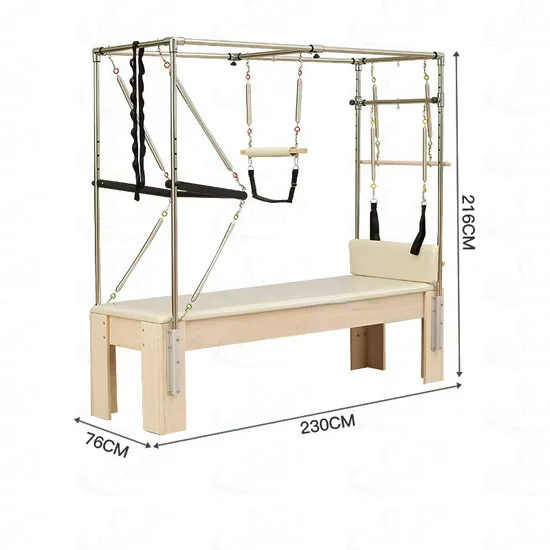
This commercial two-way ladder Pilates Reformer Core Align reformer covers supine, prone, seated, kneeling, and standing movement patterns through the ladder tower’s multiple spring attachment heights. In a studio layout, it pairs with mat stations for warm-up sequencing and with cadillac or chair units for advanced progressions. The 2460×730mm footprint fits standard studio grid spacing, accommodating users from 150cm to over 190cm without requiring carriage extenders. For facilities running back-to-back classes, the two-way ladder eliminates the need to flip equipment orientation between client sessions.
Every reformer session generates hundreds of carriage cycles — push, return, push, return — and each cycle transmits force through the rail-carriage interface and up into the tower base. In a studio running six classes daily, that accumulates to thousands of cycles weekly at the tower junction. The ladder tower’s vertical posts must resist both the downward pull of spring tension and the lateral sway of rope-and-pulley work. Sweat and cleaning agents migrate into unsealed bearings and rail channels over time, creating the friction inconsistency that clients describe as a "sticky" carriage feel after months of use. [NEED_CITE: cyclic fatigue in multi-axis fitness equipment joints]
The 150kg net weight signals a frame built from thicker gauge material rather than thin-wall tubing filled with internal bracing. When a reformer frame flexes even slightly under a standing client, that micro-deflection transfers to the rail alignment, causing the carriage to track off-center. The two-way ladder tower adds vertical structural demands — spring resistance pulls downward on the tower posts, and the pulley redirect points must handle off-axis loading when clients work at angles. Rail surface finish, carriage wheel durometer, and spring steel grade collectively determine whether the resistance curve stays consistent across the full carriage travel or develops dead spots near the end range.
A lighter reformer saves on raw material and shipping cost upfront, but the trade-offs surface within the first year of commercial use. Thin-wall tubing flexes under standing exercises, causing the carriage to wobble on the rails and accelerating wear at the wheel contact points. Non-sealed bearings in the carriage wheels collect dust and sweat residue, developing play that instructors notice as lateral carriage drift. Low-density upholstery compresses under daily use, cracking at the stitch lines where sweat penetrates the foam-to-vinyl bond. Springs made from lower-grade wire lose tension consistency faster, creating an uneven resistance feel that clients attribute to the studio rather than the equipment. [NEED_CITE: bearing degradation mechanisms in high-cycle linear motion systems]
Steel sourcing here uses Q235 and Q345 industrial-grade material with mill certification traceable to the coil batch. Welding follows robotic MIG protocols for continuous weld lines along the tower base and frame joints — no spot-weld weak points that crack under cyclic spring tension. Every unit undergoes load testing before crating, not sample-based batch testing. The 200μm powder coating resists chipping at the contact points where jump boards dock and where hand grips repeatedly strike the tower uprights. A three-year warranty backs the frame, and the 150kg unit ships with full Long Box, Jump Board, and Platform accessories. OEM logo customization is available for studio-branded fleets. 2D and 3D CAD layout files support studio floor planning around the 2460×730mm footprint.
Provide your studio floor dimensions and current equipment list to receive a 2D or 3D placement plan showing this reformer’s spacing requirements and class flow integration. Specify your average daily client volume so we can confirm the structural grade matches your usage intensity. Share any branding requirements including frame color and logo placement for OEM production alignment.
Q: How do I verify a Pilates reformer is genuinely built for commercial studio use?
A: Request mill certificates for the frame steel rather than accepting generic "commercial grade" claims. Check whether the carriage uses sealed bearings rated for high-cycle environments, and ask for the net weight — units under 100kg typically lack the mass needed to resist drift during dynamic exercises. Confirm that load testing is performed on every unit, not just production samples.
Q: How does rail precision affect long-term reformer performance and maintenance cost?
A: Rail surface finish and carriage wheel alignment determine whether the carriage tracks straight across thousands of weekly cycles. Imprecise rails cause uneven wheel wear, leading to lateral play that instructors notice as carriage wobble. Sealed bearings prevent sweat and dust from entering the wheel assembly, extending the interval between carriage servicing and keeping the movement feel consistent for clients.
Q: What structural differences exist between a two-way ladder tower and a single-direction tower?
A: A two-way ladder tower provides spring attachment points on both sides of the reformer frame, allowing instructors to angle resistance vectors for asymmetrical movement patterns. This requires the tower posts to handle off-axis loading from multiple directions simultaneously, demanding stronger base welding and thicker upright tubing compared to single-direction towers that only handle symmetrical bilateral pulls.
Q: What is the typical upholstery and spring replacement cycle in a high-traffic studio?
A: Vinyl upholstery in studios running five or more classes daily typically shows compression and stitch-line wear within the first year, depending on foam density and sweat exposure. Springs made from lower-grade wire lose consistent tension feel faster under high-frequency cycling. Confirm that replacement upholstery panels and spring sets are available as spare parts from the manufacturer before committing to a fleet purchase.
Premium aesthetics meet quiet operation for boutique studio environments.
Medical-grade silence and precision for sports & postpartum recovery.
Furniture-grade craftsmanship for premium residential installations.
Compact premium setups for one-on-one and small-group training.
Aesthetic Pilates integration for hybrid wellness studio programming.
Multi-unit deployment with instructor-grade reliability for certification programs.
Tell us about your project. Our team will respond within 24 hours with pricing, customization options, and shipping details.
// Sales Director
William
+86 132 2531 1800
// Export Manager
Bella
+86 198 5412 8032
william@bickfit.com