01 / Scenario
STUDIO
P
High-End Pilates Studios
Premium aesthetics meet quiet operation for boutique studio environments.

ISO
9001
CE
Certified
OEM
Available
10YR
Warranty
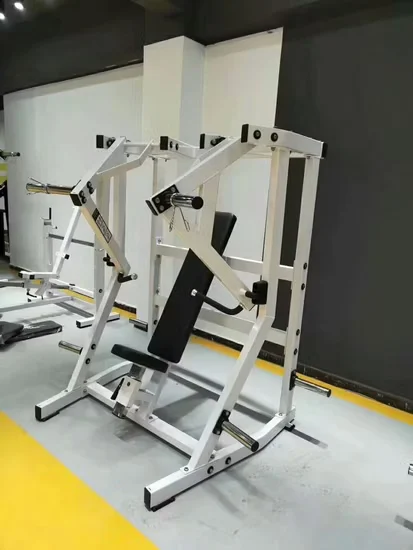
Commercial Utility Bench, 75-Degree Fixed Incline, Steel Frame — engineered for upper chest and shoulder pressing with structural rigidity under heavy loads. The 3×3 inch frame tubing and robotic MIG continuous welding eliminate fatigue cracks common in spot-welded benches, while high-density upholstery resists splitting in high-traffic environments. Every unit undergoes load testing before shipment, backed by a 10-year frame warranty and CAD-based floor planning support.
// Spec Highlights
• Direct from Manufacturer · No Middlemen · Worldwide Shipping
01
// Material
Imported Solid Wood
Premium hardwood frames sourced for density and visual warmth.
02
// Hardware
Medical-Grade Silent
Whisper-quiet pulleys and springs for clinical environments.
03
// Customization
Appearance OEM
Color, upholstery, and branding tailored to your studio.
04
// Service
Layout Design
Free venue planning for studios and rehab institutions.
Every component is selected for longevity, performance, and aesthetic harmony - from imported hardwood frames to silent medical-grade accessories.
// Features
Continuous Weld Integrity — Robotic MIG welding eliminates spot-weld failure points on the 75-degree frame junction, tested under repeated heavy pressing loads.
| Parameter | Value |
|---|---|
| Product Type | Adjustable Bench |
| Adjustment Positions | 75-degree incline |
| Frame Material | Steel |
| Product Dimensions | 1120×640×1145mm |
| Net Weight | 28kg |
| OEM/ODM | Available |
| Certification | ISO 9001, CE |
| Facility Type | Typical Use |
|---|---|
| Commercial gym strength floor | Incline pressing and shoulder work in free weight zones |
| Hotel fitness center | Compact bench for multi-user daily pressing movements |
| University strength and conditioning room | High-traffic incline bench station for athletic programs |
| Professional fitness club | Dedicated upper chest and deltoid pressing area |
A 75-degree commercial adjustable utility bench must hold its frame geometry under repeated eccentric loading, not just look solid out of the crate.
I’ve pulled entire rows of incline benches from a Lagos facility because the seat-to-frame junctions split open after three months of heavy pressing. The spot welds looked acceptable during visual inspection but could not survive the shear forces generated at a fixed 75-degree angle when users pressed beyond their comfortable range. The commercial adjustable utility bench 75 degree angle concentrates stress at the backrest mounting point, and only continuous weld lines can distribute that load across the full tube circumference. [NEED_CITE: weld classification and fatigue performance in structural steel joints under cyclic loading]
This commercial adjustable utility bench 75 degree serves the upper chest and anterior deltoid pressing plane, complementing flat benches and shoulder press stations in a typical strength floor layout. The fixed incline angle eliminates adjustment mechanism wear while providing consistent biomechanical positioning for users performing dumbbell and barbell pressing movements. It suits facilities with high daily user turnover where adjustable mechanisms would require frequent maintenance. The frame footprint accommodates users across a wide body size range while maintaining safe clearance from adjacent equipment.
Commercial benches experience static compression from user body weight combined with impact forces when dumbbells are set down and eccentric loading during pressing movements. The 75-degree fixed angle creates a persistent forward shear component at the backrest-to-frame junction, a stress point where spot welds consistently fail first in high-traffic environments. Upholstery compression and vinyl splitting occur at the contact zone where users grip the bench edge during heavy sets. Powder coating at the foot contact area faces abrasion from shoe rubber and chemical exposure from cleaning agents used between users. [NEED_CITE: EN 957 structural requirements for stationary training equipment under repeated loading]
Frame tube gauge and cross-section dimensions determine the deformation threshold when the bench carries loads exceeding 300kg combined user and equipment weight. Thicker gauge steel with larger cross-sections resists the torsional flex that develops at the 75-degree junction during unilateral pressing movements. Continuous robotic MIG welding creates full-penetration joints along the entire seam, eliminating the cold joint weak points inherent in spot welding where fatigue cracks initiate. The 200μm powder coating applied over sandblasted steel provides scratch resistance at contact points where equipment and shoes repeatedly strike the frame. Upholstery density directly determines how long the pad maintains its shape before compression set becomes visible to users.
Thin-wall tubing flexes visibly under heavy pressing loads, creating an unstable platform that compromises user confidence and movement control. Spot-welded joints at the 75-degree angle junction crack without warning, forcing emergency equipment removal and liability exposure for facility operators. Non-sealed bearings in adjustable mechanisms develop play within months of commercial use, requiring replacement rather than repair. Low-density foam compresses permanently within the first quarter of heavy use, forcing complete upholstery replacement while original-specification replacement parts remain unavailable from the supplier.
Every commercial adjustable utility bench 75 degree ships with mill-certified steel traceable to the original coil, ensuring frame material matches structural specifications. Robotic continuous welding on every unit eliminates the spot-weld failure mode that forces premature bench replacement. Each bench undergoes individual load testing before shipment rather than batch sampling, verifying structural integrity unit by unit. The 200μm industrial powder coating resists chipping at high-contact areas throughout the equipment’s service life. Facility planners receive CAD-supported layout recommendations ensuring proper spacing between this bench and adjacent stations for safe user movement paths.
Provide your strength zone floor area and equipment list to receive 2D-3D layout planning showing proper spacing for this commercial adjustable utility bench 75 degree alongside complementary pressing stations. Specify your daily user volume to confirm whether the frame gauge and weld specifications match your facility’s traffic intensity. Indicate your target user anthropometric range to verify the bench dimensions accommodate your membership profile. Custom color, logo placement, and upholstery density options are available for facility branding requirements.
Q: How do I verify a bench meets true commercial structural standards versus light commercial claims?
A: Request mill certification for the steel gauge and tube dimensions rather than accepting generic commercial-grade claims. Verify the welding method is continuous robotic MIG rather than spot welding, which fails under repeated heavy loading. Check whether each unit receives individual load testing before shipment instead of batch sampling. True commercial benches provide documentation traceable to material sources and manufacturing processes.
Q: When should I choose a fixed 75-degree bench over a fully adjustable model?
A: Fixed-angle benches eliminate adjustment mechanism wear points that develop play in high-traffic commercial environments. The 75-degree position optimizes upper chest and shoulder pressing biomechanics for most users. Choose fixed angles when your facility prioritizes structural longevity over versatility and when your programming consistently uses this incline position. Adjustable models suit facilities requiring multiple angles for varied exercise selection.
Q: What determines upholstery replacement frequency in commercial settings?
A: High-density foam maintains shape significantly longer than standard density under daily commercial use. Vinyl splitting occurs at contact points where users grip during heavy sets and where cleaning chemicals concentrate. Replacement frequency depends on daily user volume, cleaning protocols, and initial foam density specification. Facilities should maintain replacement padding inventory to minimize bench downtime when wear becomes visible.
Q: How much clearance space does this bench require in a commercial gym layout?
A: The 1120×640mm footprint requires minimum 600mm clearance on all sides for safe user access and equipment loading. Additional space accommodates dumbbell placement and user movement during heavy pressing sets. Proper spacing prevents interference with adjacent equipment and maintains safe traffic flow in the free weight zone. Layout planning should account for this bench alongside complementary pressing stations.
Premium aesthetics meet quiet operation for boutique studio environments.
Medical-grade silence and precision for sports & postpartum recovery.
Furniture-grade craftsmanship for premium residential installations.
Compact premium setups for one-on-one and small-group training.
Aesthetic Pilates integration for hybrid wellness studio programming.
Multi-unit deployment with instructor-grade reliability for certification programs.
Tell us about your project. Our team will respond within 24 hours with pricing, customization options, and shipping details.
// Sales Director
William
+86 132 2531 1800
// Export Manager
Bella
+86 198 5412 8032
william@bickfit.com