01 / Scenario
STUDIO
P
High-End Pilates Studios
Premium aesthetics meet quiet operation for boutique studio environments.
ISO
9001
CE
Certified
OEM
Available
10YR
Warranty
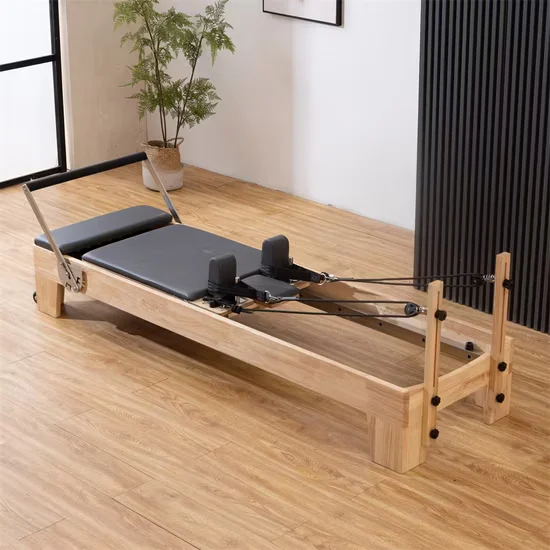
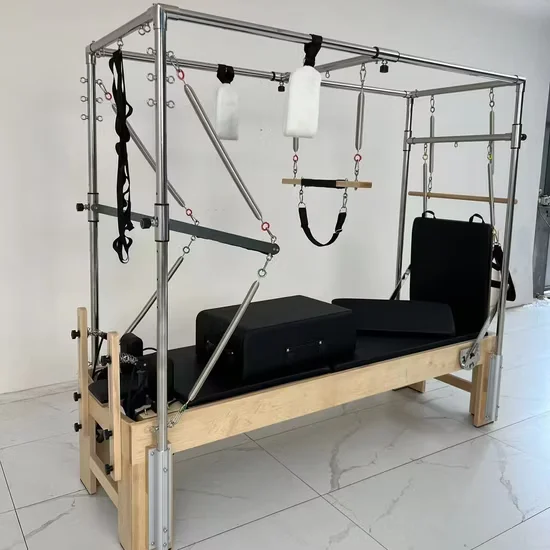
Wooden Pilates Cadillac Reformer, 2400×770×2160mm, 150kg Weight, 3-Year Warranty — constructed from solid oak and maple hardwood with reinforced carriage tracking and sealed pulley systems for smooth operation under continuous studio use. Includes long box, jump board, and platform accessories with customizable branding options. Every unit undergoes 32-point inspection and 100% load testing before shipment to ensure structural integrity for high-traffic commercial environments.
// Spec Highlights
• Direct from Manufacturer · No Middlemen · Worldwide Shipping
01
// Material
Imported Solid Wood
Premium hardwood frames sourced for density and visual warmth.
02
// Hardware
Medical-Grade Silent
Whisper-quiet pulleys and springs for clinical environments.
03
// Customization
Appearance OEM
Color, upholstery, and branding tailored to your studio.
04
// Service
Layout Design
Free venue planning for studios and rehab institutions.
Every component is selected for longevity, performance, and aesthetic harmony - from imported hardwood frames to silent medical-grade accessories.
// Features
Hardwood Frame Rigidity — solid oak and maple construction with industrial-grade joinery ensures long-term dimensional stability under continuous studio use.
| Parameter | Value |
|---|---|
| Product Type | Pilates Cadillac Reformer |
| Model NO. | SRY-01A |
| Frame Material | Solid Oak / Maple Hardwood |
| Product Dimensions | 2400×770×2160mm |
| Net Weight | 150kgs |
| Upholstery | Commercial-grade vinyl, standard or high-density options |
| Accessories Included | Long Box / Jump Board / Platform |
| Target User | Adult, Unisex |
| Logo | Customized Is Allowed |
| Warranty | 3 Years |
| Facility Type | Typical Use |
|---|---|
| Commercial Pilates studio | Daily group and private reformer sessions |
| Rehabilitation and physical therapy clinic | Controlled resistance exercises for patient recovery |
| Boutique fitness and wellness center | Premium Pilates programming for members |
| Hotel wellness center | Guest-accessible Pilates equipment with aesthetic appeal |
The joint and tracking system determines actual service life, not the wood species alone.
Many studios invest in hardwood Pilates equipment only to discover that carriage misalignment develops within the first year. The root cause is rarely the frame itself — it is undersized bearings, poorly machined rail channels, and spring attachment hardware that fatigues under cyclic loading. A commercial wooden Pilates Cadillac reformer sees hundreds of articulation cycles per week in a busy studio, and every component in the load path must hold tolerance under that repetition [NEED_CITE: EN 957 structural requirements for stationary training equipment]. When carriage wheels use simple bushings instead of sealed bearings, studio humidity and chalk dust accelerate wear, creating lateral play that compromises exercise precision and generates maintenance calls.
This commercial wooden Pilates Cadillac reformer addresses the full vertical and horizontal articulation range required for comprehensive Cadillac and tower work. It pairs naturally with mat stations and Wunda chairs to form a complete Pilates floor layout, supporting everything from foundational spring resistance exercises to advanced hanging and trapeze progressions. The 2400mm footprint fits standard studio bays with adequate clearance on three sides for instructor access and safe limb extension. The solid hardwood frame accommodates users across a broad height and weight spectrum without requiring structural adjustment between sessions.
Static loading on the uprights combines with dynamic eccentric forces every time a user controls spring return through full range. The carriage rail endures repeated impact at both travel limits, making rail-to-frame joinery a critical fatigue point. Spring anchor hardware experiences thousands of tension-release cycles monthly in a high-traffic studio, and any tolerance loss in the attachment points translates directly into uneven resistance feel. The upholstery surface resists compression set and chemical exposure from daily cleaning protocols, while sealed pulley systems must maintain glide consistency despite perspiration and environmental humidity [NEED_CITE: fatigue performance in cyclic-load fitness equipment structures].
Oak and maple differ meaningfully in grain density and moisture response, which affects how the frame holds rail alignment as studio humidity fluctuates seasonally. The 150kg net weight of this unit reflects the mass required for inherent stability — lighter hardwood reformers often rely on floor anchoring to prevent drift during vigorous spring work. Carriage wheel diameter and bearing specification determine glide smoothness and the interval between servicing, with sealed bearings outperforming bushings in environments where cleaning chemicals and chalk dust are constant. Spring gauge and progressive tension design influence both exercise feel and the hardware fatigue cycle, with heavier-gauge springs holding calibration longer under commercial frequency.
Laminated plywood frames may look identical in product photos but develop edge delamination where hardware bolts concentrate stress. Bushings cost less than sealed bearings at assembly but generate service calls within months as play develops in the carriage track. Low-density upholstery compresses permanently under daily use, forcing studios into reupholstery cycles that interrupt scheduling and add recurring cost. Springs that lack consistent gauge specification lose tension calibration at different rates across the set, creating uneven resistance that instructors must compensate for during sessions [NEED_CITE: upholstery compression and replacement intervals in commercial fitness environments].
Solid oak and maple selection ensures frame rigidity matches the torque generated by fully loaded spring configurations. Industrial-grade joinery at every structural intersection prevents the loosening that compromises carriage tracking over time. Each unit undergoes load verification before shipment to confirm rail alignment and spring tension calibration within tolerance. The 200μm industrial-grade finish protects contact surfaces from sweat corrosion and cleaning chemical degradation. Three-year warranty coverage reflects confidence in the fatigue life of every component in the load path. Full 2D and 3D layout CAD support helps studio operators plan safe spacing between reformers, towers, and accessory stations. Customization options including logo placement and upholstery color allow brand alignment without structural compromise.
Provide your studio floor plan and current equipment list to receive a 2D or 3D layout that integrates this commercial wooden Pilates Cadillac reformer with safe operational clearances. Specify expected daily session volume so that spring gauge and upholstery density match your traffic level. Identify your primary user demographic to confirm that the accessory package and spring tension range meet programming needs. Detail any branding requirements including logo placement, frame stain preference, and upholstery color to align the unit with your studio aesthetic.
Q: How do I verify that a Pilates Cadillac frame is solid hardwood rather than laminated plywood?
A: Inspect the frame cross-sections at joint intersections and hardware mounting points. Solid hardwood shows continuous grain through the full thickness, while laminated construction reveals layered edges. Request the wood species certification and moisture content report from the manufacturer, which should specify the exact hardwood type and the kiln-drying standard applied before assembly.
Q: What does carriage weight capacity tell me about overall frame construction?
A: A higher carriage load rating typically indicates heavier-gauge rail hardware, reinforced frame-to-rail joinery, and larger-diameter wheels with rated bearings. It reflects engineering decisions across the entire load path, not just the wood species. Studios serving diverse client populations should prioritize units rated well above their heaviest expected user.
Q: Sealed bearings versus bushings on carriage wheels — what is the practical difference in a studio?
A: Sealed bearings maintain consistent glide performance for significantly longer in environments with humidity, chalk dust, and frequent chemical cleaning. Bushings develop lateral play as particulate contaminates the contact surface, requiring earlier replacement and generating service interruptions. The initial cost difference is typically offset within the first year of commercial use through reduced maintenance labor.
Q: How often should springs be replaced on a commercial Pilates Cadillac reformer?
A: Replacement intervals depend on daily session volume and the tension ranges most frequently used. Springs lose calibration gradually, and uneven tension across the set indicates that some springs have fatigued faster than others. Request the manufacturer’s fatigue cycle rating for the specific spring gauge supplied, and schedule periodic tension verification to maintain consistent exercise resistance across all stations.
Premium aesthetics meet quiet operation for boutique studio environments.
Medical-grade silence and precision for sports & postpartum recovery.
Furniture-grade craftsmanship for premium residential installations.
Compact premium setups for one-on-one and small-group training.
Aesthetic Pilates integration for hybrid wellness studio programming.
Multi-unit deployment with instructor-grade reliability for certification programs.
Tell us about your project. Our team will respond within 24 hours with pricing, customization options, and shipping details.
// Sales Director
William
+86 132 2531 1800
// Export Manager
Bella
+86 198 5412 8032
william@bickfit.com