01 / Scenario
STUDIO
P
High-End Pilates Studios
Premium aesthetics meet quiet operation for boutique studio environments.

ISO
9001
CE
Certified
OEM
Available
10YR
Warranty
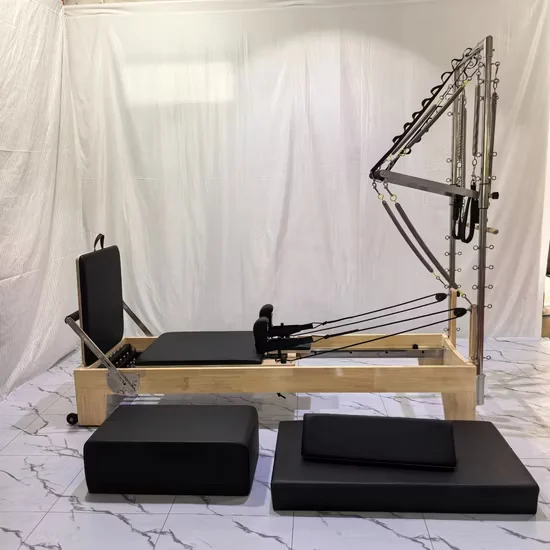
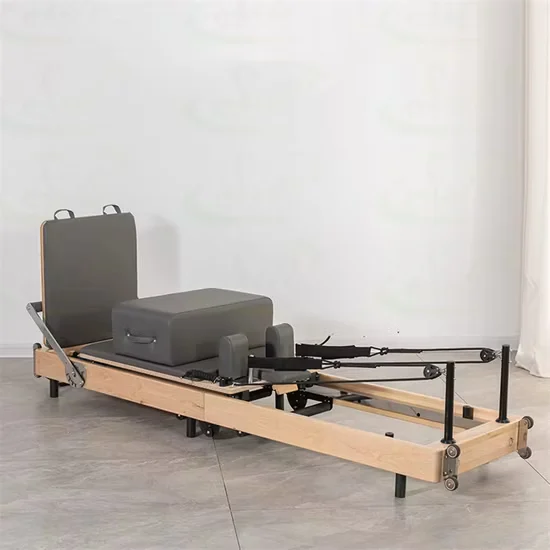
Wooden Pilates Reformer Bed, Solid Maple Timber Frame, 2460×730×680mm — engineered with a rigid maple timber chassis that resists warping and maintains rail parallelism under repetitive studio loading, paired with a precision-machined carriage rail system for smooth, consistent glide. Includes long box, jump board, and platform accessories with 3-year warranty and custom logo options. Each unit undergoes 32-point inspection and 100% load testing before shipment.
// Spec Highlights
• Direct from Manufacturer · No Middlemen · Worldwide Shipping
01
// Material
Imported Solid Wood
Premium hardwood frames sourced for density and visual warmth.
02
// Hardware
Medical-Grade Silent
Whisper-quiet pulleys and springs for clinical environments.
03
// Customization
Appearance OEM
Color, upholstery, and branding tailored to your studio.
04
// Service
Layout Design
Free venue planning for studios and rehab institutions.
Every component is selected for longevity, performance, and aesthetic harmony - from imported hardwood frames to silent medical-grade accessories.
// Features
Solid Maple Frame — Kiln-dried hardwood resists warping and maintains rail parallelism across years of daily studio use.
| Parameter | Value |
|---|---|
| Product Type | Pilates Reformer |
| Frame Material | Solid Maple Timber |
| Accessory Options | Long Box / Jump Board / Platform |
| Product Dimensions | 2460×730×680mm |
| Net Weight | 90kg |
| Color Options | Solid Color |
| Customization | Logo Customized |
| Warranty | 3 Years |
| Age Group | Adult |
| Gender | Unisex |
| Facility Type | Typical Use |
|---|---|
| Pilates Studio | Daily group and private reformer sessions |
| Yoga & Movement Studio | Complementary equipment for flexibility and core work |
| Home Fitness Space | Compact full-body conditioning station |
| Rehabilitation & Physiotherapy Center | Controlled low-impact movement therapy |
Maple density holds rail alignment where laminated plywood flexes and drifts.
The commercial wooden pilates reformer maple timber market is flooded with units built on MDF or softwood frames that look fine on day one but develop carriage wobble within months of studio-frequency use. When the frame flexes under load, the rail gap widens unevenly, creating dead spots in the carriage travel and forcing the wheel bearings to absorb lateral shear they were never designed for. I’ve seen laminate layers separate at the bolt-through joints on reformers that ran two years in a high-traffic studio. [NEED_CITE: EN 957 structural requirements for stationary training equipment]
The reformer anchors the apparatus zone in a Pilates studio, covering supine, seated, and standing movement planes that target core stabilization, hip mobility, and lower-limb control. In a mixed-modality space, it pairs with the trapeze table and chair to give instructors a full apparatus progression path. For studios running back-to-back group classes, the solid maple frame handles repetitive loading cycles without the carriage drift that plagues lighter alternatives. The 2460mm length accommodates users across a wide height range while fitting within standard studio bay spacing. This commercial wooden pilates reformer maple timber unit is built for environments where equipment reliability directly affects class flow and instructor confidence.
Every reformer exercise loads the frame differently — footwork drives compressive force through the footbar mounting points, while long stretch series pull eccentric tension across the rail anchors. Over a six-class studio day, these directional shifts repeat hundreds of times, concentrating fatigue at the carriage stop and spring anchor junctions. The rail-to-frame interface takes the most punishment: any moisture intrusion or fastener loosening shows up first as carriage rattle during slow eccentric returns. Wheel material and rail hardness pairing determines whether the glide stays smooth or develops the micro-play that instructors notice within weeks. Upholstery contact zones on the shoulder blocks and headrest compress repeatedly and need to resist splitting under sweat exposure and cleaning chemicals. [NEED_CITE: fatigue performance in wood joints under cyclic loading]
Maple timber density and grain orientation define how the frame handles long-term load. Quarter-sawn maple resists cupping better than flat-sawn stock, keeping the carriage rail parallel to the base over seasonal humidity swings. The carriage wheel and rail interface is the second critical spec — polymer wheels on aluminum rail give a different glide character than urethane on steel, and the tolerance between wheel diameter and rail width determines lateral play. Spring resistance calibration should deliver a progressive tension curve where each additional spring adds predictable load rather than sudden jumps. Accessory mounting points for the long box, jump board, and platform must engage with zero rattle; loose-fitting hardware creates noise and movement that breaks client focus mid-session. Moisture content at the time of assembly should be stabilized to the destination climate to prevent post-delivery warping.
Downgrading from solid maple to plywood or softwood saves cost upfront but introduces failure modes that surface under studio-frequency use. Softwood frames compress at the bolt-through joints over time, loosening the rail mounting and causing the carriage to bind or drift. MDF-core reformers absorb moisture from humid studio environments and swell at the edges, compromising the rail alignment permanently. Non-matching wheel and rail materials create accelerated wear on whichever component is softer, turning a glide system into a maintenance cycle. Thin vinyl upholstery on shoulder blocks splits along the stitch lines within months, and if the manufacturer doesn’t stock replacement pads, the entire unit sits idle waiting for a custom reupholster. [NEED_CITE: timber moisture content and dimensional stability standards]
Our background is in commercial strength equipment — 11-gauge steel frames and robotic MIG welding — and we apply that same structural discipline to every product category we build. For this reformer, timber species is verified against mill certificates, and moisture content is checked before assembly to prevent post-delivery warping. Every unit goes through load testing on the carriage rail system before shipment, not sample-based batch testing. The three-year warranty reflects confidence in the frame, rail, and spring anchor integrity under daily studio conditions. For operators planning a multi-unit studio layout, 2D-3D CAD floor planning is available to confirm equipment spacing, instructor circulation paths, and safe clearance between adjacent reformers. OEM customization including logo placement and color matching is available for branded studio environments.
Provide your studio floor dimensions and current apparatus list to receive a 2D-3D layout confirming unit count and spacing. Specify expected daily class volume so the structural grade matches your usage intensity. Confirm client height range to verify the carriage travel accommodates your population. Indicate any branding requirements including logo placement and frame color to finalize the customization scope.
Q: How do I verify the frame is solid maple rather than plywood or MDF?
A: Check the end grain on the frame rails — solid maple shows continuous grain lines running through the full cross-section, while plywood displays alternating layer stripes and MDF appears as uniform fiber with no grain pattern. Request a timber species certificate from the manufacturer specifying the wood type, origin, and moisture content at time of assembly to confirm material claims.
Q: What rail and wheel materials keep the carriage gliding smoothly long-term?
A: Polymer wheels running on anodized aluminum rail offer quiet operation with minimal maintenance, while urethane wheels on hardened steel rail handle higher load cycles in commercial studios. The critical factor is the tolerance between wheel diameter and rail width — too loose causes lateral play, too tight creates friction and premature wear on both surfaces.
Q: How does spring configuration affect resistance during reformer exercises?
A: Springs are typically color-coded by tension rating, with each spring adding a predictable increment of resistance to the carriage return. Progressive-wound springs deliver a smoother tension curve through the full range of motion compared to standard springs, allowing finer resistance adjustments for rehabilitation work versus advanced conditioning.
Q: What should I check before ordering jump board and platform accessories?
A: Confirm the mounting bracket design matches the accessory attachment points — some reformers use quick-release pins while others require bolt-through fastening. Verify that the accessory frame material and weight rating align with your intended use, and check that replacement pads and hardware are available separately to avoid full-unit downtime if a component wears.
Q: How do I maintain a wood-frame reformer in a humid studio environment?
A: Keep studio humidity within a stable range to prevent the maple from absorbing moisture and swelling at the joints. Wipe the frame after each session with a dry or slightly damp cloth rather than liquid cleaners. Inspect the rail mounting bolts and carriage wheel bearings quarterly for any play that signals moisture-related dimensional change in the timber.
Premium aesthetics meet quiet operation for boutique studio environments.
Medical-grade silence and precision for sports & postpartum recovery.
Furniture-grade craftsmanship for premium residential installations.
Compact premium setups for one-on-one and small-group training.
Aesthetic Pilates integration for hybrid wellness studio programming.
Multi-unit deployment with instructor-grade reliability for certification programs.
Tell us about your project. Our team will respond within 24 hours with pricing, customization options, and shipping details.
// Sales Director
William
+86 132 2531 1800
// Export Manager
Bella
+86 198 5412 8032
william@bickfit.com