01 / Scenario
STUDIO
P
High-End Pilates Studios
Premium aesthetics meet quiet operation for boutique studio environments.
ISO
9001
CE
Certified
OEM
Available
10YR
Warranty
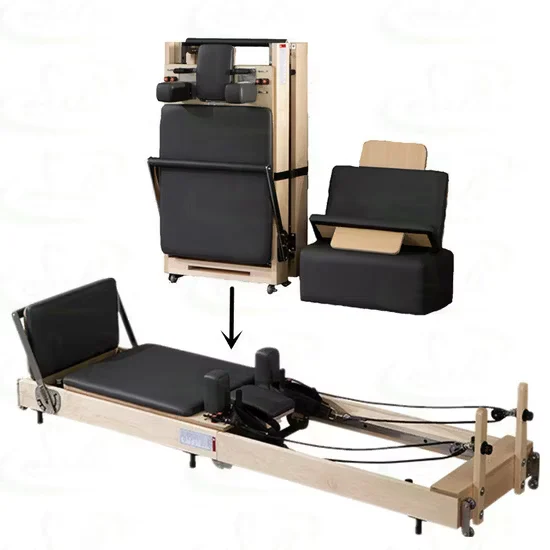
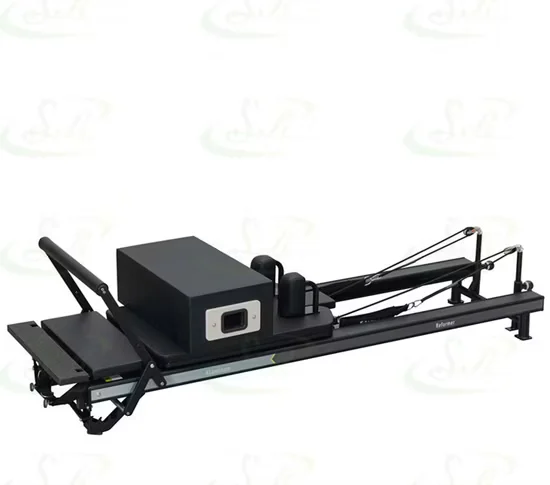
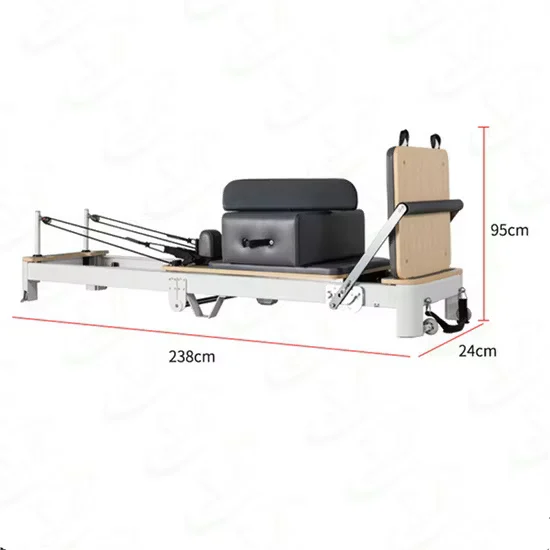
Pilates Reformer, Foldable Aluminum Frame, 90kg Net Weight — engineered with a rigid aluminum chassis to eliminate carriage wobble under spring tension, featuring integrated mounting points for long box, jump board, and platform accessories. The foldable hinge mechanism supports compact storage at 1500×740×560mm without compromising structural integrity during loaded use. Every unit undergoes 32-point inspection and full load testing before shipment.
// Spec Highlights
• Direct from Manufacturer · No Middlemen · Worldwide Shipping
01
// Material
Imported Solid Wood
Premium hardwood frames sourced for density and visual warmth.
02
// Hardware
Medical-Grade Silent
Whisper-quiet pulleys and springs for clinical environments.
03
// Customization
Appearance OEM
Color, upholstery, and branding tailored to your studio.
04
// Service
Layout Design
Free venue planning for studios and rehab institutions.
Every component is selected for longevity, performance, and aesthetic harmony - from imported hardwood frames to silent medical-grade accessories.
// Features
Aluminum Chassis Rigidity — Verified 90 kg net weight ensures frame stability under full spring tension without carriage wobble or rail deflection.
| Parameter | Value |
|---|---|
| Product Type | Pilates Reformer |
| Model NO. | SRY-12A |
| Frame Material | Aluminum Alloy |
| Assembly State | Foldable |
| Color | White |
| Product Dimensions | 2570×730×270mm |
| Net Weight | 90kgs |
| Included Accessories | Long Box / Jump Board / Platform |
| Logo | Customized Is Allowed |
| Target User | Adult, Unisex |
| Warranty | 3 Years |
| Facility Type | Typical Use |
|---|---|
| Home Pilates studio | Space-efficient daily practice with foldable storage |
| Boutique Pilates facility | Uniform equipment for group and private sessions |
| Rehabilitation and conditioning center | Low-impact controlled resistance for recovery programs |
| Hotel and resort wellness room | Portable, aesthetic equipment for guest use |
A rigid chassis prevents carriage drift and rail wear under repeated spring loads.
Many reformers marketed for home use sacrifice frame stiffness to reduce weight, resulting in a carriage that wobbles laterally during high-tension footwork and rails that develop uneven wear tracks within months. The SRY-12A addresses this through an aluminum frame engineered with wall thickness and cross-section geometry sufficient to resist torsional flex, even when multiple heavy springs are engaged simultaneously. For facility operators evaluating a folding aluminum pilates reformer for home use or small studios, the critical question is whether the folding joint and frame maintain alignment after hundreds of fold-unfold cycles. [NEED_CITE: structural rigidity requirements for spring-loaded exercise equipment]
This reformer supports the full Pilates movement library across supine, prone, seated, and standing planes, targeting core stabilization, hip and knee extension chains, shoulder girdle mobility, and spinal articulation. In a boutique studio layout, it pairs with a Pilates chair or ladder barrel to create complementary stations that allow instructors to rotate clients through different resistance modalities. The foldable design makes it practical for facilities with fluctuating class sizes or home studios where floor space must serve multiple purposes throughout the day. The 2570mm length accommodates users across a broad height range without compromising carriage travel, and the included long box, jump board, and platform expand exercise variety without requiring separate purchases. A folding aluminum pilates reformer for home use in this configuration serves both individual practitioners and small group sessions.
Every spring engagement generates lateral and longitudinal forces that concentrate at the carriage wheel-to-rail interface and the folding joint hinge. In high-frequency studio environments, these cyclical loads can introduce play in folding mechanisms that lack precision-machined tolerances, leading to audible clicking and progressive misalignment. The aluminum frame must also resist galvanic corrosion where dissimilar metals meet at hardware junctions, particularly in humid climates or spaces where sweat and cleaning agents accumulate on contact surfaces. Wheel material composition directly affects both noise levels and long-term rail degradation — harder wheel compounds reduce rolling resistance but accelerate rail wear, while softer compounds quiet the ride but require more frequent replacement. [NEED_CITE: fatigue performance in folding joint mechanisms for exercise equipment]
The aluminum alloy grade and frame wall thickness determine how the reformer handles eccentric loads during advanced movements like single-leg jumps on the jump board. Requesting mill certification for the aluminum stock verifies that the material meets stated specifications rather than relying on generic claims. The folding joint mechanism must demonstrate zero play after repeated cycle testing — a joint that feels tight at delivery but loosens after months of folding introduces unsafe lateral movement. Carriage wheel and rail tolerance specifications reveal whether smooth travel will persist under load or degrade into binding and noise. Accessory mounting points for the long box, jump board, and platform must use corrosion-resistant hardware rated for the shear forces generated during dynamic movements. [NEED_CITE: aluminum alloy grade verification and mill certification standards]
Thinner aluminum walls reduce manufacturing cost but allow the frame to deflect under heavy spring configurations, creating a sensation of instability that discourages users from progressing to advanced exercises. Folding joints that rely on simple pin locks rather than precision-machined hinge assemblies develop slop within the first year of commercial-frequency use, eventually requiring frame replacement rather than repair. Carriage wheels made from low-grade compounds flatten at contact points when the reformer sits loaded, generating flat spots that produce vibration and noise. Non-standard hardware at accessory mounting points means that when a bolt strips or a bracket cracks, replacement parts are unavailable — the entire mounting interface becomes compromised. Thin surface finishes on aluminum oxidize unevenly under sweat exposure, creating cosmetic degradation that signals poor quality to studio clients. [NEED_CITE: long-term durability comparison of aluminum frame thickness in exercise equipment]
The 11-gauge steel frame philosophy from our Ningjin facility applies equally to aluminum reformer engineering — material traceability and structural verification matter regardless of the metal. Every folding joint undergoes cycle testing before shipment, not sample-based inspection that misses unit-to-unit variation. The 200μm industrial powder coating standard used on our strength equipment line informs our expectations for reformer surface finish durability. A 10-year frame warranty on our commercial strength line reflects confidence that transfers to how we evaluate reformer frame longevity. 2D-3D floor planning CAD support helps studio operators calculate safe clearance zones around each reformer, accounting for carriage travel plus user limb extension during exercises like leg circles and long stretch. OEM customization allows facility branding on the frame without compromising structural specifications.
Provide your studio floor dimensions and equipment list to receive a 2D-3D layout showing reformer placement with proper clearance zones for carriage travel and user limb extension. Specify expected daily session frequency so we can confirm whether the folding joint specification matches your usage intensity. Indicate the height range of your user population to verify that carriage travel and accessory positioning accommodate all body types. Detail any customization requirements including frame color, logo placement, or upholstery specifications.
Q: How does aluminum frame construction compare to steel for Pilates reformers?
A: Aluminum provides corrosion resistance and weight reduction that makes the folding design practical for relocation and storage, while maintaining sufficient rigidity for commercial-grade spring loads when the wall thickness and alloy grade are properly engineered. Steel offers higher absolute stiffness but adds weight that complicates folding mechanisms and portability.
Q: What determines carriage smoothness and long-term rail wear?
A: Carriage smoothness depends on wheel material hardness, rail surface tolerance, and the precision of the wheel-to-rail fit. Softer wheel compounds reduce noise but wear faster, while harder compounds last longer but transmit more vibration. Rail alignment must remain true even after repeated folding cycles.
Q: How does the folding mechanism maintain structural rigidity over time?
A: A precision-machined hinge with positive locking engagement maintains alignment through repeated fold-unfold cycles. Lower-quality pin-lock mechanisms gradually develop lateral play as the pin and receiver wear against each other, eventually requiring joint replacement or frame retirement.
Q: Can this reformer support commercial-frequency use in a studio setting?
A: The 90 kg net weight and aluminum frame construction indicate sufficient structural mass for studio environments, provided the folding joint and carriage system are rated for the expected daily session count. Verify cycle testing documentation for the specific usage intensity of your facility.
Q: What is included in the standard accessory package and how are they mounted?
A: The package includes a long box for seated and supine exercises, a jump board for plyometric spring work, and a platform for standing exercises. Each accessory mounts to dedicated frame attachment points using corrosion-resistant hardware designed to handle dynamic loading without stripping or loosening.
Premium aesthetics meet quiet operation for boutique studio environments.
Medical-grade silence and precision for sports & postpartum recovery.
Furniture-grade craftsmanship for premium residential installations.
Compact premium setups for one-on-one and small-group training.
Aesthetic Pilates integration for hybrid wellness studio programming.
Multi-unit deployment with instructor-grade reliability for certification programs.
Tell us about your project. Our team will respond within 24 hours with pricing, customization options, and shipping details.
// Sales Director
William
+86 132 2531 1800
// Export Manager
Bella
+86 198 5412 8032
william@bickfit.com