01 / Scenario
STUDIO
P
High-End Pilates Studios
Premium aesthetics meet quiet operation for boutique studio environments.

ISO
9001
CE
Certified
OEM
Available
10YR
Warranty
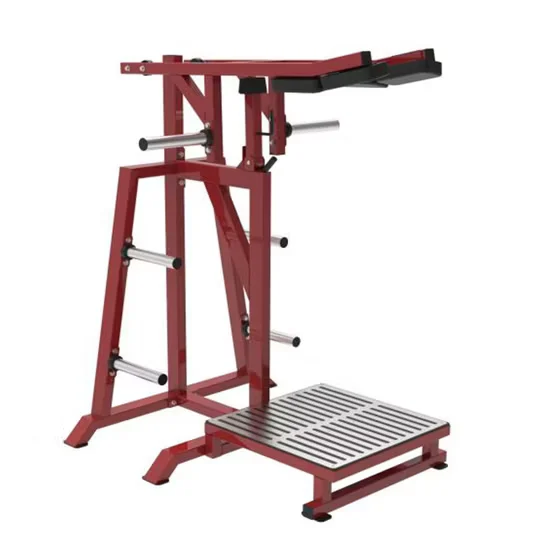
OS-H5037 Vertical Leg Press, Plate Loaded, 1300×1050×1800mm, 122kg — engineered with industrial steel frame and robotic MIG continuous welding to withstand high axial loads during heavy leg training, sealed bearings ensure smooth operation under high-traffic conditions. Every unit undergoes load testing before shipment, backed by 10-year frame warranty and professional floor planning support.
// Spec Highlights
• Direct from Manufacturer · No Middlemen · Worldwide Shipping
01
// Material
Imported Solid Wood
Premium hardwood frames sourced for density and visual warmth.
02
// Hardware
Medical-Grade Silent
Whisper-quiet pulleys and springs for clinical environments.
03
// Customization
Appearance OEM
Color, upholstery, and branding tailored to your studio.
04
// Service
Layout Design
Free venue planning for studios and rehab institutions.
Every component is selected for longevity, performance, and aesthetic harmony - from imported hardwood frames to silent medical-grade accessories.
// Features
Traceable Steel, Every Tube — Each frame member carries a mill certificate tracing back to the coil source, so buyers verify exactly what holds their members under load.
| Parameter | Value |
|---|---|
| Designation | OS-H5037 |
| Product Type | Vertical Leg Press |
| Frame Material | Steel, customizable main frame color |
| Loading Type | Plate loaded |
| Product Dimensions | 1300 × 1050 × 1800 mm |
| Net Weight | 122 kg |
| Upholstery | Cushion color customizable, standard or high-density options |
| Powder Coating | Industrial-grade, scratch-resistant |
| Welding Type | Robotic MIG continuous weld |
| Bearing Type | Sealed industrial bearings |
| Certification | ISO 9001, CE |
| Production Capacity | 1,000 units |
| OEM / ODM | Acceptable |
| Transport Package | Plywood box |
| Facility Type | Typical Use |
|---|---|
| Commercial gym strength floor | Primary leg training station for high-traffic member populations |
| University strength and conditioning room | Heavy axial loading for athletic development programs |
| Hotel and resort fitness center | Durable, visually customizable equipment for premium environments |
| Community fitness center | Shared-use leg press accommodating a wide range of user body types |
| Rehabilitation and performance center | Controlled vertical pressing for return-to-load protocols |
A vertical leg press channels forces straight down the spine of the frame — there is no lateral escape route for poorly specified steel.
When a gym buys a leg press labeled "commercial grade" without a verifiable tube gauge or steel certification, the first failure rarely shows up as a dramatic collapse. It arrives as a subtle deflection under eccentric loading — the cross member bows slightly when a member pauses at the bottom of a heavy rep. Over hundreds of cycles, that micro-deflection concentrates stress at weld joints, and eventually a crack propagates from a spot weld that was never designed to handle repeated axial compression [NEED_CITE: EN 957 structural requirements for stationary training equipment]. The commercial plate loaded vertical leg press OS-H5037 addresses this by anchoring every structural decision to traceable material specs rather than vague grade labels.
This machine occupies the bilateral pressing category, targeting the quadriceps, glutes, and hip extensors through a fixed vertical path. On a commercial gym strength floor, it complements free-weight squat racks and hip-dominant machines like leg curls, giving members a loaded pressing option that does not require spinal stabilization. It suits facilities with moderate to high member throughput, where a plate loaded vertical leg press can cycle users quickly without cable system maintenance. The footprint accommodates users across a broad range of heights and limb proportions.
A vertical leg press endures a distinctive load profile: the frame absorbs repeated axial compression as members load plates and press through full range, with peak stress occurring at the bottom transition where inertia reverses. The weld junctions where the guide carriage meets the main upright experience cyclic shear. Sealed bearings at the pivot and guide points must resist sweat and chalk dust infiltration that degrades unsealed bushings within months. Upholstery contact surfaces compress and release with every set, and the powder coating on plate-loading horns faces repeated abrasion from iron plates [NEED_CITE: weld classification and fatigue performance in structural steel]. Each of these wear paths must be addressed at the manufacturing stage, not deferred to maintenance.
Frame steel gauge and tube cross-section determine the threshold at which the frame begins to deflect under peak loads — a thicker-walled tube with a larger cross-section resists bending moments far better than a thinner alternative, regardless of how both are marketed. Continuous robotic MIG welding produces uniform penetration along the full weld seam, eliminating the stress concentrations that form at the start-stop points of manual or spot-welded joints. Sealed bearings maintain consistent rotational resistance over years of use, whereas unsealed bushings develop radial play as particulate contamination wears the bearing surface. A 200μm powder coat applied over sandblasted steel provides adhesion and chip resistance at contact points where plates and collars strike the frame repeatedly.
A thinner frame tube may pass a static load test at the factory, but under daily eccentric loading in a busy gym, it accumulates fatigue at weld toes where geometry changes create stress risers. Spot-welded joints that hold during QC inspection often crack within months when subjected to the cyclic compression and release of real member usage. Non-sealed bearings develop measurable play as chalk dust and sweat penetrate the race, turning a maintenance-free component into a recurring service call. Low-density upholstery foam compresses permanently under hundreds of daily sets, forcing the gym to recover pads or replace them entirely. Thin powder coating chips at plate contact points, exposing bare steel to humidity and sweat-driven corrosion [NEED_CITE: powder coating thickness and adhesion standards for fitness equipment].
The frame uses 11-gauge steel with mill certificates traceable to the source coil, so buyers can verify material grade independently. Robotic MIG welding runs continuous seams along load-bearing joints, removing the weak points inherent in spot-welded construction. Every unit undergoes load testing before shipment — not sample-based batch testing, but individual verification. The industrial powder coating is applied at thickness levels designed to resist chipping at high-contact zones over years of plate loading. A 10-year frame warranty backs the structural package. For facility planning, 2D and 3D CAD layouts are available to confirm safe clearance distances around the OS-H5037 within a multi-station strength zone.
Share your strength floor dimensions and current equipment list to receive a 2D or 3D layout showing how the OS-H5037 integrates with safe clearance spacing. Specify your expected daily user volume so the structural grade can be matched to your traffic profile. Provide target user demographics to confirm the machine’s range accommodates your member base. Note any color, upholstery, or branding customization requirements for a complete quotation.
Q: How do you confirm a vertical leg press is genuinely commercial grade?
A: Request the frame steel gauge, tube cross-section dimensions, and the mill certificate for the steel batch. Verify the welding method — continuous robotic MIG produces fundamentally different fatigue performance than spot welding. Ask whether load testing is performed on every unit or only on samples. These three data points separate verifiable commercial construction from marketing language.
Q: What is the relationship between steel gauge and maximum loading on a leg press?
A: A lower gauge number indicates thicker steel wall, which raises the load threshold before measurable frame deflection occurs. Tube cross-section shape and size also matter — a larger rectangular tube distributes bending stress across more material. Together, gauge and tube dimensions define the structural margin between normal operating loads and the point where permanent deformation begins.
Q: Plate loaded versus selectorized leg press — which fits a commercial gym better?
A: Plate loaded models like the OS-H5037 serve members who prefer incremental loading beyond fixed stack limits and suit facilities where maintenance simplicity is a priority — fewer cables and pulleys mean fewer wear components. Selectorized machines offer faster weight changes for high-throughput group class environments. The decision typically comes down to member preference profiles and maintenance capacity.
Q: How should equipment spacing be planned around a vertical leg press?
A: Account for the machine footprint plus user entry space, plate storage and loading clearance on both sides, and a walkway buffer so passing members never cross the loading zone. A 2D or 3D CAD layout from the manufacturer confirms these distances before installation, preventing unsafe congestion that becomes permanent once equipment is bolted to the floor.
Q: What maintenance does the bearing and pivot system require?
A: Sealed industrial bearings are designed to exclude dust and moisture, so routine maintenance focuses on visual inspection rather than lubrication. Check for smooth travel and any detectable radial play during quarterly inspections. Wipe down pivot housings to remove chalk and sweat residue that can accumulate around seal edges over time.
Premium aesthetics meet quiet operation for boutique studio environments.
Medical-grade silence and precision for sports & postpartum recovery.
Furniture-grade craftsmanship for premium residential installations.
Compact premium setups for one-on-one and small-group training.
Aesthetic Pilates integration for hybrid wellness studio programming.
Multi-unit deployment with instructor-grade reliability for certification programs.
Tell us about your project. Our team will respond within 24 hours with pricing, customization options, and shipping details.
// Sales Director
William
+86 132 2531 1800
// Export Manager
Bella
+86 198 5412 8032
william@bickfit.com
![Senrui PRO Pendulum Squat Machine Commercial Gym Fitness Equipment [WARN] draft identifier mismatch](https://bickgym.com/wp-content/uploads/2026/08/senrui-pro-pendulum-squat-machine-commercial-gym-fitness-equipment-warn-draft-identifier-mismatch-d09c4f.webp)