01 / Scenario
STUDIO
P
High-End Pilates Studios
Premium aesthetics meet quiet operation for boutique studio environments.

ISO
9001
CE
Certified
OEM
Available
10YR
Warranty
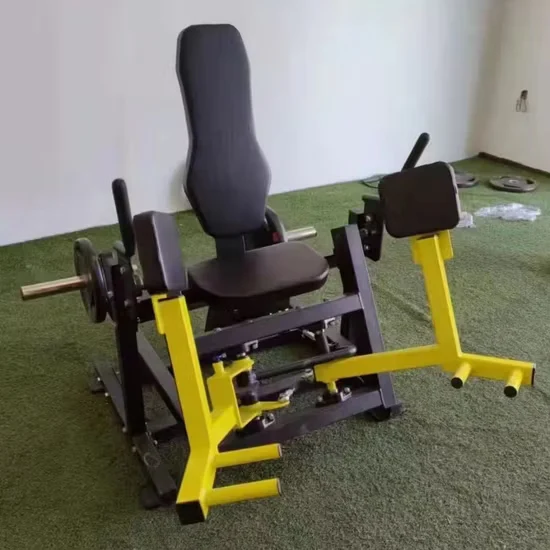
OS-H5033 Selectorized Seated Leg Curl Machine, Pin-Select Stack, 1440×1695×1481 mm — engineered with a steel frame and integrated weight stack for controlled hamstring isolation under repetitive commercial loading cycles. Pivot bearing design and guide rod alignment ensure smooth motion consistency across daily high-traffic use. Every unit undergoes load testing before shipment, backed by a 10-year frame warranty for verified structural performance.
// Spec Highlights
• Direct from Manufacturer · No Middlemen · Worldwide Shipping
01
// Material
Imported Solid Wood
Premium hardwood frames sourced for density and visual warmth.
02
// Hardware
Medical-Grade Silent
Whisper-quiet pulleys and springs for clinical environments.
03
// Customization
Appearance OEM
Color, upholstery, and branding tailored to your studio.
04
// Service
Layout Design
Free venue planning for studios and rehab institutions.
Every component is selected for longevity, performance, and aesthetic harmony - from imported hardwood frames to silent medical-grade accessories.
// Features
Mill-Certified Frame Steel — Every tube in this seated leg curl traces back to its coil with verifiable 11-gauge Q235 steel documentation.
| Parameter | Value |
|---|---|
| Designation | OS-H5033 |
| Product Type | Selectorized Leg Curl Machine |
| Frame Steel Gauge | 11-gauge |
| Frame Tube Size | 3×3 inch |
| Steel Grade | Q235 industrial steel, mill-certified |
| Welding Type | Robotic MIG continuous weld |
| Loading Type | Pin select (integrated weight stack) |
| Bearing Type | Sealed industrial bearings |
| Pulley System | Aircraft-cable pulley system |
| Upholstery | Custom density options, commercial-grade vinyl |
| Powder Coating | 200μm scratch-resistant |
| Product Dimensions | 1440×1695×1481 mm |
| Footprint | 1440×1481 mm |
| Net Weight | 103 kg |
| Certification | ISO 9001:2015, CE |
| Warranty | 10-year frame |
| Facility Type | Typical Use |
|---|---|
| Commercial gym strength floor | Primary hamstring isolation station in selectorized leg training zone |
| Hotel and resort fitness center | Durable leg curl option for 24/7 guest access environments |
| University strength and conditioning room | Controlled hamstring work for collegiate athletic programs |
| Rehabilitation and performance center | Isolated posterior chain loading with controlled resistance increments |
11-gauge steel with 3×3 inch tube dimensions absorbs eccentric hamstring loads without deflection.
Most equipment catalogs describe their frames as "commercial grade" without specifying gauge, wall thickness, or steel grade. When a commercial selectorized seated leg curl machine endures repeated heavy loading cycles, vague material claims become structural liabilities. Thin-wall tubes that pass visual inspection can develop measurable deflection within months of high-traffic use, shifting the pivot geometry and altering the resistance curve. [NEED_CITE: EN 957 structural requirements for stationary training equipment]
Spot welds at pivot brackets are another failure origin. Under repetitive eccentric loading — where users lower heavy weight stacks through the hamstring curl arc — spot-welded joints concentrate stress at discrete points rather than distributing it along continuous weld lines. The OS-H5033 addresses this with robotic MIG welding that produces continuous bead coverage at every load-bearing joint. [NEED_CITE: weld classification and fatigue performance in structural steel]
The seated leg curl targets the hamstrings in a hip-flexed position, complementing the lying leg curl where the hip is extended. This creates two distinct resistance profiles for the same muscle group, allowing lifters to address the hamstrings through different portions of their length-tension curve. On a commercial gym floor, pairing a selectorized seated leg curl machine with a lying variant covers the full range of hamstring training needs without requiring additional plate-loaded stations. The 1440×1481 mm footprint fits within standard selectorized machine spacing, and the machine accommodates a wide range of user body sizes through its pad adjustment mechanism.
The seated curl generates distinctive loading patterns. During the concentric phase, the cam arm transfers user force into the pivot shaft and frame uprights. The eccentric return — when the user controls the weight stack downward — subjects the pivot bearings and cam arm bracket to sustained tension that differs fundamentally from impact loading seen in drop-set scenarios. In a busy commercial gym, this machine may see hundreds of cycles per day, each cycle applying fatigue loading to the weld junctions where the cam arm bracket meets the main frame. [NEED_CITE: fatigue performance in structural steel under cyclic loading]
The sealed industrial bearings at the pivot point must resist ingress from sweat, cleaning chemicals, and airborne dust common in high-traffic facilities. Unsealed alternatives develop radial play within the first year, introducing vibration into the movement path and accelerating wear on the cam and cable system. The upholstery contact surfaces — the back pad and thigh restraint — endure constant compression cycles and must resist both splitting and compression set.
The 11-gauge frame steel specification determines the threshold at which the frame tube begins to deflect under load. At 3×3 inch tube dimensions, the cross-sectional area and moment of inertia resist bending forces generated during heavy hamstring curls without approaching the material’s yield point. Continuous robotic MIG welding eliminates the stress concentrations inherent in spot-welded assemblies, distributing load transfer across the full circumference of each joint rather than at discrete tack points.
The aircraft-cable pulley system paired with sealed bearings maintains consistent resistance feel through the full range of motion. When guide rod alignment is precise, the selectorized weight stack moves without binding even under off-center loading conditions — a common occurrence when users initiate the curl with uneven force application. The 200μm powder coating, applied after sandblast preparation, provides a scratch-resistant surface that withstands contact from weight plates, shoes, and cleaning equipment without exposing bare steel to corrosion.
Thin-wall frame tubing may reduce unit weight and shipping costs, but it introduces deflection that changes the pivot geometry over time. Once the frame flexes beyond design tolerances, the cam no longer tracks its intended resistance curve, and the exercise feel degrades. Spot-welded brackets at the pivot shaft can fracture under repeated eccentric loading, creating both maintenance expense and liability exposure in commercial environments. [NEED_CITE: structural failure modes in commercial fitness equipment]
Non-sealed bearings at the pivot require regular replacement as radial play increases, generating service calls and machine downtime. Low-density upholstery compresses permanently within months under commercial use, demanding pad replacements that take the machine out of service. Insufficient powder coating thickness chips at contact points, exposing bare steel to sweat-induced corrosion that spreads beneath the coating and compromises structural appearance long before the frame itself is affected.
The 11-gauge steel frame with mill certification traceable to the coil provides verifiable material documentation that most suppliers cannot produce. Robotic MIG welding ensures continuous weld coverage at the cam arm bracket and pivot shaft junctions — the highest-stress areas on any seated leg curl. Every unit undergoes load testing before shipment, not sample-based inspection, confirming that the specific machine arriving at your facility meets structural specifications.
The 200μm industrial powder coating withstands the sweat, cleaning chemicals, and incidental contact inherent to high-traffic gym floors. A 10-year frame warranty reflects confidence in the structural design rather than a marketing claim unsupported by material documentation. For facilities planning strength zones, the 1440×1481 mm footprint and required clearance dimensions are available in 2D-3D CAD format, enabling precise floor planning that eliminates unsafe gaps between stations.
Share your strength zone square footage and existing equipment list to receive 2D-3D CAD layout files showing exact placement, clearance zones, and traffic flow for the OS-H5033 within your selectorized leg training area. Specify your expected daily user volume so structural grade and bearing selection can be confirmed for your traffic level. Provide your target user demographic body size range to verify pad adjustment travel and thigh restraint positioning. Indicate any custom requirements for frame color, upholstery vinyl grade, or logo placement to finalize production specifications.
Q: How do you distinguish a true commercial-grade seated leg curl from a light-commercial alternative?
A: Request the frame steel gauge and tube dimensions with mill certification. True commercial frames use 11-gauge or thicker steel with verifiable grade documentation. Inspect weld joints at the pivot bracket — continuous MIG welds indicate structural intent, while spot welds suggest cost-driven assembly. Check whether the manufacturer load-tests every unit or only production samples.
Q: What clearance and footprint planning is needed for a seated leg curl on a commercial gym floor?
A: The OS-H5033 occupies a 1440×1481 mm footprint, but safe operation requires additional clearance for user entry, exit, and pad adjustment. EN 957 guidelines specify minimum spacing between adjacent machines to prevent interference during use. Providing your floor plan dimensions allows generation of a CAD layout that positions this machine within your leg training zone while maintaining compliant clearances.
Q: How does selectorized weight stack design compare to plate-loaded alternatives for leg curl maintenance?
A: Selectorized systems enclose the weight stack within the frame, protecting guide rods and plates from dust and impact damage common in open plate-loaded designs. The pin-select mechanism requires periodic inspection for engagement depth and cable attachment integrity, but eliminates the daily plate loading and collar securing that plate-loaded machines demand. For high-traffic facilities, this reduces between-user setup time.
Q: How often should pivot bearings and upholstery be inspected in a high-traffic commercial facility?
A: Sealed industrial bearings at the pivot shaft should be checked for radial play quarterly in facilities with high daily usage. Upholstery at the thigh restraint and back pad requires visual inspection for vinyl splitting and foam compression monthly. Replacement pads and bearing cartridges are available as spare parts to minimize machine downtime during service intervals.
Q: What customization options affect the structural integrity of the machine?
A: Frame color and upholstery vinyl selections are cosmetic choices that do not alter the 11-gauge steel frame, welding method, or bearing specifications. Custom logo placement on frame tubing avoids weld zones and high-stress areas. The selectorized weight stack capacity and cam geometry remain fixed regardless of finish options, ensuring consistent structural performance across all custom configurations.
Premium aesthetics meet quiet operation for boutique studio environments.
Medical-grade silence and precision for sports & postpartum recovery.
Furniture-grade craftsmanship for premium residential installations.
Compact premium setups for one-on-one and small-group training.
Aesthetic Pilates integration for hybrid wellness studio programming.
Multi-unit deployment with instructor-grade reliability for certification programs.
Tell us about your project. Our team will respond within 24 hours with pricing, customization options, and shipping details.
// Sales Director
William
+86 132 2531 1800
// Export Manager
Bella
+86 198 5412 8032
william@bickfit.com