01 / Scenario
STUDIO
P
High-End Pilates Studios
Premium aesthetics meet quiet operation for boutique studio environments.
ISO
9001
CE
Certified
OEM
Available
10YR
Warranty
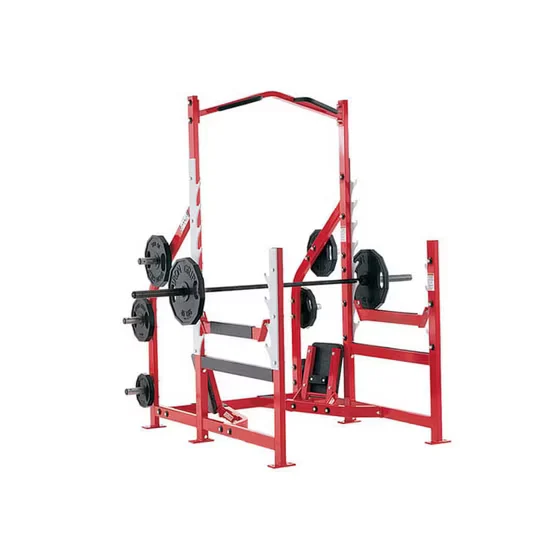
Heavy Duty Commercial Power Rack, 1785×1365×2235mm, 165kg Net Weight — constructed with Q235/Q345 industrial steel and robotic MIG continuous welding for structural integrity under repeated heavy loading. Designed for plate-loaded free weight training across full-body movements, with optional color and OEM customization available. Every unit undergoes individual load testing before shipment, backed by a 10-year frame warranty and factory-direct floor planning support.
// Spec Highlights
• Direct from Manufacturer · No Middlemen · Worldwide Shipping
01
// Material
Imported Solid Wood
Premium hardwood frames sourced for density and visual warmth.
02
// Hardware
Medical-Grade Silent
Whisper-quiet pulleys and springs for clinical environments.
03
// Customization
Appearance OEM
Color, upholstery, and branding tailored to your studio.
04
// Service
Layout Design
Free venue planning for studios and rehab institutions.
Every component is selected for longevity, performance, and aesthetic harmony - from imported hardwood frames to silent medical-grade accessories.
// Features
Mill-Certified Steel — Heavy Duty Commercial Power Rack frames are built from Q235/Q345 industrial steel with traceable coil documentation for every production batch.
| Parameter | Value |
|---|---|
| Product Type | Power Rack |
| Frame Steel | 11-gauge steel |
| Frame Tube Size | 3×3 inch |
| Steel Grade | Q235 / Q345 industrial steel, mill-certified |
| Welding Type | Robotic MIG continuous weld |
| Product Dimensions | 1785×1365×2235 mm |
| Net Weight | 165 kg |
| Loading Type | Free weight / Plate loaded |
| Powder Coating | 200 μm scratch-resistant |
| Color Options | Optional |
| Certification | ISO 9001, CE |
| Customization | OEM and color available |
| Assembly State | Unfolded |
| Production Capacity | 500 units per month |
| Facility Type | Typical Use |
|---|---|
| Commercial gym strength floor | Primary squat, press, and rack pull station for high-traffic free weight zones |
| CrossFit box functional zone | Olympic lifting and rig-integrated strength work under heavy daily rotation |
| University strength and conditioning room | Athlete testing and periodized heavy loading across multiple training sessions |
| Hotel and resort fitness center | Durable self-spotting station for unsupervised guest use with safety bar catches |
| Rehabilitation and performance center | Controlled rack-based movements with adjustable pin and strap safeties |
A frame is only as strong as its thinnest weld and its most ambiguous spec sheet.
When procurement documents list "commercial grade" tubing without naming the steel grade or wall thickness, buyers have no way to verify what happens when a loaded barbell is dropped onto the safeties at full extension. I have walked into facilities in South Asia where the uprights on competing racks showed visible bowing after six months of daily squat cycles, and the explanation from the supplier was always the same — the steel was "standard commercial." Without a verifiable mill certificate tied to a specific coil batch, the phrase means nothing. This heavy duty commercial power rack specifies 11-gauge Q235/Q345 steel with documentation traceable back to the rolling mill, so the frame deformation threshold is a matter of record rather than a marketing claim. [NEED_CITE: EN 957 structural requirements for stationary training equipment]
The power rack occupies the anchor position in any serious strength zone, handling squat, press, and rack pull variations that no selectorized machine can replicate. It pairs with adjacent flat and incline benches for pressing work and sits near plate storage walls to keep loading efficient during peak hours. Facilities running high member throughput benefit from dedicating at least one full rack per eight to twelve active lifters during peak windows. The 1785×1365 mm footprint fits standard commercial spacing grids while leaving clearance for barbell travel and spotter arm access across a wide range of user heights.
Static loading from racked weight is the least demanding scenario this heavy duty commercial power rack faces. The real structural test comes from eccentric and impact loading — a missed lift dropped onto safety bars, repeated rack pulls with controlled negative phases, and the vibration transferred through uprights when plates are loaded and unloaded dozens of times per session. Weld junctions at the base plate connections and the top crossmember joints concentrate stress during these events, which is why continuous robotic MIG welds matter far more than cosmetic finish quality. The powder coating must also resist the combination of sweat acidity and alkaline cleaning agents applied during daily floor maintenance cycles without chipping at high-contact points like J-cup seats and safety bar cradles. [NEED_CITE: weld classification and fatigue performance in structural steel]
The 11-gauge wall thickness paired with a 3×3 inch tube cross-section sets the bending resistance of the uprights, directly determining how much lateral deflection occurs when an off-center barbell load is racked on one side. Steel grade Q235 and Q345 define the yield point — the threshold where elastic deformation becomes permanent bending. Robotic MIG welding produces a continuous bead along each joint, eliminating the cold starts and incomplete fusion zones that characterize manual spot welds on cost-reduced frames. The 200 μm powder coating thickness is significant because it must cover complex geometries around weld seams and gussets without thin spots, and the sandblast pre-treatment ensures mechanical adhesion that survives years of plate contact and barbell knurling abrasion. At 165 kg net weight, the rack’s mass contributes to base stability, reducing the reliance on floor bolt-downs for standard commercial installations.
Thin-wall tubing might pass a visual inspection on delivery day, but under repeated heavy squat cycles the uprights develop a permanent set that alters bar path geometry and compromises safety catch alignment. Spot-welded joints that look clean in photographs fail progressively — micro-cracks propagate along the heat-affected zone until a sudden fracture occurs under load, creating a serious liability event for any facility operator. Non-industrial powder coatings chip within months at J-cup contact points, exposing bare steel to sweat and humidity that accelerate corrosion from the inside of tube sections outward. When hardware uses non-standard thread sizes or proprietary J-cup profiles, replacement parts become unavailable within a few years, forcing a complete rack replacement rather than a simple component swap. [NEED_CITE: common failure modes in commercial strength equipment frames]
Every heavy duty commercial power rack in this production run uses Q235 or Q345 steel with mill certification paperwork that traces each tube batch back to the originating coil, so material properties are verifiable rather than assumed. The robotic MIG welding process ensures that every joint — from base plate gussets to upright-to-crossmember connections — receives a continuous weld line with no skipped spots or cold joint starts that manual welding inevitably produces. Each unit undergoes a load test before leaving the production floor, verifying structural integrity under forces that exceed normal commercial use rather than relying on sample-based batch testing. The 200 μm industrial powder coat is applied over sandblasted surfaces for mechanical bonding that withstands plate impacts, knurling abrasion, and daily chemical cleaning. A 10-year frame warranty backs the structural components, and 2D-3D CAD layout files are provided so facility planners can verify clearance zones, barbell travel space, and adjacent equipment spacing before a single anchor bolt is drilled.
Provide your total free weight floor area and current or planned equipment list so we can generate a 2D-3D layout showing this rack positioned with correct safety clearances and traffic flow paths. Specify your expected daily user volume and peak-hour concurrent lifter count to confirm whether the 11-gauge frame specification matches your structural requirement tier. Indicate the height and build range of your primary user population so J-cup and safety bar positioning can be validated against the adjustment range. Note any color, logo, or upholstery customization requirements for OEM branding alignment with your facility identity.
Q: How do I verify the structural difference between commercial and light-commercial power racks?
A: Request the steel gauge, wall thickness, and mill certification from the supplier. Commercial-grade racks specify exact tube dimensions such as 11-gauge with 3×3 inch cross-sections and provide traceable steel grade documentation. Light-commercial racks often list only "heavy duty steel" without measurable parameters. Continuous robotic welds and per-unit load testing are additional indicators of genuine commercial construction versus cost-reduced alternatives.
Q: What is the relationship between steel gauge and the load capacity of a power rack?
A: Steel gauge indicates wall thickness — a lower gauge number means thicker steel. Combined with the tube cross-section dimensions, it determines how much the upright resists bending under off-center or impact loads. However, the welding method and joint design are equally important because the weakest point in any frame is typically the weld junction, not the middle of a tube section. Always review load test documentation rather than relying on gauge alone.
Q: How should I plan floor spacing around power racks for safe operation?
A: Each rack requires clearance on all sides for barbell overhang, plate loading, and spotter access. Provide your facility dimensions for a CAD layout that positions racks with verified safety corridors between stations. The layout should account for bumper plate diameter, barbell length extending beyond the uprights, and the space needed for lifters to approach and exit the station without crossing another user’s movement path.
Q: Can I customize the color and apply my own branding to this power rack?
A: OEM customization is available including custom powder coat colors and logo application on the frame. Provide your brand color codes in RAL or Pantone format along with logo vector files. The production team will confirm placement options on the upright and crossmember surfaces that maintain structural coating integrity without compromising the 200 μm industrial finish specification.
Premium aesthetics meet quiet operation for boutique studio environments.
Medical-grade silence and precision for sports & postpartum recovery.
Furniture-grade craftsmanship for premium residential installations.
Compact premium setups for one-on-one and small-group training.
Aesthetic Pilates integration for hybrid wellness studio programming.
Multi-unit deployment with instructor-grade reliability for certification programs.
Tell us about your project. Our team will respond within 24 hours with pricing, customization options, and shipping details.
// Sales Director
William
+86 132 2531 1800
// Export Manager
Bella
+86 198 5412 8032
william@bickfit.com