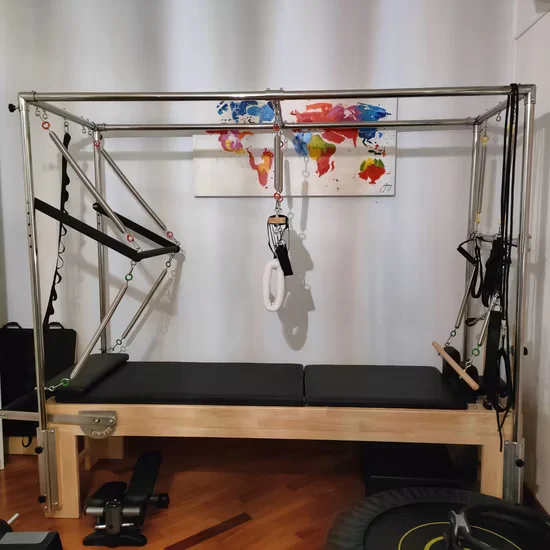
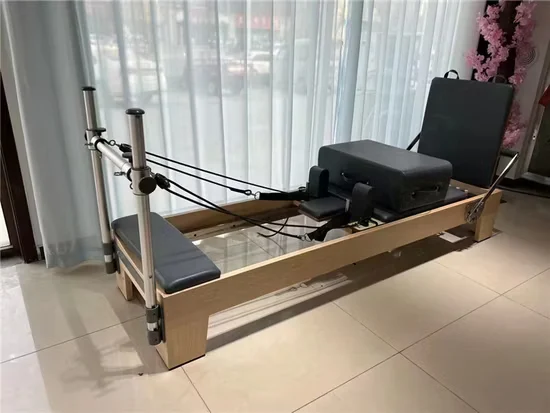
01 / Scenario
STUDIO
P
High-End Pilates Studios
Premium aesthetics meet quiet operation for boutique studio environments.
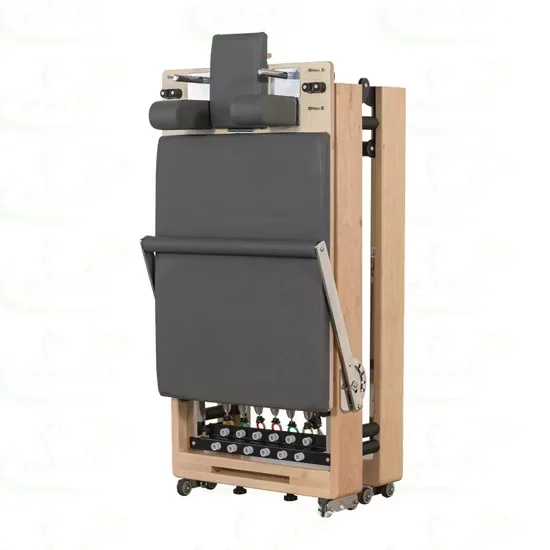
ISO
9001
CE
Certified
OEM
Available
10YR
Warranty
Every unit undergoes 32-point inspection and 100% load testing before shipment
// Spec Highlights
• Direct from Manufacturer · No Middlemen · Worldwide Shipping
01
// Material
Imported Solid Wood
Premium hardwood frames sourced for density and visual warmth.
02
// Hardware
Medical-Grade Silent
Whisper-quiet pulleys and springs for clinical environments.
03
// Customization
Appearance OEM
Color, upholstery, and branding tailored to your studio.
04
// Service
Layout Design
Free venue planning for studios and rehab institutions.
Every component is selected for longevity, performance, and aesthetic harmony - from imported hardwood frames to silent medical-grade accessories.
// Features
Every-Unit Load Tested — Each Folding Pilates Reformer undergoes full-range carriage travel under maximum rated load before leaving the factory, verifying spring tension, pulley alignment, and folding hinge engagement.
| Parameter | Value |
|---|---|
| Product Type | Folding Pilates Reformer |
| Product Dimensions | 2400×600×350mm |
| Net Weight | 100kgs |
| Frame Color | Solid Color, custom options available |
| Included Accessories | Long Box, Jump Board, Platform |
| Warranty | 3 Years |
| Custom Branding | Logo customization available |
| Target User | Adult, Unisex |
| Facility Type | Typical Use |
|---|---|
| Home Pilates studio | Dedicated daily reformer training in a private studio environment |
| Compact apartment workout area | Stowable full-body equipment that folds for floor space recovery |
| Rehabilitation and mobility center | Low-impact controlled resistance work for adult recovery programs |
| Personal fitness space | One-on-one instruction with accessory integration for varied movement patterns |
A 100kg solid frame anchors the carriage track against lateral flex during loaded movement and jump board impact.
Most folding reformers on the market shed weight by thinning the main rail walls and using lighter hinge hardware. The result shows up within months: the carriage develops side-to-side play during mid-range travel, pulleys shift off true alignment, and the footbar mount point begins to rock under repeated jump board landings. I have seen lightweight folding frames where the hinge locking pin wore through its receiver bore because the engagement depth was too shallow for the cyclic loading of daily use. [NEED_CITE: structural fatigue in folding exercise equipment frames under cyclic loading] When a home use foldable Pilates reformer is specified at 100kgs net weight, that mass signals thicker wall sections in the main rails and a hinge mechanism built for repeated fold-unfold cycles rather than minimal shipping weight.
This reformer covers the full spectrum of Pilates movement patterns — supine, prone, seated, and standing work — targeting the deep stabilizers, hip complex, and spinal articulators through spring-resisted carriage travel. In a home Pilates studio layout, it pairs with a mat zone and a small accessory wall to create a complete training environment without redundant equipment. The folding capability matters most in multi-use living spaces where the reformer must stow between sessions. The 2400mm length accommodates tall users during full-extension movements like long spine and leg circles, while the accessory set — long box for prone pulling and seated work, jump board for plyometric loading, platform for standing balance — extends the movement library without requiring additional standalone units. A home use foldable Pilates reformer with this accessory range serves users across different body sizes and training objectives within a single footprint.
Every fold-unfold cycle loads the hinge pivot in shear, and every jump board landing sends an impact pulse through the footbar into the main rail joint. The carriage track endures continuous friction wear along the full stroke length, with off-center loading during single-leg work concentrating wear on one rail side. Spring anchor points experience repeated tension cycling that can fatigue poorly welded tabs over time. The pulley routing path must maintain alignment through thousands of cable travel cycles, or the cable develops uneven wear and eventual fraying at the contact points. Upholstery on the shoulder rests and headrest compresses under bodyweight loading session after session, and low-density padding will bottom out and split along the seam lines within months of daily use. [NEED_CITE: bearing and pulley wear patterns in cable-resisted exercise equipment]
The stated 100kgs net weight for a folding reformer of these dimensions indicates substantial material in the main rails and carriage assembly, which directly governs how much the frame resists flex when the carriage is loaded at full spring tension. Heavier frame mass also dampens vibration during jump board use, keeping the platform stable under repeated impact. The accessory mounting system — how the long box seats onto the carriage, how the jump board locks into the footbar position, how the platform attaches — determines whether these add-ons introduce play or remain rigid during use. Solid mounting with positive locking engagement prevents the micro-movements that accelerate wear at the connection points. Spring tension calibration across the full carriage travel range ensures that resistance feels consistent from short-range to full-extension movements, which requires matched spring rates and proper cable routing geometry.
A lighter frame might save on shipping and initial purchase price, but the structural compromises surface quickly in regular use. Thin-wall rails flex under loaded carriage movement, causing the wheels or sliders to bind and wear unevenly across the track surface. Undersized hinge pins elongate their receiver bores under repeated folding cycles until the lock no longer engages securely, which is a safety issue during any exercise where the frame must remain rigid. Low-density upholstery compresses permanently within months, exposing the hard frame beneath and forcing reupholstery or full pad replacement. Non-standard hardware in the folding mechanism means replacement parts may not be available from any supplier once the original stock runs out, turning a minor component failure into a complete unit replacement decision. [NEED_CITE: lifecycle cost comparison between commercial-grade and lightweight fitness equipment]
The frame steel is sourced with mill certification traceable to the coil, so the material specification behind that 100kg net weight is verifiable rather than assumed. Robotic MIG welding produces continuous weld lines at every structural joint — the hinge mounts, spring anchor tabs, and footbar receivers — eliminating the spot-weld weak points that crack under cyclic impact loading. Every unit is load tested before shipment, meaning the carriage is run through full travel under maximum spring resistance to confirm smooth operation and the folding mechanism is cycled to verify positive lock engagement. The powder coating is applied at 200μm thickness after sandblast preparation, protecting contact points and fold-zone surfaces from the chips and scratches that expose bare steel to corrosion. The 3-year warranty and custom logo options support both private home studios and branded facility environments.
Provide your studio floor dimensions and we will return a 2D-3D layout showing this home use foldable Pilates reformer placed with correct operating clearances and fold-stow positions marked. Tell us your expected daily session volume so we can confirm the structural grade matches your usage pattern. Share any branding requirements — custom logo placement, specific frame color — and we will detail the options within the production run.
Q: How does the foldable design affect frame rigidity compared to a fixed reformer?
A: A well-engineered folding reformer maintains rail alignment through positive-locking hinge mechanisms that eliminate play when deployed. The 100kg frame mass ensures the main rails resist flex during loaded carriage travel. The trade-off versus a fixed frame is managed by over-specifying the hinge engagement depth and using continuous welds at all pivot mount points.
Q: What accessories are included and how do they mount to the carriage?
A: The package includes a long box, jump board, and platform. Each accessory mounts through dedicated attachment points on the main frame and carriage — the long box seats directly onto the carriage surface, the jump board locks into the footbar position, and the platform attaches at the standing end with positive engagement hardware.
Q: How should spring tension and pulley smoothness be maintained over time?
A: Springs should be inspected periodically for consistent coil spacing and anchor point security. Pulley wheels need to spin freely without lateral play, and cables should be checked for fraying at contact points. Keeping the carriage track clean and free of debris prevents abrasive wear that degrades travel smoothness.
Q: What operating clearances are needed around the reformer for safe use?
A: Allow at least 600mm on each side for limb extension during side-lying and standing work, plus 1000mm beyond the head end for full carriage travel during exercises like long spine. When folded for storage, the unit requires only its folded footprint plus access space for safe deployment.
Premium aesthetics meet quiet operation for boutique studio environments.
Medical-grade silence and precision for sports & postpartum recovery.
Furniture-grade craftsmanship for premium residential installations.
Compact premium setups for one-on-one and small-group training.
Aesthetic Pilates integration for hybrid wellness studio programming.
Multi-unit deployment with instructor-grade reliability for certification programs.
Tell us about your project. Our team will respond within 24 hours with pricing, customization options, and shipping details.
// Sales Director
William
+86 132 2531 1800
// Export Manager
Bella
+86 198 5412 8032
william@bickfit.com