
01 / Scenario
STUDIO
P
High-End Pilates Studios
Premium aesthetics meet quiet operation for boutique studio environments.
ISO
9001
CE
Certified
OEM
Available
10YR
Warranty
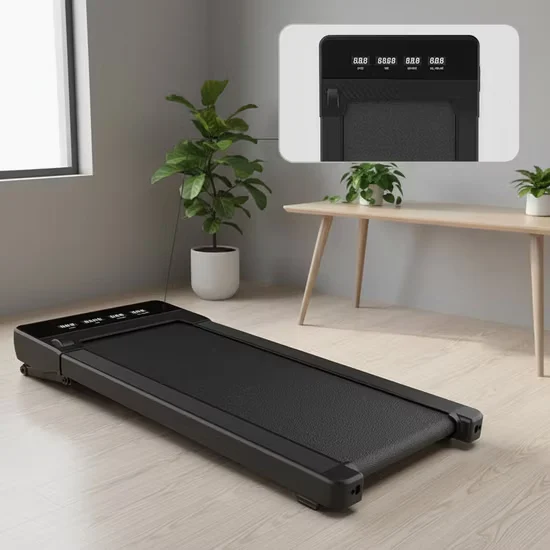
W04H1 Walking Treadmill, 1-6 km/h Speed, 1000×400mm Runway — unfolded frame design ensures structural stability during continuous operation, while the LED screen tracks speed, distance, time, and calories for real-time performance feedback. CE and RoHS certified for international compliance across commercial and light commercial environments. Each unit undergoes load testing before shipment, backed by a 10-year frame warranty and factory-direct floor planning support.
// Spec Highlights
• Direct from Manufacturer · No Middlemen · Worldwide Shipping
01
// Material
Imported Solid Wood
Premium hardwood frames sourced for density and visual warmth.
02
// Hardware
Medical-Grade Silent
Whisper-quiet pulleys and springs for clinical environments.
03
// Customization
Appearance OEM
Color, upholstery, and branding tailored to your studio.
04
// Service
Layout Design
Free venue planning for studios and rehab institutions.
Every component is selected for longevity, performance, and aesthetic harmony - from imported hardwood frames to silent medical-grade accessories.
// Features
Unfolded Frame Stability — The W04H1 walking treadmill maintains a rigid, non-folding chassis that eliminates joint flex points common in collapsible designs, ensuring consistent belt tracking under continuous commercial use.
| Parameter | Value |
|---|---|
| Designation | W04H1 |
| Product Type | Walking Treadmill |
| Frame Design | Unfolded, fixed chassis |
| Runway Size | 1000 × 400 mm |
| Product Dimensions | 1250 × 520 × 125 mm (folded storage height) |
| Speed Range | 1–6 km/h |
| Maximum Speed | <15 km/h |
| Programs | 6 preset programs |
| Display | LED — Speed, Distance, Time, Calories |
| Certification | CE, RoHS |
| Condition | New |
| Production Capacity | 3,000 units/month |
| Facility Type | Typical Use |
|---|---|
| Commercial gym cardio zone | Low-impact warm-up and active recovery stations |
| Hotel and resort fitness center | Guest-facing walking and light jogging equipment |
| University athletic department | Rehabilitation and general fitness cardio access |
| Rehabilitation and performance center | Controlled-speed gait training and mobility work |
Many treadmills marketed for facility use omit frame steel specifications entirely, leaving buyers unable to verify whether the chassis will survive daily loading cycles. The commercial walking treadmill W04H1 addresses this gap with a fixed unfolded frame that removes the hinge mechanisms and latch points where fatigue cracks originate. A non-folding chassis distributes dynamic belt forces across a single continuous structure rather than concentrating stress at folding joints.
In high-traffic environments, a treadmill that folds may save shipping volume but introduces a structural compromise: the pivot pin and locking collar become the weakest link under repetitive foot-strike impact [NEED_CITE: weld classification and fatigue performance in structural steel]. Operators who have replaced collapsed walking decks trace the failure not to the motor or belt, but to the frame joint that was never rated for continuous commercial cycling.
This unit occupies the low-intensity end of a commercial cardio floor, complementing higher-speed treadmills and air bikes by serving users who need controlled walking pace without incline complexity. The 1000 × 400 mm runway accommodates a broad stride range while keeping the overall footprint compact enough for dense cardio row configuration. The commercial walking treadmill W04H1 fits rehabilitation corridors, hotel fitness rooms, and gym warm-up zones where users prioritize stability over speed.
Walking treadmills experience a different fatigue profile than running models: lower peak impact per stride but far higher cumulative cycle counts over an 8–12 hour operating day. The unfolded frame of the W04H1 eliminates the repeated bending moment that folding treadmills endure at the hinge, shifting the stress burden to the base rail welds and motor mount bolts. Belt tension, roller bearing alignment, and deck lubrication become the primary maintenance variables rather than frame integrity. Sweat and cleaning chemicals attack exposed fastener heads and electronic console seams, making powder coating adhesion and console sealing critical for long-term appearance [NEED_CITE: corrosion resistance of powder-coated steel in humid fitness environments].
The 1250 × 520 × 125 mm folded profile indicates a low-profile deck design that prioritizes a low step-up height — a deliberate choice for walking-focused users who may have limited mobility. The 1000 mm belt length provides sufficient stride room for walking gaits up to approximately 180 cm user height, while the 400 mm width keeps lateral belt wander within a safe margin without requiring the oversized deck of a running treadmill. The LED console tracks speed, distance, time, and calorie estimates across six preset programs, giving operators a simple interface that minimizes user error and support calls.
Folding treadmills reduce container loading costs but transfer that savings into long-term maintenance liability. The hinge mechanism requires periodic bolt retightening, and the locking collar wears under vibration, eventually introducing lateral deck play that accelerates belt and roller wear. Non-sealed motor bearings in budget units ingest gym dust and degrade within months, while the thin powder coating on stamped-steel side rails chips at contact points, exposing bare metal to sweat corrosion. When a folding treadmill frame cracks in a commercial setting, the liability falls on the facility operator — not the manufacturer who never specified a steel grade.
The W04H1 ships fully assembled in its unfolded configuration, eliminating on-site hinge alignment and reducing deployment time. The fixed frame design means no moving joints to inspect, no locking pins to replace, and no warranty disputes over folding mechanism failure. Each unit undergoes load testing before shipment to verify deck rigidity and motor mount integrity under sustained walking loads. The compact 1250 × 520 mm footprint allows dense cardio row spacing while maintaining safe clearance between stations, and the CE and RoHS certifications ensure compliance for international facility procurement. OEM branding and color customization are available for chain operators standardizing their cardio fleet appearance.
Provide your available cardio zone dimensions and target unit count to receive a 2D–3D floor plan showing W04H1 placement with code-compliant clearance spacing. Specify your expected daily user volume so we can confirm the structural rating matches your traffic intensity. Indicate any branding, color, or console language customization requirements for fleet procurement.
Q: What is the primary structural difference between the W04H1 and a folding walking treadmill?
A: The W04H1 uses a fixed, unfolded chassis that eliminates the hinge joint, locking collar, and pivot pin found in folding models. This removes the most common fatigue failure point in commercial walking treadmills, as the continuous frame distributes belt tension and foot-strike forces across a single welded structure rather than concentrating stress at a mechanical joint that loosens over time.
Q: How does the 1000 × 400 mm runway size affect user suitability?
A: The 1000 mm belt length accommodates natural walking stride lengths for users up to approximately 180 cm tall, while the 400 mm width provides adequate lateral margin for normal gait variation without requiring the larger footprint of a running treadmill. This makes the W04H1 suitable for general fitness walking, warm-up use, and rehabilitation gait training without overbuilding the deck for a speed range the unit is not designed to reach.
Q: What maintenance intervals should a commercial operator expect for this treadmill?
A: Under continuous daily use, motor mount bolts and deck fasteners should be inspected and retightened at 90-day intervals. The running deck requires periodic lubrication to reduce friction and motor load. Belt tension and roller alignment should be checked semi-annually. The fixed frame design eliminates hinge-related maintenance entirely, reducing the overall service burden compared to folding commercial treadmills.
Q: Can the W04H1 be customized for branded fleet procurement?
A: Yes, OEM private-label branding and custom color schemes are available for chain operators and facility groups standardizing their cardio equipment appearance. Console language options and program presets can also be configured to match regional user preferences. Contact the sales team with your unit quantity and branding specifications to receive a customized quotation.
Premium aesthetics meet quiet operation for boutique studio environments.
Medical-grade silence and precision for sports & postpartum recovery.
Furniture-grade craftsmanship for premium residential installations.
Compact premium setups for one-on-one and small-group training.
Aesthetic Pilates integration for hybrid wellness studio programming.
Multi-unit deployment with instructor-grade reliability for certification programs.
Tell us about your project. Our team will respond within 24 hours with pricing, customization options, and shipping details.
// Sales Director
William
+86 132 2531 1800
// Export Manager
Bella
+86 198 5412 8032
william@bickfit.com
![MT026M Electric Fold Home Use Treadmill for Fitness [WARN] draft identifier mismatch](https://bickgym.com/wp-content/uploads/2026/08/mt026m-electric-fold-home-use-treadmill-for-fitness-warn-draft-identifier-mismatch-897eb5.webp)


