01 / Scenario
STUDIO
P
High-End Pilates Studios
Premium aesthetics meet quiet operation for boutique studio environments.

ISO
9001
CE
Certified
OEM
Available
10YR
Warranty
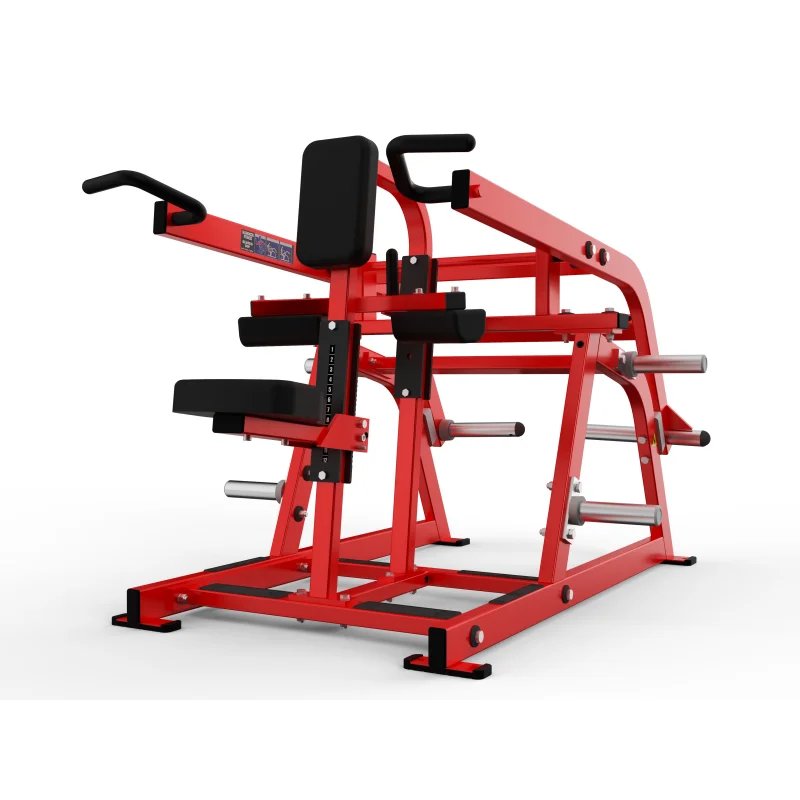
Plate Loaded ISO-Lateral Horizontal Bench Press, 1700×1400×1200 mm, 112 kg — converging press path on a heavy-gauge steel frame with robotic MIG continuous welding, eliminating spot-weld weak points under repetitive commercial loading. Plate-loaded design with hardened guide rods ensures smooth operation without cable or weight-stack maintenance. Every unit undergoes individual load testing before shipment, backed by a 10-year frame warranty and free floor planning support.
// Spec Highlights
• Direct from Manufacturer · No Middlemen · Worldwide Shipping
01
// Material
Imported Solid Wood
Premium hardwood frames sourced for density and visual warmth.
02
// Hardware
Medical-Grade Silent
Whisper-quiet pulleys and springs for clinical environments.
03
// Customization
Appearance OEM
Color, upholstery, and branding tailored to your studio.
04
// Service
Layout Design
Free venue planning for studios and rehab institutions.
Every component is selected for longevity, performance, and aesthetic harmony - from imported hardwood frames to silent medical-grade accessories.
// Features
Mill-Certified Steel Frame — every tube traceable to its coil origin, ensuring verifiable 11-gauge structural integrity across the entire ISO-Lateral Horizontal Bench Press Machine frame.
| Parameter | Value |
|---|---|
| Product Type | Plate Loaded Chest Press |
| Product Dimensions | 1700×1400×1200 mm |
| Frame Steel Gauge | 11-gauge |
| Frame Tube Size | 3×3 inch |
| Steel Grade | Q235 / Q345 industrial steel |
| Welding Type | Robotic MIG continuous weld |
| Loading Type | Plate loaded |
| Net Weight | 112 kg |
| Powder Coating | 200μm scratch-resistant |
| Certification | ISO 9001, CE |
| Warranty | 10-year frame |
| Facility Type | Typical Use |
|---|---|
| Commercial gym strength floor | Primary horizontal pressing station for general membership and serious lifters |
| Hotel and resort fitness center | Low-maintenance chest press for unsupervised guest use with plate-loaded simplicity |
| University strength and conditioning room | Heavy-load horizontal pressing for athletic programs running multiple daily sessions |
| CrossFit box functional zone | Supplementary maximal strength work for athletes bridging barbell and machine pressing |
Continuous MIG weld lines carry load across the entire joint, not just at isolated points.
When a gym owner sources a commercial plate loaded horizontal bench press machine, the frame tube gauge often gets quoted as "commercial grade" with no verifiable specification. I have seen batch recalls happen because a cost-reduction decision on beam tube thickness led to visible deflection on a heavily used bench press within months. Spot welds pass a quick visual check on the showroom floor, but under repeated heavy loading from daily commercial use, those isolated weld points become the first failure location. The crack propagates silently until the frame develops play that users feel but cannot identify. [NEED_CITE: EN 957 structural requirements for stationary training equipment]
The ISO-Lateral Horizontal Bench Press Machine targets the horizontal pressing plane, working the pectorals, anterior deltoids, and triceps through a converging arm path. In a strength zone layout, it pairs naturally with an incline press and a pec deck to cover the full pressing spectrum without redundancy. The independent arm design accommodates users ranging from rehabilitation clients loading one side to advanced lifters stacking plates on both horns. For high-traffic commercial gyms, this commercial plate loaded horizontal bench press machine fills the primary flat pressing slot that free-weight benches cannot serve safely without spotters.
Horizontal pressing generates substantial eccentric force at the bottom of each repetition, concentrating stress at the arm pivot points and the main frame junction. In a busy facility running ten or more hours daily, those pivot bearings endure thousands of load cycles per week, making sealed industrial bearings essential to prevent premature play from sweat and chalk dust infiltration. The plate horns experience impact loading each time users load or unload plates, and any spot-welded connection at the horn base becomes a fatigue risk over time. The powder coating at grip contact points and plate horn edges faces constant abrasion, requiring adequate thickness to prevent bare steel exposure. [NEED_CITE: weld classification and fatigue performance in structural steel]
The 3×3 inch frame tube cross-section combined with 11-gauge wall thickness determines the deflection threshold when the machine is loaded asymmetrically or when a user shifts mid-rep. Robotic MIG continuous welding produces uniform penetration depth along the entire joint length, eliminating the cold joints and incomplete fusion defects common in manual spot welding on production lines. The 200μm powder coating applied over sandblasted surfaces creates a scratch-resistant barrier that withstands daily contact with loaded plates and cleaning chemicals. Hardened guide rods on the plate horns resist scoring from repeated plate changes, maintaining smooth loading action without the binding that develops when softer rod materials wear unevenly.
Thinner wall tubing flexes noticeably under heavy loading, and that flex transfers to the pivot bearings, accelerating wear on components that are not designed for off-axis movement. Spot-welded frames that crack at joint intersections create liability exposure for gym operators when structural failure occurs during use. Non-sealed bearings in a plate-loaded environment accumulate chalk dust and sweat residue, developing axial play that users perceive as looseness and that maintenance teams must address through frequent replacement. Insufficient powder coating at high-contact areas chips within months, exposing bare steel to humidity and sweat corrosion that spreads beneath the remaining coating. [NEED_CITE: powder coating durability standards for commercial fitness environments]
The 11-gauge frame with mill-certified Q235/Q345 steel means the material is traceable to its coil origin — not an unverifiable commercial-grade claim. Robotic MIG continuous welding eliminates the spot-weld weak points that fail first under repeated loading on a busy strength floor. Every unit undergoes per-unit load testing before shipment rather than sample-based inspection, so the machine arriving at your facility has documented structural verification. The 1700×1400 mm footprint with proper safety clearance spacing fits standard commercial strength floor layouts, and our 2D-3D CAD planning support ensures this commercial plate loaded horizontal bench press machine sits with correct traffic flow around it. A 10-year frame warranty backs the structural components that carry load every day.
Provide your strength zone dimensions and current equipment list so we can generate a 2D-3D floor plan showing proper clearance spacing around this press. Specify your expected daily user volume and heaviest anticipated loading to confirm the structural grade matches your traffic pattern. Share any custom requirements including frame color, logo placement, or upholstery selection to align with your facility branding.
Q: How do I verify a chest press frame is genuinely commercial-grade rather than light-commercial?
A: Request mill-certified steel documentation showing the exact gauge and steel grade traceable to the coil. Confirm the welding process produces continuous weld lines rather than spot welds, which pass visual inspection but fail under repeated heavy loading. True commercial equipment specifies verifiable tube dimensions like 11-gauge 3×3 inch rather than vague commercial-grade claims.
Q: What maintenance does a plate-loaded chest press require compared to a selectorized machine?
A: Plate-loaded designs eliminate cable replacement, pulley bearing service, and weight stack guide rod maintenance entirely. Your maintenance focus shifts to pivot bearing inspection, bolt torque checks, and plate horn condition. This significantly reduces service calls in high-traffic facilities where selectorized mechanisms experience more moving-part failures under continuous daily use.
Q: How much floor space should I allocate around a plate-loaded horizontal bench press?
A: Plan the 1700×1400mm machine footprint plus minimum clearance on all sides for safe plate loading and user passage. Users need space to load plates on both horns without blocking adjacent equipment traffic. Providing your full strength zone layout allows accurate CAD planning to ensure proper spacing between this press and neighboring stations.
Q: What does the frame warranty actually cover on commercial chest press equipment?
A: A structural frame warranty covers the welded steel frame against cracking, deformation, and material defects under normal commercial use. It does not cover wear items like bearings, upholstery, or powder coating. Confirm whether the warranty applies to the specific steel gauge and welding construction your machine was built with, and verify replacement part availability for moving components.
Premium aesthetics meet quiet operation for boutique studio environments.
Medical-grade silence and precision for sports & postpartum recovery.
Furniture-grade craftsmanship for premium residential installations.
Compact premium setups for one-on-one and small-group training.
Aesthetic Pilates integration for hybrid wellness studio programming.
Multi-unit deployment with instructor-grade reliability for certification programs.
Tell us about your project. Our team will respond within 24 hours with pricing, customization options, and shipping details.
// Sales Director
William
+86 132 2531 1800
// Export Manager
Bella
+86 198 5412 8032
william@bickfit.com