01 / Scenario
STUDIO
P
High-End Pilates Studios
Premium aesthetics meet quiet operation for boutique studio environments.
ISO
9001
CE
Certified
OEM
Available
10YR
Warranty
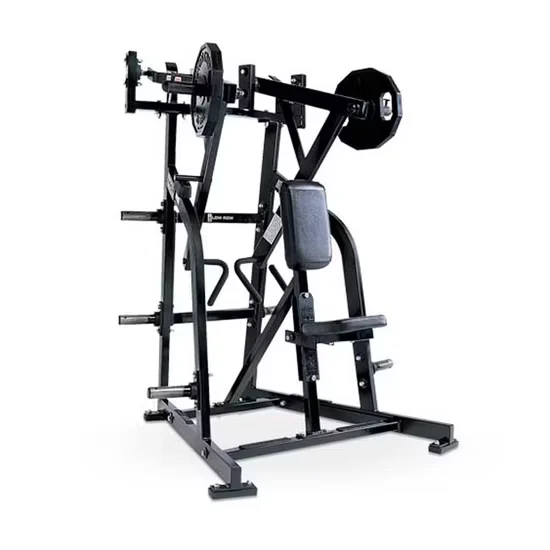
Plate Loaded ISO-Lateral Low Row Machine, 1250×1056×1700mm, 135kg Net Weight — independent arm design eliminates strength imbalances during back training. ISO 9001 and CE certified, with OEM and custom color options available for facility branding. Every unit undergoes individual load testing before shipment to ensure structural integrity under high-traffic commercial use.
// Spec Highlights
• Direct from Manufacturer · No Middlemen · Worldwide Shipping
01
// Material
Imported Solid Wood
Premium hardwood frames sourced for density and visual warmth.
02
// Hardware
Medical-Grade Silent
Whisper-quiet pulleys and springs for clinical environments.
03
// Customization
Appearance OEM
Color, upholstery, and branding tailored to your studio.
04
// Service
Layout Design
Free venue planning for studios and rehab institutions.
Every component is selected for longevity, performance, and aesthetic harmony - from imported hardwood frames to silent medical-grade accessories.
// Features
Traceable Mill Steel — Every frame tube on this ISO-Lateral Low Row traces back to the originating coil certificate, confirming gauge and grade before fabrication begins.
| Parameter | Value |
|---|---|
| Product Type | Plate Loaded Low Row Machine |
| Loading Type | Plate loaded |
| Product Dimensions | 1250 × 1056 × 1700 mm |
| Net Weight | 135 kg |
| Frame Steel Gauge | 11-gauge |
| Frame Tube Size | 3 × 3 inch |
| Steel Grade | Q235 / Q345 industrial steel, mill-certified |
| Welding Type | Robotic MIG, continuous weld lines |
| Bearing Type | Sealed industrial bearings |
| Pulley System | Aircraft-cable pulley system |
| Powder Coating | Sandblast pre-treatment, 200 μm scratch-resistant finish |
| Color Options | Optional |
| Upholstery | Standard or high-density options available |
| Certification | ISO 9001, CE |
| Warranty | 10-year frame |
| Facility Type | Typical Use |
|---|---|
| Commercial gym strength floor | Primary back development station in high-traffic plate-loaded rows |
| University strength and conditioning room | Unilateral rowing for athletic populations with varying limb lengths |
| CrossFit box functional zone | Heavy rowing accessory for strength-bias programming blocks |
| Hotel fitness center | Compact footprint back trainer for limited square-footage layouts |
| Rehabilitation and performance center | Independent arm operation for post-injury unilateral loading |
Continuous robotic MIG welds distribute stress across the full joint length instead of concentrating it at isolated points.
On a plate-loaded iso-lateral machine, the converging arm pivots endure repeated eccentric loading every rep. Spot-welded joints pass initial visual inspection but develop micro-fractures where the weld terminates, eventually propagating through the tube wall under sustained commercial use. This machine eliminates those termination points by running continuous weld beads along every structural junction, which is how the frame maintains rigidity after thousands of loaded cycles [NEED_CITE: weld classification and fatigue performance in structural steel]. When gym owners pull a side cover and see a dotted weld pattern, they are looking at a predictable failure timeline. The commercial plate loaded iso-lateral low row machine addresses this through uninterrupted weld lines that spread force evenly across each connection.
This unit targets the horizontal pull plane, engaging the latissimus dorsi, rhomboids, and posterior deltoid through a converging arc that draws the handles inward as the elbows travel behind the torso. On a strength floor, it complements a lat pulldown and a chest-supported T-bar row, filling the gap between vertical pulling and free-weight bent-over rows. The independent arm mechanism accommodates users with asymmetrical strength without forcing bilateral compensation. Facilities running high member throughput benefit from the self-regulating resistance curve, which reduces the need for spotter supervision. The commercial plate loaded iso-lateral low row machine fits users ranging from shorter adolescents to tall athletes because the seat and pad geometry allow a stable braced position across a wide anthropometric spectrum.
Each rep on a plate-loaded low row subjects the pivot arm to a compound stress profile: static tension at the handle, torsional load through the frame junction, and shock loading when plates are released after a heavy set. At eight or more hours of daily use, these cycles accumulate into the tens of thousands per month. The pivot bearings carry the brunt of rotational wear, and unsealed units allow particulate ingress from chalk dust and rubber flooring debris, producing audible play within the first year [NEED_CITE: bearing contamination and preload loss in gym environment]. Sweat and alkaline cleaning agents attack powder coatings at contact zones where pads meet steel. The frame tube itself must resist bending deflection under maximum plate loading, a condition where gauge thickness and tube cross-section work together to maintain the intended geometry of the converging movement path.
An 11-gauge tube wall sits at approximately 3 mm, providing a deformation threshold that keeps the frame dimensionally stable when loaded beyond typical working sets. The 3 × 3 inch cross-section offers a broad moment of inertia, resisting the twisting forces generated by offset plate sleeves. Robotic MIG welding produces consistent penetration depth across every joint, avoiding the cold-start and crater defects common in manual welding where the arc breaks and restarts. Sealed industrial bearings contain their own lubricant and exclude contaminants, maintaining smooth pivot rotation without scheduled greasing intervals. The aircraft-cable pulley system routes force through large-diameter sheaves that reduce cable bending fatigue, extending service intervals between replacements. A 200 μm powder coat applied over sandblast-prepared steel provides a mechanical bond that resists chipping at high-contact areas like plate horns and foot supports [NEED_CITE: powder coating adhesion standards for fitness equipment].
Thinner-walled tubing deflects visibly under heavy loads, transmitting vibration through the frame and into the user’s grip, which degrades the feel of the movement and accelerates fatigue in the forearm stabilizers. Spot-welded pivot joints create localized stress risers that concentrate force into a small area of the parent metal, leading to crack initiation that may not surface until the frame is already compromised. Non-sealed bearings require periodic disassembly, cleaning, and re-lubrication, adding labor hours to maintenance schedules that already run thin in commercial environments. Low-density upholstery compresses permanently within months of heavy use, exposing the substrate to moisture and accelerating deterioration of the underlying foam and pad board. A thin powder coat chips at plate-loading contact points, exposing bare steel to sweat and humidity, which initiates surface rust that spreads beneath adjacent coating [NEED_CITE: corrosion propagation under thin film coatings in humid environments].
The 11-gauge Q235 and Q345 steel used in this commercial plate loaded iso-lateral low row machine arrives with a mill certificate traceable to the coil of origin, ensuring material composition is documented before any cutting begins. Six-kilowatt fiber lasers cut frame components at ±0.1 mm tolerance, so mating surfaces fit together without gap-filling weld passes that dilute joint strength. Robotic MIG welding runs continuous beads along every structural connection, and a three-stage quality inspection includes load testing on every individual unit rather than sampling from a batch. The 200 μm powder coating undergoes sandblast pre-treatment to achieve mechanical adhesion that holds up to repeated contact with loaded plates and cleaning chemicals. A 10-year frame warranty backs the structural assembly, and 2D-3D CAD layout support ensures adequate safety clearance around the machine within the strength zone floor plan.
Provide your strength floor area and current equipment list to receive a 2D-3D CAD layout showing clearances and traffic flow around this unit. Specify average daily user volume so the structural grade matches your facility’s throughput demands. Communicate the anthropometric range of your membership to confirm pad and seat geometry coverage. State any custom requirements including frame color, logo application, or upholstery density to finalize the build specification.
Q: How do I verify the steel gauge on a plate-loaded low row before purchasing?
A: Request the mill certificate tied to the steel coil used in production. A legitimate manufacturer provides documentation showing the originating mill, steel grade, and wall thickness. Visual inspection alone cannot distinguish gauge differences, and marketing terms like "commercial grade" carry no standardized measurement. The certificate closes the gap between the claimed specification and the actual material in the frame.
Q: What is the difference between plate-loaded and selectorized loading for a low row?
A: Plate-loaded machines use external weight plates added to sleeves, allowing incremental loading beyond typical stack limits and giving advanced lifters finer control over resistance progression. Selectorized units use a pin-selected weight stack that enables faster weight changes between users, suiting high-turnover facilities where members cycle through stations quickly. The choice depends on whether your facility prioritizes maximum load capacity or changeover speed.
Q: How much floor space does this machine require including safety clearance?
A: The machine footprint measures 1250 × 1056 mm, but total floor allocation must account for plate loading clearance behind the sleeves, user entry and exit space, and safe passage between adjacent equipment. A 2D layout plan ensures adequate gaps on all sides, preventing traffic bottlenecks and meeting insurance requirements for commercial fitness environments.
Q: How often do sealed bearings need servicing on a commercial low row?
A: Sealed industrial bearings contain their lubricant internally and exclude external contaminants, which eliminates routine greasing from the maintenance schedule. Periodic inspection during scheduled equipment checks should confirm smooth rotation without grinding or play. If abnormal movement is detected, the sealed unit is replaced as a complete assembly rather than rebuilt on-site, minimizing equipment downtime.
Q: Can the frame color and upholstery be customized for my facility branding?
A: Color options and upholstery selections are available to match facility design standards or brand guidelines. Custom frame colors require specification during the order process before powder coating begins. Upholstery density and cover color can be selected from available options to coordinate with existing equipment or interior finishes throughout the strength training area.
Premium aesthetics meet quiet operation for boutique studio environments.
Medical-grade silence and precision for sports & postpartum recovery.
Furniture-grade craftsmanship for premium residential installations.
Compact premium setups for one-on-one and small-group training.
Aesthetic Pilates integration for hybrid wellness studio programming.
Multi-unit deployment with instructor-grade reliability for certification programs.
Tell us about your project. Our team will respond within 24 hours with pricing, customization options, and shipping details.
// Sales Director
William
+86 132 2531 1800
// Export Manager
Bella
+86 198 5412 8032
william@bickfit.com