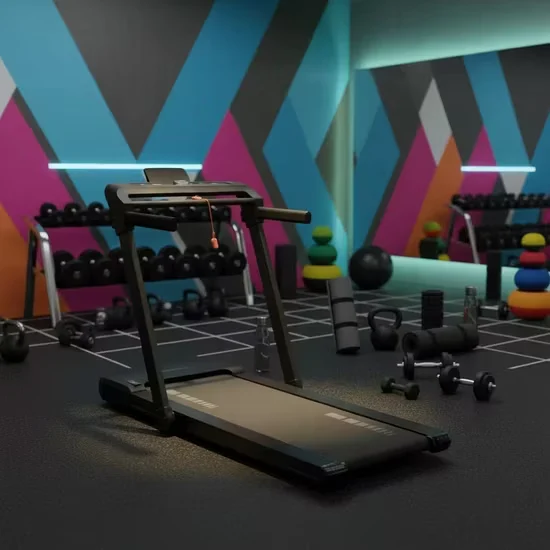
01 / Scenario
STUDIO
P
High-End Pilates Studios
Premium aesthetics meet quiet operation for boutique studio environments.

ISO
9001
CE
Certified
OEM
Available
10YR
Warranty
MT296 Home Electric Treadmill, DC2.0HP Motor, 1200×520mm Runway — engineered with a foldable frame reducing footprint to 910×865×1345mm for compact residential spaces. The 16 preset programs and 1-20 km/h speed range support varied cardiovascular training intensities, while the 520mm belt width accommodates natural stride mechanics. CE and RoHS certified, with full OEM/ODM customization available for private-label branding.
// Spec Highlights
• Direct from Manufacturer · No Middlemen · Worldwide Shipping
01
// Material
Imported Solid Wood
Premium hardwood frames sourced for density and visual warmth.
02
// Hardware
Medical-Grade Silent
Whisper-quiet pulleys and springs for clinical environments.
03
// Customization
Appearance OEM
Color, upholstery, and branding tailored to your studio.
04
// Service
Layout Design
Free venue planning for studios and rehab institutions.
Every component is selected for longevity, performance, and aesthetic harmony - from imported hardwood frames to silent medical-grade accessories.
// Features
DC2.0HP Continuous Output — The MT296 delivers sustained motor power across its full 1–20 km/h speed range, engineered to handle repetitive daily running cycles without thermal degradation.
| Parameter | Value |
|---|---|
| Designation | MT296 |
| Motor Type | DC 2.0HP |
| Speed Range | 1–20 km/h |
| Runway Size | 1200 × 520 mm |
| Preset Programs | 16 |
| Display | LCD — Speed / Distance / Time / Calories / Pulse |
| Unfolded Dimensions | 1580 × 865 × 1300 mm |
| Folded Dimensions | 910 × 865 × 1345 mm |
| Net Weight | 64.0 kg |
| Foldable | Yes |
| Frame Material | ABS |
| Certification | CE, RoHS |
| OEM / ODM | Available |
| Facility Type | Typical Use |
|---|---|
| Home fitness rooms | Daily cardiovascular conditioning and body shaping |
| Small apartment studios | Space-efficient cardio with foldable storage |
| Boutique wellness suites | Low-impact aerobic training for residents |
| Personal training studios | Warm-up and cool-down cardio stations |
| Corporate wellness areas | Employee fitness and stress-relief sessions |
Narrow running surfaces force stride compression, increasing joint stress and reducing workout consistency.
Most home treadmills sacrifice runway width to cut shipping volume, landing at 400–450mm decks that feel confining for anyone over average height. The MT296 carries a 1200 × 520mm running area, which aligns with the stride length of users up to approximately 185cm without forcing lateral foot placement corrections mid-step. When a runner’s foot lands near the belt edge repeatedly, the psychological discomfort alone shortens session duration — and the biomechanical compensation pattern shifts load into the knee and hip in ways that compound over hundreds of weekly cycles [NEED_CITE: biomechanical impact of restricted treadmill deck width on lower limb kinematics].
This home electric treadmill MT296 foldable motorized unit occupies a single-file footprint of roughly 1.58m × 0.87m when deployed, fitting naturally against a wall or beside a window in rooms as small as 12 square metres. The 520mm belt width and 20 km/h ceiling place it between entry-level walking pads and full commercial deck units, serving users who need genuine running capacity without dedicating a separate gym room. It pairs logically with a compact adjustable bench or a set of dumbbells in a combined strength-cardio corner, covering warm-up protocols and dedicated aerobic sessions within the same zone.
Every fold-unfold cycle introduces shear forces at the hinge pins and latch mechanisms — a failure point that separates residential-grade units from those built for daily use. The MT296’s folding architecture must sustain not only the static 64kg frame weight during storage transitions but also the dynamic impact loads generated during running, where each footstrike transmits forces multiples of body weight through the deck, rollers, and motor mount [NEED_CITE: fatigue analysis of folding mechanisms in motorized treadmill frames]. The DC motor operates under variable torque demand as speed changes and incline-equivalent resistance shifts with user weight, meaning thermal management and brush wear become relevant factors over extended sessions. Bearing seals at the front and rear rollers face fine particulate ingress from household dust and belt abrasion debris, conditions that accelerate wear in unsealed designs.
The DC 2.0HP motor rating defines continuous output rather than peak surge, which is the honest metric for sustained running at 12–20 km/h where thermal buildup is the limiting factor. A 1200 × 520mm runway requires a deck substrate rigid enough to resist centre-deflection under a 90kg+ runner at full stride extension — if the deck flexes, the belt tracking drifts and the motor draws excess current to compensate. The 16 preset programs vary speed and resistance profiles automatically, which means the motor controller must handle continuous ramp-up and ramp-down cycles rather than holding a single steady-state load. The LCD console integrates pulse monitoring, typically through contact grips or a wireless chest strap receiver, and the accuracy of that data depends on sensor placement and signal filtering — specifications that vary widely across price tiers. Folded dimensions of 910 × 865 × 1345mm mean the unit stands roughly waist-height when stored, requiring overhead clearance awareness in rooms with low shelving or pendant lighting.
When manufacturers quote motor power without distinguishing continuous from peak rating, buyers discover thermal shutdowns during sessions longer than thirty minutes — a problem that surfaces only after the warranty window closes. Thin running decks warp under repetitive impact, creating a centre dip that accelerates belt wear and forces premature replacement at costs that often exceed thirty percent of the original unit price. Non-sealed roller bearings in dusty home environments develop play within months, producing noise and vibration that worsen progressively [NEED_CITE: bearing degradation modes in residential fitness equipment under particulate exposure]. Cheap folding latches wear at the engagement surfaces, eventually developing enough slop to produce a perceptible shift underfoot at higher speeds — a safety concern that compounds with every fold cycle.
The MT296 is manufactured within BICKFIT’s vertically integrated facility, where the same quality discipline applied to commercial strength equipment extends to the cardio line — including incoming material verification, in-process assembly checks, and final functional testing on every unit before dispatch. The 15,000㎡ production environment in Ningjin supports OEM and ODM customization, allowing facility planners to specify frame colour, console branding, and upholstery options to match an existing interior palette. BICKFIT provides 2D-3D layout support for multi-unit home gym projects, ensuring the MT296 is positioned with adequate clearance for safe mounting, dismounting, and emergency access. Each unit ships with documentation covering installation torque values, maintenance intervals, and a spare parts catalogue for long-term ownership.
Provide your available floor area dimensions and the intended equipment list to receive a 2D-3D spatial plan showing the MT296 positioned with correct safety clearances and traffic flow. Specify average daily usage hours and primary user weight range so the structural grade and motor duty cycle can be confirmed against your operational profile. If your project requires custom frame colours, console logo placement, or alternative upholstery, note those requirements alongside the layout request for a complete OEM specification review.
Q: How should I determine the right runway size for a home treadmill?
A: Runway width directly affects stride comfort and safety. A 520mm deck accommodates most adult runners without forcing narrow foot placement, while the 1200mm length provides sufficient stride extension for users up to approximately 185cm tall. Shorter users may find the deck generous, but the extra surface area reduces edge-landing anxiety during faster running segments.
Q: What is the difference between DC and AC motors in home treadmills?
A: DC motors deliver variable speed control through voltage adjustment, offering quieter operation and smoother acceleration profiles suited to residential noise environments. The DC 2.0HP rating in the MT296 reflects continuous duty output, meaning it sustains running speeds without thermal cutoff under normal user weight ranges, whereas underspecified DC motors overheat during extended sessions above twelve kilometres per hour.
Q: How does the folding mechanism maintain structural stability during use?
A: The folding hinge assembly uses engagement pins and latch locks that must resist both the static frame weight and dynamic running impact forces. Properly engineered folding treadmills eliminate perceptible play at the hinge when locked in the running position. Regular inspection of the latch surfaces and hinge pins ensures the locking mechanism maintains its precision over hundreds of fold cycles.
Q: What maintenance tasks extend the service life of a home electric treadmill?
A: Belt cleaning and lubrication reduce friction between the running surface and deck substrate, preserving both the belt and the motor. Roller bearings should be kept free of dust accumulation through periodic vacuuming. The motor compartment requires airflow clearance to prevent heat buildup, and the folding mechanism benefits from occasional lubrication at pivot points to prevent metal wear at engagement surfaces.
Q: Can the MT296 accommodate users of different body weights?
A: The 64kg net weight and DC 2.0HP motor indicate a design intended for users within a moderate weight range typical of home fitness applications. Heavier users generate greater impact forces per footstrike, which increases demand on the deck, motor, and roller bearings. Confirming the maximum rated user weight against the heaviest intended user ensures the motor operates within its thermal duty cycle and the deck resists centre deflection over time.
Premium aesthetics meet quiet operation for boutique studio environments.
Medical-grade silence and precision for sports & postpartum recovery.
Furniture-grade craftsmanship for premium residential installations.
Compact premium setups for one-on-one and small-group training.
Aesthetic Pilates integration for hybrid wellness studio programming.
Multi-unit deployment with instructor-grade reliability for certification programs.
Tell us about your project. Our team will respond within 24 hours with pricing, customization options, and shipping details.
// Sales Director
William
+86 132 2531 1800
// Export Manager
Bella
+86 198 5412 8032
william@bickfit.com