01 / Scenario
STUDIO
P
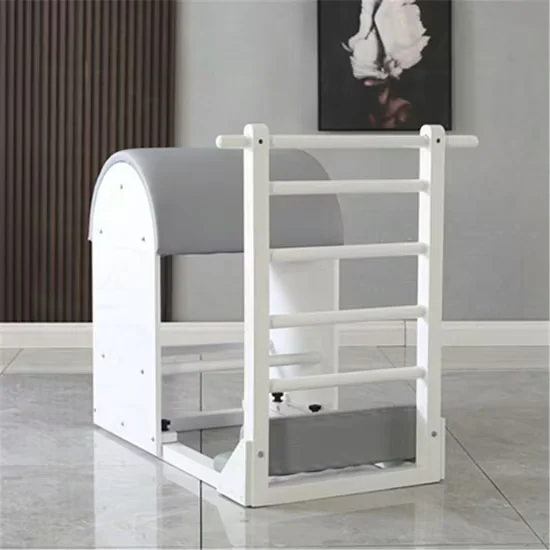
High-End Pilates Studios
Premium aesthetics meet quiet operation for boutique studio environments.

ISO
9001
CE
Certified
OEM
Available
10YR
Warranty
Pilates Reformer Pull Spring, 2.2×25×450mm, 1.2 kg — precision-wound with controlled heat treatment for consistent resistance curves and fatigue resistance under high-frequency commercial use. End hooks formed to minimize stress concentration, with corrosion-resistant surface coating for humid studio environments. Backed by a 3-year warranty and 100% load testing before shipment, with custom logo and color options available.
// Spec Highlights
• Direct from Manufacturer · No Middlemen · Worldwide Shipping
01
// Material
Imported Solid Wood
Premium hardwood frames sourced for density and visual warmth.
02
// Hardware
Medical-Grade Silent
Whisper-quiet pulleys and springs for clinical environments.
03
// Customization
Appearance OEM
Color, upholstery, and branding tailored to your studio.
04
// Service
Layout Design
Free venue planning for studios and rehab institutions.
Every component is selected for longevity, performance, and aesthetic harmony - from imported hardwood frames to silent medical-grade accessories.
// Features
Hook Integrity & Wire Traceability — Every spring wire is certified to the coil, with hook bends cycle-tested to eliminate micro-fracture failure points.
| Parameter | Value |
|---|---|
| Product Type | Pilates Reformer Accessory (Pull Spring) |
| Specification | 2.2×25×450mm |
| Net Weight | 1.2 kg |
| Color | Solid Color |
| Logo | Customized Is Allowed |
| Warranty | 3 Years |
| Age Group | Adult |
| Gender | Unisex |
| Facility Type | Typical Use |
|---|---|
| Commercial Pilates Studio | Daily reformer class spring replacement and resistance calibration |
| Hotel and Resort Fitness Center | Pilates zone maintenance and seasonal equipment refresh |
| Rehabilitation and Conditioning Center | Therapeutic reformer spring swap for patient-specific resistance |
| University Athletic Department | Pilates cross-training equipment upkeep for sports programs |
The hook bend is where every reformer spring eventually fails — and it is where manufacturing choices determine whether that failure happens in months or in years.
Most studio owners blame the rails when a carriage feels uneven. The real culprit is almost always asymmetric tension loss inside the spring itself. I once tore apart a reformer pull spring that had lost resistance after only a few months of daily classes and found micro-fractures radiating from the hook bend. The supplier had quoted stainless wire but delivered low-carbon steel with no proper heat treatment. When a commercial Pilates reformer pull spring replacement is sourced without verifying wire grain and hook forming process, the entire carriage system compensates for a failure that began at the manufacturing stage [NEED_CITE: spring wire fatigue classification under cyclic tensile loading].
A commercial Pilates reformer pull spring replacement serves as the primary resistance generator on reformer and Cadillac frames, directly governing the load felt during footwork, arm pulls, and spinal articulation sequences. In a studio layout, these springs are consumable components that require periodic rotation across stations to maintain uniform resistance profiles. They suit high-density facilities running multiple classes per day and accommodate the full range of adult user body weights without performance degradation. Proper resistance selection across spring sets ensures smooth progression for clients from introductory sessions through advanced programming.
A reformer in a busy studio may cycle through hundreds of extension and contraction repetitions daily, subjecting each commercial Pilates reformer pull spring replacement to sustained tensile fatigue loading. The hook bend experiences concentrated stress at the transition radius where the wire changes direction from coil to attachment loop. Inadequate heat treatment at this junction accelerates micro-crack propagation under repeated loading. Wire surface condition and coating integrity also matter — sweat and cleaning agents in studio environments promote corrosion at coil contact points, gradually reducing cross-sectional area and altering the resistance curve [NEED_CITE: corrosion fatigue interaction in carbon steel spring wire].
The 2.2mm wire diameter governs the spring’s baseline resistance output and its linearity across the full extension range. Tighter wire diameter tolerance ensures that springs within the same resistance category deliver consistent pull force, which is essential when clients move between reformers mid-class. Heat treatment — specifically controlled quenching and tempering — determines whether the wire grain structure can endure repeated elongation without permanent set. End hook forming must maintain a smooth bend radius; sharp transitions create stress risers that initiate fracture. The solid color finish and corrosion-resistant treatment protect against the humid, chemically cleaned environment typical of commercial Pilates spaces.
Low-carbon wire without proper tempering may look identical on a shelf but develops permanent elongation within weeks of commercial use. Once a spring loses its original resistance profile, instructors compensate by adding springs to the carriage, which increases carriage weight and alters movement feel for every exercise. Studios that source springs without wire certification often face cascading replacement cycles — swapping springs every few months instead of every few years. Hook fractures under load pose a direct safety risk to clients mid-exercise, creating liability exposure that far exceeds any per-unit savings on procurement [NEED_CITE: product liability standards for fitness equipment component failure].
Our manufacturing discipline applies to every component we produce. Steel sourcing is traceable to the coil, with wire material certificates available for every batch. End hook bends are formed under controlled tooling to maintain consistent bend radius and eliminate stress concentrations. Every spring undergoes cycle testing to verify resistance consistency before leaving the factory — not sample-based testing, but unit-level verification. The three-year warranty reflects confidence in wire grade and heat treatment process, covering the spring through years of daily commercial studio use. Custom logo options are available without compromising structural specifications.
Provide your current reformer count and daily class volume to receive a recommended spring rotation schedule and bulk order quantity. Specify the resistance levels needed across your reformer fleet so we can match wire specifications to each station’s typical programming. Share any branding requirements — custom logo or color — to confirm production lead time. For multi-site rollouts, share facility count and reformer model list to standardize spring inventory across locations.
Q: How do I know when a reformer spring needs replacement?
A: Check for visible elongation when the spring is at rest — if coils appear more spaced out than a new reference spring, permanent set has occurred. Listen for inconsistent resistance feedback during slow controlled pulls. Inspect the hook bend closely for any surface cracking or discoloration. Springs that feel noticeably lighter at full extension compared to their rated resistance should be removed from service immediately.
Q: What causes reformer pull springs to break prematurely?
A: The most common cause is low-carbon wire substituted for specified spring steel, combined with inadequate heat treatment at the hook bend. Micro-fractures develop at the hook transition radius under cyclic loading. Environmental corrosion from sweat and cleaning chemicals can also reduce wire cross-section over time. Manufacturing defects like sharp bend radii during hook forming create stress concentration points that accelerate fatigue failure.
Q: Can custom logo or color affect spring performance?
A: Logo application and color finishing are surface-level processes that do not alter the wire’s mechanical properties or heat treatment state. The coating is applied after coil winding and heat treatment are complete, so resistance curve and fatigue life remain unaffected. Custom branding is available across all resistance levels and can be matched to your studio’s visual identity without any specification compromise.
Q: How should we manage spring replacement across multiple reformers?
A: Assign each spring a tracking number and installation date. Rotate springs between high-use and low-use stations on a regular schedule to distribute fatigue evenly. Keep a documented inventory of resistance levels per station. Replace springs in matched sets rather than individually to maintain consistent carriage feel across your studio floor.
Q: What warranty coverage applies under commercial studio conditions?
A: The three-year warranty covers manufacturing defects including premature resistance loss, hook bend fracture, and coil deformation under normal commercial use conditions. Coverage applies when springs are installed on compatible reformer and Cadillac frames. Batch traceability through coil-level material certificates supports warranty claims. Contact us with your order reference and failure description to initiate a replacement.
Premium aesthetics meet quiet operation for boutique studio environments.
Medical-grade silence and precision for sports & postpartum recovery.
Furniture-grade craftsmanship for premium residential installations.
Compact premium setups for one-on-one and small-group training.
Aesthetic Pilates integration for hybrid wellness studio programming.
Multi-unit deployment with instructor-grade reliability for certification programs.
Tell us about your project. Our team will respond within 24 hours with pricing, customization options, and shipping details.
// Sales Director
William
+86 132 2531 1800
// Export Manager
Bella
+86 198 5412 8032
william@bickfit.com