
01 / Scenario
STUDIO
P
High-End Pilates Studios
Premium aesthetics meet quiet operation for boutique studio environments.
ISO
9001
CE
Certified
OEM
Available
10YR
Warranty
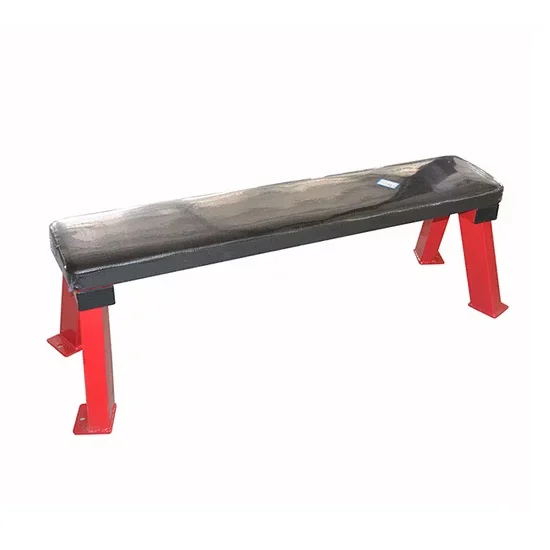
Plate Loaded Flat Bench Machine, Steel Frame, Plate Loaded Chest Press — engineered with industrial-grade steel tubing and robotic MIG continuous welding to eliminate stress concentration points common in spot-welded frames. The plate-loaded system removes guide rod binding issues typical of selectorized units, ensuring smooth operation under heavy off-center loads. Every unit undergoes individual load testing before shipment to verify structural integrity for high-traffic commercial environments.
// Spec Highlights
• Direct from Manufacturer · No Middlemen · Worldwide Shipping
01
// Material
Imported Solid Wood
Premium hardwood frames sourced for density and visual warmth.
02
// Hardware
Medical-Grade Silent
Whisper-quiet pulleys and springs for clinical environments.
03
// Customization
Appearance OEM
Color, upholstery, and branding tailored to your studio.
04
// Service
Layout Design
Free venue planning for studios and rehab institutions.
Every component is selected for longevity, performance, and aesthetic harmony - from imported hardwood frames to silent medical-grade accessories.
// Features
Traceable Mill Steel — Every tube in this plate loaded flat bench traces back to the producing steel coil, eliminating the guesswork behind vague "commercial grade" claims.
| Parameter | Value |
|---|---|
| Product Type | Plate Loaded Flat Bench Machine |
| Loading Type | Plate loaded |
| Frame Steel | 11-gauge, 3×3 inch tube |
| Steel Grade | Q235 / Q345 industrial steel, mill-certified |
| Welding Type | Robotic MIG, continuous weld lines |
| Product Dimensions | 1295 × 595 × 457 mm |
| Powder Coating | 200 μm scratch-resistant, sandblast pre-treated |
| Upholstery | Standard or high-density options |
| Main Frame Color | Customizable |
| Cushion Color | Customizable |
| OEM/ODM | Acceptable |
| Production Capacity | 500 PCS/Month |
| Certification | ISO 9001, CE |
| Warranty | 10-year frame |
| Facility Type | Typical Use |
|---|---|
| Commercial gym strength floor | High-traffic flat press station in the free weight zone |
| Hotel and resort fitness center | Durable chest training point built for unattended daily use |
| University strength and conditioning room | Heavy barbell bench work for athletic development programs |
| CrossFit box functional zone | Flat pressing accessory work alongside rig-based training |
| Rehabilitation and performance center | Controlled chest loading with stable, non-rocking base contact |
The wall thickness decides whether the frame holds geometry or slowly bows under repeated off-center plates.
Many benches marketed as "commercial" never disclose actual tube gauge. The frame might look heavy in photos, but once a lifter loads uneven plates or drops the bar onto the uprights, thin-wall tubing begins to deflect at the upright-to-base junction. Over months of daily gym traffic, that micro-deflection compounds into visible warping, and spot-welded joints crack before the steel itself fails [NEED_CITE: weld classification and fatigue performance in structural steel]. A commercial plate loaded flat bench machine that cannot hold its upright alignment forces spotters to compensate for geometry drift, which is a liability no gym owner wants to manage.
A plate loaded flat bench machine anchors the horizontal pressing station in any serious strength zone. It pairs directly with plate loaded incline and decline benches to cover the full pressing plane, and sits adjacent to dumbbell racks for accessory work. The low profile and fixed back angle suit lifters across a wide height range without requiring adjustment mechanisms that introduce play. In high-density gym floors, the compact footprint leaves clearance for spotters and plate storage without crowding neighboring stations.
Flat bench pressing generates concentrated downward force through the uprights and lateral torque when a lifter unracks unevenly. Each rep sends an impact pulse through the weld where the upright meets the base frame, which is exactly where spot welds fail first. Under eight or more hours of daily commercial use, these micro-impacts accumulate into fatigue cycles that only continuous weld lines can absorb without cracking [NEED_CITE: EN 957 structural requirements for stationary training equipment]. The upholstery endures repeated compression from lifter bodyweight plus barbell load transfer, and the powder coating at upright contact points faces abrasion from knurled bar sleeves and dropped plates.
The 3×3 inch 11-gauge tube cross-section provides the bending resistance needed when plates load unevenly on one side of the bar. Robotic MIG welding produces continuous bead lines along every joint rather than intermittent tack points, distributing stress across the full seam length. The 200 μm powder coating, applied over sandblast pre-treatment, resists chipping at the high-contact zones where bar sleeves scrape the uprights during racking. High-density upholstery options maintain pad firmness through thousands of compression cycles, whereas low-density foam bottoms out and exposes the support board within months in busy facilities.
Thin-wall tubing on a flat bench might survive light home use, but in a commercial gym it deforms at the upright base within the first year of heavy traffic. Spot welds that pass a visual inspection still concentrate stress at discrete points, and once a crack propagates through a weld, the entire joint becomes a structural liability. Non-industrial powder coating chips at contact points within months, exposing bare steel to sweat and humidity that accelerates corrosion. Low-density cushion inserts compress permanently and split at the seams, forcing replacement orders that take the bench out of service repeatedly.
The 11-gauge frame steel carries a mill certificate traceable to the producing coil, so there is no ambiguity about what supports the lifter. Robotic MIG continuous welds eliminate the spot-weld weak points that crack under repeated unracking impacts. Every unit undergoes individual load testing before crating rather than relying on batch sampling. The 200 μm industrial powder coating survives knurled bar contact and cleaning chemicals without exposing bare metal. A 10-year frame warranty and 2D-3D CAD layout support ensure this commercial plate loaded flat bench machine fits the strength zone with proper safety clearances on all sides.
Provide your strength floor dimensions and current equipment list to receive a 2D or 3D layout showing this bench with correct safety clearances. Specify expected daily user volume so the structural grade matches your traffic pattern. Confirm the height range of your primary user base to verify the fixed pad geometry covers your membership. Share any color, logo, or upholstery customization requirements for OEM production.
Q: How do I tell a true commercial flat bench from a light-commercial one?
A: Request the actual tube gauge and wall thickness from the supplier. Light-commercial benches often use thinner steel with spot-welded joints. A genuine commercial plate loaded flat bench machine uses 11-gauge or heavier tubing with continuous weld lines and provides mill certificates to verify the steel specification.
Q: Does steel gauge really matter that much on a flat bench?
A: Yes. Thinner tubing deflects under off-center plate loading, which shifts the bar path and stresses the weld joints. Heavier gauge steel holds its geometry through thousands of loading cycles, preventing the upright creep and joint fatigue that force early replacement in busy gym environments.
Q: Should I choose plate loaded or selectorized for the flat press station?
A: Plate loaded benches suit facilities where users load their own plates and prefer raw barbell feel. Selectorized versions offer quick weight changes but add guide rods and cable systems requiring more maintenance. High-traffic strength floors typically deploy plate loaded units for durability and lower long-term service needs.
Q: How should I space flat benches in the strength area?
A: Plan enough lateral clearance between adjacent benches for a spotter to stand and move freely, plus rear clearance for plate loading and unloading. Request a CAD layout from the manufacturer that accounts for the exact footprint and local safety standards before finalizing floor placement.
Premium aesthetics meet quiet operation for boutique studio environments.
Medical-grade silence and precision for sports & postpartum recovery.
Furniture-grade craftsmanship for premium residential installations.
Compact premium setups for one-on-one and small-group training.
Aesthetic Pilates integration for hybrid wellness studio programming.
Multi-unit deployment with instructor-grade reliability for certification programs.
Tell us about your project. Our team will respond within 24 hours with pricing, customization options, and shipping details.
// Sales Director
William
+86 132 2531 1800
// Export Manager
Bella
+86 198 5412 8032
william@bickfit.com


