01 / Scenario
STUDIO
P
High-End Pilates Studios
Premium aesthetics meet quiet operation for boutique studio environments.

ISO
9001
CE
Certified
OEM
Available
10YR
Warranty
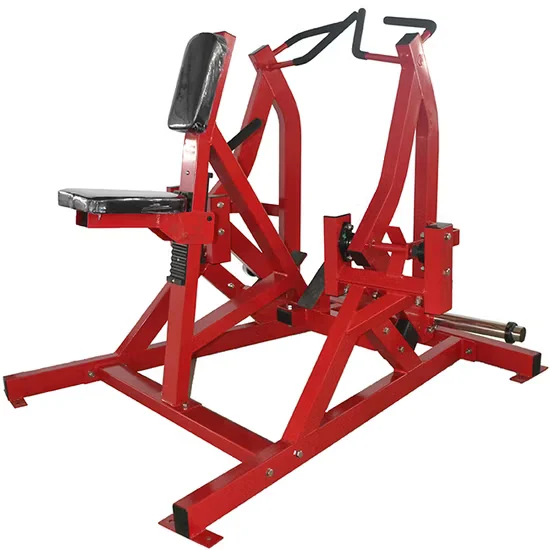
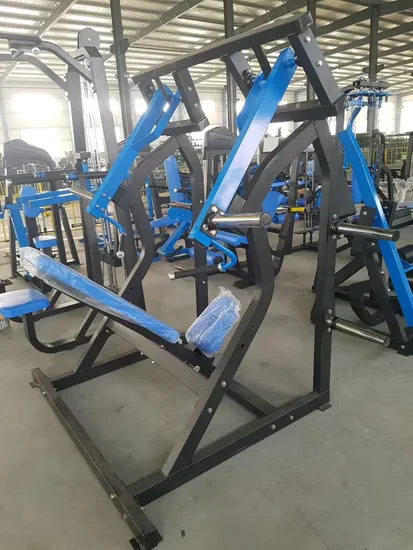
Plate Loaded Chest Press Machine, 2000×1150×1150mm, 78kg Net Weight — engineered with 3×3 inch frame steel and robotic MIG continuous welding to eliminate cold joints under cyclic loading. Sealed industrial bearings and 200μm scratch-resistant powder coating ensure lasting performance in high-traffic environments. Every unit undergoes individual load testing before shipment, backed by a 10-year frame warranty and free floor planning support.
// Spec Highlights
• Direct from Manufacturer · No Middlemen · Worldwide Shipping
01
// Material
Imported Solid Wood
Premium hardwood frames sourced for density and visual warmth.
02
// Hardware
Medical-Grade Silent
Whisper-quiet pulleys and springs for clinical environments.
03
// Customization
Appearance OEM
Color, upholstery, and branding tailored to your studio.
04
// Service
Layout Design
Free venue planning for studios and rehab institutions.
Every component is selected for longevity, performance, and aesthetic harmony - from imported hardwood frames to silent medical-grade accessories.
// Features
Structural Load Verification — Every plate loaded chest press unit is load-tested individually before leaving the factory, eliminating sample-batch guesswork from your equipment procurement.
| Parameter | Value |
|---|---|
| Product Type | Plate Loaded Chest Press Machine |
| Loading Type | Plate loaded |
| Exercise Part | Chest |
| Frame Steel | 11-gauge, 3×3 inch tube |
| Steel Grade | Q235 and Q345 industrial steel, mill-certified |
| Welding Type | Robotic MIG continuous weld |
| Load Capacity | Tested beyond 500kg |
| Bearing Type | Sealed industrial bearings |
| Pulley System | Aircraft-cable pulley system |
| Upholstery | Available in standard or high-density options |
| Powder Coating | Sandblast plus 200μm scratch-resistant finish |
| Product Dimensions | 2000×1150×1150mm |
| Certification | ISO 9001, CE |
| Warranty | 10-year frame warranty |
| Color Options | Main frame and cushion color according to customer requirements |
| OEM/ODM | Acceptable |
| Assembly State | Unfolded |
| Power Source | Manual |
| Facility Type | Typical Use |
|---|---|
| Commercial gym strength floor | Primary chest pressing station in high-traffic plate loaded zones |
| Hotel and resort fitness center | Durable chest training option for diverse guest populations |
| University strength and conditioning room | Athletic team pressing work with heavy plate loading capacity |
| Professional fitness club | Serious lifters requiring stable pressing mechanics under load |
| Rehabilitation and performance center | Controlled chest movement patterns for return-to-training protocols |
Continuous robotic MIG welding eliminates the cold joints that crack under repeated heavy pressing.
Walk into any aging commercial gym and inspect the weld points on plate loaded equipment. The first failures almost always appear at spot-welded junctions where the pressing arm connects to the main frame. Each rep of a heavy chest press transmits cyclic loading directly through those connection points, and a spot weld creates a discrete stress concentration rather than distributing force along the joint [NEED_CITE: weld classification and fatigue performance in structural steel facilities]. Over months of high-traffic use, microfractures propagate from these localized points until visible cracking appears — long before the steel tube itself reaches its deformation threshold.
This plate loaded chest press targets the horizontal pressing movement pattern, engaging the pectoralis major with secondary involvement of the anterior deltoids and triceps. In a commercial gym strength zone, it pairs logically with incline and decline pressing stations to cover the full range of chest development angles. The equipment suits high-density training floors where lifters load and unload plates frequently throughout operating hours. The converging pressing arc accommodates users across a broad range of torso lengths and shoulder widths without requiring seat or pad adjustments between sets.
A commercial plate loaded chest press machine in a busy gym endures hundreds of pressing cycles daily, each one transmitting ground-reaction forces through the arm pivot, the seat support bracket, and the main vertical frame member. The load profile combines static stress from loaded plates at rest with dynamic impact when users drop weight onto the pegs between sets. Weld junctions at the pressing arm pivot and the base stabilizer cross-member experience the highest cyclic fatigue demand [NEED_CITE: EN 957 structural requirements for stationary training equipment]. Sealed industrial bearings at the pivot axis prevent the play and rattle that develop in unsealed bushings after months of sweat and chalk dust exposure. The contact points where plates meet the storage pegs and where the user grips the handles experience the most coating abrasion over time.
The 11-gauge frame tube with a 3×3 inch cross-section determines how much deflection occurs when the pressing arms carry maximum plate load. Thicker-walled tubing resists bending deformation at the arm pivot, keeping the pressing path consistent even when a lifter loads asymmetrically or shifts body position mid-set. Robotic MIG continuous welding produces uniform penetration depth along the entire joint length, avoiding the incomplete fusion zones that manual spot welding leaves at start-stop points. The 200μm powder coating applied over sandblasted steel provides a scratch-resistant barrier that withstands daily contact with iron plates, sweat residue, and commercial cleaning agents without exposing bare metal to corrosion. Sealed bearings eliminate the maintenance schedule that open bushings demand in dusty, high-humidity gym environments.
A facility buyer comparing two visually similar plate loaded chest stations might not notice that one uses 14-gauge tube instead of 11-gauge until the pressing arms begin to deflect noticeably under heavy loads. Spot-welded junctions that pass a visual factory inspection still develop propagating cracks within the first year of commercial use, creating liability exposure when structural failure occurs during a loaded set. Non-sealed bearings develop rotational play that makes the pressing arc feel loose and inconsistent, prompting member complaints and eventual bearing replacement downtime [NEED_CITE: bearing failure modes in high-cycle commercial fitness equipment]. Low-density upholstery compresses permanently within months of daily use, leaving visible deformation that signals neglect to prospective members touring the facility. Undersized powder coating chips at plate contact points, allowing sweat and humidity to initiate corrosion on exposed steel surfaces.
The 11-gauge steel frame with mill-certified coil traceability means you can verify material origin rather than accepting vague "commercial grade" claims. Robotic MIG continuous welding on every junction eliminates the spot-weld cracking that plagues high-traffic pressing stations. Every unit undergoes individual load testing before shipment, providing documented proof that this specific machine — not just a sample from the production run — meets the 500kg structural verification threshold. The 200μm industrial powder coating applied after sandblast preparation resists the chipping and corrosion that degrade equipment appearance in humid gym environments. A 10-year frame warranty on the chest press structure reduces long-term capital replacement planning. Floor planning CAD support ensures correct equipment spacing, accounting for plate loading clearance and safe passage between stations in your specific facility layout [NEED_CITE: commercial gym floor layout and safety clearance standards].
Provide your strength floor dimensions and existing equipment list to receive a 2D or 3D layout showing this plate loaded chest press positioned with correct safety clearances for plate handling traffic. Specify your estimated daily user volume so we can confirm the structural grade matches your operational demand. Indicate the body type range of your primary user population to verify the pressing arc and seat geometry accommodate your members without modification. Detail any custom requirements including frame color, upholstery material, or logo placement to receive accurate lead time and quotation.
Q: How do I distinguish genuine commercial-grade plate loaded equipment from light-commercial alternatives?
A: Request the specific steel gauge and tube dimensions with mill certification rather than accepting "commercial grade" marketing language. Inspect the welding type — continuous robotic MIG welds indicate structural commitment, while visible spot welds at junctions signal cost reduction. Ask whether load testing covers every unit or only production samples. Verify the powder coating thickness specification and warranty duration on the frame structure.
Q: What is the relationship between 11-gauge steel and load capacity on a plate loaded chest press?
A: The 11-gauge tube wall thickness combined with the 3×3 inch cross-section determines how much the frame resists bending deformation when pressing arms carry maximum plate load. Thinner gauge steel deflects more under identical weight, creating a pressing path that feels unstable at heavy loads. Mill-certified steel with documented Q235 or Q345 grade provides verifiable structural performance rather than unspecified material claims.
Q: How does plate loaded chest pressing differ from selectorized chest press in a commercial setting?
A: Plate loaded stations allow users to increment load beyond fixed weight stack limits, accommodating advanced lifters who exceed standard pin-select ranges. The loading and unloading process requires more floor space around the equipment for safe plate handling traffic. Selectorized machines offer faster weight changes and occupy a fixed footprint, but their cable and pulley systems introduce maintenance requirements that plate loaded pivot designs avoid entirely.
Q: What floor spacing should I plan around a plate loaded chest press machine?
A: The equipment footprint of 2000×1150×1150mm must be supplemented with clearance zones on both sides for users loading and removing plates from the storage pegs. A minimum passage width between adjacent stations prevents traffic conflicts during peak hours. Providing a 2D or 3D floor plan to your equipment supplier enables precise layout recommendations that account for actual plate handling movement patterns in your specific room geometry.
Premium aesthetics meet quiet operation for boutique studio environments.
Medical-grade silence and precision for sports & postpartum recovery.
Furniture-grade craftsmanship for premium residential installations.
Compact premium setups for one-on-one and small-group training.
Aesthetic Pilates integration for hybrid wellness studio programming.
Multi-unit deployment with instructor-grade reliability for certification programs.
Tell us about your project. Our team will respond within 24 hours with pricing, customization options, and shipping details.
// Sales Director
William
+86 132 2531 1800
// Export Manager
Bella
+86 198 5412 8032
william@bickfit.com