01 / Scenario
STUDIO
P
High-End Pilates Studios
Premium aesthetics meet quiet operation for boutique studio environments.

ISO
9001
CE
Certified
OEM
Available
10YR
Warranty
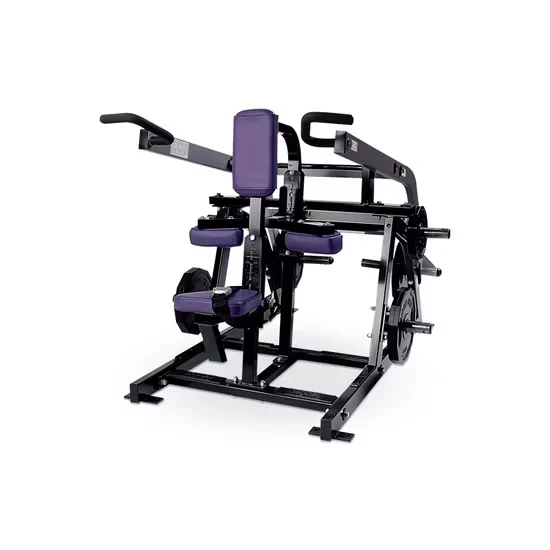
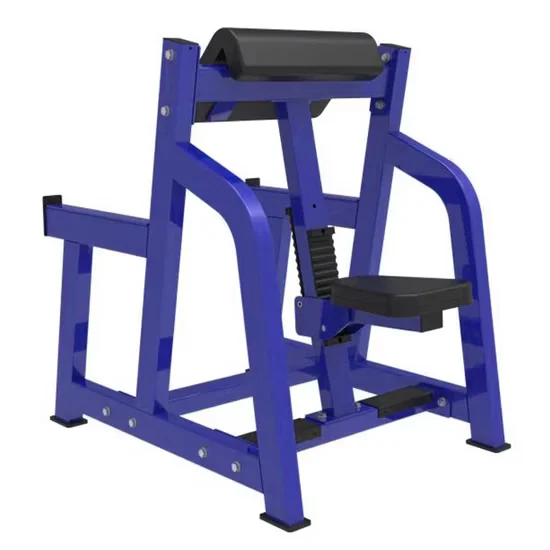
Plate Loaded Seated Triceps Extension, 1355×1330×1410mm, 90kg Net Weight — built with 3×3 inch frame steel and sealed industrial bearings for smooth cable trajectory under heavy loading. Robotic MIG welding ensures continuous weld lines with no cold joints, while plate-loaded design eliminates weight stack guide rod binding. ISO 9001 and CE certified, with every unit load-tested before shipment and 10-year frame warranty backed by floor planning support.
// Spec Highlights
• Direct from Manufacturer · No Middlemen · Worldwide Shipping
01
// Material
Imported Solid Wood
Premium hardwood frames sourced for density and visual warmth.
02
// Hardware
Medical-Grade Silent
Whisper-quiet pulleys and springs for clinical environments.
03
// Customization
Appearance OEM
Color, upholstery, and branding tailored to your studio.
04
// Service
Layout Design
Free venue planning for studios and rehab institutions.
Every component is selected for longevity, performance, and aesthetic harmony - from imported hardwood frames to silent medical-grade accessories.
// Features
Steel Coil Traceability — Every tube on this seated triceps extension traces back to its mill certificate, because frame rigidity under eccentric load starts at the furnace, not the factory floor.
| Parameter | Value |
|---|---|
| Product Type | Plate Loaded Triceps Extension Machine |
| Exercise Part | Tricep |
| Frame Steel Gauge | 11-gauge |
| Frame Tube Size | 3×3 inch |
| Steel Grade | Q235 / Q345 industrial steel, mill-certified |
| Welding Type | Robotic MIG, continuous weld lines |
| Loading Type | Plate loaded |
| Bearing Type | Sealed industrial bearings |
| Pulley System | Aircraft-cable pulley system |
| Upholstery | Standard or high-density options available |
| Powder Coating | 200μm scratch-resistant, sandblast pre-treated |
| Product Dimensions | 1355 × 1330 × 1410 mm |
| Net Weight | 90 kg |
| Certification | ISO 9001, CE |
| Warranty | 10-year frame |
| Facility Type | Typical Use |
|---|---|
| Commercial gym strength floor | High-frequency member use in dedicated plate loaded zones |
| Professional fitness club | Isolation work for trained members seeking precise triceps loading |
| Hotel fitness center | Durable single-station addition for space-constrained strength areas |
| University strength and conditioning room | Auxiliary arm work for collegiate athletes in rotation circuits |
| Community fitness center | Multi-user durability with low daily maintenance requirements |
Thicker walls resist the rotational torque that cracks lighter frames at the pivot weld.
Most suppliers quote "commercial grade" tubing for plate loaded triceps machines without publishing wall thickness or steel grade. Under repeated off-axis loading — a common failure mode when users push through unilateral pressing patterns — thin-wall tubing develops micro-cracks at the pivot junction within the first year of heavy rotation. We specify 11-gauge Q235/Q345 steel with mill certificates traceable to the coil, so the deformation threshold stays well above anything a loaded horn can generate. [NEED_CITE: EN 957 structural requirements for stationary training equipment]
This commercial plate loaded seated triceps extension targets the elbow extension plane, isolating all three heads of the triceps brachii with minimal shoulder involvement. On a strength floor layout, it pairs naturally with plate loaded biceps curls and overhead press stations to complete an upper-arm auxiliary circuit. The seated, fixed-path design accommodates a wide range of torso sizes without requiring seat-swap adjustments between users, making it suitable for high-turnover facilities where dwell time per station needs to stay short.
The dominant load path runs from the plate horns through the lever arm and into the main pivot weld, where eccentric torque concentrates during the negative phase of each rep. In a facility running 12+ hours daily, this weld zone sees thousands of stress cycles per week, which is exactly where spot welds begin to propagate fatigue cracks. Robotic MIG continuous welds distribute that stress across a longer bead with no cold-joint interruptions. Sealed bearings at the pivot prevent dust and sweat ingress that accelerates play, and the 200μm powder coating resists chipping at the horn contact points where plates are repeatedly loaded and unloaded. [NEED_CITE: weld classification and fatigue performance in structural steel]
The 3×3 inch frame section with 11-gauge walls sets the bending resistance of the main upright. When a user loads heavy plates and pushes through the lockout, the lever arm transmits that force as rotational stress into the upright junction — thicker walls delay deflection and keep the movement path stable. Continuous robotic MIG welds eliminate the cold-joint weak points that spot welds leave between passes, which matters because a single unfused root can propagate under cyclic loading. The aircraft-cable pulley system pairs with sealed bearings to keep the return stroke smooth without the lateral play that unsealed bushings develop after months of chalk and sweat exposure.
Swapping 11-gauge tubing for thinner walls saves material cost upfront, but under heavy unilateral pressing the upright begins to flex, shifting the lever arm geometry and changing the resistance curve the user feels. Spot welds that pass a visual QC check can still harbor incomplete fusion at the root, and when that junction is subjected to daily eccentric loading the crack propagates until the weld fails. Non-sealed bearings develop lateral play within months, requiring maintenance visits that pull the station offline. Thin powder coatings chip at the plate horn contact zone, exposing bare steel to sweat and cleaning chemicals that start corrosion cycles long before the frame itself is structurally exhausted. [NEED_CITE: powder coating thickness and corrosion resistance in fitness equipment environments]
The 11-gauge frame steel with traceable mill certification means the tube you see on the floor matches the spec sheet you approved. Robotic MIG continuous welds are applied to every pivot junction on this plate loaded seated triceps extension, not just the visible faces. Every unit is load tested before crating — not sampled from a batch — so the machine that ships is the machine that was verified. The 200μm industrial powder coating over sandblast pre-treatment holds up against daily plate contact and commercial cleaning agents. A 10-year frame warranty backs the structural investment, and our 2D-3D CAD layout support ensures this station’s 1355 × 1330 mm footprint is placed with proper clearance for safe loading and passage.
Share your strength floor square footage and current equipment list so we can generate a 2D-3D layout with this station placed at proper clearance. Tell us the average daily user volume to confirm the structural grade matches your rotation demands. Specify the primary user demographic so we can verify the seat geometry covers the expected body-type range. Note any custom requirements — frame color, logo placement, or upholstery density — so we quote the full build.
Q: How do I verify that a plate loaded triceps extension actually meets commercial structural standards?
A: Request the supplier’s mill certificate for the frame steel, confirming gauge and grade rather than accepting "commercial grade" as a description. Ask whether each unit is individually load tested before shipment or only sampled from a production batch. Verify the welding process — continuous MIG welds resist fatigue cracking far better than spot welds under daily eccentric loading cycles.
Q: What is the relationship between frame tube gauge and the load capacity of this machine?
A: The wall thickness and cross-section of the frame tube determine how much rotational force the pivot junction can absorb before flexing. An 11-gauge tube with a 3×3 inch profile resists the bending torque generated during heavy triceps extension reps, keeping the lever arm geometry stable and the movement path consistent throughout the range of motion.
Q: Why choose plate loaded over selectorized for a triceps isolation station?
A: Plate loaded stations allow users to increment loading in small plate steps without being limited by a pin-select stack ceiling. They also have fewer moving parts — no weight stack guide rods or cable-return springs — which reduces long-term maintenance in high-traffic environments where uptime between service visits matters to daily operations.
Q: What spacing should I plan between this station and adjacent equipment on the strength floor?
A: The 1355 × 1330 mm footprint requires clearance on both sides for safe plate loading and user passage. Request a 2D-3D CAD layout from the supplier to verify that adjacent stations, walkways, and plate storage racks maintain safe operational distances per EN 957 clearance guidelines for stationary training equipment.
Premium aesthetics meet quiet operation for boutique studio environments.
Medical-grade silence and precision for sports & postpartum recovery.
Furniture-grade craftsmanship for premium residential installations.
Compact premium setups for one-on-one and small-group training.
Aesthetic Pilates integration for hybrid wellness studio programming.
Multi-unit deployment with instructor-grade reliability for certification programs.
Tell us about your project. Our team will respond within 24 hours with pricing, customization options, and shipping details.
// Sales Director
William
+86 132 2531 1800
// Export Manager
Bella
+86 198 5412 8032
william@bickfit.com