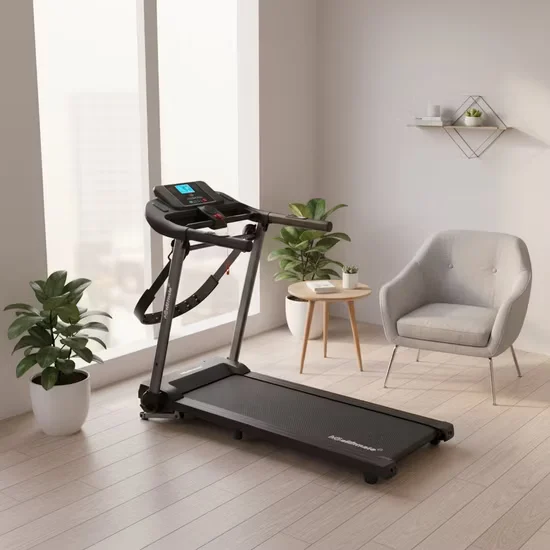
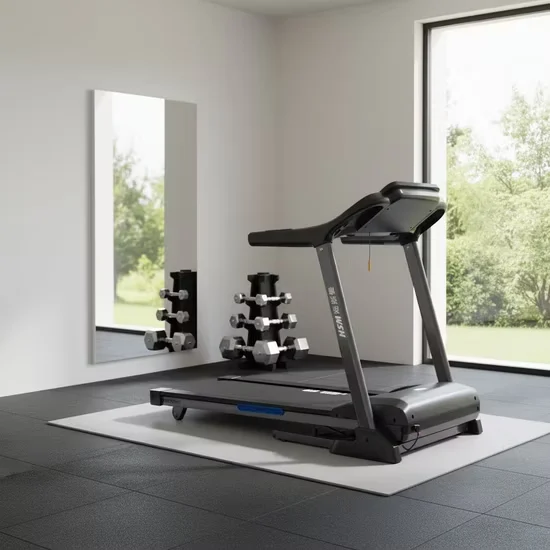
01 / Scenario
STUDIO
P
High-End Pilates Studios
Premium aesthetics meet quiet operation for boutique studio environments.

ISO
9001
CE
Certified
OEM
Available
10YR
Warranty
Walking Treadmill, 1000×400 mm Running Surface, 1-6 km/h Speed Range — engineered with a compact 1250×520×125 mm footprint, integrated transport wheels, and a 6-program LED console for controlled daily cardio. Remote control operation and CE/RoHS compliance ensure reliable performance in home and light commercial environments. Every unit undergoes six-stage quality inspection before shipment to guarantee consistent build quality.
// Spec Highlights
• Direct from Manufacturer · No Middlemen · Worldwide Shipping
01
// Material
Imported Solid Wood
Premium hardwood frames sourced for density and visual warmth.
02
// Hardware
Medical-Grade Silent
Whisper-quiet pulleys and springs for clinical environments.
03
// Customization
Appearance OEM
Color, upholstery, and branding tailored to your studio.
04
// Service
Layout Design
Free venue planning for studios and rehab institutions.
Every component is selected for longevity, performance, and aesthetic harmony - from imported hardwood frames to silent medical-grade accessories.
// Features
Precision-Belt Tracking Under Continuous Load — The 1000×400 mm running deck maintains alignment through a calibrated roller system, verified across thousands of walking cycles before shipment.
| Parameter | Value |
|---|---|
| Product Type | Walking Treadmill |
| Model | W04H1 |
| Running Surface | 1000×400 mm |
| Walking Speed | 1–6 km/h |
| Maximum Speed | <15 km/h |
| Product Dimensions (Unfolded) | 1250×520×125 mm |
| Folded State | Unfolded (non-folding) |
| LED Display | Speed / Distance / Time / Calories |
| Preset Programs | 6 |
| Remote Control | Yes |
| Transport Wheels | Yes |
| Certification | CE, RoHS |
| Color Options | Multicolor available |
| Facility Type | Typical Use |
|---|---|
| Home fitness rooms | Daily walking and light cardio routines |
| Corporate wellness areas | Low-impact movement breaks and walking meetings |
| Rehabilitation clinics | Controlled gait training and recovery protocols |
| Apartment building gyms | Compact cardiovascular equipment for shared spaces |
| Hotel fitness centers | Guest-accessible walking equipment for light exercise |
Many compact treadmills advertise "commercial-grade" construction without disclosing belt tension calibration, deck material, or roller bearing specifications — leaving buyers to discover slippage, tracking drift, and motor strain only after months of daily use.
A 1000×400 mm deck with a segmented 1–6 km/h walking range demands precise belt-to-deck friction matching and hall-sensor calibration to maintain consistent speed feedback under varying user weights.
In our experience, walking treadmills that cut corners on belt encoder accuracy produce speed readouts that drift by noticeable margins within the first few hundred hours — a problem that compounds when users rely on distance and calorie metrics for rehabilitation or fitness tracking [NEED_CITE: hall-sensor calibration standards for motorized treadmill speed accuracy]. The remote control walking treadmill with transport wheels in the W04H1 configuration addresses this through a dedicated controller board that separates walking-speed torque management from the peak motor capacity, reducing thermal buildup during extended low-speed sessions.
This walking treadmill occupies a narrow 1250×520 mm footprint, making it suitable for cardiovascular zones where floor density matters. The 1–6 km/h walking range serves users who need low-impact movement rather than running-specific training, complementing higher-speed treadmills or air bikes in mixed-use facilities. The remote control walking treadmill with transport wheels integrates into apartment gyms, office wellness rooms, and rehabilitation settings where noise and space constraints limit equipment choices. The 1000×400 mm deck accommodates average adult stride lengths for walking gait patterns without overreaching.
Walking imposes a different stress profile than running — lower peak impact per step, but significantly higher cycle counts over the same session duration. The belt, deck, and roller bearings experience continuous friction-based wear rather than shock loading, meaning material selection and lubrication sealing matter more than raw impact resistance. Transport wheel pivot joints face repeated tilting forces when the unit is repositioned, a common failure point on units where the base frame lacks reinforcement at the tilt axis. The motor controller board must sustain thermal cycling between idle standby and sustained walking-load operation without capacitor degradation [NEED_CITE: motor controller thermal cycling endurance in light-duty treadmill applications].
The 1000×400 mm running surface directly determines which user heights can walk comfortably without stride restriction — decks shorter than 1000 mm force shorter-stride users to alter their natural gait, increasing joint fatigue over time. The segmented speed range (1–6 km/h walking, <15 km/h peak) reflects a controller board designed to optimize torque delivery at low RPM rather than a general-purpose motor, which improves efficiency and reduces heat generation during prolonged walking use. Transport wheel integration requires the base frame to handle concentrated load at the tilt pivot — units that omit reinforcement at this joint develop cracks after repeated repositioning on hard floors. The 6-program LED console relies on hall-sensor calibration for speed and distance accuracy, where sensor placement relative to the motor shaft determines long-term readout consistency.
Belt decks that omit cushioning layers transfer repetitive impact directly to user joints — a trade-off that reduces manufacturing cost but increases complaint rates in residential and clinical settings. Non-sealed roller bearings in walking treadmills accumulate dust and lint from household environments, accelerating wear and producing audible noise within months. Thin-gauge base frames that integrate transport wheels without reinforcement at the pivot point develop hairline cracks that propagate under repeated tilting, eventually rendering the wheels unusable. Remote control pairing modules that lack shielding experience interference from nearby electronics, causing unresponsive speed adjustments during use [NEED_CITE: bearing seal classification for dust-contaminated indoor environments].
The W04H1 walking treadmill undergoes individual unit testing before shipment, verifying belt tracking, speed accuracy, and remote control responsiveness rather than relying on batch sampling. The 1250×520×125 mm footprint is factored into 2D-3D floor planning support, ensuring adequate clearance around the unit for safe mounting and dismounting in compact gym layouts. CE and RoHS certification confirms compliance with European safety and environmental standards for electrical fitness equipment. OEM private label options allow facility operators to match branding across a unified equipment fleet. The remote control walking treadmill with transport wheels ships with transport wheels pre-installed and tested for pivot durability, reducing on-site assembly variables.
Provide your available cardio zone dimensions and target equipment list to receive a 2D-3D layout with clearance verification for the remote control walking treadmill with transport wheels. Specify expected daily usage hours and user weight range so the structural configuration can be matched accordingly. Indicate any OEM requirements including color customization, branding placement, or console language preferences for bulk procurement.
Q: What motor power is needed for continuous walking versus occasional jogging use?
A: Walking treadmills operating at 1–6 km/h require lower continuous torque than running models, allowing a motor optimized for sustained low-RPM output rather than peak horsepower. The controller board in this unit separates walking-speed management from the <15 km/h peak capacity, reducing thermal stress during extended daily walking sessions and extending motor brush and bearing service intervals.
Q: How does running belt length affect stride comfort and user height compatibility?
A: The 1000×400 mm running surface accommodates natural walking stride lengths for most adult users without forcing gait modification. Decks shorter than 1000 mm cause shorter-stride users to subconsciously reduce step length, which increases hip flexor fatigue over sessions exceeding twenty minutes. Users above average height may find the 1000 mm length adequate for walking but insufficient for jogging transitions.
Q: What maintenance does a walking treadmill require compared to a full commercial treadmill?
A: Walking treadmills experience lower peak impact but higher cycle counts, meaning belt tension, roller bearing condition, and deck surface friction require regular attention. Transport wheel pivot joints need periodic inspection for cracks from repeated tilting. Belt lubrication intervals follow the installation manual schedule, and the LED console sensors should be verified for accuracy if distance or calorie readings appear inconsistent over time.
Q: Are transport wheels durable enough for daily repositioning on hard floors?
A: The transport wheel pivot joint on this unit is reinforced at the base frame to resist cracking under repeated tilting and rolling. Wheels are designed for hard, flat indoor surfaces — use on uneven or threshold-heavy floors accelerates pivot wear. The remote control walking treadmill with transport wheels should be tilted and rolled with the motor end raised to distribute load correctly through the reinforced joint.
Q: What is the noise level during operation in apartment or office environments?
A: The walking speed range of 1–6 km/h produces lower motor RPM and belt noise than running-speed treadmills, making this unit suitable for noise-sensitive residential and office settings. Roller bearing condition and belt tension directly affect operational sound levels — proper maintenance per the installation manual keeps noise within acceptable limits for shared-wall and open-plan environments.
Premium aesthetics meet quiet operation for boutique studio environments.
Medical-grade silence and precision for sports & postpartum recovery.
Furniture-grade craftsmanship for premium residential installations.
Compact premium setups for one-on-one and small-group training.
Aesthetic Pilates integration for hybrid wellness studio programming.
Multi-unit deployment with instructor-grade reliability for certification programs.
Tell us about your project. Our team will respond within 24 hours with pricing, customization options, and shipping details.
// Sales Director
William
+86 132 2531 1800
// Export Manager
Bella
+86 198 5412 8032
william@bickfit.com