01 / Scenario
STUDIO
P
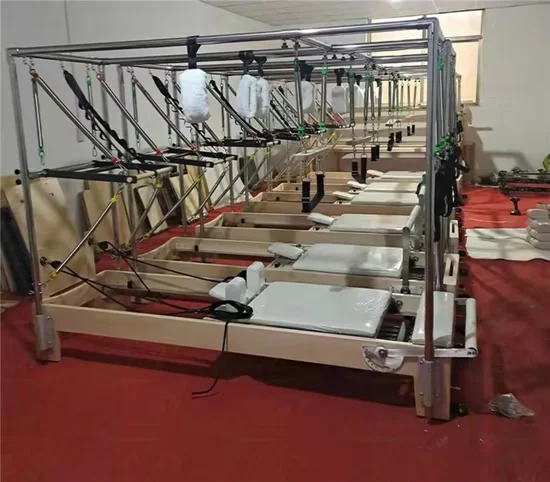
High-End Pilates Studios
Premium aesthetics meet quiet operation for boutique studio environments.
ISO
9001
CE
Certified
OEM
Available
10YR
Warranty
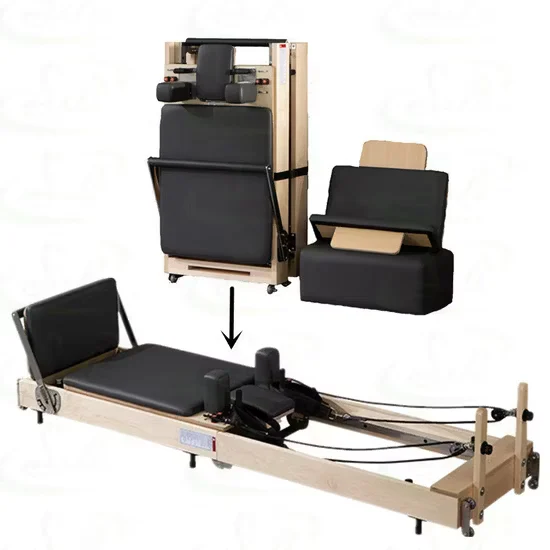
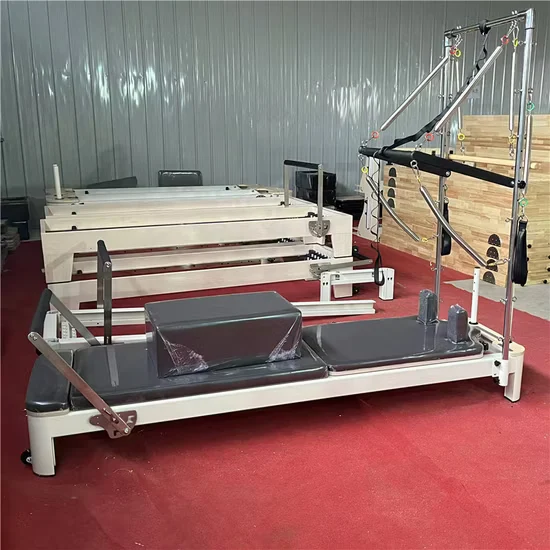
SRY-12A Pilates Reformer with Tower, White Aluminum Frame, 2570×730×1850mm — full aluminum construction eliminates corrosion and powder coating maintenance in humid studio environments, while tower attachment with half trapeze extends progressive training range beyond standard reformer work. Equipped with long box, jump board, and platform for versatile session programming. Every unit undergoes structural load verification and spring fatigue testing before dispatch to studio operators.
// Spec Highlights
• Direct from Manufacturer · No Middlemen · Worldwide Shipping
01
// Material
Imported Solid Wood
Premium hardwood frames sourced for density and visual warmth.
02
// Hardware
Medical-Grade Silent
Whisper-quiet pulleys and springs for clinical environments.
03
// Customization
Appearance OEM
Color, upholstery, and branding tailored to your studio.
04
// Service
Layout Design
Free venue planning for studios and rehab institutions.
Every component is selected for longevity, performance, and aesthetic harmony - from imported hardwood frames to silent medical-grade accessories.
// Features
Precision-Machined Aluminum — Mill-certified extrusions with carriage rail flatness held to tight tolerances, eliminating the lateral play that plagues steel-framed reformers in humid studio environments.
| Parameter | Value |
|---|---|
| Designation | SRY-12A |
| Product Type | Pilates Reformer with Tower |
| Frame Material | Aluminum |
| Product Dimensions | 2570×730×1850mm |
| Net Weight | 130kgs |
| Color | White |
| Accessory | Long Box / Jump Board / Platform |
| Tower Accessory | Half Trapeze |
| Certification | HS Code 9506911900 |
| Age Group | Adult |
| Gender | Unisex |
| Logo | Customized Is Allowed |
| Warranty | 3 Years |
| Facility Type | Typical Use |
|---|---|
| Pilates studio | Group reformer classes with tower-based progressive sequences |
| Yoga studio | Supplementary flexibility and core conditioning sessions |
| Rehabilitation center | Controlled-range movement therapy with spring-assisted resistance |
| Personal training studio | One-on-one full-body conditioning with half trapeze variations |
| Boutique fitness facility | Premium reformer stations in high-density class layouts |
Corrosion and carriage rail play vanish at the material level, not through coating or adjustment.
Many reformers marketed as studio-grade use painted or powder-coated steel frames. In climate-controlled studios where humidity fluctuates with HVAC cycles and perspiration accumulates on contact points, those coatings chip and expose bare metal. Rust creeps along weld seams within the first year, and carriage rails develop lateral wobble as wheel bearings ingest airborne dust. [NEED_CITE: EN 957 structural requirements for stationary training equipment] A commercial white aluminum pilates reformer with tower sidesteps both failure modes entirely. Aluminum forms a self-healing oxide layer, meaning scratches from repositioning or accessory swaps never propagate into corrosion. The rail surfaces remain dimensionally stable without relying on a surface coating that eventually wears through.
The SRY-12A covers supine, seated, kneeling, and standing movement planes through its carriage, long box, jump board, platform, and half trapeze combination. In a studio layout, it pairs with mat-based equipment for warm-up sequences and complements chair or barrel stations for isolated spinal articulation work. The 2570mm length requires adequate clearance at both ends for jump board rebound and trapeze swing arcs. It accommodates adult users across a broad height range, with the carriage travel and spring anchor positions supporting both shorter and taller practitioners without modification. The commercial white aluminum pilates reformer with tower fits into studios running six to twelve stations per class block.
The carriage endures cyclic loading from jump board impacts, rapid directional reversals during footwork sequences, and sustained off-center tension when practitioners work unilateral spring configurations. The tower attachment introduces cantilever stress during half trapeze hanging exercises and standing pull-down sequences, concentrating load at the bolt-on mounting interface. [NEED_CITE: weld classification and fatigue performance in structural steel] Sealed bearing wheels must resist dust and chalk infiltration across hundreds of daily carriage passes. Aluminum surfaces tolerate sweat exposure and cleaning agents without degradation, but the spring hooks, carriage stop mechanisms, and upholstery contact points face concentrated wear that dictates maintenance intervals.
The aluminum alloy grade used in frame extrusions determines how the reformer handles sustained static loads from standing exercises and dynamic impacts from jump board sequences. Precision-machined carriage rails with tight flatness tolerances keep wheel contact consistent, preventing the uneven wear patterns that develop on loosely finished surfaces. Sealed bearing wheels resist particulate ingress far better than open bushings in studios where chalk dust, skin cells, and fiber debris accumulate beneath the carriage. The tower mounting interface — whether bolted through reinforced cross-members or welded to the frame end — must resist flex when the half trapeze carries an off-center load during hanging sequences. Spring wire material and heat treatment traceability ensure resistance calibration remains consistent across production batches, so practitioners experience predictable tension from one reformer to the next.
Thinner aluminum extrusions or lower-grade alloys flex perceptibly during standing work and heavy spring configurations, making advanced exercises feel unstable. Rails machined to loose tolerances develop carriage wobble within months, requiring constant adjustment and premature wheel replacement. Open bearings pack with debris, creating gritty movement that degrades the practitioner experience and triggers complaints in studio reviews. [NEED_CITE: bearing seal classification and particulate ingress resistance] Non-standard spring hooks and proprietary carriage hardware mean replacement parts are unavailable when original suppliers discontinue production. Low-density carriage upholstery compresses and splits under daily class throughput, forcing mid-cycle reupholstery that takes the reformer offline.
Full aluminum construction eliminates the powder-coating failure points that plague steel-framed alternatives in studio environments. Robotic MIG welding is applied at the tower base and frame joints for continuous weld lines rather than spot-weld shortcuts. Every unit undergoes load testing before shipment — not sample-based QC — so the reformer arriving at your studio has verified structural integrity. Industrial-grade powder coating on accessory hardware resists chipping from accessory swaps and jump board impacts. A 3-year warranty backs the frame and structural components. Studio layout CAD support ensures the SRY-12A spacing accounts for jump board clearance and trapeze swing arcs, preventing the unsafe gaps and collision zones that emerge from eyeballed floor plans. OEM custom logo application allows brand consistency across a multi-station purchase.
Provide your studio floor dimensions and target station count to receive a 2D or 3D layout confirming safe clearances between SRY-12A units. Specify expected daily class volume and average practitioner profile to confirm the spring configuration and upholstery grade match your throughput. Indicate whether custom color or logo application is required across your reformer fleet to align with studio branding standards.
Q: How do I distinguish a commercial-grade aluminum reformer from a light-duty studio model?
A: Check the aluminum alloy grade and request mill certification for the frame extrusions. Commercial-grade reformers use sealed bearing wheels on precision-machined rails, while light-duty models often rely on open bushings that develop play within months. Tower mounting should feature reinforced cross-members rather than thin bolt plates. Verify that the manufacturer provides load testing records per unit, not just sample-based reports.
Q: What are the trade-offs between aluminum and steel frames for studio reformers?
A: Aluminum offers inherent corrosion resistance without depending on powder coating integrity, which matters in humid studio environments. It weighs less than steel, simplifying repositioning during floor plan adjustments. Steel frames can offer higher absolute rigidity at a given price point but require intact coating to prevent rust. Aluminum’s self-healing oxide layer means surface scratches from daily use never escalate into structural corrosion concerns.
Q: What should I verify before purchasing third-party tower add-ons?
A: Confirm that your reformer’s frame end has reinforced mounting points rated for the cantilever loads introduced by a half trapeze. Third-party towers often assume a universal bolt pattern that may not align with your frame’s cross-member spacing. Mismatched hardware grades can introduce galvanic corrosion where dissimilar metals contact. Request load test documentation for the combined assembly, not just the tower component alone.
Q: How often should springs be replaced in a high-traffic studio?
A: Spring replacement intervals depend on daily class volume, spring extension patterns, and wire material quality. Inspect springs for visible deformation, inconsistent hook tension, and fatigue cracks near the end loops during routine maintenance. Heat-treated music wire springs with batch traceability tend to maintain calibration longer than unmarked alternatives. Replace springs showing permanent elongation or inconsistent resistance, regardless of how long they have been in service.
Q: What spacing does a reformer with tower need in a group class layout?
A: The SRY-12A measures 2570×730mm and requires additional clearance at both ends. The jump board needs rebound space behind the carriage end, while the half trapeze swing arc demands overhead and lateral room. A CAD-based studio layout accounts for these zones and prevents the collision risks that emerge when reformers are spaced by visual estimation alone.
Premium aesthetics meet quiet operation for boutique studio environments.
Medical-grade silence and precision for sports & postpartum recovery.
Furniture-grade craftsmanship for premium residential installations.
Compact premium setups for one-on-one and small-group training.
Aesthetic Pilates integration for hybrid wellness studio programming.
Multi-unit deployment with instructor-grade reliability for certification programs.
Tell us about your project. Our team will respond within 24 hours with pricing, customization options, and shipping details.
// Sales Director
William
+86 132 2531 1800
// Export Manager
Bella
+86 198 5412 8032
william@bickfit.com