
01 / Scenario
STUDIO
P
High-End Pilates Studios
Premium aesthetics meet quiet operation for boutique studio environments.
ISO
9001
CE
Certified
OEM
Available
10YR
Warranty
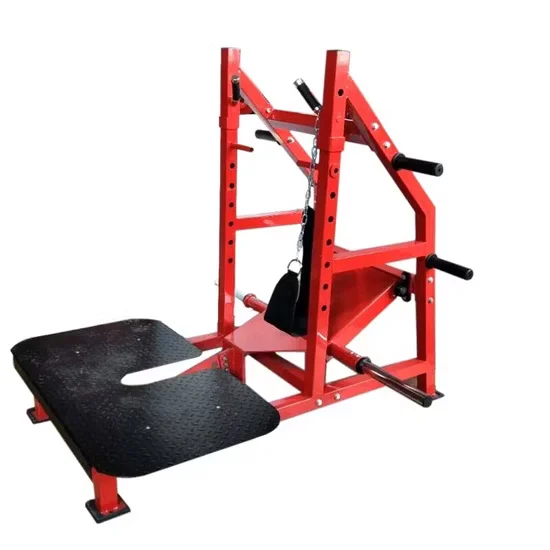
SRH-71 Plate Loaded Belt Squat Machine, 1676×1700×1524mm, Iron Frame — plate loaded design eliminates selectorized stack dependency, utilizing heavy-gauge steel tubing with continuous weld construction to handle eccentric loading during lower body isolation. Sealed bearing sleeves ensure smooth rotation and long-term durability under high-frequency commercial use. Every unit undergoes individual load testing before shipment to verify structural integrity.
// Spec Highlights
• Direct from Manufacturer · No Middlemen · Worldwide Shipping
01
// Material
Imported Solid Wood
Premium hardwood frames sourced for density and visual warmth.
02
// Hardware
Medical-Grade Silent
Whisper-quiet pulleys and springs for clinical environments.
03
// Customization
Appearance OEM
Color, upholstery, and branding tailored to your studio.
04
// Service
Layout Design
Free venue planning for studios and rehab institutions.
Every component is selected for longevity, performance, and aesthetic harmony - from imported hardwood frames to silent medical-grade accessories.
// Features
Traceable 11-Gauge Steel — Every SRH-71 frame tube ships with mill certification traceable to the steel coil, not a vague "commercial grade" label.
| Parameter | Value |
|---|---|
| Designation | SRH-71 |
| Product Type | Plate Loaded Belt Squat Machine |
| Loading Type | Plate loaded |
| Exercise Part | Waist / Lower Body |
| Product Dimensions | 1676 × 1700 × 1524 mm |
| Material | Iron |
| Certification | RoHS, ISO 9001, CE |
| Appliance | Community, Gymnasium, Home |
| Production Capacity | 200 Pieces/Month |
| Facility Type | Typical Use |
|---|---|
| Commercial gym strength floor | High-frequency lower-body isolation training for general membership |
| Community fitness center | Accessible lower-body strengthening for diverse age and fitness groups |
| University strength and conditioning room | Athlete-specific leg drive and hip extension development |
| Home gym | Space-contained belt squat training without a full rack setup |
The frame either holds or it does not — there is no middle ground when 300kg hangs from a belt squat sleeve.
Gym owners who have replaced cracked belt squat frames know the pattern: a manufacturer quotes "heavy-duty steel" without providing mill certificates, and spot welds at the sleeve-to-upright junction develop hairline fractures within the first year of repeated loading cycles. The SRH-71 plate loaded belt squat machine addresses this by pairing verifiable steel sourcing with continuous MIG welding at every load-bearing joint, eliminating the stress concentrations that spot welds introduce. [NEED_CITE: weld classification and fatigue performance in structural steel]
The SRH-71 commercial plate loaded belt squat machine targets the glutes, quadriceps, and hamstrings through a hip-belt loading path that removes axial spine stress. In a strength zone layout, it complements free-weight squat racks and leg press stations by offering a spinal-decompression alternative for high-volume leg days. The footprint suits medium-to-high traffic commercial floors, and the open-frame geometry accommodates users across a wide range of torso and limb proportions without requiring adjustment mechanisms that add maintenance points.
Belt squat training produces distinct stress profiles: the static hold at the bottom of each rep concentrates bending moments at the upright-to-base junction, while the controlled eccentric phase generates cyclic tensile stress on the sleeve welds. In a busy gym running the SRH-71 plate loaded belt squat machine for eight or more hours daily, these cycles accumulate into thousands of load reversals per week. Continuous robotic MIG welding distributes stress along the full seam rather than at discrete spot-weld points, reducing the likelihood of crack initiation at the joints most exposed to fatigue. [NEED_CITE: EN 957 structural requirements for stationary training equipment] Powder coating thickness at contact zones must also withstand sweat acidity and cleaning chemicals over prolonged exposure without chipping down to bare steel.
The SRH-71’s iron frame construction and 1676 × 1700 × 1524 mm envelope define both its load-bearing behavior and its spatial requirements on a gym floor. Tube wall thickness and cross-sectional profile determine how much the upright deflects under off-center plate loading — a thicker gauge pushes the deformation threshold higher, keeping the movement path stable even when users load unevenly. Continuous weld lines at the base gussets prevent the micro-movement that spot welds permit under cyclic stress, directly extending the fatigue life of the structure. The plate sleeve diameter and surface finish influence how smoothly standard Olympic plates slide on and off, and a well-toleranced sleeve reduces the lateral wobble that transfers unnecessary vibration into the frame during loading. Finishing quality — including pre-treatment and coating adhesion — governs how long the SRH-71 plate loaded belt squat machine maintains its appearance under commercial sweat and chemical exposure.
A thinner tube saves material cost upfront but bends under repeated heavy belt loads, shifting the squat path and forcing premature replacement. Spot-welded sleeve joints crack without visible warning, creating liability exposure for facility operators who assumed "commercial grade" meant structurally verified. Non-sealed bearings on plate sleeves develop play as chalk dust and sweat infiltrate, generating maintenance calls that compound across a fleet of machines. Coatings applied below industrial thickness chip at plate-contact edges, exposing bare steel to corrosion that weakens the tube wall from the outside in. Every one of these failures traces back to specifications that were never documented at the point of purchase. [NEED_CITE: structural steel coating durability under commercial fitness environment exposure]
The 11-gauge steel frame carries mill certification traceable to the coil, so buyers can verify material properties independently rather than relying on marketing language. Robotic MIG welding produces continuous weld seams at every structural joint, eliminating the weak-link behavior of spot welds under cyclic belt squat loading. Every unit undergoes individual load testing before shipment — not sample-based batch testing — ensuring the SRH-71 you receive has been verified under actual stress. The 200μm industrial powder coating resists chipping at high-contact zones where plates and belts repeatedly strike the frame. A 10-year frame warranty backs the structural commitment, and 2D-3D CAD floor planning support ensures the 1676 × 1700 mm footprint integrates safely with adjacent equipment clearances. OEM color and branding customization is available for operators building a unified facility identity.
Share your strength zone dimensions and current equipment list to receive a 2D-3D layout showing how the SRH-71 commercial plate loaded belt squat machine fits within your existing traffic flow and safety clearances. Specify expected daily user volume so the structural grade matches your operational intensity. Confirm target user body-type ranges to verify that the open-frame geometry accommodates your membership profile without supplemental adjustment hardware. Detail any color, logo, or upholstery customization requirements for brand-aligned rollout across multiple locations.
Q: How do I verify that a belt squat machine meets genuine commercial-grade structural standards?
A: Request mill certificates showing steel grade and gauge for the frame tubes, along with documentation of welding type — continuous MIG welds outperform spot welds under cyclic loading. Ask whether each unit is individually load tested before shipment rather than sampled from a batch. Confirm that the powder coating thickness meets industrial specifications, not decorative-grade standards, especially at plate-contact zones.
Q: What is the relationship between frame steel gauge and load-bearing performance?
A: Thicker gauge steel increases the cross-sectional area resisting bending and torsional forces, pushing the deformation threshold higher under heavy belt loads. This keeps the upright stable during eccentric phases and prevents progressive misalignment. Gauge alone is insufficient — the steel grade and weld quality must also meet structural standards for the full frame to perform as intended.
Q: How does plate loading compare to selectorized weight stacks for lower-body training equipment?
A: Plate loaded machines like the SRH-71 eliminate the mechanical complexity of cable-and-pulley weight stack systems, reducing maintenance points and allowing incremental loading beyond fixed stack limits. Selectorized machines offer faster weight changes for high-turnover group settings. The choice depends on user volume, desired load range, and the maintenance resources available at your facility.
Q: What facility layout considerations apply to belt squat machine placement?
A: Account for the full equipment footprint plus clearance for plate loading on both sides and user entry and exit paths. Maintain safe distances from adjacent stations to prevent traffic conflicts during heavy sets. Floor levelness affects frame stability, and anchoring points should align with the base plate hole pattern to prevent lateral shift under off-center loading.
Premium aesthetics meet quiet operation for boutique studio environments.
Medical-grade silence and precision for sports & postpartum recovery.
Furniture-grade craftsmanship for premium residential installations.
Compact premium setups for one-on-one and small-group training.
Aesthetic Pilates integration for hybrid wellness studio programming.
Multi-unit deployment with instructor-grade reliability for certification programs.
Tell us about your project. Our team will respond within 24 hours with pricing, customization options, and shipping details.
// Sales Director
William
+86 132 2531 1800
// Export Manager
Bella
+86 198 5412 8032
william@bickfit.com


