01 / Scenario
STUDIO
P
High-End Pilates Studios
Premium aesthetics meet quiet operation for boutique studio environments.
ISO
9001
CE
Certified
OEM
Available
10YR
Warranty
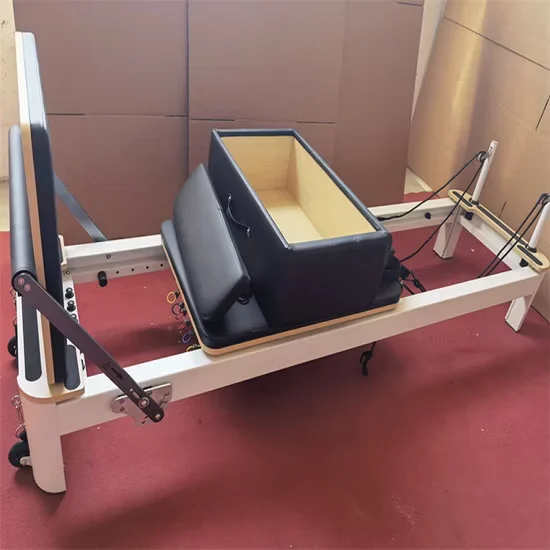
Commercial Pilates Reformer, Aluminium Alloy Frame, 2570×730×270mm — precision-machined rail system delivers zero-play carriage glide, eliminating wobble under repetitive lateral loading typical of 8+ hour daily studio cycles. Sealed bearing pulleys prevent dust ingress, while reinforced mounting points secure Long Box, Jump Board, and Platform without bolt loosening. Every unit undergoes rail straightness verification and spring tension calibration before dispatch.
Each reformer ships with mill-certified aluminium grade documentation and individual glide tolerance test reports.
// Spec Highlights
• Direct from Manufacturer · No Middlemen · Worldwide Shipping
01
// Material
Imported Solid Wood
Premium hardwood frames sourced for density and visual warmth.
02
// Hardware
Medical-Grade Silent
Whisper-quiet pulleys and springs for clinical environments.
03
// Customization
Appearance OEM
Color, upholstery, and branding tailored to your studio.
04
// Service
Layout Design
Free venue planning for studios and rehab institutions.
Every component is selected for longevity, performance, and aesthetic harmony - from imported hardwood frames to silent medical-grade accessories.
// Features
Aircraft-Grade Aluminium Frame — Solid alloy rail system with sealed industrial bearings, load-tested for high-traffic studio environments where thin-wall steel carriages develop lateral play within months.
| Parameter | Value |
|---|---|
| Product Type | Pilates Reformer |
| Frame Material | Aluminium Alloy |
| Product Dimensions | 2570×730×270mm |
| Net Weight | 90kg |
| Carriage System | Sealed industrial bearings on precision-machined aluminium rails |
| Standard Accessories | Long Box / Jump Board / Platform |
| Color Options | White (custom colors available upon request) |
| Logo | Customization allowed |
| Warranty | 3 Years |
| Facility Type | Typical Use |
|---|---|
| Commercial Pilates studio | Group class reformer bank configuration for daily back-to-back scheduling |
| Rehabilitation and physical therapy clinic | Low-impact resistance training with controlled spring tension progression |
| Boutique wellness facility | Premium mind-body class offering alongside mat and apparatus work |
| Hotel and resort fitness spa | Guest-accessible Pilates programming in limited-floor-space environments |
| Commercial fitness center group class area | Dedicated reformer zone within a larger group exercise studio |
A solid aluminium alloy rail maintains glide precision under thousands of spring-loaded cycles where thin-wall steel tubes develop measurable lateral play.
At a Pilates studio running six group classes daily, a reformer carriage endures repetitive lateral loading as practitioners push through footwork and long stretch sequences. Most studio-grade units rely on thin-wall steel rails that begin exhibiting carriage wobble within the first year of commercial operation — the rail surface degrades, the glide becomes gritty, and instructors start hearing the metal-on-metal chatter mid-class. The aircraft-grade aluminium alloy construction on this commercial aluminium pilates reformer resists that deformation pattern entirely [NEED_CITE: aluminium alloy fatigue behavior under cyclic lateral loading]. The sealed industrial bearings prevent studio floor dust and chalk residue from infiltrating the carriage housing, which is the primary cause of glide degradation in high-traffic environments.
This commercial aluminium pilates reformer supports full-range spinal articulation, hip and shoulder mobilization, and lower-body resistance work across sagittal and frontal planes. In a group class layout, it pairs naturally with mat zones and smaller apparatus like the Cadillac or Wunda Chair to build progressive class programming. The unit accommodates adult practitioners across a wide anthropometric range, with the Long Box and Jump Board extending exercise variety for both rehabilitation clients and athletic populations. Studios running reformer banks of six to twelve units benefit from the lighter aluminium frame weight during periodic floor reconfigurations.
The carriage rail system absorbs eccentric loading during controlled return phases of every repetition — footwork, long stretch, and coordination sequences generate repeated off-axis forces on the glide surface [NEED_CITE: eccentric loading patterns in Pilates apparatus use]. Sealed bearings at the carriage contact points prevent particulate ingress that accelerates wear in open-system designs. Spring attachment points undergo constant tension cycling, and the aluminium frame junctions where the Jump Board and Platform mount must resist bolt loosening under repetitive impact. The white powder-coated finish faces daily exposure to sweat, cleaning chemicals, and mat friction at contact zones, requiring a coating thickness that prevents chipping down to bare alloy.
Aluminium alloy provides inherent corrosion resistance in humid studio environments where steel frames require intact powder coating to prevent oxidation at contact points — once that coating chips, the steel beneath begins to rust. The precision-machined rail tolerance ensures the carriage maintains zero lateral play through full extension, which directly affects exercise quality during single-leg footwork and advanced balance work. Sealed bearings eliminate the quarterly maintenance cycle of stripping, cleaning, and re-greasing open carriage systems. The reinforced mounting points at frame junctions for the Long Box and Jump Board prevent the fastener fatigue that causes accessory wobble on lighter-duty units [NEED_CITE: fastener fatigue under cyclic impact loading in fitness apparatus].
Thin-wall aluminium or steel rails on budget reformers develop measurable carriage drift under commercial scheduling, forcing studio owners into premature equipment replacement or constant bearing service. Non-sealed carriage systems require regular teardown and cleaning — downtime that removes the unit from revenue-generating class slots. Low-grade spring steel loses tension calibration faster under daily cycling, creating inconsistent resistance that instructors and clients notice within weeks. When accessory mounting points lack reinforcement at frame junctions, the Jump Board and Platform develop play that compromises exercise safety during dynamic movements. Thin surface finishes chip at high-contact zones, exposing the substrate to corrosion and degrading the studio’s visual presentation [NEED_CITE: lifecycle cost comparison of commercial vs. light-duty Pilates apparatus].
Every aluminium alloy frame in this line is sourced with mill traceability, so the material certification follows the unit from raw stock to studio floor. The robotic welding process produces continuous joint lines without the cold-joint failures common in hand-welded light-duty frames. Each unit undergoes individual load testing before shipment — not sample-based batch testing — to verify carriage glide integrity and spring tension calibration under working loads. The industrial powder coating applied at 200μm thickness resists chipping at carriage contact points and accessory mounting zones through years of daily commercial use. The three-year warranty covers frame, carriage, and spring components, backed by replacement part availability that keeps units in service rather than stored waiting for proprietary hardware. Studio operators receive 2D-3D floor planning CAD support to determine optimal reformer bank spacing, ensuring safe clearance between stations during group class operation and compliance with studio layout standards.
Provide your group class floor dimensions and target reformer count to receive a 2D-3D placement plan with safe clearance calculations for your specific studio footprint. Specify average daily class scheduling volume so we can confirm the structural specification matches your operational duty cycle. Indicate any custom color or logo requirements for brand consistency across your reformer bank and other apparatus.
Q: How does an aluminium alloy frame compare to steel for long-term commercial durability?
A: Aluminium alloy resists corrosion without relying solely on surface coating integrity, which matters in humid studio environments where sweat and cleaning chemicals degrade thin powder coats. Steel frames offer higher absolute stiffness but require flawless coating maintenance at contact points. The aluminium construction also reduces unit weight for easier repositioning during studio layout changes while maintaining rail precision under commercial scheduling loads.
Q: What should I check to verify carriage rail precision before accepting delivery?
A: Run the carriage through full extension and return with no load applied — any lateral play or binding indicates rail misalignment or bearing issues. Under loaded conditions, the carriage should glide without chatter or gritty feedback through the entire range. Request the individual unit glide test record from the manufacturer’s pre-shipment inspection to confirm the tolerance was verified on your specific reformer, not just a production sample.
Q: How often do springs need replacement under daily commercial class scheduling?
A: Spring tension calibration degrades with cyclic loading, and commercial studios running multiple daily classes will see measurable tension loss before home-use units do. Replace springs on a scheduled interval rather than waiting for instructor complaints about inconsistent resistance. Maintain a replacement spring inventory so units remain in rotation rather than sitting idle waiting for parts, and verify tension calibration on new springs before returning the reformer to class scheduling.
Q: Are the Long Box and Jump Board mounting points reinforced for repetitive dynamic use?
A: Yes — accessory mounting junctions are reinforced at the aluminium frame connections to resist bolt loosening under repetitive impact loading from Jump Board plyometric sequences and Long Box sliding work. The fastener specification matches the dynamic load profile of commercial group class use. Verify bolt torque at these junctions during quarterly maintenance to maintain secure attachment and prevent accessory wobble during exercises.
Q: What reformer spacing does a commercial studio need for safe group class operation?
A: Safe clearance depends on carriage extension range and practitioner movement beyond the frame footprint during standing and long box exercises. A professional floor plan accounts for the 2570mm frame length plus full carriage travel plus lateral movement space. Request a 2D-3D CAD layout based on your room dimensions and target unit count to ensure compliant spacing that supports instructor circulation and emergency access pathways between stations.
Premium aesthetics meet quiet operation for boutique studio environments.
Medical-grade silence and precision for sports & postpartum recovery.
Furniture-grade craftsmanship for premium residential installations.
Compact premium setups for one-on-one and small-group training.
Aesthetic Pilates integration for hybrid wellness studio programming.
Multi-unit deployment with instructor-grade reliability for certification programs.
Tell us about your project. Our team will respond within 24 hours with pricing, customization options, and shipping details.
// Sales Director
William
+86 132 2531 1800
// Export Manager
Bella
+86 198 5412 8032
william@bickfit.com