01 / Scenario
STUDIO
P
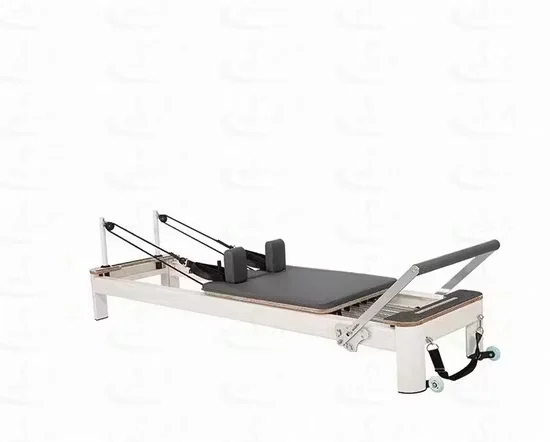
High-End Pilates Studios
Premium aesthetics meet quiet operation for boutique studio environments.

ISO
9001
CE
Certified
OEM
Available
10YR
Warranty
Wooden Balance Board, 1030×300×15mm, 5kg Net Weight — solid 15mm thickness resists flex fatigue under repeated commercial loading, curved profile delivers consistent roll radius for controlled instability training. Custom logo and color options available for facility branding. Backed by 17 years of manufacturing heritage and 500+ commercial gym deployments ensuring production consistency.
// Spec Highlights
• Direct from Manufacturer · No Middlemen · Worldwide Shipping
01
// Material
Imported Solid Wood
Premium hardwood frames sourced for density and visual warmth.
02
// Hardware
Medical-Grade Silent
Whisper-quiet pulleys and springs for clinical environments.
03
// Customization
Appearance OEM
Color, upholstery, and branding tailored to your studio.
04
// Service
Layout Design
Free venue planning for studios and rehab institutions.
Every component is selected for longevity, performance, and aesthetic harmony - from imported hardwood frames to silent medical-grade accessories.
// Features
Every Unit Load-Tested Before Shipment — each balance board undergoes dynamic deflection testing to verify structural integrity under repeated off-center loading, not just sample-based QC.
| Parameter | Value |
|---|---|
| Product Type | Balance Board |
| Dimensions | 1030 × 300 × 15 mm |
| Net Weight | 5 kg |
| Board Thickness | 15 mm solid construction |
| Surface Finish | Solid color, non-slip coating |
| Logo | Customized branding available |
| Target User | Adult, unisex |
| Warranty | 3 Years |
| Facility Type | Typical Use |
|---|---|
| Commercial gym functional training zone | Core stability and proprioception drills between strength sets |
| Yoga and Pilates studio | Balance progression sequences and standing posture work |
| Hotel fitness center | Compact, portable balance training for transient guests |
| University athletic performance lab | Unilateral stability assessment and rehab return-to-play protocols |
| Rehabilitation and physiotherapy clinic | Ankle and knee joint stabilization during recovery phases |
A 15mm solid profile resists the flex fatigue that destroys thinner boards within months of daily gym use.
Walk into most functional training zones and you will find balance boards with visible surface cracking along the curved underside. The failure pattern is predictable: thin laminated layers separate under repeated loading, the arc profile flattens, and the board becomes unstable in ways that were never intended. Facility operators end up replacing the entire batch. This commercial wooden balance board addresses that failure mode directly through material thickness and solid wood construction that does not delaminate under cyclic loading [NEED_CITE: structural fatigue behavior in solid wood vs. laminated plywood under cyclic loading].
The 1030mm length accommodates a full adult stance width, making it practical for bilateral and single-leg balance work in high-traffic functional zones. It pairs naturally with plyometric boxes, suspension trainers, and free weight stations where athletes rotate through proprioception circuits. The footprint stays compact enough to store against a wall or on a rig-mounted shelf when not in active use. For facilities programming balance progressions into group sessions, multiple units can be deployed across a training bay without consuming the floor area a larger apparatus would demand. This commercial wooden balance board serves adult users across a broad range of body weights and skill levels.
Balance boards experience a specific loading profile: concentrated eccentric force applied through a single foot or an off-center stance, generating bending moments along the board’s longitudinal axis. In a commercial setting with multiple users per day, these cycles accumulate quickly and expose any weakness in grain structure or surface coating [NEED_CITE: fatigue accumulation in wood fitness equipment under repetitive eccentric loading]. Sweat exposure adds a chemical degradation variable — alkaline perspiration breaks down inferior finishes, exposing raw wood to moisture absorption and warping. The contact points where the board meets the floor endure repeated impact and abrasion, demanding a curved profile geometry that maintains consistent roll behavior even as the surface wears.
The 15mm board thickness is the primary structural determinant here. Thinner profiles deflect under concentrated adult body weight, creating a bottoming-out sensation that compromises the training stimulus and accelerates material fatigue. Solid wood construction — as opposed to laminated plywood — eliminates the adhesive layer failures that cause surface delamination in humid gym environments. The 1030 × 300mm footprint provides sufficient stance area for users with wider foot placement while keeping the unit portable for reconfiguration. Surface finish selection matters for grip longevity: a non-slip coating rated for repeated cleaning with commercial disinfectants will outlast raw wood treatments that absorb moisture over time [NEED_CITE: wood surface treatment durability standards for commercial fitness environments].
The cheapest path is thin laminated plywood with a decorative surface veneer. These boards look acceptable on day one and fail structurally within a season of commercial use. The laminations separate along the glue lines — a failure invisible until the board cracks mid-session under a user’s full weight. Non-commercial surface coatings wear smooth within weeks, creating a slip hazard that exposes facility operators to liability. Boards that are too short force users into an unnaturally narrow stance, reducing training effectiveness and increasing the likelihood of a misstep. The replacement cycle for these units ends up costing more than sourcing properly specified equipment initially [NEED_CITE: total cost of ownership analysis for commercial fitness accessories].
Every board is produced within a 15,000 sqm vertically integrated facility where material sourcing and finishing happen under one roof. The manufacturing process applies the same QC discipline used for heavy steel equipment: each unit is load-tested before shipment rather than cleared through sample-based inspection. The 200μm industrial powder coating process used on steel frames translates to rigorous surface treatment standards across all product categories. Custom logo and color specifications are handled in-house, meaning branding requests do not add lead time through third-party decorators. For operators planning full functional zone layouts, 2D and 3D CAD support helps position this commercial wooden balance board with correct safety clearances relative to surrounding rigs and free weight stations. A 3-year warranty backs structural performance under documented commercial use.
Share your functional training area dimensions and existing equipment list to receive a layout plan that positions balance training stations with correct safety clearances. Specify your expected daily user volume so structural grade and quantity recommendations align with actual traffic. If your facility requires custom branding or color matching across equipment categories, flag those requirements early in the specification process to consolidate production runs.
Q: How do I distinguish a commercial-grade balance board from consumer-grade products?
A: Consumer boards typically use thin laminated plywood with decorative veneers that delaminate under repeated loading. Commercial-grade units specify solid board thickness, non-slip coatings rated for chemical disinfectants, and documented load testing. Request manufacturer test data for dynamic loading capacity and verify the warranty covers commercial use rather than limited household application.
Q: Is solid wood better than laminated plywood for gym environments?
A: Solid wood eliminates the adhesive layers that fail under cyclic loading and humidity exposure common in gym settings. Laminated plywood can separate along glue lines after sustained use, creating sudden structural failure. Solid construction maintains grain continuity and consistent flex behavior throughout its service life under daily commercial traffic.
Q: What surface maintenance does a wooden balance board require in a high-traffic facility?
A: Clean daily with pH-neutral disinfectant to remove sweat residue without degrading the non-slip coating. Inspect the surface monthly for wear smoothing and schedule refinishing before grip deteriorates. Avoid abrasive cleaning pads or alkaline solutions that strip protective finishes and expose raw wood to moisture absorption and warping.
Q: Can the board be customized with our facility branding?
A: Custom logo placement and color matching are available for facility branding. Specify logo dimensions, placement position, and color codes during the order specification phase. Minimum order requirements apply for custom runs, and branding is applied during the finishing stage so it does not compromise surface grip or structural coating durability.
Q: How should balance boards integrate with surrounding functional training equipment?
A: Position boards with sufficient clearance for the full roll radius to prevent contact with adjacent rigs, boxes, or free weight stations. Group them in dedicated balance and proprioception zones within the functional area rather than scattering them across the floor. This reduces trip hazards and creates a logical training flow for members moving through programmed circuits.
Premium aesthetics meet quiet operation for boutique studio environments.
Medical-grade silence and precision for sports & postpartum recovery.
Furniture-grade craftsmanship for premium residential installations.
Compact premium setups for one-on-one and small-group training.
Aesthetic Pilates integration for hybrid wellness studio programming.
Multi-unit deployment with instructor-grade reliability for certification programs.
Tell us about your project. Our team will respond within 24 hours with pricing, customization options, and shipping details.
// Sales Director
William
+86 132 2531 1800
// Export Manager
Bella
+86 198 5412 8032
william@bickfit.com