Wunda Chair Cleaning Guide: Wholesale Supplier for Clinics
Stronger disinfectants do not mean cleaner equipment; they often mean cracked vinyl and voided warranties.
Proper sanitation of Wunda Chairs requires balancing clinical hygiene standards with material preservation. The correct protocol involves using neutral pH cleaners (6-8 range), applying them with microfiber cloths in unidirectional strokes, and allowing full air-drying before reuse. This method prevents the premature degradation of protective coatings and ensures compliance with international hygiene standards for fitness facilities without compromising the structural integrity of the upholstery. [NEED_CITE: International hygiene standards for fitness facilities]
I still remember the humidity in that Dubai clinic. It was thick enough to taste. A high-end facility had just taken delivery of a batch of Pilates reformers and Wunda Chairs. The manager, eager to meet strict health regulations, instructed his staff to spray a heavy-duty industrial bleach solution directly onto the leatherette surfaces after every session. It smelled sharp, sterile, and wrong. Three months later, the upholstery on half the units began to crack along the seams. The manager demanded compensation, claiming the materials were defective. I spent a day watching their cleaning routine. They were soaking the seams, using abrasive pads to scrub off sweat marks, and never letting the chairs dry completely before the next client arrived. The issue was not the quality of the vinyl; it was the chemistry of the cleaner and the physics of moisture trapped under tension. Since then, I have carried a simple maintenance manual in my toolkit, sharing it with facility managers from Riyadh to Doha. The lesson is consistent: commercial器械 is built for durability, but it is not immune to chemical abuse.
Why Standard Gym Cleaners Fail on Wunda Chairs
Most gym owners assume that if a cleaner works on a treadmill belt or a metal weight stack, it will work on Pilates upholstery. This is a critical error. Standard gym cleaners are often formulated for hard, non-porous surfaces like steel, plastic, or rubber. They frequently contain high-pH alkalines or solvents designed to cut through heavy grease and ground-in dirt. [NEED_CITE: Material safety data sheets (MSDS) for cleaning agents]
Wunda Chair upholstery, typically made from high-grade vinyl or leatherette, has a protective topcoat that provides resistance to abrasion and stains. Harsh chemicals strip this coating. Once the protective layer is compromised, the underlying material becomes porous. Sweat, oils, and bacteria penetrate deeper, leading to odors that surface cleaning cannot remove. More importantly, the material loses its flexibility. In a climate-controlled studio, this might take years to show. In a humid environment or under the constant tension of springs and moving parts, the material cracks prematurely.
The failure is not immediate. It starts with a slight stickiness, then a dulling of the finish, and finally, micro-fractures along the stress points where the user sits or leans. By the time visible cracking appears, the damage is irreversible. Replacing upholstery is costly and requires specialized tools, often exceeding the value of the initial savings from using cheap, harsh cleaners.
The 3-Step Safe Sanitization Protocol
Effective cleaning is not about aggression; it is about precision. The goal is to remove biological contaminants without altering the chemical structure of the material. This protocol is designed for high-traffic physiotherapy clinics and commercial gyms where turnover is rapid.
-
Select a Neutral pH Cleaner
Choose a cleaner with a pH level between 6 and 8. This range is close to neutral and is safe for most synthetic leathers and vinyls. Avoid anything labeled "heavy-duty degreaser" or containing bleach, ammonia, or alcohol. These substances are too aggressive for daily use on flexible upholstery. [NEED_CITE: Manufacturer warranty terms regarding chemical damage] Look for products specifically certified for medical or fitness equipment, as these are tested for compatibility with common upholstery materials. -
Apply with Microfiber and Unidirectional Strokes
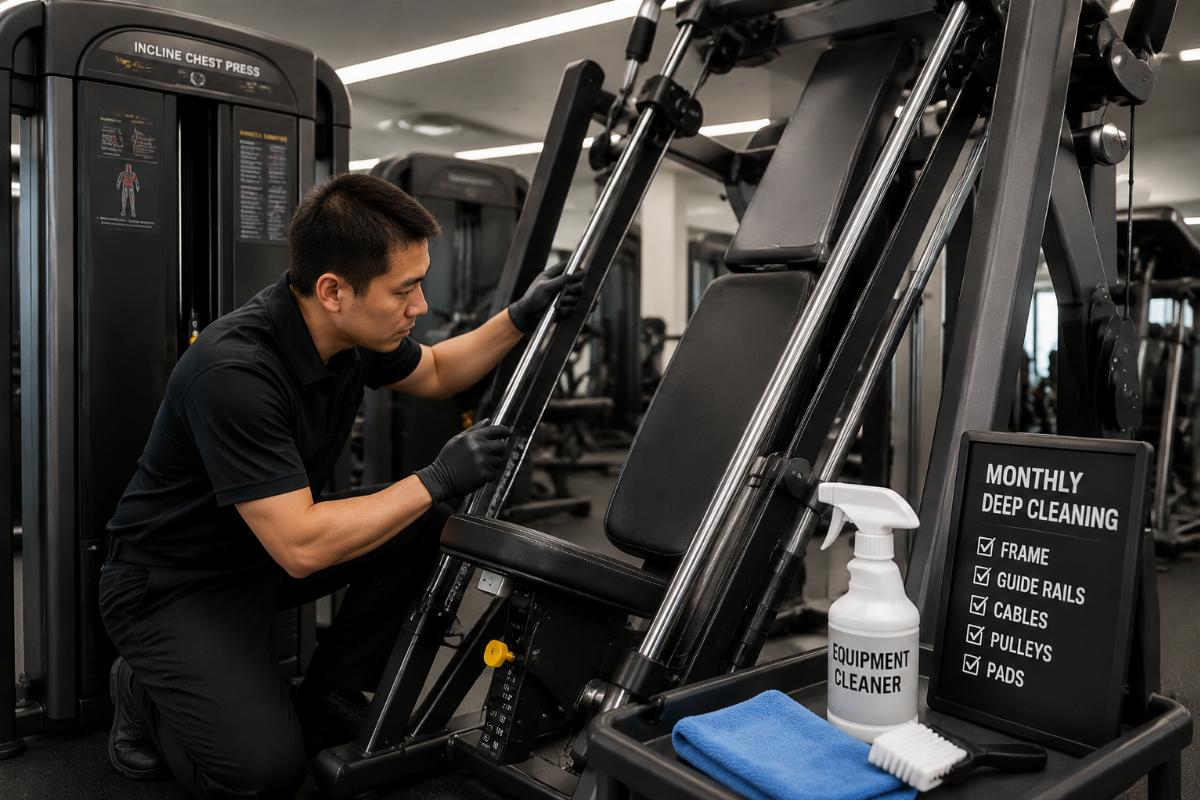
Do not spray the cleaner directly onto the chair. Spray it onto a clean, lint-free microfiber cloth. This controls the amount of liquid applied and prevents overspray from entering the mechanical parts of the Wunda Chair, such as the springs and pulleys. Wipe the surface using long, unidirectional strokes. Avoid circular motions, which can grind debris into the material rather than lifting it away. Pay special attention to high-contact areas like the headrest and seat platform, but do not scrub. Let the chemistry of the cleaner do the work. -
Allow Full Air-Dry
This is the step most often skipped. After wiping, the surface must be allowed to air-dry completely before the next user. In humid climates, this may take longer than expected. Trapped moisture under seams or in crevices creates a breeding ground for mold and mildew. It can also lead to corrosion of the metal frame components hidden beneath the upholstery. Never cover a damp chair with a towel or plastic sheet. Ensure adequate ventilation in the studio to accelerate drying. [NEED_CITE: Root cause distribution per ISO 15243 regarding moisture-induced corrosion]
Common Mistakes That Void Your Warranty
Manufacturers provide warranties based on the assumption that equipment will be maintained according to specific guidelines. Deviating from these guidelines often results in claims being denied. Understanding these common pitfalls can save clinic owners significant expense and operational downtime.
-
Using Abrasive Pads or Brushes
Steel wool, stiff-bristled brushes, or even rough paper towels can scratch the protective coating of the upholstery. These microscopic scratches become traps for dirt and bacteria, accelerating wear. Always use soft, non-abrasive cloths. -
Soaking the Seams
Excessive liquid can seep into the stitching and padding. This not only leads to mold growth but can also weaken the adhesive bonds holding the upholstery to the frame. In severe cases, it can cause the padding to shift or clump, affecting the comfort and support of the chair. -
Ignoring Manufacturer Guidelines
Every manufacturer has specific recommendations for care. Ignoring these instructions is the fastest way to void a warranty. For instance, Bick’s commercial-grade upholstery is designed for durability and ease of maintenance, but it still requires proper care to maintain its lifespan. Using unauthorized cleaning agents or methods can invalidate the technical support and warranty coverage provided by the supplier. [NEED_CITE: Manufacturer warranty terms regarding chemical damage]
A case in point involved a boutique studio in Europe. They used a steam cleaner to sanitize their Pilates equipment, believing the heat would kill all bacteria. The steam penetrated the vinyl, causing the backing material to delaminate from the surface layer. The entire batch of chairs had to be reupholstered, a cost that far exceeded the price of proper cleaning supplies.
Maintenance Schedule for High-Traffic Clinics
Consistency is key to longevity. A structured maintenance schedule ensures that cleaning is not an afterthought but an integral part of the clinic’s operations. This schedule balances daily hygiene with periodic deep inspections.
| Frequency | Action | Focus Area | Tool/Method |
|---|---|---|---|
| Daily | Surface Wipe-Down | High-contact zones (seat, headrest, handles) | Microfiber cloth + Neutral pH cleaner |
| Weekly | Deep Inspection | Seams, edges, and frame connections | Visual check + Dry cloth |
| Monthly | Frame Maintenance | Moving parts, springs, and weld points | Lubricant (if recommended) + Dry cloth |
| Quarterly | Professional Review | Overall condition and warranty compliance | Technician inspection |
In a high-turnover clinic, surface contact occurs multiple times a day. A quick wipe-down after each session is essential to remove sweat and oils. However, this should not replace the weekly deep inspection. During the weekly check, look for early signs of wear, such as discoloration or loose stitching. Addressing these issues early can prevent larger problems later.
Frame maintenance is often overlooked. Chemical exposure can affect metal components, especially if overspray occurs. Regularly check weld points and moving parts for signs of corrosion or stiffness. Keeping the mechanical parts in good condition ensures the Wunda Chair functions smoothly and safely.
Conclusion
Preserving your equipment is as much about chemistry as it is about cleanliness.
Adhering to a neutral pH cleaning protocol, using proper techniques, and allowing adequate drying time will extend the life of your Wunda Chairs significantly. This approach not only protects your investment but also ensures a safe and hygienic environment for your clients. By avoiding common mistakes and following a structured maintenance schedule, clinic owners can maintain the aesthetic and functional integrity of their equipment for years.