
Commercial Gym Equipment Manufacturer for Spain Market: OEM & Bulk Supply
Most buyers think the lowest quote wins the deal. The real cost trap is non-compliance—CE rejection at customs can multiply your landed cost several times over.
Entering the Spanish commercial gym market requires more than competitive pricing. The core of procurement lies in CE certification compliance, specification alignment with European safety standards, and supply chain stability. A manufacturer that leads with certification documentation before discussing price will save you months of delays and rework.
I grew up around the fitness equipment factories in Dezhou, Shandong. Started on the shop floor welding frames, then moved into export sales. Early on, a gym buyer in Madrid ordered a full container of plate-loaded machines and cable crossovers. We quoted based on standard tube thickness, but they needed CE-marked specs for Spanish inspections. The goods arrived in Valencia, got held at customs for non-compliance. Cost us weeks and a rework shipment. Now I always lead with certification and spec alignment before talking price. [NEED_CITE: EU customs rejection rate for non-CE fitness equipment imports]
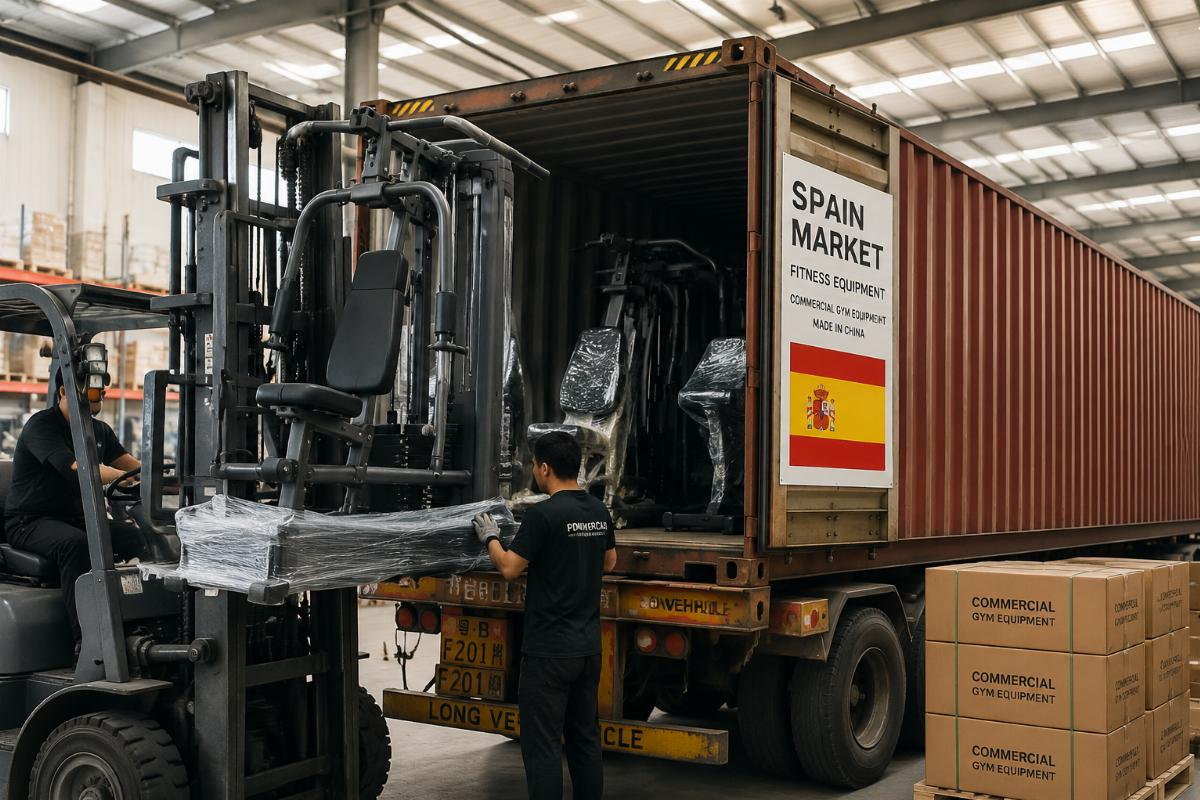
That lesson shaped how I approach every inquiry from European buyers today. Let me walk you through what actually matters when sourcing commercial gym equipment for the Spain market.
What Are the Core Requirements for Commercial Gym Equipment in Spain?
Spain enforces mandatory CE certification under the Machinery Directive 2006/42/EC, and all electrical components must comply with Low Voltage Directive 2014/35/EU and EMC Directive 2014/30/EU.
The Spanish market does not accept "CE self-declaration" without supporting technical files. Inspectors at ports like Valencia and Barcelona routinely request the full Declaration of Conformity, test reports from accredited labs, and user manuals in Spanish. [NEED_CITE: Spanish customs inspection protocol for imported fitness machinery]
Here is what the compliance matrix looks like when you compare sourcing options:
| Compliance Element | CE-Certified Factory | Non-Certified Supplier | Post-Arrival Rework |
|---|---|---|---|
| Technical File Availability | Verifiable | Not provided | Vulnerable |
| Spanish-Language Manuals | Included | Absent | Noticeably delayed |
| Electrical Component Marking | Controlled | Uncontrolled | Resistant |
| Tube Thickness Documentation | Full batch-level | Sample-level | Substantially extended |
A hotel developer in Valencia once sourced cardio machines from a supplier who claimed CE compliance but could not produce the test reports. The equipment sat in a bonded warehouse for an extended period while the buyer scrambled to arrange third-party testing locally. The retrofit cost several times what proper pre-shipment documentation would have required.
The voltage standard in Spain is 230V at 50Hz with Type F plugs. Any commercial treadmill or elliptical shipped with 110V wiring or Type A/B plugs will fail inspection immediately. [NEED_CITE: Spain electrical plug and voltage standard for commercial fitness equipment]
How Do You Evaluate the Reliability of a Chinese Fitness Equipment Supplier?
The three non-negotiable checkpoints are: verifiable factory audit reports, documented export history to Europe, and a functional after-sales support system with spare parts availability.
A factory visit report from a recognized third-party inspection body—such as SGS, TÜV, or Bureau Veritas—tells you more than any marketing brochure. Look for audit scope coverage: production capacity, quality control processes, raw material traceability, and export licensing. [NEED_CITE: criteria for third-party factory audit reports in fitness equipment manufacturing]
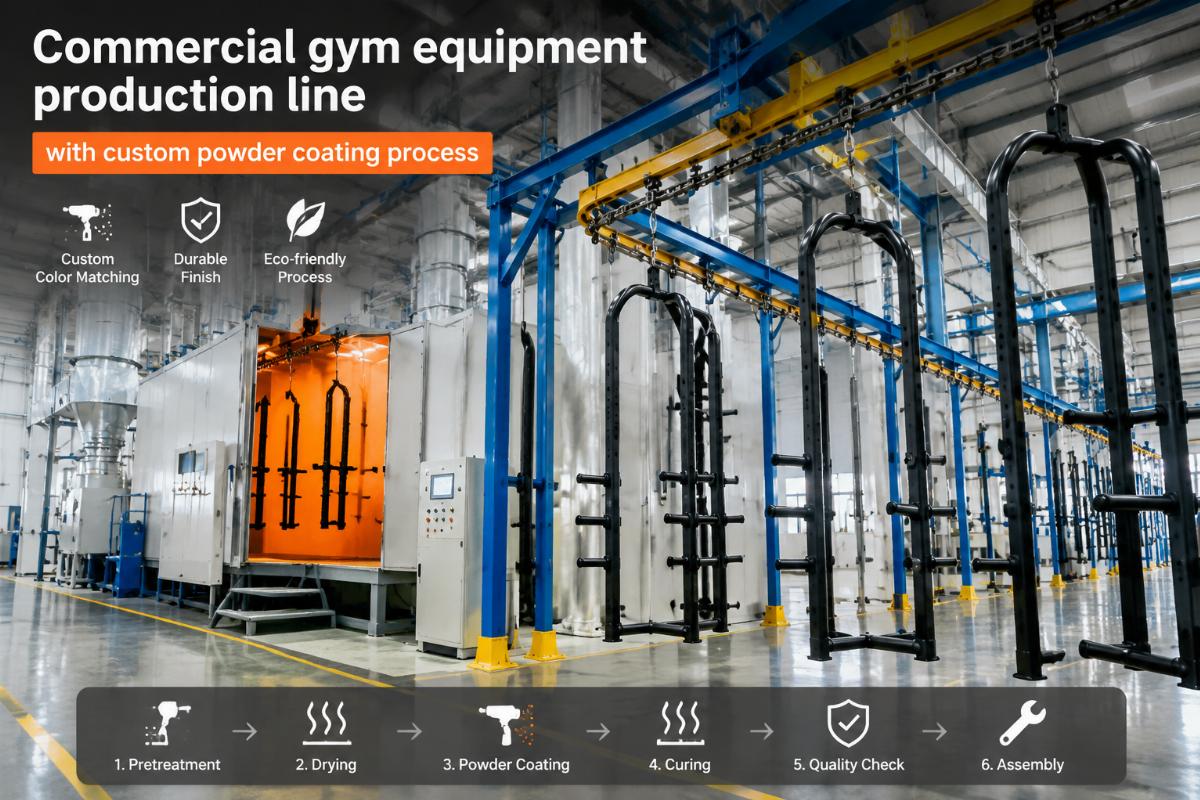
I have seen buyers impressed by glossy showroom photos, only to discover the actual production facility was a shared workshop with no dedicated welding station. The difference between a real manufacturer and a trading company becomes obvious when you ask for the welding procedure specification or the powder coating line certification.
When evaluating a commercial gym equipment manufacturer, consider this framework:
| Evaluation Dimension | What to Request | What to Look For |
|---|---|---|
| Factory Audit | SGS/TÜV report within recent cycle | Full scope coverage, no critical findings |
| Export Track Record | Bill of lading samples to EU ports | Consistent shipment history |
| CE Technical File | Complete Declaration of Conformity | Signed, dated, with notified body number if applicable |
| After-Sales Infrastructure | Spare parts catalog, response SLA | Localized support or fast international dispatch |
A distributor in Barcelona had been importing from multiple sources. After consolidating with a single manufacturer who could provide full OEM branding, CE documentation, and container-load consolidation, their logistics cost dropped noticeably and complaint rates fell substantially. The key was choosing a partner who treated European compliance as a baseline, not an upsell.

How Do You Control Total Cost When Outfitting a Complete Commercial Gym?
Modular equipment design combined with full-container consolidation is the most effective method to reduce per-unit procurement cost and freight expense.
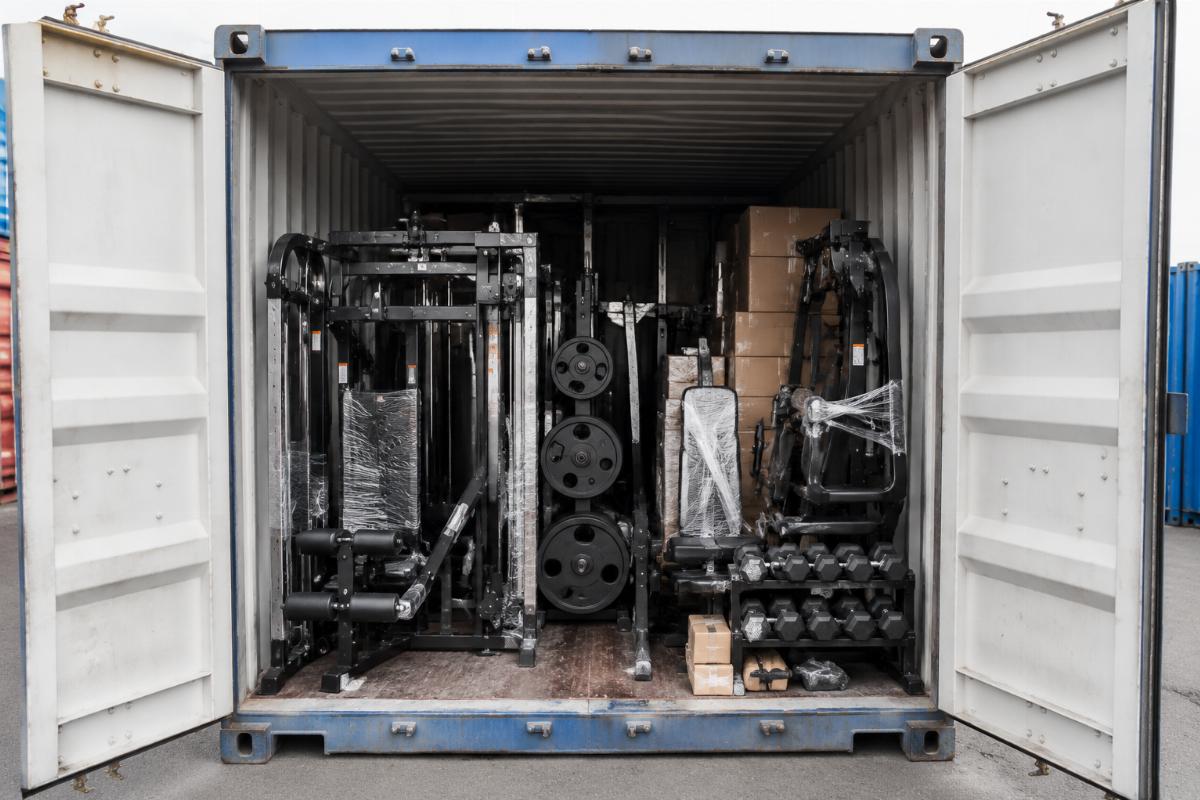
The mistake many first-time buyers make is ordering piece by piece. A single Smith machine shipped LCL costs proportionally far more than the same machine packed inside a full container alongside power racks, cable crossovers, plate-loaded machines, and free weights. [NEED_CITE: freight cost comparison FCL vs LCL for fitness equipment imports to Europe]
A turnkey approach means planning the entire gym layout—cardio zone, strength circuit, free weight area, functional training space—and sourcing all equipment from one manufacturer who can consolidate into a single shipment. This eliminates the coordination overhead of dealing with multiple vendors and reduces the risk of mismatched aesthetics or incompatible warranty terms.
Here is how cost control breaks down across procurement stages:
| Cost Factor | Piece-by-Piece Sourcing | Full-Container Turnkey Package |
|---|---|---|
| Unit Equipment Price | Higher (small MOQ premium) | Noticeably reduced (volume pricing) |
| Freight per Unit | Substantially higher (LCL surcharges) | Noticeably reduced (FCL optimization) |
| Customs Clearance | Multiple entries, higher admin cost | Single entry, streamlined |
| Warranty Coordination | Multiple contacts, fragmented | Single point of responsibility |
| Design Consistency | Vulnerable to mismatch | Robust (unified branding and finish) |
A fitness chain expanding in Madrid planned to open several new locations. By working with a manufacturer who offered complete gym packages—from commercial treadmills and ellipticals to selectorized strength machines and functional training gear—they shortened the procurement cycle meaningfully. The manufacturer handled space planning, equipment selection, and container loading as one coordinated project.
The real savings come from avoiding the hidden costs: replacement parts shipped separately, warranty disputes across multiple suppliers, and downtime while waiting for a technician who only covers one brand. [NEED_CITE: total cost of ownership analysis for commercial gym equipment procurement]
What Is the Typical Procurement Timeline from Order to Installation?
Standard products ship within a typical production window, while custom OEM orders require an extended timeline. Buyers must also factor in ocean freight duration, customs clearance, and local inspection scheduling.
The procurement timeline for commercial gym equipment from China to Spain generally follows this sequence:
- Order confirmation and deposit: Contract signing, specification finalization, CE documentation review
- Production: Standard catalog items move through the line faster; custom branding, color matching, or spec modifications add to the cycle
- Quality inspection and loading: Pre-shipment inspection, container stuffing, seal application
- Ocean freight: Transit from Chinese ports (Qingdao, Shanghai, Ningbo) to Valencia or Barcelona
- Customs clearance: CE document verification, duty payment, release
- Local delivery and installation: Transport to site, assembly, calibration
A common failure point is underestimating the customs clearance phase. Spanish customs authorities may hold shipments for document verification, especially if the CE technical file is incomplete or if the commercial invoice lacks proper HS codes for fitness machinery. [NEED_CITE: Spain customs clearance timeline for imported commercial fitness equipment]
| Procurement Phase | Standard Products | Custom OEM Orders |
|---|---|---|
| Production | Typical cycle | Noticeably extended |
| Pre-Shipment Inspection | Included | Included with additional spec checks |
| Ocean Freight | Standard transit | Standard transit |
| Customs Clearance | Verifiable documentation accelerates release | Vulnerable to delays if CE file incomplete |
A gym owner in southern Spain once placed an order for a full strength line with custom powder coating to match their brand colors. The production took longer than a standard order, but because the manufacturer provided complete CE documentation upfront and coordinated the container loading with the cardio equipment arriving from the same facility, the overall project stayed on schedule. The alternative—ordering the custom strength gear from one source and the cardio from another—would have created a fragmented delivery with mismatched arrival dates.
Conclusion
CE compliance is not optional—it is the foundation of every successful fitness equipment import into Spain. Lead with certification, consolidate your procurement into full-container packages, and choose a manufacturer who treats European standards as a starting point rather than an afterthought. The buyers who win in this market are the ones who plan for compliance first and negotiate price second.


