01 / Scenario
STUDIO
P
High-End Pilates Studios
Premium aesthetics meet quiet operation for boutique studio environments.
ISO
9001
CE
Certified
OEM
Available
10YR
Warranty
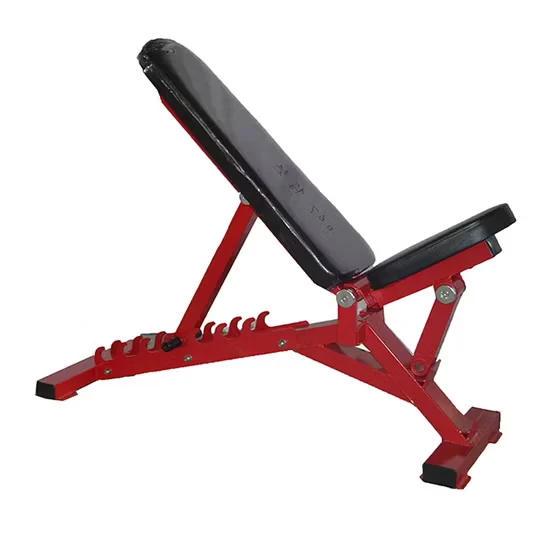
Multi-Functional Adjustable Bench, Incline/Flat/Decline Positions, 38kg Net Weight — engineered with steel frame construction and 1673×706×1390mm dimensions for high-density commercial gym floors. Adjustment mechanism tested for pivot stability under repeated loading cycles. ISO 9001 and CE certified with OEM/ODM customization available. Every unit undergoes load testing before shipment, backed by 10-year frame warranty and professional floor planning support.
// Spec Highlights
• Direct from Manufacturer · No Middlemen · Worldwide Shipping
01
// Material
Imported Solid Wood
Premium hardwood frames sourced for density and visual warmth.
02
// Hardware
Medical-Grade Silent
Whisper-quiet pulleys and springs for clinical environments.
03
// Customization
Appearance OEM
Color, upholstery, and branding tailored to your studio.
04
// Service
Layout Design
Free venue planning for studios and rehab institutions.
Every component is selected for longevity, performance, and aesthetic harmony - from imported hardwood frames to silent medical-grade accessories.
// Features
11-gauge steel frame with mill-certified traceability — Q235 and Q345 industrial steel sourced from certified mills, cut by 6kW fiber lasers at ±0.1mm tolerance for every tube junction on this adjustable bench.
| Parameter | Value |
|---|---|
| Product Type | Adjustable Bench |
| Frame Steel Gauge | 11-gauge |
| Frame Tube Size | 3×3 inch |
| Steel Grade | Q235 / Q345 |
| Welding Type | Robotic MIG, continuous weld |
| Product Dimensions | 1673×706×1390mm |
| Net Weight | 38kg |
| Adjustment Positions | Incline / Flat / Decline |
| Powder Coating | 200μm scratch-resistant |
| Material | Steel |
| Certification | ISO 9001, CE |
| OEM/ODM | Available |
| Production Capacity | 500 PCS/Month |
| Facility Type | Typical Use |
|---|---|
| Commercial gym strength floor | Multi-position pressing and dumbbell work in free weight zones |
| Hotel fitness center | Durable bench for varied guest profiles across incline, flat, and decline |
| University strength and conditioning room | High-turnover adjustable bench for athletic departments |
| Rehabilitation and performance center | Controlled-angle positioning for progressive loading protocols |
| Professional fitness club | Daily-use bench supporting heavy dumbbell and barbell movements |
Most benches do not fail at the steel tube — they fail where the backrest angle changes. A commercial adjustable incline decline bench gets tilted dozens of times daily, and if the adjustment mechanism relies on a standard bushing instead of a sealed bearing, the pivot develops play within months. Members feel the wobble during incline pressing; the backrest shifts under load.
The adjustment mechanism determines how long the bench stays rigid at every angle.
In our experience reworking benches that came back with complaints, the frame was fine but the adjustment pin holes had elongated and the bushing had worn through. The fix was redesigning the pivot with sealed industrial bearings and reinforcing the latch plate. That is the structural difference between a bench that holds its angle for years and one that needs replacement within a single equipment cycle [NEED_CITE: bearing selection and fatigue life in pivoting gym equipment joints].
This commercial adjustable incline decline bench covers horizontal, upward, and downward pressing planes, supporting dumbbell chest work, shoulder pressing, and seated row variations from a single station. In a high-density strength floor, it pairs with power racks and plate-loaded machines to fill the gap between fixed-angle benches and fully adjustable cable stations. The 1673×706×1390mm footprint allows tight spacing while maintaining safe clearance for plate loading and dumbbell retrieval. It accommodates a wide range of user body sizes through its multi-position backrest and seat angle, making it suitable for facilities where equipment must serve diverse membership profiles without constant readjustment.
A commercial adjustable incline decline bench in a busy gym faces three stress types simultaneously: static load from heavy pressing, impact load when dumbbells are set down on the frame, and eccentric load when users shift position during a set. The 11-gauge 3×3 inch frame tube resists deflection across all three, but the critical fatigue points are the weld joints where the seat frame meets the base and where the adjustment bracket attaches to the backrest support. Robotic MIG continuous welding eliminates the spot-weld weak points that crack under cyclic loading. The sealed bearings at the pivot handle the rotational stress of angle changes, while the 200μm powder coating protects the steel surface from sweat corrosion and cleaning chemical exposure across thousands of daily contact cycles [NEED_CITE: weld classification and fatigue performance in structural steel under cyclic loading].
The 11-gauge wall thickness on the 3×3 inch frame tube sets the deflection threshold — thinner gauge tubes flex visibly under loads above 150kg, and that flex transfers to the adjustment mechanism, accelerating wear at the pivot. The Q235 and Q345 steel grades provide different yield characteristics; Q345 offers higher resistance to permanent deformation under sustained heavy load, which matters for benches that see daily barbell work. Robotic MIG welding produces continuous fillet welds along every joint, distributing stress across the full seam rather than concentrating it at discrete spot-weld points. The sealed industrial bearings at the adjustment pivot resist contamination from gym dust, chalk, and sweat — environments where open bushings degrade rapidly and develop the play that causes backrest movement during sets. The 200μm powder coating applied after sandblast surface preparation creates a barrier that resists chipping at contact points where users grip the frame or set equipment down [NEED_CITE: powder coating adhesion and impact resistance on structural steel gym equipment].
Benches built with thin-wall tubing and spot-welded joints may pass visual inspection at the factory, but the spot welds crack under repeated heavy loading — and the failure is not cosmetic, it is structural. Non-sealed bearings at the adjustment pivot develop play that makes the backrest shift during incline pressing, creating a safety issue that forces facility operators to pull the bench from the floor. Low-density upholstery compresses permanently within months of commercial use, exposing the foam substrate and requiring full replacement. Thin powder coating chips at frame contact points, leaving bare steel exposed to sweat and humidity, which leads to surface corrosion that spreads under the coating. When the hardware uses non-standard fasteners, replacement parts become unavailable, and the entire bench must be retired rather than repaired [NEED_CITE: failure modes and maintenance cost comparison in commercial fitness equipment].
Every unit is built on the 11-gauge 3×3 inch frame with mill-certified Q235/Q345 steel, traceable back to the coil source — no vague "commercial grade" claims without documentation. Robotic MIG welding produces continuous weld lines at every structural joint, verified through three-stage QC inspection with load testing performed on each bench before shipment, not on random samples. The 200μm industrial powder coating is applied after sandblast preparation for adhesion that resists chipping and corrosion in high-traffic environments. The 10-year frame warranty covers the structural steel against defects in material and workmanship. BICKFIT provides 2D-3D CAD floor planning support to ensure this commercial adjustable incline decline bench is positioned with correct spacing relative to adjacent equipment, maintaining safe clearance for movement and loading. OEM private label and custom color options are available for facility branding requirements.
Provide your strength zone floor area and target equipment list to receive a 2D-3D CAD layout showing optimal placement and spacing for this commercial adjustable incline decline bench. Specify your expected daily user volume so the structural grade can be matched to actual usage intensity. Indicate the body size range of your primary users to confirm the adjustment position range covers your membership profile. Custom requirements for frame color, facility logo, or upholstery specification can be addressed through the OEM process.
Q: How do I distinguish a true commercial adjustable bench from a light-commercial model?
A: Check the frame tube gauge and wall thickness — 11-gauge 3×3 inch steel with continuous robotic MIG welding indicates commercial structural capacity. Light-commercial benches typically use thinner gauge tubing and spot welds that cannot sustain daily heavy loading without developing frame flex or joint failure.
Q: What makes the adjustment mechanism last in high-traffic gym environments?
A: Sealed industrial bearings at the pivot points resist contamination from gym dust, chalk, and sweat, maintaining smooth rotation without developing play. Standard bushings degrade rapidly in these conditions, causing the backrest to shift under load and requiring premature replacement of the entire adjustment assembly.
Q: How should I plan bench spacing in a commercial free weight zone?
A: Allow adequate clearance around the 1673×706×1390mm footprint for users to load dumbbells, move in and out of position, and access adjacent equipment safely. BICKFIT provides 2D-3D CAD floor planning to optimize bench placement relative to racks, plate storage, and traffic flow in your specific facility layout.
Q: What maintenance does the powder coating require in a humid gym environment?
A: The 200μm scratch-resistant powder coating applied over sandblasted steel resists chipping and corrosion under normal commercial use. Clean surfaces regularly with pH-neutral cleaner to remove sweat and humidity residue, and inspect contact points where frames touch or equipment is set down for any coating damage that could expose bare steel.
Premium aesthetics meet quiet operation for boutique studio environments.
Medical-grade silence and precision for sports & postpartum recovery.
Furniture-grade craftsmanship for premium residential installations.
Compact premium setups for one-on-one and small-group training.
Aesthetic Pilates integration for hybrid wellness studio programming.
Multi-unit deployment with instructor-grade reliability for certification programs.
Tell us about your project. Our team will respond within 24 hours with pricing, customization options, and shipping details.
// Sales Director
William
+86 132 2531 1800
// Export Manager
Bella
+86 198 5412 8032
william@bickfit.com