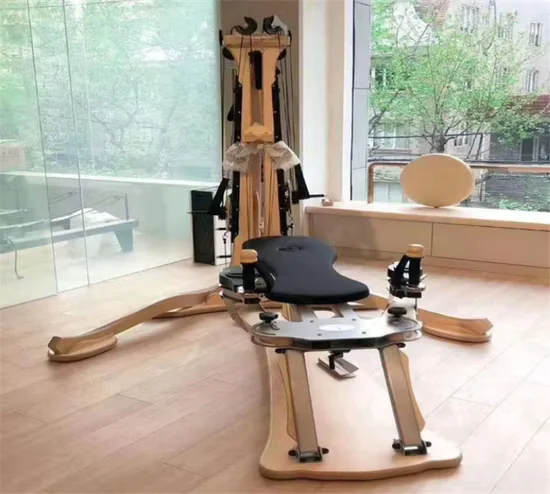
01 / Scenario
STUDIO
P
High-End Pilates Studios
Premium aesthetics meet quiet operation for boutique studio environments.

ISO
9001
CE
Certified
OEM
Available
10YR
Warranty
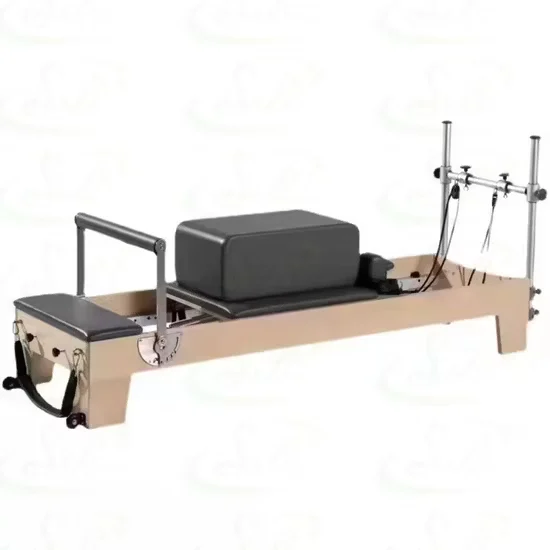
Black Aluminum Alloy Pilates Reformer with Tower, 2570×730×270mm, 90kg Net Weight — engineered with aircraft-grade aluminum alloy frame for structural rigidity and corrosion resistance, paired with precision-machined pulley and rail system ensuring smooth carriage glide under repeated commercial loads. Tower attachment expands vertical training dimensions with integrated spring and rope configurations for comprehensive movement coverage. Each unit undergoes full load testing and 32-point inspection before shipment, backed by 3-year warranty and custom logo availability.
// Spec Highlights
• Direct from Manufacturer · No Middlemen · Worldwide Shipping
01
// Material
Imported Solid Wood
Premium hardwood frames sourced for density and visual warmth.
02
// Hardware
Medical-Grade Silent
Whisper-quiet pulleys and springs for clinical environments.
03
// Customization
Appearance OEM
Color, upholstery, and branding tailored to your studio.
04
// Service
Layout Design
Free venue planning for studios and rehab institutions.
Every component is selected for longevity, performance, and aesthetic harmony - from imported hardwood frames to silent medical-grade accessories.
// Features
Structural Traceability — Every aluminum extrusion batch is sourced with supplier certification traceable to the original ingot, ensuring consistent alloy composition and mechanical properties across production runs.
| Parameter | Value |
|---|---|
| Product Type | Pilates Reformer with Tower |
| Material | Aluminium Alloy |
| Color | Black |
| Product Dimensions | 2570×730×270mm |
| Net Weight | 90kgs |
| Accessories Included | Long Box / Jump Board / Platform |
| Target User | Adult, Unisex |
| Logo | Customized Is Allowed |
| Customization | Available |
| Warranty | 3 Years |
| Facility Type | Typical Use |
|---|---|
| Pilates Studio | Core conditioning and full-body reformer classes across group and private sessions |
| Boutique Fitness Studio | Hybrid reformer-mat programming with tower-based resistance exercises |
| Rehabilitation and Physiotherapy Center | Controlled-range movement protocols for post-injury and post-surgical recovery |
| Hotel and Resort Wellness Facility | Guest-facing Pilates programming in spa-adjacent fitness suites |
| Private Home Studio | Comprehensive reformer and tower routines for dedicated personal practice |
The alloy frame eliminates the rust-and-replace cycle that carbon steel reformers force on high-traffic studios.
Walk into any studio running budget carbon steel reformers past the two-year mark and you will see the same pattern: surface corrosion creeping along weld seams where sweat and cleaning agents accumulate, carriage wobble developing as thin-wall tube sections begin to deflect under repeated sliding loads, and pulley housings that have shifted out of alignment because the base frame itself has warped. The commercial aluminum alloy Pilates reformer with tower avoids this entire failure chain because aluminum alloy does not oxidize the way untreated mild steel does, and the extrusion profiles used here carry wall thickness sufficient to resist the cyclic loading of daily group classes [NEED_CITE: material fatigue behavior in aluminum alloy structural extrusions].
This unit covers the sagittal and frontal movement planes through sliding carriage work and vertical tower exercises, targeting core stabilizers, hip flexors, gluteal chains, and upper body pulling musculature in a single footprint. In a studio layout, the commercial aluminum alloy Pilates reformer with tower pairs with mat stations and small apparatus like the Wunda chair and spine corrector to fill out a complete class rotation without requiring additional large-format equipment. The 2570mm length allows comfortable clearance for overhead tower movements while keeping adjacent lane spacing manageable in rooms designed for eight to twelve units. Users across a wide range of body proportions can work effectively on the platform given the carriage travel and spring anchor positions.
The reformer carriage endures lateral and vertical forces every time a user performs footwork sequences or long-box slides, with peak stress arriving during jump board landings where impact loads multiply static body weight. The tower section introduces a separate stress profile — sustained tension from springs and ropes pulling downward and sideways on the vertical uprights. In a studio running four to six classes per day, these load cycles accumulate rapidly, concentrating stress at the junction where the tower bolts to the main frame and where the carriage wheels meet the rail ends. The aluminum extrusion joints and fastener points must handle this combined fatigue environment without developing play or microfractures over extended service [NEED_CITE: cyclic load performance in bolted aluminum frame structures]. Upholstery on the carriage pad and long box also faces accelerated wear from constant friction and cleaning chemical exposure, requiring density and surface treatment matched to commercial turnover rates.
The aluminum alloy extrusion chosen for the main carriage rail dictates how well the sliding surface resists deflection under off-center loading — a wider profile with internal ribbing maintains flatness where a simple hollow tube would develop a concave wear track over months of use. The carriage wheel-to-rail interface governs both noise and smoothness; precision-machined rail surfaces paired with sealed wheel bearings keep the glide consistent without the lateral play that develops when open bushings ingest dust and skin particles from the studio environment. The tower attachment method matters structurally: a bolted flange connection distributing load across a broad section of the main frame outperforms a single-point bracket that concentrates stress into one extrusion wall. Spring anchor points on both the carriage and tower must resist pullout under sustained tension, which requires the aluminum profile to carry adequate wall thickness around each anchor hole. The black powder-coated finish on the alloy surface provides a wear barrier against cleaning agents and sweat residue without the adhesion problems that plague painted finishes on aluminum substrates.
Studios that purchase reformers built on thin-wall carbon steel frames discover within the first year that carriage wobble requires increasingly frequent wheel adjustments, and surface rust demands sanding and repainting during every scheduled maintenance window. Point-welded joints on budget tower assemblies begin to show hairline cracks where the vertical upright meets the base plate, creating a liability question that no studio owner wants to answer in front of a client. Non-sealed carriage bearings pick up particulate contamination from the studio floor and develop audible grinding that disrupts the focused environment a Pilates class requires. Low-density foam padding on the carriage compresses to the point where users feel the aluminum base plate beneath them, triggering reupholstery costs that compound across a room full of units [NEED_CITE: upholstery compression and replacement cycles in commercial fitness environments]. When non-standard hardware is used throughout the assembly, sourcing replacement springs, ropes, and foot bar components becomes an ongoing procurement problem rather than a simple reorder.
The aluminum alloy frame specification here carries supplier material certification so that the extrusion composition is verifiable at any point, not just described in marketing language. Robotic welding processes on the steel subcomponents ensure continuous weld lines without the cold joints that plague manual spot welding on cheaper assemblies. Every unit undergoes load testing before it leaves the facility, meaning the carriage and tower are exercised under real tension rather than approved on a sample basis. The powder coating applied to the aluminum surfaces is processed at industrial thickness to resist chipping where accessories contact the frame during class setups. A three-year warranty backs the structural components, and the customization options for logo and color allow studios to maintain brand consistency across their equipment fleet. Our engineering team also provides 2D and 3D floor planning CAD support to confirm that the 2570×730mm footprint fits your room layout with proper clearance between adjacent reformers and safe egress paths.
Provide your studio floor area and target unit count to receive a 2D or 3D layout confirming spacing, egress, and tower clearance for the commercial aluminum alloy Pilates reformer with tower. Share your average daily class volume and user demographics so the structural grade and upholstery specification can be matched to your actual throughput. Confirm any logo placement, frame color, or accessory bundling requirements at the inquiry stage so that customization lead times align with your opening or renovation schedule.
Q: What performance difference does an aluminum alloy frame make compared to carbon steel in a commercial studio?
A: Aluminum alloy eliminates the progressive surface corrosion that carbon steel develops in sweat-heavy studio environments, reducing the maintenance burden of sanding and repainting. The extrusion profiles also carry consistent wall thickness and internal ribbing that resist deflection under repeated carriage loading, keeping the glide path true longer than thin-wall steel tube construction typically manages under equivalent class volume.
Q: How do you determine whether the carriage and rail system meets commercial-grade durability standards?
A: Look for sealed wheel bearings that exclude studio dust and particulate contamination rather than open bushings that develop lateral play within months. The rail surface should show precision machining rather than raw extrusion finish, because surface irregularities translate directly into carriage vibration and noise. Ask for sliding cycle test documentation that demonstrates sustained smoothness under load [NEED_CITE: bearing sealing standards for commercial fitness equipment].
Q: What does the tower attachment add to the range of exercises a single reformer can support?
A: The tower introduces vertical spring resistance for standing work, seated rowing patterns, and overhead pressing movements that the horizontal carriage alone cannot produce. This expands the exercise library available to instructors without requiring a separate apparatus on the studio floor, effectively increasing the programming variety per unit and reducing the total equipment footprint needed for a comprehensive class format.
Q: What maintenance intervals should a studio plan for regarding springs, ropes, and upholstery?
A: Springs should be inspected for deformation and loss of tension on a monthly rotation schedule, with replacement driven by observed performance decline rather than a fixed calendar date. Ropes and straps require inspection for fraying at attachment points and pulley contact zones. Upholstery pads compress under daily use and should be evaluated quarterly for surface integrity and support density, with replacement parts sourced from the original manufacturer to maintain fit.
Q: What is involved in ordering customized logo placement and color options?
A: Logo application on the aluminum frame requires artwork files in vector format, with positioning confirmed against the frame profile before the powder coating stage to ensure permanent bonding beneath the finish layer. Custom frame colors are matched to standard RAL references, and lead time extends to accommodate the additional coating run. Minimum order quantities apply for non-standard color batches to justify the separate powder processing setup.
Premium aesthetics meet quiet operation for boutique studio environments.
Medical-grade silence and precision for sports & postpartum recovery.
Furniture-grade craftsmanship for premium residential installations.
Compact premium setups for one-on-one and small-group training.
Aesthetic Pilates integration for hybrid wellness studio programming.
Multi-unit deployment with instructor-grade reliability for certification programs.
Tell us about your project. Our team will respond within 24 hours with pricing, customization options, and shipping details.
// Sales Director
William
+86 132 2531 1800
// Export Manager
Bella
+86 198 5412 8032
william@bickfit.com