01 / Scenario
STUDIO
P
High-End Pilates Studios
Premium aesthetics meet quiet operation for boutique studio environments.

ISO
9001
CE
Certified
OEM
Available
10YR
Warranty
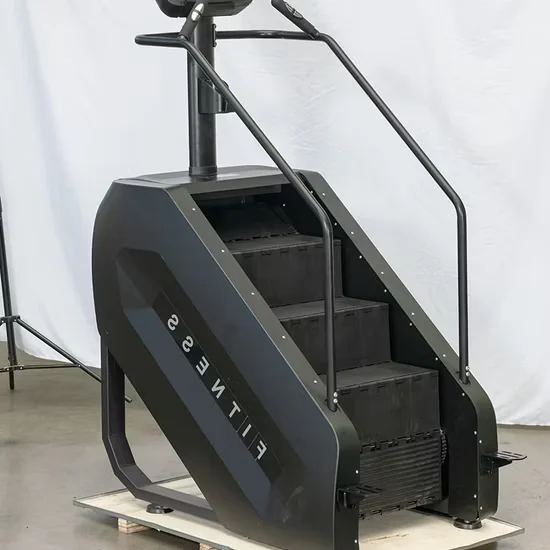
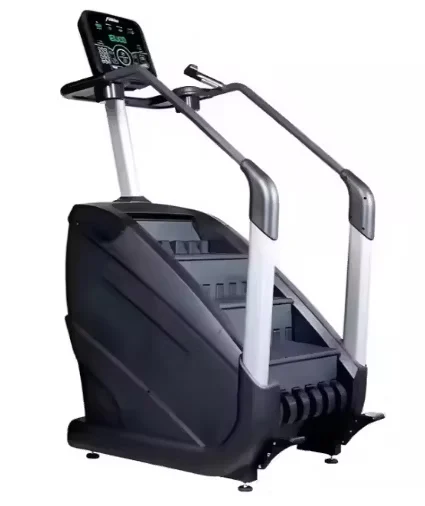
Commercial Motor Drive Stair Climber, 15–164 Steps/Min, 148 kg Net Weight — steel pipe frame construction delivers structural rigidity for continuous daily operation, while the motorized drive ensures smooth cadence control across the full speed range without belt-slip issues. Each unit undergoes three-stage inspection with load testing before shipment, backed by CE certification for commercial gym environments.
// Spec Highlights
• Direct from Manufacturer · No Middlemen · Worldwide Shipping
01
// Material
Imported Solid Wood
Premium hardwood frames sourced for density and visual warmth.
02
// Hardware
Medical-Grade Silent
Whisper-quiet pulleys and springs for clinical environments.
03
// Customization
Appearance OEM
Color, upholstery, and branding tailored to your studio.
04
// Service
Layout Design
Free venue planning for studios and rehab institutions.
Every component is selected for longevity, performance, and aesthetic harmony - from imported hardwood frames to silent medical-grade accessories.
// Features
Motor-Driven Cadence with Structural Rigidity — Steel pipe frame construction eliminates the lateral flex and console vibration that plague lightweight steppers during sustained high-speed climbing sessions.
| Parameter | Value |
|---|---|
| Product Type | Motor Drive Stair Climber |
| Type of Drive | Motor Drive |
| Running Velocity | 15 – 164 steps/min |
| Step Area | 560 × 235 × 220 mm |
| Product Dimensions | 1450 × 820 × 2080 mm |
| Net Weight | 148 kg |
| Mains Input | AC220V±10% / AC110V±10% |
| Material | Steel Pipe + PP Plastic |
| OSD Display | Time, Climb, Calories, Steps, Heart Rate |
| Folded | Unfolded |
| Color | Black (customizable) |
| Certification | CE |
| Condition | New |
| Facility Type | Typical Use |
|---|---|
| Commercial gym cardio zone | High-traffic stepper station for warm-up protocols and HIIT intervals |
| Hotel and resort fitness center | Compact-footprint cardio unit for limited-space exercise rooms |
| University athletic facility | Durable conditioning tool for team preparation and general student use |
| High-traffic fitness studio | Dedicated climbing station for circuit-based class programming |
Many cardio suppliers label equipment "commercial grade" without verifiable frame specifications — leaving gym operators with machines that develop wobble, motor strain, and console failures within months of heavy use.
A steel pipe frame with verified wall thickness maintains motor-to-step alignment across the full 15–164 steps/min range, preventing the drivetrain binding and console flicker that emerge when thin-gauge tubing flexes under repetitive loading.
Operators who have deployed lightweight steppers in high-traffic zones report motor housing vibration intensifying as step cadence increases — a direct consequence of frame resonance rather than motor defect. When the steel pipe structure lacks adequate rigidity, the motor mount shifts microscopically each cycle, gradually misaligning the drive mechanism and accelerating bearing wear [NEED_CITE: structural vibration analysis in motor-driven fitness equipment]. The commercial motor drive stair climber machine addresses this through a steel pipe frame engineered to resist deflection at maximum operating speed, keeping the drivetrain stable through thousands of daily cycles.
This motorized stepper occupies a specific niche on the commercial cardio floor — it provides a weight-bearing, lower-body-dominant climbing motion that complements non-impact options like ellipticals and recumbent bikes. The 1450 × 820 mm footprint allows relatively dense cardio zone layouts, while the 560 × 235 mm step surface accommodates a broad range of foot sizes during extended sessions. The commercial motor drive stair climber machine fits environments where members expect consistent step cadence without manual resistance adjustment, making it suitable for both self-directed workouts and trainer-led conditioning blocks.
Unlike self-powered steppers where user effort directly governs belt tension, a motor drive system imposes continuous cyclic loading on the frame, step mechanism, and bearing assemblies. The steel pipe frame must absorb vibration from the motor while maintaining geometric stability — any flex at the motor mount translates into step wobble that users perceive as instability. Bearing points in the step linkage experience repetitive shear stress across the full speed range, and unsealed bearings in humid gym environments accumulate sweat residue that degrades lubrication over time [NEED_CITE: bearing contamination and service life in indoor fitness equipment]. The powder coating at handgrip contact zones and step edges faces constant exposure to sweat and cleaning chemicals, demanding adequate film thickness and adhesion to prevent premature corrosion at high-wear points.
The steel pipe construction of this unit provides the baseline rigidity needed for motor-driven operation — frame wall thickness and tube cross-section directly determine how much lateral deflection occurs when the motor runs at peak cadence. Thicker-walled steel pipe raises the deformation threshold, meaning the frame resists flex even during prolonged high-speed sessions where thinner alternatives would develop perceptible sway. The motor drive system itself must deliver consistent torque across the 15–164 steps/min range; smooth acceleration without belt slip or dead zones depends on proper motor calibration and a drivetrain that maintains alignment under load. Step dimensions of 560 × 235 × 220 mm provide full-foot contact stability, reducing the lateral foot repositioning that causes joint discomfort during longer climbing efforts. The multi-function OSD console integrates heart rate sensor input alongside time, climb count, calories, and step tracking — signal reliability at the sensor interface matters in commercial settings where console errors generate repeated service calls.
When manufacturers substitute thin-wall tubing for adequate steel pipe gauge, the frame begins to resonate at higher step speeds — users feel instability, and the motor mount gradually loosens as fasteners cycle through vibration-induced preload loss. Spot-welded joints at stress concentration points crack under repetitive loading, creating safety liability that often goes undetected until visible deformation appears. Non-sealed bearings in the step linkage allow moisture and particulate contamination to degrade the lubricant, producing play and noise within months of commercial deployment. Low-density padding on handgrips compresses permanently under daily use, exposing bare substrate and requiring full replacement rather than simple cover swaps. Inadequate powder coating thickness chips at contact edges, leaving bare steel exposed to sweat corrosion that spreads beneath the surrounding finish.
The steel pipe frame undergoes three-stage inspection with load testing on every unit before shipment — not sample-based auditing, but individual verification that the structure performs under commercial duty conditions. Robotic MIG welding produces continuous weld lines without the cold joints and spot-weld weak points that compromise long-term frame integrity. The 200μm scratch-resistant powder coating is applied after sandblast surface preparation, providing durable protection at handgrip and step contact zones where sweat and cleaning agents concentrate. BICKFIT provides 2D-3D CAD layout support for cardio zone planning — ensuring this commercial motor drive stair climber machine is positioned with adequate safety clearance from adjacent equipment and emergency egress paths. A 10-year frame warranty covers the steel pipe structure against manufacturing defects, reflecting confidence in the material traceability and welding quality that goes into each unit.
Provide your cardio zone floor dimensions and existing equipment list to receive a 2D-3D layout plan showing optimal placement of this commercial motor drive stair climber machine with proper safety clearances. Specify your expected daily usage hours so the structural configuration can be matched to your traffic intensity. Indicate any customization requirements for frame color, console language, or facility branding integration.
Q: How do I verify that a motor drive stair climber meets commercial structural requirements rather than light-commercial standards?
A: Request the steel pipe wall thickness and tube cross-section dimensions from the manufacturer — commercial-grade units use heavier-gauge tubing that resists flex at maximum cadence. Confirm that the motor is rated for continuous duty operation of eight or more hours daily without thermal protection shutdown. Ask whether each unit undergoes individual load testing before shipment rather than batch sampling, and verify that bearing assemblies are sealed to resist contamination from sweat and gym floor particulate.
Q: What frame specifications prevent vibration and wobble at high step speeds?
A: The steel pipe frame must have sufficient wall thickness and cross-section rigidity to absorb motor vibration without resonating — thin-wall tubing transmits oscillation to the console and handgrips, creating perceived instability. Continuous weld joints at motor mount and step linkage connection points prevent the micro-movement that spot welds allow under repetitive cyclic loading. A properly engineered commercial motor drive stair climber machine maintains step path alignment across the full speed range without frame deflection.
Q: How does motor drive operation differ from self-powered stepping in terms of structural demands?
A: Motor drive systems impose continuous cyclic loading on the frame and drivetrain regardless of user effort level, meaning the structure must withstand sustained vibration at all cadence settings. Self-powered units rely on user weight to drive the step mechanism, producing variable loading patterns. Motor-driven commercial units require heavier frame construction, sealed bearings rated for continuous rotation, and a drivetrain designed for thousands of hours of uninterrupted operation without belt slip or gear wear.
Q: What floor space and clearance does this stair climber require in a commercial cardio layout?
A: The unit footprint is 1450 × 820 mm with a height of 2080 mm. Allow a minimum of 600 mm clearance on all operational sides for safe mounting and dismounting, plus additional rear access space for maintenance. Position the unit away from high-traffic walkways to prevent collision risk during use. A 2D-3D CAD layout from the manufacturer can confirm optimal spacing relative to adjacent cardio equipment and emergency egress routes.
Q: What maintenance items should be scheduled for long-term commercial operation?
A: Inspect step linkage bearings and motor mount fasteners quarterly for vibration-induced loosening or contamination buildup. Clean the steel pipe frame and powder-coated surfaces with non-abrasive pH-neutral solutions to prevent sweat corrosion at contact edges. Check OSD console sensor connections and heart rate contact pad condition during routine maintenance. Verify that replacement parts for the display, sensors, and step mechanism remain available from the manufacturer for the expected service life of the equipment.
Premium aesthetics meet quiet operation for boutique studio environments.
Medical-grade silence and precision for sports & postpartum recovery.
Furniture-grade craftsmanship for premium residential installations.
Compact premium setups for one-on-one and small-group training.
Aesthetic Pilates integration for hybrid wellness studio programming.
Multi-unit deployment with instructor-grade reliability for certification programs.
Tell us about your project. Our team will respond within 24 hours with pricing, customization options, and shipping details.
// Sales Director
William
+86 132 2531 1800
// Export Manager
Bella
+86 198 5412 8032
william@bickfit.com