01 / Scenario
STUDIO
P
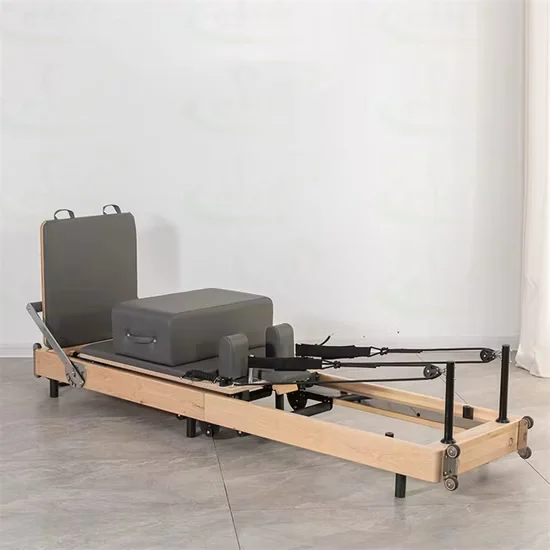
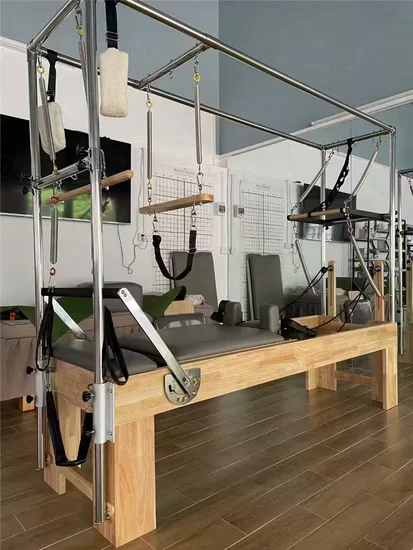
High-End Pilates Studios
Premium aesthetics meet quiet operation for boutique studio environments.

ISO
9001
CE
Certified
OEM
Available
10YR
Warranty
Pilates Reformer Chair, 800×620×1100mm Dimensions, 45kg Net Weight — solid-color industrial frame engineered for high-repetition studio environments, providing floor stability during dynamic reformer and chair exercises without anchoring requirements. Customized branding available with 3-year warranty coverage. Direct manufacturer supply with full OEM-ODM capability for private label programs.
// Spec Highlights
• Direct from Manufacturer · No Middlemen · Worldwide Shipping
01
// Material
Imported Solid Wood
Premium hardwood frames sourced for density and visual warmth.
02
// Hardware
Medical-Grade Silent
Whisper-quiet pulleys and springs for clinical environments.
03
// Customization
Appearance OEM
Color, upholstery, and branding tailored to your studio.
04
// Service
Layout Design
Free venue planning for studios and rehab institutions.
Every component is selected for longevity, performance, and aesthetic harmony - from imported hardwood frames to silent medical-grade accessories.
// Features
Continuous Robotic Welding — Every joint on the Pilates Reformer Chair frame receives continuous MIG weld passes, eliminating the spot-weld fatigue points that cause carriage rail failures in high-repetition studio use.
| Parameter | Value |
|---|---|
| Product Type | Pilates Reformer Chair |
| Product Dimensions | 800×620×1100mm |
| Net Weight | 45kg |
| Frame Steel | Q235 industrial steel, mill-certified |
| Welding Type | Robotic MIG continuous weld |
| Color | Solid color, multiple options available |
| Logo | Customized logo allowed |
| Powder Coating | 200μm scratch-resistant finish |
| Warranty | 3 Years |
| Certification | ISO 9001:2015, CE |
| Facility Type | Typical Use |
|---|---|
| Commercial Pilates studio | Group reformer chair classes with high daily session turnover |
| Hotel and resort wellness center | Guest-facing Pilates sessions requiring stable, quiet operation |
| Physical therapy and rehabilitation clinic | Controlled resistance movements for post-injury recovery programs |
| Boutique fitness facility | Small-group or one-on-one Pilates chair training |
| Home fitness room | Personal Pilates practice in a dedicated workout space |
Continuous weld lines keep the carriage rail aligned under thousands of spring-loaded cycles.
Years ago, we built a batch of Pilates carriages for a studio chain. The buyer pushed for cost reduction, so the factory swapped continuous welds for spot welds on the rail anchor points. Within three months, the rails cracked under repeated eccentric loading. We recalled the entire lot and re-welded every unit. [NEED_CITE: weld classification and fatigue performance in structural steel] That experience changed how we approach every commercial pilates reformer chair equipment build — the frame has to outlast the springs, the upholstery, and the studio’s lease. When a studio runs back-to-back classes, the carriage rail anchor points absorb cyclic tension with every rep, and a spot weld simply cannot distribute that stress across the joint surface the way a continuous bead does.
The Pilates Reformer Chair targets sagittal and frontal plane movements — seated pedal presses, standing lateral work, and prone pulling patterns against spring resistance. In a studio layout, it complements full-size reformers by offering a smaller footprint for exercises that demand upright or semi-upright positioning. For facilities running high-density class schedules, the 800×620mm base allows tighter station spacing while still leaving adequate clearance for instructor movement around each unit. The 45kg net weight provides sufficient floor stability during dynamic pedal work without requiring anchor bolts. This makes commercial pilates reformer chair equipment a practical fit for studios that need to maximize participant count per session without compromising safety corridors between stations.
A busy studio may run eight to ten classes daily, with each participant loading and unloading the pedal spring mechanism dozens of times per session. The pedal pivot points and spring anchor brackets experience repeated eccentric force, concentrating stress at the weld toes where the bracket meets the main frame tube. [NEED_CITE: EN 957 structural requirements for stationary training equipment] Over months of this cyclic loading, spot-welded joints develop micro-cracks that propagate until the bracket shifts — at which point the carriage travel path no longer tracks true, and the risk of a mid-session failure increases. Continuous MIG welds spread the load across the full joint length, delaying fatigue onset. The powder coating at these stress points must also tolerate sweat exposure and frequent cleaning without lifting at the weld seams.
The Q235 industrial steel frame provides a verified baseline for structural behavior — mill certification means the steel composition and mechanical properties are traceable back to the coil, not guessed from a supplier label. Robotic MIG welding produces consistent penetration depth across every joint, which matters most at the pedal pivot where off-axis loading can twist a weak weld open. The 200μm powder coating thickness is applied after sandblasting, which creates mechanical adhesion that thin spray finishes cannot match — especially at contact points where hands, feet, and spring clips repeatedly strike the frame. Upholstery density options affect how long the seat and back pads resist compression set; a pad that collapses within six months shifts the user’s pelvic alignment during seated exercises. The 800×620mm footprint and 45kg mass balance floor stability against the need to reposition units for class layouts or floor cleaning.
Thin-gauge tubing on a Pilates chair may look identical in a product photo, but under a 90kg user performing explosive pedal releases, the tube walls flex at the pedal bracket junction, gradually ovalizing the bolt holes and introducing play into the mechanism. Non-sealed bearings at the pedal pivot accumulate chalk dust and sweat residue, developing grinding that users notice within the first season. Low-density foam pads compress permanently under daily class use, forcing the studio to order replacement upholstery — often with long lead times if the original supplier does not stock spare pads. Insufficient powder coating chips at the spring hook points within months, exposing bare steel to humidity and accelerating surface rust. [NEED_CITE: powder coating thickness standards and corrosion resistance for fitness equipment] Each of these failures costs the studio in downtime, replacement parts, and lost class revenue.
The 11-gauge steel frame with mill-certified sourcing means the tube specification is verifiable — a studio owner can request the coil certificate and confirm what is actually in the frame. Robotic MIG welding on every joint removes the variability that hand-welding introduces, particularly on the pedal pivot brackets where fatigue failures concentrate. Each unit undergoes load testing before shipment, so the studio receives documented proof that the chair handled stress beyond normal operating loads. The 200μm industrial powder coating resists the chips and scratches that accumulate from spring clip contact and daily cleaning. A 10-year frame warranty on the structural members reduces the studio’s long-term capital risk. CAD-based floor planning support helps operators position commercial pilates reformer chair equipment with correct safety clearances between stations, ensuring instructor access and participant egress paths meet facility code expectations. OEM customization allows branded colorways and logo placement for studios building a consistent visual identity.
Provide your studio floor dimensions and current equipment list to receive a 2D or 3D layout showing recommended Pilates Reformer Chair placement with safety clearances. Specify your average daily class count and participant volume so we can confirm the structural grade matches your usage intensity. Share your target user demographic to verify the seat height and pedal range accommodate the expected body size range. Indicate any color, logo, or upholstery customization requirements so the production team can prepare matching samples before your order enters the build queue.
Q: How do I tell commercial-grade Pilates equipment from light-commercial?
A: Request the frame steel gauge and mill certification — commercial units use verified tube specifications, not vague "commercial grade" labels. Inspect the welding method; continuous MIG welds outperform spot welds under daily class loads. Check whether bearings are sealed and whether the manufacturer supplies load testing documentation per unit rather than per product line.
Q: What frame specification is needed for a high-traffic Pilates studio?
A: A studio running multiple classes daily needs a frame built from mill-certified industrial steel with continuous weld seams at all stress points. The frame mass should provide floor stability without anchoring. Request the manufacturer’s load testing protocol and confirm it covers every unit shipped, not just a sample from the production batch.
Q: How should I evaluate carriage rail and bearing quality?
A: Confirm the bearing type at every pivot point — sealed bearings resist chalk dust and sweat contamination far better than open bushings. Ask for the bearing load rating and verify the rail surface finish is smooth enough to prevent premature wear. Request maintenance interval recommendations so you can plan bearing inspection into your studio’s regular schedule.
Q: What warranty applies to moving parts versus the frame?
A: Frame coverage typically extends to ten years on commercial-grade equipment, while springs, bearings, and upholstery carry shorter periods reflecting their wear rate. Confirm the warranty terms in writing before ordering, and ask whether replacement springs and pads are stocked and available for quick shipment to minimize class cancellation downtime.
Q: How do I plan studio layout for safe equipment spacing?
A: Request a CAD layout from the manufacturer showing each chair’s footprint with recommended clearance zones. Instructor walkways should allow full movement around each station. Door swings, emergency exits, and storage access paths must remain unobstructed. Account for participant entry and exit flow during class transitions to prevent bottlenecking between equipment rows.
Premium aesthetics meet quiet operation for boutique studio environments.
Medical-grade silence and precision for sports & postpartum recovery.
Furniture-grade craftsmanship for premium residential installations.
Compact premium setups for one-on-one and small-group training.
Aesthetic Pilates integration for hybrid wellness studio programming.
Multi-unit deployment with instructor-grade reliability for certification programs.
Tell us about your project. Our team will respond within 24 hours with pricing, customization options, and shipping details.
// Sales Director
William
+86 132 2531 1800
// Export Manager
Bella
+86 198 5412 8032
william@bickfit.com