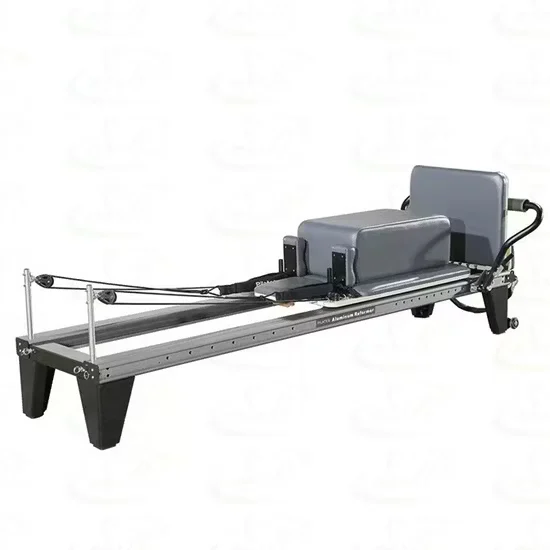
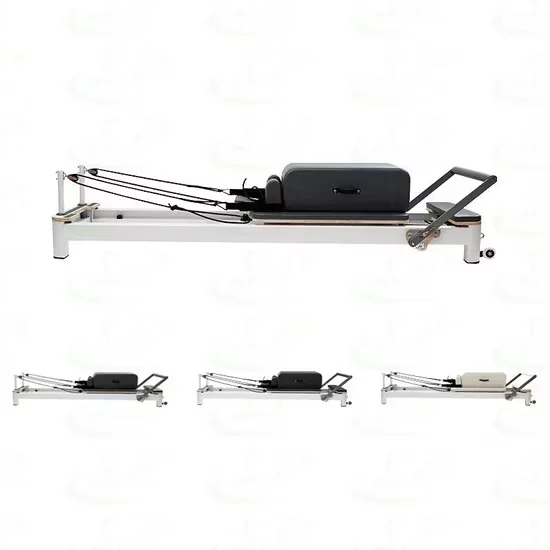
01 / Scenario
STUDIO
P
High-End Pilates Studios
Premium aesthetics meet quiet operation for boutique studio environments.
ISO
9001
CE
Certified
OEM
Available
10YR
Warranty
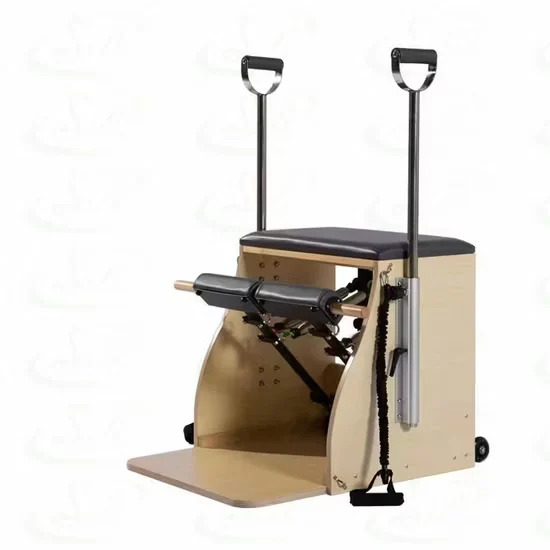
Pilates Reformer Chair, 800×620×1100mm, 45kg Net Weight — solid wood frame with reinforced joinery ensures structural rigidity under repetitive spring-loaded movement, while precision-machined carriage rail delivers smooth glide without lateral play. Customizable logo and color options available for studio branding. Each unit undergoes 32-point inspection and 100% load testing before shipment.
// Spec Highlights
• Direct from Manufacturer · No Middlemen · Worldwide Shipping
01
// Material
Imported Solid Wood
Premium hardwood frames sourced for density and visual warmth.
02
// Hardware
Medical-Grade Silent
Whisper-quiet pulleys and springs for clinical environments.
03
// Customization
Appearance OEM
Color, upholstery, and branding tailored to your studio.
04
// Service
Layout Design
Free venue planning for studios and rehab institutions.
Every component is selected for longevity, performance, and aesthetic harmony - from imported hardwood frames to silent medical-grade accessories.
// Features
Structural Rigidity Under Spring Load — Solid wood frame construction resists seasonal expansion and maintains rail alignment through thousands of compression cycles.
| Parameter | Value |
|---|---|
| Product Type | Pilates Reformer Chair |
| Product Dimensions | 800×620×1100mm |
| Net Weight | 45kg |
| Frame Material | Solid Wood |
| Color | Solid Color (customizable) |
| Logo | Customized Is Allowed |
| Upholstery | Standard or high-density options |
| Warranty | 3 Years |
| Certification | ISO 9001 (manufacturer level) |
| Transport Package | Standard Wood Case |
| Facility Type | Typical Use |
|---|---|
| Pilates Studio | Primary reformer stations for group and private sessions |
| Commercial Gym Functional Zone | Reformer-based core and mobility work alongside rigs |
| Rehabilitation Center | Controlled spring-resistance exercises for physiotherapy protocols |
| Boutique Fitness Studio | Branded reformer environments with custom logo integration |
A reformer chair fails at the joint before the wood splits.
Many facilities discover within the first year that the carriage begins to wobble laterally, producing uneven resistance and forcing instructors to compensate verbally during sessions. The root cause is almost always joint construction rather than wood species itself — doweled connections loosen under the repetitive eccentric loading of spring return, while mortise-and-tenon or reinforced laminated joints maintain alignment far longer. When a commercial pilates reformer chair is specified for studio use, the frame must handle not just static body weight but the dynamic oscillation of spring tension release hundreds of times per day. [NEED_CITE: EN 957 structural requirements for stationary training equipment]
The commercial pilates reformer chair occupies a specific niche between pure strength equipment and mobility tools, targeting spinal articulation, hip flexor engagement, and scapular stability in a supine or seated position. It complements plate-loaded and selectorized machines by providing low-impact resistance that serves recovery days and active rehabilitation without overlapping the loading patterns of squat racks or cable columns. Facilities with high member throughput benefit from placing these units in a dedicated zone with adequate clearance for full carriage extension, typically serving members ranging from lighter recreational users to heavier athletic populations through adjustable spring configuration.
The primary fatigue cycle on this equipment comes from spring tension fluctuation rather than static compression — each repetition loads and unloads the carriage rail system, creating micro-movements at every connection point between the rail and the wood frame. Over a full day of back-to-back classes, these cycles accumulate into meaningful shear stress at the rail mounting hardware, particularly if the original fasteners were sized for residential rather than commercial duty. Upholstery contact points experience abrasion from clothing friction combined with sweat moisture, degrading surface material well before the foam core compresses. Wood frames in climate-controlled studios remain stable, but any humidity variation causes the grain to expand perpendicular to the rail axis, potentially binding carriage movement if tolerances were set too tight at assembly. [NEED_CITE: wood dimensional stability under cyclic humidity conditions]
The 800×620mm footprint reflects a deliberate balance between carriage travel length and floor space efficiency in multi-station studio layouts. A 45kg net weight indicates sufficient frame mass to resist walking or shifting during aggressive spring-loaded movements without requiring permanent floor anchoring. The 1100mm height accommodates the full range of standing and kneeling exercises while keeping the center of gravity low enough to prevent tipping under off-center user positioning. Solid wood construction here means the frame can be refinished or repaired locally rather than requiring full replacement when surface damage occurs — a practical advantage over wrapped or laminated composite alternatives in high-visibility studio environments. Custom logo integration at the manufacturer level allows branding directly into the wood or upholstery, avoiding the peeling and wear associated with applied decals.
Thinner wood sections or lower-grade lumber reduce upfront cost but introduce rail warping as the frame responds unevenly to seasonal humidity shifts, turning smooth carriage glide into a sticking point that instructors must work around. Undersized mounting hardware for the rail system leads to elongation of screw holes over time, creating lateral play that no amount of lubrication can correct. Low-density foam in the upholstery compresses within months under daily commercial scheduling, leaving users in direct contact with the rigid frame beneath and generating complaints that reflect poorly on the facility rather than the equipment. Non-standard spring attachment points mean replacement springs may not be available from general suppliers, forcing the facility into extended downtime while sourcing proprietary parts. [NEED_CITE: fatigue failure patterns in spring steel under cyclic tension]
Solid wood frame construction is specified here because it allows field repair and refinishing without returning the unit to the factory, keeping studio schedules intact. Each unit undergoes load testing before shipment to verify carriage alignment and spring calibration under actual working conditions rather than relying on sample-based quality control. The three-year warranty reflects confidence in joint construction and rail hardware surviving the compression cycles of commercial scheduling. Custom color and logo options are integrated at the manufacturing stage, meaning branding survives the wear of daily use rather than degrading as surface applications do. Facility operators receive layout guidance that accounts for the full carriage extension envelope and safe instructor circulation space around each station.
Provide your functional zone or studio floor dimensions to receive a layout that accounts for carriage extension and safe passage between stations. Specify expected daily session volume so the appropriate spring configuration and upholstery density can be matched to your scheduling intensity. Confirm the user population weight range to ensure spring tension options cover the full spectrum from rehabilitation loads to advanced athletic resistance. Indicate any branding requirements including logo placement and frame color to align with your studio identity before production begins.
Q: How do you distinguish commercial-grade Pilates chairs from home-use models?
A: Commercial units specify wood species, joint reinforcement method, and rail hardware sizing rather than generic "solid wood" descriptions. They carry load test records for each unit, offer replacement upholstery and springs as standard spare parts, and provide warranty terms that reflect daily studio scheduling rather than occasional personal use patterns.
Q: What is the difference between laminated and solid plank wood frames?
A: Laminated frames layer multiple wood sections with alternating grain direction, resisting warping from humidity changes more effectively than single solid planks. Solid plank construction offers easier local repair and refinishing but requires more careful climate control to maintain rail alignment over seasonal changes.
Q: How does spring tension range relate to user weight capacity?
A: The spring system must provide meaningful resistance across the full user weight spectrum without requiring excessive pre-tension that shortens spring life. A properly calibrated commercial configuration offers multiple spring attachment points, allowing instructors to scale resistance for rehabilitation through advanced athletic use on the same unit.
Q: What maintenance does the carriage rail system require?
A: Rail surfaces need periodic cleaning to remove dust and body oil buildup that increases friction. Mounting hardware should be checked for torque retention quarterly, and rail lubrication applied according to the bearing type specified — sealed bearings require less frequent attention than open bushing systems in high-humidity studio environments.
Premium aesthetics meet quiet operation for boutique studio environments.
Medical-grade silence and precision for sports & postpartum recovery.
Furniture-grade craftsmanship for premium residential installations.
Compact premium setups for one-on-one and small-group training.
Aesthetic Pilates integration for hybrid wellness studio programming.
Multi-unit deployment with instructor-grade reliability for certification programs.
Tell us about your project. Our team will respond within 24 hours with pricing, customization options, and shipping details.
// Sales Director
William
+86 132 2531 1800
// Export Manager
Bella
+86 198 5412 8032
william@bickfit.com