01 / Scenario
STUDIO
P
High-End Pilates Studios
Premium aesthetics meet quiet operation for boutique studio environments.
ISO
9001
CE
Certified
OEM
Available
10YR
Warranty
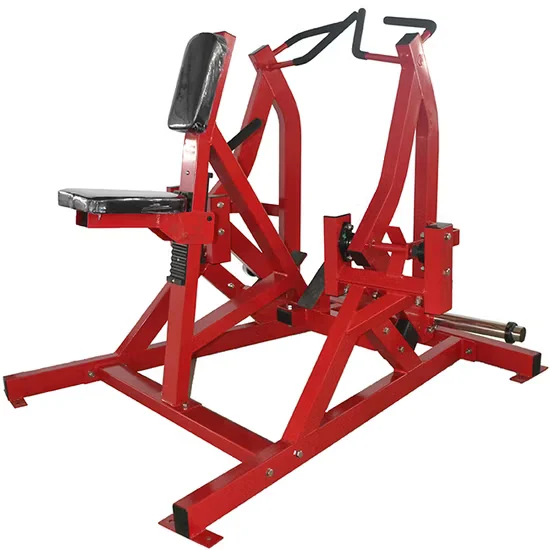
Plate Loaded ISO-Lateral Rowing Machine, 3×3 Inch Frame, 128kg Net Weight — engineered with 11-gauge Q235/Q345 steel and robotic MIG continuous welds to eliminate stress concentration points under repetitive heavy loading. Sealed industrial bearings maintain smooth pull trajectories without axial play across high-traffic daily use. Every unit undergoes individual load testing before shipment, backed by a 10-year frame warranty.
// Spec Highlights
• Direct from Manufacturer · No Middlemen · Worldwide Shipping
01
// Material
Imported Solid Wood
Premium hardwood frames sourced for density and visual warmth.
02
// Hardware
Medical-Grade Silent
Whisper-quiet pulleys and springs for clinical environments.
03
// Customization
Appearance OEM
Color, upholstery, and branding tailored to your studio.
04
// Service
Layout Design
Free venue planning for studios and rehab institutions.
Every component is selected for longevity, performance, and aesthetic harmony - from imported hardwood frames to silent medical-grade accessories.
// Features
Traceable Mill Steel — every 11-gauge tube traced back to its original coil certificate before cutting begins.
| Parameter | Value |
|---|---|
| Product Type | Plate Loaded Rowing Machine |
| Frame Steel Gauge | 11-gauge |
| Frame Tube Size | 3×3 inch |
| Steel Grade | Q235 / Q345 |
| Welding Type | Robotic MIG continuous welds |
| Loading Type | Plate loaded |
| Bearing Type | Sealed industrial bearings |
| Pulley System | Aircraft-cable pulley system |
| Powder Coating | 200μm scratch-resistant |
| Product Dimensions | 1558×1426×1467mm |
| Net Weight | 128kg |
| Certification | ISO 9001, CE |
| Facility Type | Typical Use |
|---|---|
| Commercial gym strength floor | High-traffic back training station for general membership |
| CrossFit box functional zone | Fixed-plate pulling movement to supplement barbell work |
| University strength and conditioning room | Heavy-load rowing for varsity athlete programming |
| Hotel fitness center | Durable single-station back equipment for guest use |
Continuous MIG welds eliminate the exact failure point that forces recalls in commercial pulling equipment.
Most gym owners never see the weld inside the frame joint. They only notice when a pulling arm develops wobble eighteen months after installation, or when a pivot plate shifts off-axis during a heavy set. The underlying cause is almost always a spot weld that passed a visual inspection at the factory but was never designed for thousands of eccentric pull cycles. A commercial plate loaded iso-lateral rowing machine transfers load through the entire arm-to-frame junction on every repetition, concentrating stress exactly where a short spot weld ends and unwelded steel begins. [NEED_CITE: weld classification and fatigue performance in structural steel]
This station covers the horizontal pulling plane, targeting the latissimus dorsi, rhomboids, and posterior deltoids through an iso-lateral converging arc. It pairs with a lat pulldown for vertical pulling balance and sits opposite a chest press to create a push-pull training loop. The iso-lateral arm design accommodates limb-length differences, meaning members from smaller-framed users to large athletes can load each side independently. A commercial plate loaded iso-lateral rowing machine earns its floor space by serving a broad membership without requiring adjustment between sets.
Rowing movements produce a distinct stress profile: high concentric force during the pull, followed by a controlled eccentric return where the plates decelerate against the stops. Each cycle loads the pivot bearing, the arm-to-frame weld, and the horn where plates sit. Over thousands of repetitions, the pivot bearing experiences radial force that wears unsealed bushings into oval profiles. Sweat and chalk dust infiltrate open bearings, accelerating degradation. The powder coating at contact points — plate horns, foot braces, seat rail — takes repeated impact and abrasion that thin coatings cannot survive. [NEED_CITE: EN 957 structural requirements for stationary training equipment]
The 11-gauge frame tube and 3×3 inch cross-section work together: wall thickness resists local buckling at the weld, while the square section resists torsional twist when one arm is loaded heavier than the other. Robotic MIG continuous welds mean the entire joint perimeter is fused, distributing stress across a long weld line instead of concentrating it at discrete spots. Sealed industrial bearings block chalk dust and moisture from reaching the race, which is the primary reason they maintain smooth pivoting through years of heavy use. The 200μm powder coat, applied after sandblast preparation, provides a coating thickness that resists chipping at the plate horns and foot-plate contact zones where bare steel would otherwise corrode within months.
Dropping from 11-gauge to a thinner wall tube may reduce the purchase price, but the frame begins to flex under asymmetric loading, creating a perceptible sway during single-arm rows. Spot-welded joints save seconds per unit on the production line but introduce a predictable failure timeline once heavy users cycle the arms daily. Unsealed bushings demand replacement on a schedule that interrupts gym operations and requires technician labor. Thin powder coating chips within the first year at every metal-to-metal contact point, exposing steel to sweat corrosion that spreads beneath the remaining coat. Non-standard hardware means replacement bearings or cables are unavailable once the original supplier moves on. [NEED_CITE: bearing service life under contaminated conditions in commercial fitness environments]
The 11-gauge Q235/Q345 steel is sourced with mill certificates traceable to the coil, so the wall thickness on the spec sheet is the wall thickness in the frame. Robotic MIG welding runs continuous beads along every structural joint, verified through three-stage QC inspection rather than random sampling. Each unit undergoes a load test before crating — not a sample from the batch, but the actual machine shipping to the floor. The 200μm industrial powder coating survives plate impacts and daily cleaning chemicals without cracking. A ten-year frame warranty covers the structural members that matter. Floor planning support provides CAD layouts that position this station with proper clearance for plate loading and user passage on both sides.
Provide the square footage of your pulling-equipment zone and the rest of your machine list to receive a 2D-3D floor plan with safe clearance distances around each station. Specify average daily traffic volume so we can confirm whether the sealed bearing and 11-gauge frame match your usage profile. Share the body-size range of your primary user group to verify that the iso-lateral arm convergence path fits your membership. Note any color, logo, or upholstery preferences for OEM customization.
Q: How do I confirm a plate loaded rowing machine is truly commercial grade?
A: Request the mill certificate for the frame steel and verify the gauge matches the spec sheet. Ask whether the weld is continuous MIG or spot-welded, and whether load testing covers every unit or only samples. Inspect the bearing type — sealed industrial bearings indicate a build intended for years of high-frequency use without maintenance intervention.
Q: What is the practical difference between 11-gauge and 14-gauge frame steel?
A: Thinner-gauge tubing begins to flex visibly when a user loads one side heavily, creating a sway that compromises the pulling path. Under repeated eccentric loading, thinner walls also fatigue faster at the weld junction. An 11-gauge, 3×3 inch tube maintains rigidity through the full range of motion, keeping the convergence arc stable regardless of load asymmetry.
Q: Should I choose plate loaded or selectorized for a high-traffic gym?
A: Plate loaded stations give experienced users finer load increments and accommodate very heavy training without stack limitations. Selectorized units offer faster weight changes for circuit-style environments where members rotate quickly. Many commercial floors run both, placing plate loaded rows near the free-weight zone and selectorized rows in the express circuit area.
Q: What maintenance do sealed industrial bearings actually require?
A: Sealed bearings block dust, chalk, and moisture from entering the race, so they do not need periodic lubrication or adjustment. The primary maintenance task is a visual check during quarterly inspections to confirm the seal remains intact and the pivot runs without lateral play. If a seal is damaged, the bearing is replaced as a cartridge unit.
Premium aesthetics meet quiet operation for boutique studio environments.
Medical-grade silence and precision for sports & postpartum recovery.
Furniture-grade craftsmanship for premium residential installations.
Compact premium setups for one-on-one and small-group training.
Aesthetic Pilates integration for hybrid wellness studio programming.
Multi-unit deployment with instructor-grade reliability for certification programs.
Tell us about your project. Our team will respond within 24 hours with pricing, customization options, and shipping details.
// Sales Director
William
+86 132 2531 1800
// Export Manager
Bella
+86 198 5412 8032
william@bickfit.com