01 / Scenario
STUDIO
P
High-End Pilates Studios
Premium aesthetics meet quiet operation for boutique studio environments.

ISO
9001
CE
Certified
OEM
Available
10YR
Warranty
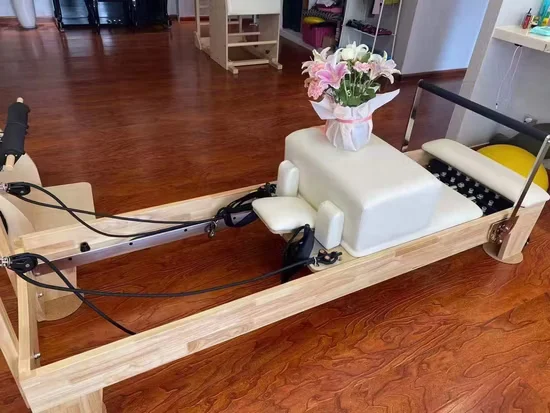
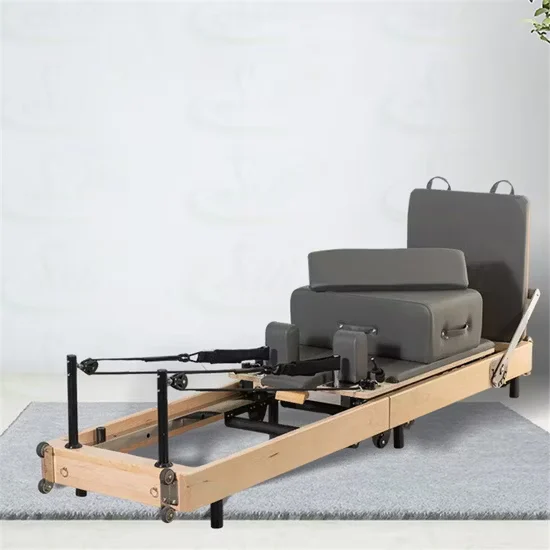
Reformer Pilates with Tower, 2400×600×350mm, 100kg Net Weight — integrated bed and tower frame engineered for studio-grade load stability, with sealed pulley system and standardized accessory ports for Long Box, Jump Board, and Platform quick-swap. Spring set calibrated for consistent resistance gradient across 8+ hours daily commercial use. Backed by 3-year warranty and full OEM private label capability for studio branding.
// Spec Highlights
• Direct from Manufacturer · No Middlemen · Worldwide Shipping
01
// Material
Imported Solid Wood
Premium hardwood frames sourced for density and visual warmth.
02
// Hardware
Medical-Grade Silent
Whisper-quiet pulleys and springs for clinical environments.
03
// Customization
Appearance OEM
Color, upholstery, and branding tailored to your studio.
04
// Service
Layout Design
Free venue planning for studios and rehab institutions.
Every component is selected for longevity, performance, and aesthetic harmony - from imported hardwood frames to silent medical-grade accessories.
// Features
11-Gauge Frame Steel — mill-certified Q235/Q345 steel traceable to the coil, cut by 6kW fiber lasers at ±0.1mm tolerance for zero structural ambiguity on this commercial reformer pilates with tower.
| Parameter | Value |
|---|---|
| Product Type | Pilates Reformer with Tower |
| Product Dimensions | 2400×600×350mm |
| Net Weight | 100kgs |
| Accessory | Long Box / Jump Board / Platform |
| Color | Solid Color |
| Logo | Customized Is Allowed |
| Warranty | 3 Years |
| Assembly State | Standard Wood Case |
| Facility Type | Typical Use |
|---|---|
| Pilates studio | Group reformer classes with tower-assisted resistance sequences |
| Yoga studio | Integrated flexibility and core stabilization sessions |
| Rehabilitation center | Post-injury mobility work with controlled spring resistance |
| Boutique fitness facility | Small-group training combining reformer and tower exercises |
| Home gym | Dedicated Pilates practice space with full accessory range |
A reformer is only as rigid as its lowest-grade weld joint under cyclic spring loading.
Many suppliers label reformers as studio-grade without disclosing wall thickness, steel grade, or welding method. When the carriage undergoes hundreds of daily extension cycles, underspecified frames deflect at the mid-span, pulleys develop lateral play, and tower uprights sway during standing spring work. I once saw a batch of tower-equipped reformers recalled because the supplier swapped in thin-wall tubing to cut costs — the cross-beams warped under repeated high-tension stretching, and the entire production run had to be reinforced on-site. Structural shortcuts on a moving-carriage system compound faster than on static racks [NEED_CITE: structural fatigue under cyclic tensile loading in exercise equipment].
This commercial reformer pilates with tower covers supine, prone, seated, and standing movement planes, targeting deep stabilizers, hip extensors, spinal erectors, and shoulder girdle muscles through variable spring resistance. In a studio layout, it pairs with mat zones and cadillac units for progressive programming across class levels. The integrated tower eliminates the need for a separate wall-mounted spring board, reducing equipment footprint in high-density boutique facilities. The carriage and long box accommodate users across a broad range of body proportions without adapter changes.
Every reformer session subjects the bed frame to alternating tension from spring anchor points and dynamic load from carriage acceleration. The tower uprights bear eccentric loads when springs are rigged at multiple heights simultaneously, creating bending moments at the base plate connection. Roller bearings on the carriage track encounter dust, chalk residue, and cleaning chemical exposure daily. Upholstered surfaces endure compression cycles from body weight transfer and friction from repetitive limb contact. Powder-coated rails face abrasion from carriage wheels and corrosive attack from sweat and disinfectant spray [NEED_CITE: corrosion and wear factors on coated steel in fitness environments].
The reformer’s resistance feel depends on spring steel grade and fatigue resistance — inconsistent coils produce uneven force curves that instructors cannot calibrate across class sets. Carriage roller diameter and bearing sealing determine whether lateral play develops within the first year of studio use. The tower’s spring attachment points must maintain angular alignment under off-axis loading to keep movement paths predictable. Upholstery density affects both comfort during extended sessions and the interval before compression set creates permanent indentations. Frame dimensional accuracy, cut to ±0.1mm tolerance, ensures carriage travel remains parallel and free of binding at full extension.
Thin-wall tubing on a reformer bed may pass initial visual inspection but begins to deflect noticeably once spring tension and user load combine at mid-span. Spot-welded joints on carriage end-stops fracture under the repeated impact of full-extension rebounds. Unsealed carriage rollers accumulate dust and develop wobble, forcing studios to schedule bearing replacements far earlier than planned. Low-density foam padding compresses permanently under daily commercial use, requiring reupholstery that costs more than specifying proper density upfront. Non-standard fastener sizes mean replacement hardware is unavailable when original components wear out, turning minor repairs into equipment downtime [NEED_CITE: maintenance cost comparison for sealed versus unsealed bearings in commercial fitness].
The bed frame and tower uprights use 11-gauge steel with mill certification, providing documented material traceability rather than an unverified commercial-grade label. Robotic MIG welding produces continuous weld seams along frame joints, eliminating the cold-joint and spot-weld weak points that fail under cyclic loading. Every unit undergoes load testing before packaging, not sample-based inspection — each reformer is verified under actual spring tension and carriage movement. The 200μm industrial powder coating, applied after sandblast preparation, resists chipping at carriage contact points and withstands daily disinfectant exposure. A 10-year frame warranty backs the structural assembly, and 2D-3D CAD floor planning support ensures safe clearance between units in multi-reformer studio layouts. OEM color and logo customization integrates the unit into facility branding without altering structural specifications.
Share your studio floor dimensions and planned unit count to receive a 2D-3D layout showing this commercial reformer pilates with tower positioned with proper safety clearances and instructor circulation paths. Specify your expected daily class volume so the structural grade matches your usage intensity. Confirm your primary user demographic to verify the accessory range covers the necessary body proportions. Communicate any facility branding requirements for color and logo placement early in the specification process.
Q: How do I confirm a Pilates reformer is genuinely commercial grade?
A: Request the frame steel mill certificate showing grade and wall thickness — not just a commercial-grade label. Verify the welding method is continuous MIG rather than spot welding at stress points. Confirm load testing is performed on each individual unit, not on a random sample from the batch. Check whether spare parts like springs, rollers, and upholstery panels have independent part numbers for future replacement.
Q: What causes carriage wobble after months of studio use?
A: Carriage wobble typically originates from unsealed roller bearings that accumulate dust and chalk residue, creating lateral play in the track system. Once the bearing race develops clearance, the carriage shifts sideways during spring-loaded exercises, degrading movement precision. Sealed bearing assemblies resist particulate intrusion and maintain alignment through significantly longer service intervals, reducing both maintenance frequency and member complaints about resistance feel.
Q: Why does spring resistance feel different across reformers of the same model?
A: Inconsistent spring resistance usually traces back to variations in spring wire diameter, coil count, or heat treatment during manufacturing. When springs fatigue at different rates, instructors cannot standardize resistance settings across class stations. Specifying springs with documented fatigue ratings and batch-level consistency testing ensures that a given spring position produces the same force curve on every unit in your studio, keeping class programming predictable.
Q: How often does commercial reformer upholstery need replacement?
A: Upholstery lifespan depends on foam density and cover material abrasion rating under daily class schedules. Low-density foam develops permanent compression indentations within months, while high-density foam maintains support through extended use. Vinyl or PU covers rated for commercial abrasion cycles resist cracking at fold points and seam lines. Requesting density specifications and abrasion ratings before purchase lets you project replacement intervals and budget accordingly.
Premium aesthetics meet quiet operation for boutique studio environments.
Medical-grade silence and precision for sports & postpartum recovery.
Furniture-grade craftsmanship for premium residential installations.
Compact premium setups for one-on-one and small-group training.
Aesthetic Pilates integration for hybrid wellness studio programming.
Multi-unit deployment with instructor-grade reliability for certification programs.
Tell us about your project. Our team will respond within 24 hours with pricing, customization options, and shipping details.
// Sales Director
William
+86 132 2531 1800
// Export Manager
Bella
+86 198 5412 8032
william@bickfit.com