01 / Scenario
STUDIO
P
High-End Pilates Studios
Premium aesthetics meet quiet operation for boutique studio environments.
ISO
9001
CE
Certified
OEM
Available
10YR
Warranty
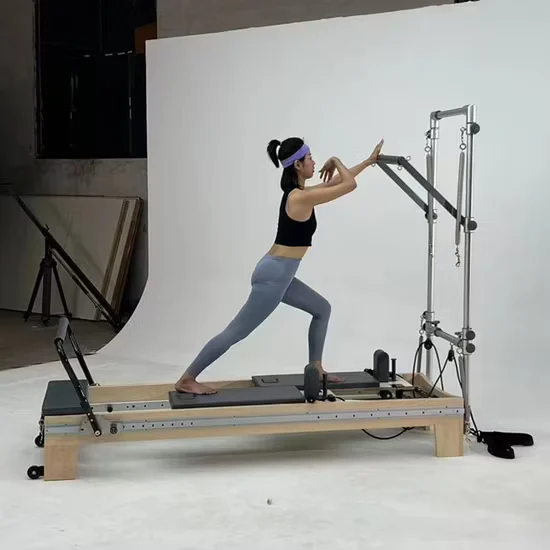
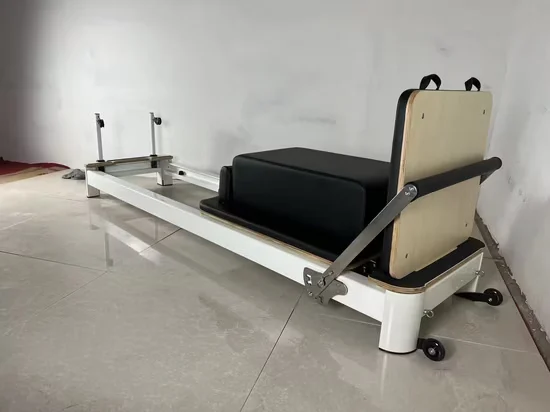
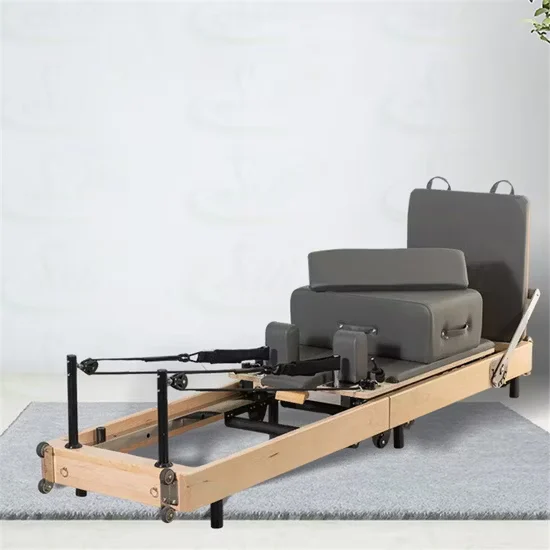
Foldable Pilates Reformer with Tower, Solid Wood Frame, 2400×600×350mm Dimensions — engineered with a folding hinge mechanism that maintains carriage alignment and rail integrity under repeated commercial deployment, paired with a tower attachment for expanded spring resistance configurations. Each unit undergoes load testing prior to shipment, backed by a 3-year warranty and full logo customization for private-label studio branding.
// Spec Highlights
• Direct from Manufacturer · No Middlemen · Worldwide Shipping
01
// Material
Imported Solid Wood
Premium hardwood frames sourced for density and visual warmth.
02
// Hardware
Medical-Grade Silent
Whisper-quiet pulleys and springs for clinical environments.
03
// Customization
Appearance OEM
Color, upholstery, and branding tailored to your studio.
04
// Service
Layout Design
Free venue planning for studios and rehab institutions.
Every component is selected for longevity, performance, and aesthetic harmony - from imported hardwood frames to silent medical-grade accessories.
// Features
Solid Wood Frame Rigidity — Kiln-dried hardwood resists long-term creep under repeated carriage loading, maintaining rail alignment in daily commercial use.
| Parameter | Value |
|---|---|
| Product Type | Foldable Pilates Reformer |
| Frame Material | Solid Wood |
| Product Dimensions | 2400 × 600 × 350 mm |
| Net Weight | 100 kg |
| Accessories Included | Long Box, Jump Board, Platform |
| Tower Attachment | Integrated Tower with Spring Anchors |
| Color Options | Solid Color |
| Customization | Logo Customization Available |
| Warranty | 3 Years |
| Target User | Adult, Unisex |
| Facility Type | Typical Use |
|---|---|
| Pilates Studio | Daily group and private reformer sessions with tower-assisted resistance |
| Commercial Gym Mind-Body Zone | Supplemental core and flexibility training alongside strength equipment |
| Rehabilitation and Physiotherapy Center | Low-impact controlled movement for injury recovery protocols |
| Boutique Fitness Studio | Space-efficient reformer classes with fold-and-store between sessions |
| Home and Apartment Training Space | Full reformer capability that folds flat when not in use |
A folding hinge that lacks load-path continuity turns lateral carriage forces into rail misalignment.
The core engineering conflict in any foldable Pilates reformer is straightforward: the hinge mechanism introduces a structural discontinuity in the frame. In commercial studios running back-to-back classes, every carriage stroke applies lateral and torsional forces to the frame rails. When the folding joint cannot transfer those loads across the seam, the carriage begins to track off-center. Over hundreds of deployment and use cycles, rail wear accelerates and the characteristic side-to-side wobble develops. We have seen competing foldable reformers returned to service repeatedly because the hinge pins elongate their bores under cyclic loading, and no field adjustment can restore the original tolerance [NEED_CITE: structural fatigue in hinged wood frames under cyclic lateral load].
The commercial foldable Pilates reformer with tower occupies a specific niche: controlled, spring-resisted movement across sagittal and frontal planes targeting core stabilizers, hip musculature, and spinal erectors. In a commercial gym layout, it complements free weight zones by offering low-impact active recovery and mobility work. For rehabilitation centers, the tower attachment extends the exercise range to standing and semi-supported positions that a standard reformer carriage alone cannot accommodate. The 2400 mm length suits users across a broad height range, and the foldable footprint lets studios reconfigure floor space between class formats.
Every reformer session generates cyclic loading through the carriage wheels into the rails, and those rails transfer force into the frame and ultimately the floor. On a foldable unit, the hinge becomes the critical stress concentration point. Static loads during held positions, dynamic impacts from jump board work, and eccentric resistance during controlled returns all route through that single joint. In a studio running six or more classes daily, the hinge endures thousands of load cycles per week. Sealed bearing surfaces at the pivot, properly rated hardware, and solid wood substrate around the bolt pattern determine whether the joint holds tolerance or degrades into play. Sweat exposure and cleaning chemicals add a corrosion dimension to any exposed metal at the hinge [NEED_CITE: cyclic load degradation in wood-to-metal structural joints].
Solid wood framing behaves fundamentally differently from laminated or engineered alternatives under sustained carriage loading. Natural hardwood with proper kiln drying maintains dimensional stability along the grain, resisting the creep deformation that causes laminated boards to sag over months of use. The rail-to-carriage wheel interface demands straightness tolerance measured in fractions of a millimeter — any bow in the rail translates directly into uneven resistance feel and accelerated wheel wear. Tower rigidity depends on how the vertical member anchors into the wood frame: through-bolted connections with adequate embedment depth resist the lateral pull of springs at full extension far better than surface-mounted brackets. Spring anchor points machined into solid stock maintain consistent resistance geometry across the full range of motion.
Thinner frame stock or lower-grade engineered wood may pass initial load testing but develops progressive deformation under commercial repetition rates. A hinge specified for residential duty cycles will exhibit measurable play within months in a studio environment, and that play transfers into carriage misalignment and uneven rail wear. Undersized tower mounting hardware flexes under maximum spring tension, altering resistance angles and reducing exercise effectiveness. Non-standard fasteners mean that when wear components need replacement, no off-the-shelf parts fit — the entire sub-assembly must be sourced from the original manufacturer or discarded [NEED_CITE: maintenance cost impact of non-standard hardware in commercial fitness equipment].
Solid wood frame selection provides verifiable material density that resists creep deformation across years of commercial carriage loading. Robotically continuous weld procedures — applied where metal brackets interface with the wood frame — eliminate the spot-weld failure points that crack under repeated spring tension. Every unit undergoes load testing before shipment rather than sample-based batch inspection. The industrial-grade powder coating on all metal components reaches 200μm thickness, protecting hinge hardware and tower mounts from sweat corrosion and cleaning agent exposure. The three-year warranty reflects confidence in the structural specification rather than a cost-limited liability window. Two-dimensional and three-dimensional floor planning support accounts for the deployed footprint and the clearance needed for safe carriage travel plus instructor circulation.
Provide your mind-body zone floor area and existing equipment list to receive a 2D or 3D layout showing deployed and folded clearances for the commercial foldable Pilates reformer with tower. Specify your average daily class count and session duration so we can confirm the structural specification matches your usage intensity. Share your target user population height and weight range to verify the carriage travel and spring resistance configuration covers your client base. Indicate any logo customization or color preferences early in the specification process.
Q: How do I confirm a foldable reformer maintains rigidity when deployed for commercial use?
A: Request the hinge load rating and cycle test data from the manufacturer. The joint should be rated for the maximum user weight plus dynamic forces from jump board work. Ask for a deployed-state deflection measurement under load — commercial-grade units show negligible frame twist. Verify that the hinge uses through-bolted connections into solid wood rather than surface-mounted brackets that can pull free over time.
Q: What wood specifications indicate long-term structural integrity?
A: Confirm the frame uses solid hardwood with documented kiln-drying, not laminated or particle-core construction. Solid wood maintains dimensional stability along the grain and resists the progressive sag that engineered boards develop under repeated carriage loading. Request the wood species identification and density grade. Engineered alternatives may reduce upfront cost but compromise rail straightness over hundreds of use cycles.
Q: How does the folding mechanism affect carriage alignment over time?
A: The hinge introduces a discontinuity in the rail path. If hinge tolerance degrades through repeated deployment cycles, the two frame halves shift relative to each other, causing the carriage to track off-center. This accelerates wheel wear and creates uneven resistance feel. Ask the manufacturer for hinge play specifications after rated deployment cycles and whether field adjustment is possible when wear develops.
Q: What should I verify about the tower attachment under maximum spring resistance?
A: The tower must resist lateral flex when springs are loaded at full extension. Request the mounting method — through-bolts into solid wood frame stock provide far greater resistance to pull-out forces than surface brackets. Ask for a lateral deflection measurement under maximum spring load. A tower that flexes alters the resistance angle and reduces exercise effectiveness across the movement range.
Q: How do I plan studio layout around foldable reformers for storage and traffic flow?
A: Calculate both the deployed footprint at 2400 × 600 mm and the folded storage dimensions. Plan aisle clearance for users and instructors to circulate safely around deployed units. Designate a storage zone where folded reformers can be staged without blocking emergency exits or other equipment access. Provide your floor plan for a layout assessment that accounts for class changeover logistics and folded unit stacking.
Premium aesthetics meet quiet operation for boutique studio environments.
Medical-grade silence and precision for sports & postpartum recovery.
Furniture-grade craftsmanship for premium residential installations.
Compact premium setups for one-on-one and small-group training.
Aesthetic Pilates integration for hybrid wellness studio programming.
Multi-unit deployment with instructor-grade reliability for certification programs.
Tell us about your project. Our team will respond within 24 hours with pricing, customization options, and shipping details.
// Sales Director
William
+86 132 2531 1800
// Export Manager
Bella
+86 198 5412 8032
william@bickfit.com