01 / Scenario
STUDIO
P
High-End Pilates Studios
Premium aesthetics meet quiet operation for boutique studio environments.

ISO
9001
CE
Certified
OEM
Available
10YR
Warranty
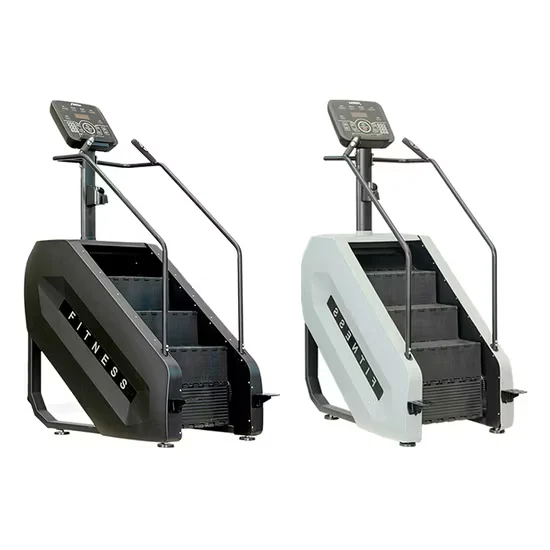
Commercial Stair Climber Machine, Motor Drive, 148kg Net Weight — engineered with AC220V/AC110V motorized step system delivering 15–164 steps/min for sustained cardio conditioning in high-traffic environments. Steel pipe frame construction with sealed mechanical components supports continuous daily operation cycles. Every unit undergoes load testing before shipment, backed by a 10-year frame warranty and factory-direct floor planning support.
// Spec Highlights
• Direct from Manufacturer · No Middlemen · Worldwide Shipping
01
// Material
Imported Solid Wood
Premium hardwood frames sourced for density and visual warmth.
02
// Hardware
Medical-Grade Silent
Whisper-quiet pulleys and springs for clinical environments.
03
// Customization
Appearance OEM
Color, upholstery, and branding tailored to your studio.
04
// Service
Layout Design
Free venue planning for studios and rehab institutions.
Every component is selected for longevity, performance, and aesthetic harmony - from imported hardwood frames to silent medical-grade accessories.
// Features
Mill-Certified Steel — Every coil used in our stair climber frames carries traceable Q235/Q345 certification from the rolling mill to the finished unit.
| Parameter | Value |
|---|---|
| Product Type | Stair Climber |
| Frame Steel | 11-gauge, 3×3 inch tube |
| Steel Grade | Q235 and Q345 industrial steel, mill-certified |
| Welding Type | Robotic MIG, continuous weld lines |
| Load Capacity | Tested beyond 500kg |
| Drive System | Motor Drive |
| Mains Input | AC220V±10% / AC110V±10% |
| Running Velocity | 15–164 steps/minute |
| Step Area | 560×235×220mm |
| Powder Coating | 200μm scratch-resistant, sandblasted base |
| Product Dimensions | 1450×820×2080mm |
| Net Weight | 148kg |
| Display Readouts | Time, Climb, Calories, Steps, Heart Rate |
| Certification | CE |
| Warranty | 10-year frame |
| Facility Type | Typical Use |
|---|---|
| Commercial gym cardio zone | 8+ hours daily continuous stepping under varied user loads |
| Hotel and resort fitness center | High turnover with minimal on-site maintenance capability |
| University athletic department | Conditioning circuits for team sport athletes |
| Rehabilitation and performance center | Low-impact cardiovascular work with controlled step rate |
Frame deflection under cyclic load is the primary failure mode in high-traffic stair climbers.
When a commercial stair climber sees hundreds of users daily, each step applies an eccentric impact load to the pedal support structure. Frames built from thin-gauge tubing flex slightly with every step, and over thousands of cycles that flexion concentrates stress at weld joints. I watched a batch of pedal assemblies come back after three months of continuous operation — the support tubes had been downgauged to cut cost, and the fatigue cracking started right at the pedal shaft axis. That failure pattern repeats across the industry whenever structural specifications are left vague. [NEED_CITE: fatigue cracking in cyclic-loaded tubular steel assemblies] A commercial stair climber machine must resist this deflection threshold from day one, which is why we specify 11-gauge steel with mill documentation traceable to the original coil.
This commercial stair climber machine occupies a specific role in the cardio zone: sustained lower-body cardiovascular work that recruits glutes, quadriceps, and calves through a closed-chain stepping pattern. It complements treadmills and ellipticals by offering a higher-resistance, lower-impact alternative for users who need joint-friendly conditioning. Facilities with moderate to high member density benefit from positioning it between self-powered cardio units to maintain consistent traffic flow. The step platform accommodates users across a wide range of leg lengths and body weights, making it suitable for general membership floors and athletic training facilities alike.
Every step a user takes delivers a dynamic impact through the pedal arm into the frame and drive assembly. In a facility running eight or more hours daily, the step mechanism endures thousands of load cycles per day, with peak forces occurring during the push-off phase. Continuous weld lines at the pedal arm junction distribute this stress across a broader area compared to spot welds, which create localized hard points prone to crack initiation. The motor drive system must manage sustained thermal output without derating, and sealed bearings at pivot points prevent dust and sweat infiltration that accelerates wear. [NEED_CITE: bearing seal degradation in high-humidity fitness environments] Powder coating at contact areas must withstand repeated friction from user footwear and cleaning chemicals applied during daily maintenance routines.
The 11-gauge frame steel used in this unit provides a deflection threshold that keeps the chassis stable under repetitive stepping loads — thinner tubes flex visibly and transfer vibration to the user. Robotic MIG welding produces continuous bead lines along every structural joint, eliminating the cold joints and incomplete fusion defects common in manual spot welding. The 200μm powder coating, applied over a sandblasted surface, maintains adhesion at high-wear contact points where users grip, step, and where cleaning solutions pool. Motor drive thermal management ensures the system can sustain extended sessions without overheating shutdowns, which is critical for facilities with back-to-back usage patterns throughout operating hours.
Reducing tube wall thickness saves material cost upfront but shifts the expense into warranty claims and member complaints when pedals develop play or frames show visible flex. Spot-welded joints that pass initial visual inspection become failure points within months under commercial stepping loads, creating liability exposure for facility operators. Non-sealed bearings at pivot points absorb moisture and particulate matter, requiring replacement on schedules that drain maintenance budgets and pull equipment off the floor. Thin powder coating chips at pedal edges and handrail contact zones, exposing bare steel to oxidation that spreads beneath adjacent coating and accelerates structural degradation. [NEED_CITE: powder coating adhesion failure at mechanical wear points]
The 11-gauge frame steel carries mill certification traceable to the coil, so every unit shipped has documented material provenance rather than an unverified commercial grade label. Robotic MIG welding on every structural joint means consistent penetration depth and bead profile, with no operator-dependent weak links in the weld sequence. Each assembled unit undergoes load testing before crating — not sample-based batch testing, but individual verification under load. The 200μm industrial powder coating is applied after sandblasting to ensure mechanical bonding at the steel interface. Floor planning support includes CAD layouts with clearance zones specific to this unit’s footprint, ensuring safe passage and ADA-compliant spacing between adjacent machines. OEM private label options allow custom color, logo, and display branding without altering the structural platform.
Provide your cardio zone dimensions and equipment list to receive a 2D or 3D layout showing clearance zones and traffic flow around this unit. Specify expected daily user volume so we can confirm the structural rating matches your operating profile. Indicate any custom requirements including frame color, logo placement, or display branding for OEM integration.
Q: How do you distinguish a commercial-grade stair climber from a light-commercial unit?
A: Inspect the frame steel gauge and request mill certification — commercial units use 11-gauge tubing with documented material origin, while light-commercial frames often quote vague grade labels without traceability. Check weld patterns for continuous bead lines rather than spot welds, and verify that bearings at pivot points are sealed against moisture and dust ingress.
Q: What motor drive capacity is needed for continuous daily operation?
A: The motor must sustain thermal output across eight or more hours without derating or shutdown. Ask for the duty cycle rating and thermal protection specifications, not just peak power. Units in high-traffic facilities need drive systems rated for continuous commercial use, with adequate heat dissipation built into the motor housing.
Q: How does frame steel gauge affect long-term structural performance?
A: Thicker gauge steel resists deflection under repetitive stepping loads, keeping the chassis stable and preventing stress concentration at weld joints. Over thousands of daily cycles, thin-gauge frames flex and accumulate fatigue damage at connection points, while 11-gauge construction maintains alignment and extends the service interval before structural intervention is needed.
Q: What bearing maintenance is realistic in a high-traffic gym environment?
A: Sealed bearings at pedal pivots and drive linkages require minimal routine attention — typically a semi-annual inspection for play or roughness during rotation. Unsealed bearings in the same positions absorb sweat and dust, developing play within months and requiring full replacement. Sealed units keep the stair climber on the floor and out of the maintenance queue.
Q: When should step mechanism components be scheduled for replacement?
A: Wear patterns depend on daily user volume and maintenance intervals rather than a fixed calendar schedule. Monitor pedal surface traction, pivot bearing smoothness, and drive belt tension during routine inspections. Documenting usage hours helps predict replacement windows before components develop play that affects user experience or safety.
Premium aesthetics meet quiet operation for boutique studio environments.
Medical-grade silence and precision for sports & postpartum recovery.
Furniture-grade craftsmanship for premium residential installations.
Compact premium setups for one-on-one and small-group training.
Aesthetic Pilates integration for hybrid wellness studio programming.
Multi-unit deployment with instructor-grade reliability for certification programs.
Tell us about your project. Our team will respond within 24 hours with pricing, customization options, and shipping details.
// Sales Director
William
+86 132 2531 1800
// Export Manager
Bella
+86 198 5412 8032
william@bickfit.com