01 / Scenario
STUDIO
P
High-End Pilates Studios
Premium aesthetics meet quiet operation for boutique studio environments.

ISO
9001
CE
Certified
OEM
Available
10YR
Warranty
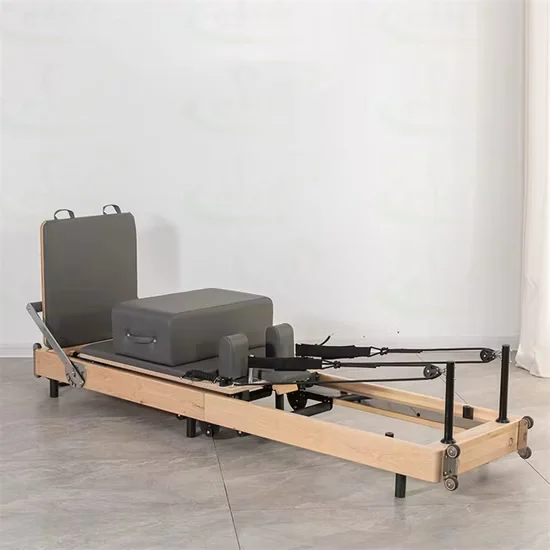
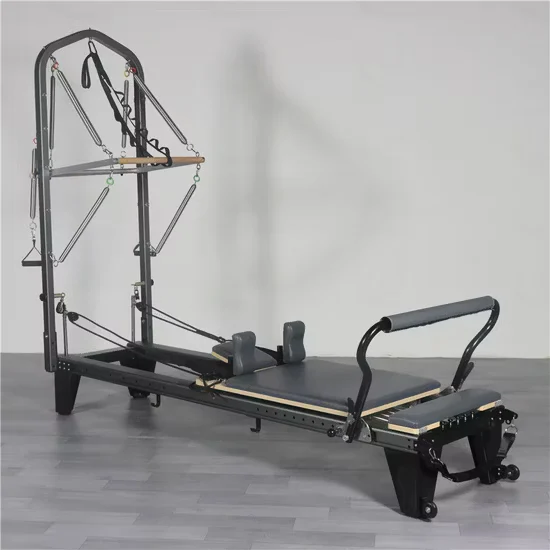
Wood Pilates Reformer with Half Trapeze, Beech/Maple Frame, 2460×730×680mm — engineered with solid hardwood construction and includes long box, jump board, and platform as standard accessories. Half trapeze tower integration expands exercise repertoire for commercial studio and rehabilitation applications. Direct from a 15,000㎡ vertically integrated facility with 17 years of manufacturing heritage and full OEM customization available.
// Spec Highlights
• Direct from Manufacturer · No Middlemen · Worldwide Shipping
01
// Material
Imported Solid Wood
Premium hardwood frames sourced for density and visual warmth.
02
// Hardware
Medical-Grade Silent
Whisper-quiet pulleys and springs for clinical environments.
03
// Customization
Appearance OEM
Color, upholstery, and branding tailored to your studio.
04
// Service
Layout Design
Free venue planning for studios and rehab institutions.
Every component is selected for longevity, performance, and aesthetic harmony - from imported hardwood frames to silent medical-grade accessories.
// Features
Mill-Certified Hardwood Integrity — Every Beech/Maple Wood Pilates Reformer with Half Trapeze leaves our facility with verified wood species documentation and moisture content records traceable to the source batch.
| Parameter | Value |
|---|---|
| Product Type | Wood Pilates Reformer |
| Frame Material | Solid Beech or Maple Hardwood (selectable) |
| Product Dimensions | 2460 × 730 × 680 mm |
| Net Weight | 100 kg |
| Standard Accessories | Long Box, Jump Board, Platform |
| Color Options | Solid Color (customization available) |
| Target User | Adult, Unisex |
| Logo | Customized |
| Warranty | 3 Years |
| Facility Type | Typical Use |
|---|---|
| Commercial Pilates Studio | Daily group and private reformer sessions integrating half trapeze tower exercises |
| Rehabilitation and Conditioning Center | Controlled resistance movements for physiotherapy and post-injury recovery protocols |
| Boutique Fitness Studio | Premium apparatus-based classes combining reformer and trapeze table work |
| Commercial Gym Functional Zone | Dedicated mind-body area supplementing the main strength floor |
Solid beech and maple resist delamination and fastener pull-out under years of daily carriage loading.
Many wood reformers in commercial circulation rely on laminated plywood frames or unspecified "solid wood" claims that begin to separate at the glued layers once carriage traffic reaches studio volumes. Fastener holes in plywood elongate within the first heavy-use season, causing rail misalignment and carriage rattle that no amount of maintenance can fully correct [NEED_CITE: structural performance of laminated vs solid hardwood in cyclic load applications]. Moisture fluctuations in studio environments — humidity from group classes, cleaning solutions applied daily — accelerate this separation in layered boards. A commercial wood pilates reformer with half trapeze must withstand both the dynamic impact of jump board work and the sustained static loads of trapeze spring tension; only verified solid hardwood maintains dimensional stability through these combined stress cycles.
This apparatus bridges two movement categories: the horizontal plane work of a standard reformer and the vertical spring-resistance repertoire of a trapeze table. In a commercial wood pilates reformer with half trapeze configuration, the tower extends exercise options to include assisted stretching, spinal decompression, and upper-body spring work that a standalone reformer cannot offer. It pairs logically with full trapeze tables for studios that allocate a dedicated apparatus zone, or with Wunda chairs and Cadillac units for a comprehensive classical Pilates equipment lineup. The 2460 × 730 mm footprint fits standard studio bays while leaving adequate clearance for instructor circulation on three sides, making it suitable for facilities running semi-private sessions where spatial efficiency and exercise variety both matter.
The carriage-rail interface absorbs the highest cyclic stress on any reformer, with each session generating hundreds of rolling cycles under variable body weight and spring resistance. On units equipped with a half trapeze, the tower-to-bed junction experiences additional torsional loading every time a client pulls against overhead springs — a force vector that standard reformers never encounter [NEED_CITE: cyclic fatigue in wood-to-metal fastened joints under multi-axis loading]. The long box and jump board attachment points concentrate impact and shear forces at their mounting hardware, particularly during plyometric jump board sequences where repeated landings transmit shock through the carriage into the frame. Sweat, cleaning agents, and ambient humidity fluctuations in high-traffic studios also challenge the wood finish and metal hardware interfaces, demanding coating systems and corrosion-resistant fasteners rated for this chemical exposure profile.
Beech delivers high compressive strength and uniform grain density, which translates to predictable rail straightness and consistent fastener grip across the frame. Maple offers comparable hardness with slightly tighter grain, providing additional resistance to surface denting where hardware and accessories contact the frame repeatedly. Both species maintain dimensional stability better than many tropical hardwoods when exposed to the humidity swings typical of group exercise environments [NEED_CITE: dimensional stability coefficients of beech and maple in controlled interior climates]. The 100 kg net weight of the assembled unit reflects the mass of solid lumber rather than hollow-core or laminated construction, contributing to the stability clients feel during standing and kneeling exercises on the carriage. Customization options in color and logo allow studio operators to align the apparatus finish with their interior design without compromising the underlying structural material specification.
Frames built from unverified wood species or thin laminated boards may pass initial visual inspection but develop fastener looseness at the rail mounting points as the substrate compresses under repeated carriage travel. Non-sealed carriage bearings accumulate dust and hair from studio floors, increasing rolling resistance and requiring progressively more frequent service intervals until replacement becomes unavoidable. Spring attachment points on half trapeze towers that use undersized hardware or insufficient reinforcement plates concentrate stress into a small area of the wood, eventually causing splitting that compromises both safety and repairability [NEED_CITE: fastener withdrawal strength in hardwood species under repeated tensile cycling]. Accessories like the long box and jump board that mount with non-standard fittings create a dependency on a single supplier for replacement parts, leaving studio operators stranded when those components wear or break.
Solid beech or maple hardwood is sourced with species verification, not purchased on generic "wood frame" purchase orders. The tower-to-bed junction uses reinforced mounting geometry to handle the multi-directional spring loads that a half trapeze introduces, rather than simply bolting a tower onto a standard reformer bed. Every unit undergoes assembly and functional testing before crating, confirming carriage travel smoothness, spring tension calibration, and accessory mount security. The 3-year warranty covers structural frame integrity and hardware against manufacturing defects, giving studio operators predictable maintenance budgeting. Customization in finish color, logo application, and accessory selection allows each commercial wood pilates reformer with half trapeze to match the operator’s brand identity and programming requirements without altering the core material specification.
Provide your studio floor dimensions and existing equipment list to receive a layout recommendation that accounts for clearance, traffic flow, and instructor sightlines. Specify your expected daily session volume and whether the unit will serve group classes or primarily private instruction, so we can confirm the configuration matches your usage intensity. Communicate any finish color, logo placement, or accessory preferences early in the inquiry to ensure production scheduling aligns with your opening or renovation timeline.
Q: How can I verify a reformer frame is solid hardwood rather than laminated or veneered?
A: Inspect the end grain at frame joints and rail terminations. Solid beech or maple shows continuous grain running through the full cross-section, while laminated boards reveal visible ply layers and veneered surfaces show a thin decorative layer over a different substrate. Request a wood species certificate from the manufacturer specifying the exact lumber source and moisture content at time of manufacture.
Q: What are the practical differences between beech and maple for a commercial studio reformer?
A: Both species deliver the compressive strength and dimensional stability required for daily studio use. Beech offers uniform grain density and consistent machining results across the frame. Maple provides slightly higher surface hardness, which resists denting at hardware contact points. The choice often comes down to grain appearance preference and how each species interacts with the selected finish color in your studio environment.
Q: How does a half trapeze differ structurally from a full tower on a reformer?
A: A half trapeze uses a shorter vertical tower with a reduced number of spring attachment points, lowering the overall center of gravity and the torsional load transferred to the bed frame during use. This makes it well-suited for studios prioritizing reformer-based programming with supplementary tower exercises, while a full tower supports the complete classical trapeze table repertoire and requires a heavier base structure.
Q: What maintenance schedule should a studio expect for the carriage and rail system?
A: In high-traffic commercial environments, inspect carriage wheels and rails weekly for dust, hair, and residue buildup that increases rolling resistance. Wipe rails with a clean dry cloth and check bearing smoothness monthly. Bearings showing play or roughness should be replaced promptly to prevent rail surface damage. Keeping a spare bearing set on-site minimizes downtime between service intervals.
Q: Are replacement parts available for the long box, jump board, and platform accessories?
A: Standard accessories mount using defined hardware interfaces, and replacement components can be ordered directly from the manufacturer. Confirm at the time of purchase that mounting hardware uses common fastener sizes rather than proprietary fittings, which ensures you are not locked into a single supply source for future replacements or upgrades.
Premium aesthetics meet quiet operation for boutique studio environments.
Medical-grade silence and precision for sports & postpartum recovery.
Furniture-grade craftsmanship for premium residential installations.
Compact premium setups for one-on-one and small-group training.
Aesthetic Pilates integration for hybrid wellness studio programming.
Multi-unit deployment with instructor-grade reliability for certification programs.
Tell us about your project. Our team will respond within 24 hours with pricing, customization options, and shipping details.
// Sales Director
William
+86 132 2531 1800
// Export Manager
Bella
+86 198 5412 8032
william@bickfit.com