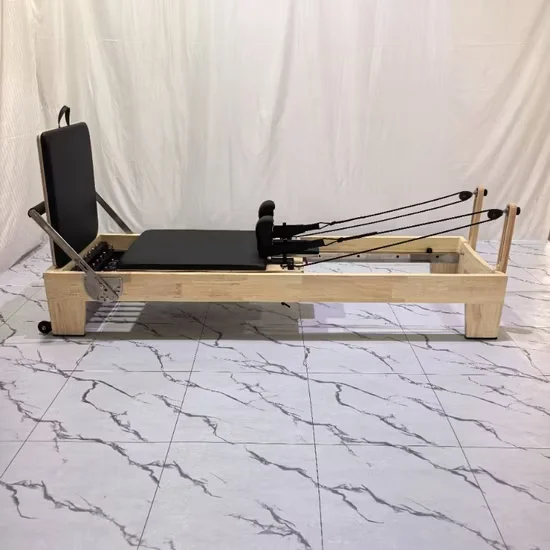
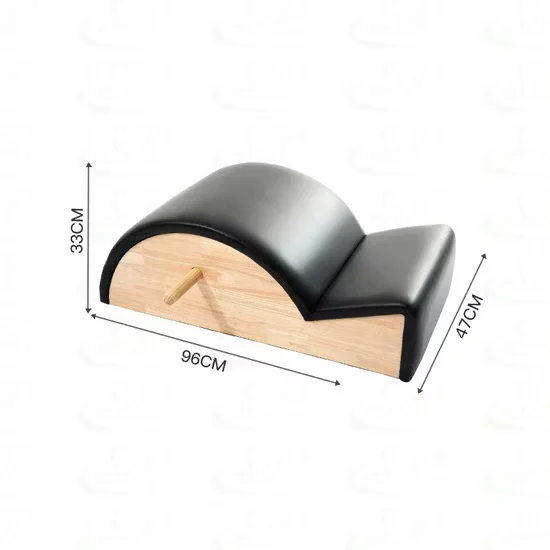
01 / Scenario
STUDIO
P
High-End Pilates Studios
Premium aesthetics meet quiet operation for boutique studio environments.
ISO
9001
CE
Certified
OEM
Available
10YR
Warranty
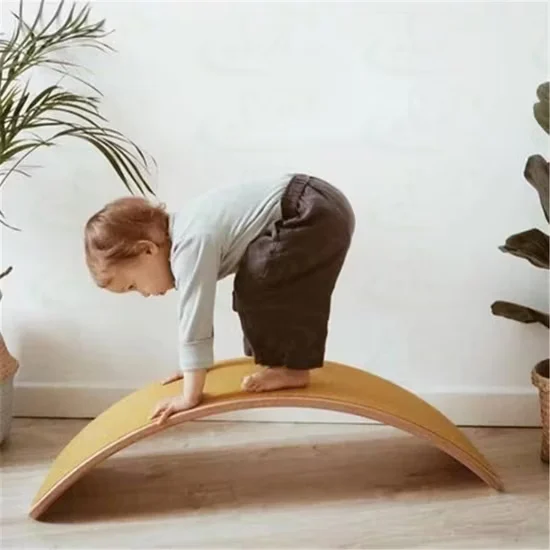
Wooden Curved Balance Board, 1030×300×15mm Solid Wood, 5kg Net Weight — engineered with curved rocker geometry for progressive instability training, 15mm thickness delivers flex resistance without warping under cyclic commercial loading. Anti-slip surface treatment and customizable logo options support studio branding and high-traffic durability. Direct manufacturer with 3-year warranty and OEM private label capability.
// Spec Highlights
• Direct from Manufacturer · No Middlemen · Worldwide Shipping
01
// Material
Imported Solid Wood
Premium hardwood frames sourced for density and visual warmth.
02
// Hardware
Medical-Grade Silent
Whisper-quiet pulleys and springs for clinical environments.
03
// Customization
Appearance OEM
Color, upholstery, and branding tailored to your studio.
04
// Service
Layout Design
Free venue planning for studios and rehab institutions.
Every component is selected for longevity, performance, and aesthetic harmony - from imported hardwood frames to silent medical-grade accessories.
// Features
Mill-Certified Solid Wood — every plank is traceable to the species source, ensuring lamination integrity and consistent flex resistance under cyclic studio use.
| Parameter | Value |
|---|---|
| Product Type | Balance Board |
| Material | Solid Wood |
| Product Dimensions | 1030 × 300 × 15 mm |
| Net Weight | 5 kg |
| Board Thickness | 15 mm |
| Color | Solid Color (custom color available) |
| Logo | Customized logo available |
| Warranty | 3 Years |
| Age Group | Adult |
| Gender | Unisex |
| Kind | Pilates Equipment |
| Facility Type | Typical Use |
|---|---|
| Pilates Studio | Core stabilization and proprioceptive drills integrated into reformer or mat sessions |
| Functional Training Zone | Balance challenge stations within circuit layouts or warm-up areas |
| Rehabilitation Center | Motor coordination and ankle stability retraining under therapist guidance |
| Commercial Gym Accessory Floor | Standalone station in stretching or mobility corners |
| Children’s Motor Coordination Training | Supervised balance games and sensory integration for youth programs |
Verifying core construction prevents costly replacement cycles in high-traffic studios.
Many balance boards marketed as solid wood are actually laminated veneer layers bonded with adhesives that degrade under repeated flex loading. Once the glue lines separate, the board loses its structural continuity and the rocker geometry distorts unpredictably. For a commercial wooden curved balance board deployed across group classes, that failure mode means pulling units off the floor every few months. Solid timber with proper grain orientation distributes stress along the fiber, maintaining the original curvature far longer under daily use. [NEED_CITE: EN 957 structural requirements for stationary training equipment]
A commercial wooden curved balance board occupies minimal floor area while introducing an instability stimulus that complements fixed-path strength machines and free-weight stations. It primarily targets ankle stabilizers, hip abductors, and deep core musculature in the sagittal and frontal planes. In a studio setting, it pairs well with foam rollers and stability balls to form a dedicated mobility cluster. The 1030 mm length accommodates adult users of varying stances, from narrow single-leg work to wide sumo-position drills, making it suitable for facilities serving diverse membership demographics.
The primary load on this board is cyclic flex fatigue from users shifting weight laterally across the rocker arc. Each session generates hundreds of micro-deflection cycles concentrated at the apex of the curve, where bending moment peaks. Surface abrasion from barefoot contact and rubber-soled shoes wears the anti-slip treatment progressively, especially near the center standing zone. In humid environments such as hot-yoga studios, moisture absorption can alter the wood’s flex modulus if the sealing finish is inadequate. [NEED_CITE: fatigue performance of solid timber under cyclic bending loads] The 15 mm thickness provides a stiffness-to-weight ratio that limits excessive deflection while keeping the unit light enough for instructors to reposition between classes.
The 15 mm solid-wood construction sets the flex threshold: thinner boards deflect too readily under heavier users, creating a sluggish rebound that hinders dynamic balance reactions. The curved rocker radius determines the instability gradient — a tighter radius demands faster corrective responses, while a wider arc offers a gentler learning curve. Together, thickness and radius define how the board behaves across skill levels. Wood species selection influences long-term grain stability; denser hardwoods resist surface denting from dropped dumbbells or kettlebells in adjacent training zones. Consistency of rocker geometry across a batch matters for group classes where multiple users expect identical feedback from their boards.
Boards cut to 10 mm or less to save shipping weight flex excessively under adult users, accelerating fatigue cracking at the curve apex. Laminated veneer construction may pass initial inspection but tends to delaminate after months of cyclic loading, particularly in humid climates where adhesive bonds weaken. Anti-slip surfaces applied as thin spray coatings wear through within a season of barefoot classes, exposing smooth wood that becomes a slip hazard. When these boards fail, facilities face replacement costs and scheduling disruptions that outweigh any initial savings. [NEED_CITE: comparative lifecycle cost of solid wood versus laminated fitness accessories]
Solid-wood sourcing with species traceability ensures the grain direction aligns with the primary bending axis, preventing premature split failures. Each board undergoes dimensional checks to confirm rocker radius consistency across production batches, so group-class participants receive uniform instability feedback. The 15 mm thickness was selected through iterative load testing with users across weight ranges, balancing rigidity against portability. Surface finishing follows a multi-coat sealing process that resists sweat and cleaning agents common in studio environments. The three-year warranty reflects confidence in the wood’s long-term fatigue performance under commercial deployment. Customization for logo and color allows facilities to match branding without compromising structural specifications. [NEED_CITE: ISO 9001 quality management for fitness equipment manufacturing]
Provide your studio floor plan and projected class sizes so our team can recommend unit quantities and spacing layouts. Specify the average user weight range to confirm the 15 mm thickness meets your load requirements. Share branding requirements early to align logo placement and custom color lead times with your opening or renovation schedule.
Q: How can I tell solid wood apart from laminated veneer in a balance board?
A: Inspect the board edge for visible ply layers or repeating grain patterns that indicate bonded sheets. Solid wood shows continuous, non-repeating grain running through the full thickness. Tap the surface — laminated boards produce a hollow, layered sound while solid timber sounds dense. Request material certification from the supplier documenting species and construction method.
Q: What rocker radius is appropriate for beginners versus advanced users?
A: A wider, gentler arc suits beginners by offering gradual instability that allows time for corrective balance responses. A tighter radius creates sharper tilt transitions, demanding faster neuromuscular reactions suited to experienced users. For mixed-ability studios, stocking both profiles lets instructors progress participants through skill levels without equipment changes mid-class.
Q: How long does the anti-slip surface last in a commercial studio environment?
A: Surface longevity depends on session volume, footwear type, and cleaning frequency. Bonded grit treatments generally outlast spray-on coatings under daily barefoot and sock-foot traffic. Facilities running multiple classes daily should inspect the center standing zone monthly for smooth patches. Ordering replacement boards as part of a scheduled refresh cycle prevents unexpected floor closures.
Q: What customization options are available for branding and color?
A: Logo engraving or printing can be applied to the top surface or edge, positioned to avoid the primary foot-contact zone. Custom solid colors are available to match studio branding palettes. Confirm artwork files and color codes with the production team to align lead times with your procurement schedule, especially for bulk orders across multiple locations.
Premium aesthetics meet quiet operation for boutique studio environments.
Medical-grade silence and precision for sports & postpartum recovery.
Furniture-grade craftsmanship for premium residential installations.
Compact premium setups for one-on-one and small-group training.
Aesthetic Pilates integration for hybrid wellness studio programming.
Multi-unit deployment with instructor-grade reliability for certification programs.
Tell us about your project. Our team will respond within 24 hours with pricing, customization options, and shipping details.
// Sales Director
William
+86 132 2531 1800
// Export Manager
Bella
+86 198 5412 8032
william@bickfit.com