01 / Scenario
STUDIO
P
High-End Pilates Studios
Premium aesthetics meet quiet operation for boutique studio environments.

ISO
9001
CE
Certified
OEM
Available
10YR
Warranty
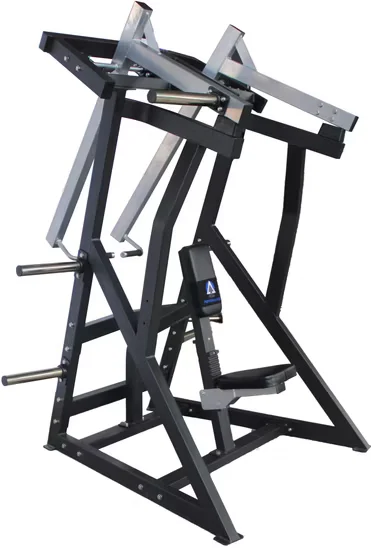
Commercial Plate Loaded Squat Lunge Machine, 2092×1791×2252mm, 142kg Net Weight — built with industrial steel frame and plate loaded system for heavy-duty lower body training in high-traffic facilities. Engineered with continuous robotic MIG welding and load-tested per unit before shipment. Backed by 10-year frame warranty and full floor planning support for optimal spacing and safety clearance.
// Spec Highlights
• Direct from Manufacturer · No Middlemen · Worldwide Shipping
01
// Material
Imported Solid Wood
Premium hardwood frames sourced for density and visual warmth.
02
// Hardware
Medical-Grade Silent
Whisper-quiet pulleys and springs for clinical environments.
03
// Customization
Appearance OEM
Color, upholstery, and branding tailored to your studio.
04
// Service
Layout Design
Free venue planning for studios and rehab institutions.
Every component is selected for longevity, performance, and aesthetic harmony - from imported hardwood frames to silent medical-grade accessories.
// Features
Traceable Mill Steel — Every tube in this plate loaded squat lunge machine traces back to the certified Q235/Q345 coil it was cut from.
| Parameter | Value |
|---|---|
| Product Type | Plate Loaded Squat Lunge Machine |
| Loading Type | Plate Loaded |
| Frame Steel Gauge | 11-gauge |
| Frame Tube Size | 3×3 inch |
| Steel Grade | Q235 / Q345 industrial steel, mill-certified |
| Welding Type | Robotic MIG, continuous weld |
| Load Capacity | Tested beyond 500 kg |
| Product Dimensions | 2092 × 1791 × 2252 mm |
| Net Weight | 142 kg |
| Bearing Type | Sealed industrial bearings |
| Powder Coating | 200 μm scratch-resistant, sandblast pre-treated |
| Upholstery | Standard or high-density options, color customizable |
| Main Frame Color | Customer-specified |
| Certification | ISO 9001, CE |
| Warranty | 10-year frame |
| Facility Type | Typical Use |
|---|---|
| Commercial gym strength floor | Primary lower-body station for open-access member training |
| CrossFit box functional zone | Heavy unilateral leg work between WOD cycles |
| University strength and conditioning room | Athlete split-squat and lunge loading under coach supervision |
| Hotel fitness center | Durable single-station option where floor space limits full racks |
| Rehabilitation and performance center | Controlled unilateral loading for return-to-play protocols |
Continuous MIG welds eliminate the joint-by-joint failure pattern that spot welding creates under cyclic heavy loading.
I have stood in a gym at 6 a.m. watching a member load plates onto a lunge machine whose pivot weld had separated cleanly from the upright. The frame steel was intact — the spot weld simply could not handle thousands of off-axis load cycles. On a commercial plate loaded squat lunge machine, the eccentric forces at the hip pivot and the sled guide are relentless, and every weld discontinuity is a future crack initiation site [NEED_CITE: weld classification and fatigue performance in structural steel]. Robotic MIG welding lays a continuous bead along the entire joint length, distributing stress across the full weld line rather than concentrating it at discrete points.
This machine targets the sagittal plane with a converging arc that mimics the natural path of a forward lunge, loading quadriceps, glutes, and stabilizers through a controlled range. In a strength zone layout, it complements bilateral stations like hack squats and leg presses by addressing unilateral imbalances. The 2092 × 1791 mm footprint fits a standard commercial bay, and the open frame design suits high-density floors where multiple athletes cycle through during peak hours. Body sizes from smaller recreational lifters to large-framed athletes can load and unload plates without frame clearance issues. The commercial plate loaded squat lunge machine earns its floor space by covering a movement pattern that barbell racks alone cannot replicate safely at high volume.
Every lunge repetition sends an off-axis impulse through the pivot bearings and into the weld joints connecting the lever arm to the main upright. Over thousands of cycles per week, this creates a fatigue environment where stress concentrates at the transition between the welded bracket and the vertical tube [NEED_CITE: EN 957 structural requirements for stationary training equipment]. Sealed industrial bearings at the pivot resist the ingress of chalk dust and sweat that degrades open bushings within months. The plate-loading horns experience lateral shear when users load unevenly, and the guide rail clearance must accommodate this without binding. Powder coating at contact points faces abrasion from plate edges and bumper rubber, which is why a 200 μm coating with sandblast pre-treatment holds where thinner finishes chip to bare steel.
The 11-gauge frame tube in a 3×3 inch square profile sets the bending resistance threshold — thicker walls and larger cross-sections resist deflection under loads that would visibly flex lighter tubing. Robotic MIG welding produces a uniform bead profile with full fusion at the root pass, avoiding the cold joints and incomplete penetration that manual spot welding leaves at high-stress junctions. Sealed bearings maintain rotational tolerance regardless of the chalk and moisture environment typical of a busy strength floor. The 200 μm powder coating, applied after sandblast rather than chemical wash alone, creates a mechanical bond that resists chipping at plate contact zones and grip surfaces. Plate-loaded systems eliminate the cable-and-pulley maintenance cycle entirely, which is a structural choice, not just a cost one.
A thinner-walled tube may pass a static load test but develops visible flex under the dynamic冲击 of a heavy lunge, and that flex fatigues the weld zone from the inside. Spot welds that look clean on the showroom floor separate under cyclic eccentric loading, turning a structural joint into a liability question. Open bushings absorb sweat and chalk until they develop play, and once the pivot wobbles, the lunge path drifts off the intended arc. Low-density upholstery compresses permanently within months of commercial use, exposing the foam core to moisture and requiring full pad replacement. Thin powder coating chips at the plate horns first, and once bare steel is exposed to sweat and humidity, rust undermines the surrounding finish.
The 11-gauge Q235/Q345 steel frame with mill-certified traceability means the material spec is verifiable, not a vague commercial-grade label. Continuous robotic MIG welds on every joint mean no spot-weld weak points hiding under paint. Every unit is load-tested before crating — not sampled from a batch — so the machine on your floor has individually proven its structural capacity. The 200 μm industrial powder coating survives plate contact and cleaning chemicals that strip thinner finishes within a season. A 10-year frame warranty backs the structural engineering rather than shifting risk to the operator. When you share your strength floor dimensions, the 2D/3D CAD layout positions this machine with correct safety clearances between adjacent stations, and OEM color and upholstery options let it match your existing equipment line.
Provide your strength floor square footage and current equipment list to receive a 2D/3D layout that positions this machine with proper safety clearances and traffic flow. Specify your expected daily user volume so the structural grade matches actual cyclic loading. Share the body-size range of your primary user population to confirm the plate-loading horn height and stance platform work across your membership. Confirm frame color, upholstery density, and logo placement to match your existing equipment branding.
Q: How do I distinguish commercial-grade from light-commercial frame construction on a lunge machine?
A: Request the steel gauge and tube dimensions with mill certification. Commercial frames use 11-gauge or thicker steel in 3×3 inch profiles with verifiable traceability. Light-commercial frames often cite vague commercial-grade labels without tube specifications or welding documentation. Inspect the weld pattern — continuous beads indicate robotic MIG, while discrete spots suggest manual welding with concentrated stress points.
Q: What is the relationship between steel gauge and load capacity on plate-loaded equipment?
A: Lower gauge numbers mean thicker tube walls, which resist bending and torsional deflection under heavy plate loads. An 11-gauge tube in a 3×3 inch square section handles the eccentric forces of a loaded lunge without visible flex. Load capacity also depends on weld integrity and bearing specification, so the gauge alone does not tell the full structural story.
Q: How should I choose between plate-loaded and selectorized lunge machines for my facility?
A: Plate-loaded machines suit environments where users load significant weight and expect direct force transfer without cable or pulley intermediary. Selectorized units offer faster weight changes for high-turnover group settings. Plate-loaded designs eliminate cable maintenance entirely and handle heavier absolute loads, making them the standard for dedicated strength zones and athletic facilities.
Q: What safety clearances should I plan around a plate-loaded lunge machine?
A: Allow clearance on the plate-loading side for users to add and remove bumpers safely, plus lateral space so adjacent station users do not interfere during the lunge arc. The 2092 × 1791 mm footprint plus safety margins should be mapped in a 2D CAD layout before installation to confirm the machine integrates with your traffic flow and emergency egress paths.
Q: How does upholstery density affect replacement cycles in a commercial setting?
A: High-density foam pads resist the permanent compression channels that form under daily use by multiple lifters. Standard-density pads may show visible deformation within months of commercial operation, requiring earlier replacement. When ordering, specify high-density upholstery for open-access floors and confirm that replacement pads are available as individual components rather than full assembly swaps.
Premium aesthetics meet quiet operation for boutique studio environments.
Medical-grade silence and precision for sports & postpartum recovery.
Furniture-grade craftsmanship for premium residential installations.
Compact premium setups for one-on-one and small-group training.
Aesthetic Pilates integration for hybrid wellness studio programming.
Multi-unit deployment with instructor-grade reliability for certification programs.
Tell us about your project. Our team will respond within 24 hours with pricing, customization options, and shipping details.
// Sales Director
William
+86 132 2531 1800
// Export Manager
Bella
+86 198 5412 8032
william@bickfit.com