01 / Scenario
STUDIO
P
High-End Pilates Studios
Premium aesthetics meet quiet operation for boutique studio environments.
ISO
9001
CE
Certified
OEM
Available
10YR
Warranty
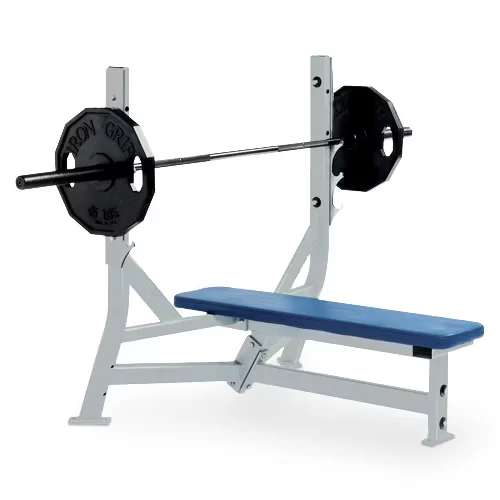
Plate Loaded Chest Press, 3×3 Inch Frame Steel, 1304×1300×1234 mm — engineered with Q235/Q345 industrial-grade steel and robotic MIG continuous welding to eliminate cold joints and fatigue cracking under repeated heavy loading. Sealed industrial bearings and 200μm powder coating ensure long-term durability in high-traffic environments. Every unit undergoes load testing before shipment, backed by 10-year frame warranty and professional floor planning support.
// Spec Highlights
• Direct from Manufacturer · No Middlemen · Worldwide Shipping
01
// Material
Imported Solid Wood
Premium hardwood frames sourced for density and visual warmth.
02
// Hardware
Medical-Grade Silent
Whisper-quiet pulleys and springs for clinical environments.
03
// Customization
Appearance OEM
Color, upholstery, and branding tailored to your studio.
04
// Service
Layout Design
Free venue planning for studios and rehab institutions.
Every component is selected for longevity, performance, and aesthetic harmony - from imported hardwood frames to silent medical-grade accessories.
// Features
11-Gauge Traceable Steel — Every coil of Q235/Q345 steel used in this plate loaded chest press flat bench is mill-certified and traceable from the mill to the finished frame, eliminating the guesswork that plagues vague "commercial grade" claims.
| Parameter | Value |
|---|---|
| Product Type | Plate Loaded Chest Press |
| Frame Tube Size | 3×3 inch |
| Steel Grade | Q235 / Q345 |
| Welding Type | Robotic MIG continuous weld |
| Loading Type | Plate loaded |
| Product Dimensions | 1304×1300×1234 mm |
| Net Weight | 63 kg |
| Powder Coating | 200μm scratch-resistant |
| Upholstery | Standard or high-density options available |
| Color Options | Main frame and cushion color per customer requirements |
| Certification | ISO 9001, CE |
| Warranty | 10-year frame |
| OEM/ODM | Acceptable |
| Facility Type | Typical Use |
|---|---|
| Commercial gym strength floor | Primary pressing station in the plate loaded machine zone |
| Professional fitness club | Heavy-duty flat press for intermediate and advanced lifters |
| Hotel and resort fitness center | Low-maintenance pressing option for varied guest usage |
| University strength and conditioning room | Structurally verified equipment for athlete programming |
| Rehabilitation and performance center | Controlled horizontal pressing for return-to-play protocols |
Heavier gauge tubing holds its line when plates stack up and lifters push through failure.
The flat chest press concentrates load at the fulcrum where the lever arm meets the main frame. When suppliers quote tubing simply as "commercial grade" with no verifiable wall thickness or steel certification, you have no way to know when that frame will begin to flex under repeated heavy loading. Spot welds at the lever pivot are the first failure point — they crack silently long before the steel itself yields, creating play that members feel before anyone inspects the joint. [NEED_CITE: EN 957 structural requirements for stationary training equipment] This is why mill-certified steel and robotic continuous welding matter on a commercial plate loaded chest press: the frame either holds or it does not, and the difference is in the documentation, not the marketing.
The flat chest press targets horizontal adduction and elbow extension, engaging the pectoralis major, anterior deltoid, and triceps through a fixed converging movement path. In a commercial strength zone, it complements incline and decline plate loaded stations, filling the flat pressing gap that barbell benches alone cannot cover safely during unsupervised hours. The fixed movement path accommodates a wide range of user body sizes without requiring spotter assistance, making it appropriate for high-density commercial floors where staff cannot monitor every lift. This commercial plate loaded chest press earns its footprint by serving as the default pressing station for the majority of members who train horizontal push patterns.
A flat chest press endures asymmetric eccentric loading every time a lifter lowers plates under control or drops them after a failed rep. The highest stress concentration occurs at the lever arm pivot and the seat rail weld, where cyclic fatigue accumulates across thousands of press cycles per week. [NEED_CITE: weld classification and fatigue performance in structural steel] Bearings at the pivot point bear the brunt of rotational shear; unsealed bushings in this position develop play within months when exposed to commercial gym dust and humidity. The upholstery at the seat and back pad undergoes constant compression and sweat exposure, demanding high-density foam and commercial-grade vinyl that resists splitting at the stitch lines. Powder coating at the plate-loading horns and foot contact points faces abrasion from repeated plate handling and shoe friction.
The 3×3 inch frame tube cross-section provides a high moment of inertia that resists bending under loaded conditions. When paired with Q235 or Q345 steel, the wall thickness determines how much load the frame absorbs before measurable deflection occurs. Robotic MIG continuous welding produces uniform bead profiles along the entire joint length, eliminating the cold joints and incomplete penetration that characterize spot-welded assemblies. Sealed industrial bearings at the pivot point prevent contaminant ingress that accelerates wear in dusty commercial environments. [NEED_CITE: bearing seal performance in high-contaminant environments] The 200μm powder coating, applied over a sandblast pre-treatment, provides a scratch-resistant barrier that prevents bare steel exposure at the plate-loading horns and foot rail contact points.
Thin-wall tubing bends progressively under heavy plate loading, shifting the pressing path away from the intended movement plane and placing shear force on the lifter’s shoulder joints. Spot-welded pivot joints fail without visible warning — a cracked weld hidden beneath powder coating creates a liability event, not a maintenance ticket. Unsealed bushings require scheduled replacement in commercial settings, and when maintenance is deferred, the resulting play produces a rattling feel that members notice immediately. Low-density upholstery compresses permanently within months, creating an uneven support surface that drives members toward competing machines. Insufficient powder coating chips at plate-loading contact points, exposing bare steel to sweat corrosion that spreads beneath the coating and requires full frame refinishing. [NEED_CITE: comparative lifecycle cost of sealed bearings versus unsealed bushings in commercial fitness equipment]
The 11-gauge steel frame with mill-certified traceability means your procurement team can verify material origin rather than trusting a catalog claim. Robotic MIG continuous welding on every joint removes the spot-weld failure mode that causes field returns on comparable plate loaded equipment. Each unit undergoes individual load testing before shipment, not sample-based batch testing, so the machine arriving at your dock has been structurally verified under load. The 200μm industrial powder coating with sandblast pre-treatment protects the frame through years of high-frequency use in humid commercial environments. The 10-year frame warranty backs the structural specification with a commitment that extends beyond the typical equipment replacement cycle. Floor planning support in 2D and 3D CAD ensures this plate loaded chest press fits your strength zone with proper safety clearances between adjacent stations. OEM customization of frame color and upholstery allows the machine to match your brand specification without compromising structural integrity.
Provide your strength zone floor area and current machine list to receive a 2D or 3D layout showing how this commercial plate loaded chest press fits within your existing clearance requirements. Specify average daily user volume so the structural specification can be matched to your traffic level. Confirm the body size range of your member population to verify that the seat and pad geometry covers your users. Communicate any custom frame color or upholstery requirements early to align production lead times with your installation schedule.
Q: How can I verify that the frame steel is genuinely commercial grade and not just marketed that way?
A: Request mill-certified steel documentation that traces the material back to the producing coil. Genuine commercial-grade equipment suppliers provide verifiable steel grade certifications such as Q235 or Q345, including chemical composition and mechanical test results. Suppliers who cannot produce traceability documents are typically sourcing unverified tube stock with inconsistent wall thickness and yield properties.
Q: What is the relationship between frame tube size and load capacity in plate loaded machines?
A: Larger tube cross-sections with thicker walls increase the moment of inertia, which directly determines how much load the frame can resist before deflecting. A 3×3 inch tube in 11-gauge steel handles significantly heavier plate loading than thinner alternatives without measurable flex, keeping the movement path stable under maximum effort and preventing progressive deformation over years of cyclic use.
Q: How does robotic continuous welding compare to spot welding for fatigue resistance?
A: Continuous MIG welding produces a uniform weld bead along the entire joint length, distributing stress evenly across the connection. Spot welding creates isolated attachment points where stress concentrates at each weld nugget, leading to crack initiation under repeated cyclic loading. Robotic continuous welding eliminates cold joints and incomplete penetration that are common failure modes in manually spot-welded fitness equipment frames.
Q: What maintenance is required for bearings in a high-traffic commercial chest press?
A: Sealed industrial bearings require minimal scheduled maintenance compared to unsealed bushings, which demand regular lubrication and replacement. In a high-traffic commercial gym, inspect sealed bearings semi-annually for smooth rotation and absence of play. Unsealed bushings in the same environment typically develop measurable play within months due to dust and moisture contamination, driving higher parts and labor costs over the equipment lifecycle.
Q: How should I plan equipment spacing around plate loaded pressing stations?
A: Allow sufficient clearance on all sides for plate loading and unloading, plus safe passage between adjacent machines. Use 2D or 3D CAD floor planning to verify that the equipment footprint, plate horn swing radius, and user entry-exit paths do not overlap with neighboring station clearances, preventing pinch points and ensuring safe traffic flow in the strength zone.
Premium aesthetics meet quiet operation for boutique studio environments.
Medical-grade silence and precision for sports & postpartum recovery.
Furniture-grade craftsmanship for premium residential installations.
Compact premium setups for one-on-one and small-group training.
Aesthetic Pilates integration for hybrid wellness studio programming.
Multi-unit deployment with instructor-grade reliability for certification programs.
Tell us about your project. Our team will respond within 24 hours with pricing, customization options, and shipping details.
// Sales Director
William
+86 132 2531 1800
// Export Manager
Bella
+86 198 5412 8032
william@bickfit.com