01 / Scenario
STUDIO
P
High-End Pilates Studios
Premium aesthetics meet quiet operation for boutique studio environments.
ISO
9001
CE
Certified
OEM
Available
10YR
Warranty
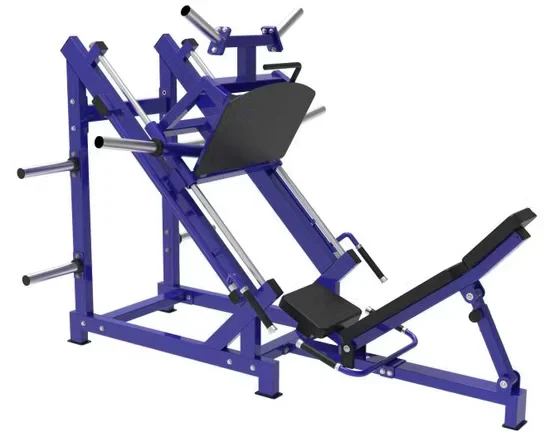
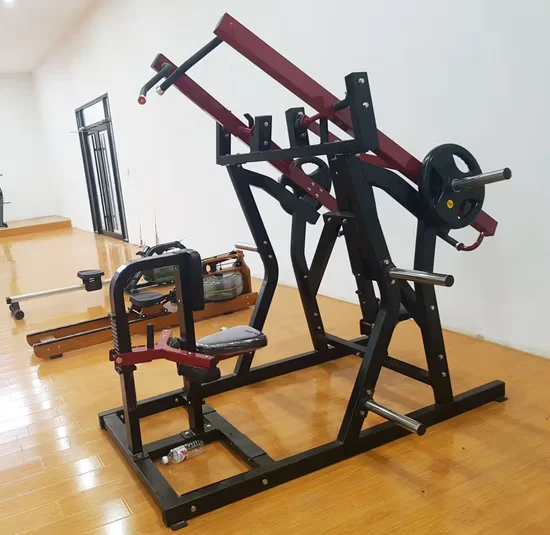
Plate Loaded PRO Tackler Machine, 3×3 Inch Frame Tube, 139kg Net Weight — engineered with 11-gauge industrial steel and robotic MIG continuous welding to eliminate cold joints under repetitive tackling loads. Plate-loaded resistance removes cable maintenance variables for high-traffic commercial environments. Every unit undergoes per-unit load testing before shipment, backed by a 10-year frame warranty and factory-direct floor planning support.
// Spec Highlights
• Direct from Manufacturer · No Middlemen · Worldwide Shipping
01
// Material
Imported Solid Wood
Premium hardwood frames sourced for density and visual warmth.
02
// Hardware
Medical-Grade Silent
Whisper-quiet pulleys and springs for clinical environments.
03
// Customization
Appearance OEM
Color, upholstery, and branding tailored to your studio.
04
// Service
Layout Design
Free venue planning for studios and rehab institutions.
Every component is selected for longevity, performance, and aesthetic harmony - from imported hardwood frames to silent medical-grade accessories.
// Features
Continuous Robotic Welding — every load-bearing joint on this plate loaded tackler machine receives uninterrupted MIG weld lines, eliminating the cold-joint failures common in spot-welded frames.
| Parameter | Value |
|---|---|
| Product Type | Plate Loaded Tackler Machine |
| Frame Tube Size | 3×3 inch |
| Frame Steel Gauge | 11-gauge |
| Steel Grade | Q235 / Q345 industrial steel |
| Welding Type | Robotic MIG continuous weld |
| Loading Type | Plate loaded |
| Exercise Part | Arm / Shoulder |
| Powder Coating | 200μm scratch-resistant |
| Pre-treatment | Sandblast |
| Product Dimensions | 1643×1356×1841mm |
| Net Weight | 139kg |
| Certification | ISO 9001, CE |
| Warranty | 10-year frame |
| Facility Type | Typical Use |
|---|---|
| Commercial gym strength floor | Heavy-duty shoulder and arm isolation stations |
| University strength and conditioning room | Athletic tackling and push-power development |
| Sports performance training center | Sport-specific upper body power conditioning |
| Rehabilitation and performance center | Controlled progressive resistance for shoulder recovery |
Tube wall thickness determines whether a frame holds geometry or slowly deforms under off-center force.
Most plate loaded machines marketed as "commercial grade" never disclose the actual gauge or tube dimensions of their steel. Facility operators discover the difference only after months of heavy use, when frames begin to flex under repeated tackling motions and weld seams develop hairline cracks at stress points [NEED_CITE: EN 957 structural requirements for stationary training equipment]. A commercial plate loaded tackler machine must absorb force that is rarely perfectly centered — athletes drive at angles, shift weight mid-repetition, and load unevenly. Thinner tubes deflect under this treatment, transferring stress into the weld zones where failure starts.
The plate loaded tackler targets the shoulder girdle and arm musculature through a converging pressing arc, filling a specific gap between overhead press stations and chest-focused equipment. In a commercial strength zone, it pairs naturally with lat machines and rowing stations to balance anterior and posterior upper-body work. The fixed movement path suits facilities with high member turnover where coaching oversight is limited, and the plate loaded configuration allows users to progress resistance without the mechanical complexity of cable routing. The commercial plate loaded tackler machine accommodates a broad range of user statures within a single footprint, making it practical for high-density gym floors.
Tackling movements generate impulsive loads — not the smooth, controlled force of a standard press, but repeated acceleration and deceleration cycles that concentrate stress at the frame junctions where the lever arm meets the main upright [NEED_CITE: weld classification and fatigue performance in structural steel]. Each repetition transmits force through the pivot bearings, which must maintain alignment despite dust, chalk residue, and sweat exposure typical in commercial environments. The powder coating at contact points — where plates are loaded and unloaded, where users grip and brace — faces constant abrasion. Upholstery surfaces compress under body weight during forceful exertion and must recover between users across hundreds of daily cycles.
The 3×3 inch frame tube cross-section provides a deflection threshold appropriate for the asymmetric force vectors generated during tackling movements — narrower tubes bend incrementally under off-axis loading, accelerating fatigue at connection points. Robotic MIG continuous welding produces uniform penetration along the entire joint length, removing the intermittent weak points that spot-welding leaves between contact spots. A 200μm powder coating applied over sandblast pre-treatment creates a barrier thick enough to resist chipping at plate-loading horns and grip-contact zones, where thinner finishes expose bare steel to moisture and corrosion within the first year. The 11-gauge wall thickness keeps the frame rigid under loads that would cause lighter-gauge tubes to flex measurably.
Thinner-gauge steel saves weight and material cost at the factory but manifests as warranty claims within the first year of commercial deployment, when tubes oval at bolt holes and frames lose squareness. Spot-welded joints pass initial visual inspection but propagate cracks under the repetitive impulse loads that tackling machines absorb — operators face the liability of structural failure during use. Non-sealed bearings develop play as chalk dust and sweat penetrate, requiring replacement on a cycle that pulls equipment off the floor repeatedly. Thin powder coatings chip at loading horns, exposing untreated steel that oxidizes and degrades appearance across an otherwise functional machine [NEED_CITE: powder coating adhesion standards for fitness equipment].
Every frame tube traces to mill-certified Q235 or Q345 coil, providing material verification that goes beyond generic "commercial grade" claims. Robotic MIG welding runs continuous beads on every load-bearing joint of this plate loaded tackler machine, producing consistent penetration without the cold-joint gaps that hand-welding leaves under heavy production schedules. Each unit undergoes individual load testing before crating — not sample-based batch testing. The 200μm powder coating applied over full sandblast pre-treatment holds against plate-contact abrasion and cleaning chemical exposure. The 10-year frame warranty reflects confidence in structural longevity, and 2D-3D floor planning CAD support ensures the 1643×1356mm footprint integrates safely with adjacent station clearances.
Provide your strength zone dimensions and current equipment list to receive a 2D or 3D layout that positions the tackler station with correct safety clearances relative to adjacent machines. Specify anticipated daily user volume so structural grade recommendations align with actual traffic. Identify your user population’s stature range to confirm that the fixed geometry accommodates your membership. Note any color, logo, or upholstery customization requirements for brand consistency across the floor.
Q: How can I verify the actual steel gauge versus vague commercial-grade marketing claims?
A: Request mill certificates that trace the frame steel back to the original coil. Reputable manufacturers supply documentation showing the gauge, grade, and mill source. Without this paperwork, "commercial grade" is a marketing phrase with no verifiable specification behind it, leaving you unable to compare structural integrity across competing bids.
Q: What frame tube gauge and size should a plate loaded tackling machine have?
A: An 11-gauge wall thickness in a 3×3 inch tube section provides the rigidity needed for the off-center impulse loads that tackling movements generate. Thinner walls or smaller cross-sections deflect under asymmetric force, accelerating weld fatigue and misaligning the movement path over time.
Q: How does a plate loaded machine compare to selectorized equipment in durability?
A: Plate loaded machines eliminate cables, pulleys, and weight stack guide rods — the components that wear fastest in selectorized stations. Maintenance reduces primarily to bearing inspection and bolt torque checks. This simpler mechanical path means fewer failure points and longer intervals between service interventions.
Q: What footprint and clearance spacing does this machine require for safe installation?
A: The machine occupies 1643×1356mm, but safe installation requires additional clearance on all sides for plate loading, user entry and exit, and emergency access. A detailed floor plan ensures adjacent stations do not create pinch points or restrict the movement envelope during full-range tackling repetitions.
Q: What warranty coverage applies to the frame versus wearable components?
A: The frame carries a 10-year warranty covering structural integrity under normal commercial use. Wearable items such as upholstery, grips, and bearings are covered under separate terms reflecting their expected service life. Confirm specific warranty language before purchase to understand what is included and what constitutes normal wear.
Premium aesthetics meet quiet operation for boutique studio environments.
Medical-grade silence and precision for sports & postpartum recovery.
Furniture-grade craftsmanship for premium residential installations.
Compact premium setups for one-on-one and small-group training.
Aesthetic Pilates integration for hybrid wellness studio programming.
Multi-unit deployment with instructor-grade reliability for certification programs.
Tell us about your project. Our team will respond within 24 hours with pricing, customization options, and shipping details.
// Sales Director
William
+86 132 2531 1800
// Export Manager
Bella
+86 198 5412 8032
william@bickfit.com