01 / Scenario
STUDIO
P
High-End Pilates Studios
Premium aesthetics meet quiet operation for boutique studio environments.

ISO
9001
CE
Certified
OEM
Available
10YR
Warranty
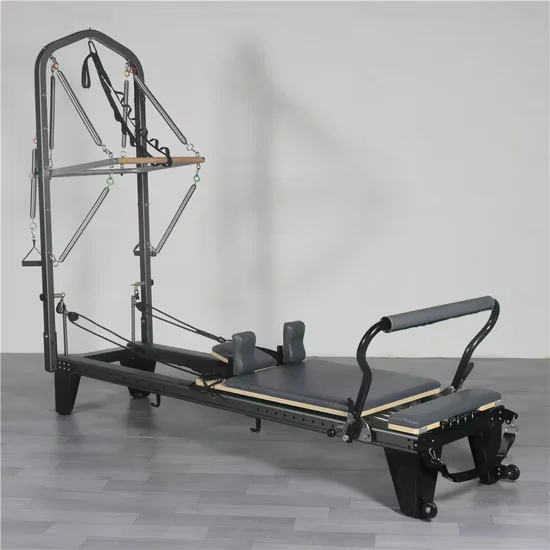
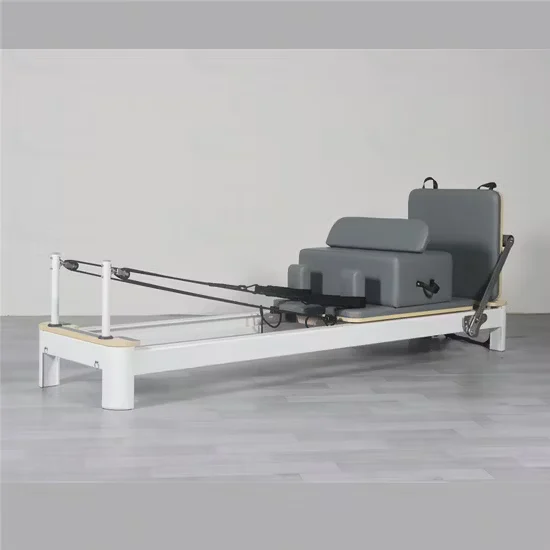
White Aluminum Alloy Pilates Reformer Bed, 2570×730×350mm, 70kg Net Weight — engineered with aircraft-grade aluminum frame for optimal weight-to-rigidity balance, ensuring smooth carriage glide and long-term track integrity. Includes Long Box, Jump Board, and Platform as standard accessories to support full-spectrum studio programming. Custom logo and color options available with 3-year warranty coverage. Backed by 32-point inspection and 100% load testing before shipment.
// Spec Highlights
• Direct from Manufacturer · No Middlemen · Worldwide Shipping
01
// Material
Imported Solid Wood
Premium hardwood frames sourced for density and visual warmth.
02
// Hardware
Medical-Grade Silent
Whisper-quiet pulleys and springs for clinical environments.
03
// Customization
Appearance OEM
Color, upholstery, and branding tailored to your studio.
04
// Service
Layout Design
Free venue planning for studios and rehab institutions.
Every component is selected for longevity, performance, and aesthetic harmony - from imported hardwood frames to silent medical-grade accessories.
// Features
Traceable Alloy Integrity — Every extruded aluminum rail ships with a mill certificate linking the frame stock back to the production batch, ensuring the structural baseline is verifiable rather than claimed.
| Parameter | Value |
|---|---|
| Product Type | Pilates Reformer |
| Frame Material | Aluminum Alloy |
| Color | White |
| Included Accessories | Long Box / Jump Board / Platform |
| Product Dimensions | 2570 × 730 × 350 mm |
| Net Weight | 70 kg |
| Warranty | 3 Years |
| Customization | Available (Color, Logo) |
| Target User | Adult, Unisex |
| Facility Type | Typical Use |
|---|---|
| Pilates Studio | Full-equipment mat and apparatus class programming |
| Rehabilitation Center | Controlled-resistance therapeutic movement protocols |
| Boutique Fitness Studio | Small-group reformer classes with high turnover |
| Home Fitness Space | Dedicated private training environment |
The carriage return force concentrates at one point — the rail’s terminal anchor — and that is where thin-wall frames crack first.
A lot of reformers on the market look right in a showroom photograph. The upholstery is clean, the logo is crisp, the price point fits the budget. But when an 85kg client drives through a Jump Board sequence and the carriage slams into the stop block at full spring tension, the shock wave travels straight into the frame’s end joint [NEED_CITE: cyclic loading and fatigue at carriage stop interfaces in linear motion equipment]. If the aluminum wall thickness was shaved to save weight and cost, that joint is the first thing to develop play. You will not see it for the first six months. You will hear it — a click at the bottom of every return stroke — and then the carriage starts to drift off-center. A commercial aluminum alloy Pilates reformer bed has to survive thousands of those impact cycles before the first scheduled maintenance, and the only way to guarantee that is to start with verifiable material specs, not a supplier’s "commercial grade" claim.
A 2570mm length and 730mm width means this unit occupies a footprint that most studio operators already budget for standard reformer bays. The 70kg net weight keeps the unit stable during aggressive Jump Board work without requiring floor anchoring on concrete slabs. In a group class layout, the platform and long box allow each station to run independent exercise sequences without swapping accessories between clients. For rehabilitation environments, the low 350mm platform height accommodates patients stepping on and off without assistance. The commercial aluminum alloy Pilates reformer bed works as the primary apparatus in a dedicated studio or as one unit among a mixed apparatus configuration with Cadillacs and Wunda Chairs.
Every reformer session generates hundreds of carriage travel cycles, each one pushing lateral force into the rail walls at the point where the bearing housing rides. Over weeks of studio scheduling — eight classes a day, six days a week — that localized pressure either distributes across a properly sized aluminum section or starts to oval the bearing channel. The Jump Board introduces axial impact that a standard reformer sequence never produces. Upholstery contact zones on the shoulder rest and headrest compress and release under body weight and sweat exposure, meaning material density and cover stitching determine how quickly the padding splits. The spring anchor points endure cyclical tension that loosens substandard fasteners within months [NEED_CITE: fastener preload loss under cyclic tensile loading in fitness apparatus]. Powder coating on the aluminum surfaces faces constant abrasion from carriage travel and chemical exposure from cleaning agents used between clients.
The 2570 × 730 × 350 mm dimension profile places this reformer in the full-size category, meaning the carriage travel distance accommodates clients across a wide height range without requiring platform extensions. Aluminum alloy as a frame material delivers two things simultaneously: corrosion resistance in sweat-heavy studio environments and a weight-to-rigidity ratio that keeps the unit portable for layout changes without sacrificing structural mass. The 70kg net weight signals that the frame section has enough material to resist flex during loaded carriage travel — lighter units tend to deflect under lateral load, producing the wobble clients feel during single-leg footwork. The inclusion of the Long Box, Jump Board, and Platform as standard accessories eliminates the common problem of sourcing compatible third-party add-ons that do not match the carriage width or rail gauge. Customization availability for color and logo allows multi-location operators to maintain brand consistency across purchased batches.
Operators who bought on price discover the actual cost later. Thin-wall aluminum extrusions flex under loaded carriage travel, and once the rail deforms past its elastic limit, the carriage develops side-to-side play that no adjustment bolt corrects. Non-sealed bearings packed with generic grease attract aluminum dust from rail wear, forming an abrasive paste that scores the channel surface within months. Upholstery specified at residential density compresses permanently under daily class schedules, leaving visible depressions that clients read as equipment neglect [NEED_CITE: foam density and compression set in commercial upholstery applications]. Replacement parts for non-standard hardware — proprietary spring hooks, odd-size carriage wheels — become unavailable when the original supplier discontinues the model, leaving the reformer sitting idle in a storage room while the operator sources an entirely new unit.
The aluminum stock sourcing starts with batch-traceable mill certificates so the alloy grade and wall thickness can be verified against the specification sheet, not taken on faith. Carriage rail surfaces are machined to flatness tolerances that keep bearing travel smooth across the full stroke length without binding at the ends. Every spring anchor point uses grade-rated fasteners torqued to specification and marked for visual inspection during routine maintenance. Upholstery foam is selected at commercial density to resist compression set under high-frequency class scheduling. The white powder-coated finish on the aluminum frame provides a durable surface that withstands daily chemical cleaning without degrading or chalking. Custom color and logo application is integrated into the finishing process rather than applied as an afterthought, so branding survives the same wear cycle as the rest of the frame.
Share your studio floor dimensions and planned reformer count so a layout drawing can confirm spacing and traffic flow around each unit. Specify your average daily class schedule and client volume so the structural duty rating can be matched to actual usage intensity. Indicate your client demographic — height range, average body weight — so carriage travel and spring configuration can be confirmed as appropriate. If custom color or logo application is required across multiple units, state the quantity per batch so lead time and finish consistency can be planned before production begins.
Q: Aluminum vs steel frame — which is the right choice for a commercial studio?
A: Aluminum alloy frames resist corrosion from sweat and cleaning chemicals without surface treatment dependency, which matters in high-humidity studio environments. Steel frames can be built heavier but require coating integrity to prevent oxidation. For studios running group classes with frequent equipment repositioning, the weight-to-rigidity balance of aluminum makes layout changes manageable without sacrificing stability during loaded use.
Q: How do I know if the carriage system will hold up under group class volume?
A: Carriage durability depends on bearing type, rail material hardness, and housing fit tolerance. Sealed bearings prevent contamination from aluminum dust and sweat ingress. Request the bearing specification and ask for a loaded-travel test showing the carriage moving smoothly across the full stroke with lateral force applied. Any detectable side play at the ends of the rail signals tolerance issues that will worsen with use.
Q: Does the included accessory set cover a full class curriculum?
A: The Long Box enables seated and supine pulling movements that the standard carriage alone cannot support. The Jump Board adds plyometric and cardiovascular sequences. The Platform extends the working surface for standing and kneeling exercises. Together they allow a full class to run without accessory swaps between exercises, which keeps class pacing tight and eliminates transition dead time.
Q: What is the expected upholstery lifespan under daily commercial use?
A: Commercial-density foam resists permanent compression far longer than residential-grade padding, but lifespan still depends on class volume and client weight distribution. Expect cover material to show wear at high-contact zones — shoulder rest edges, headrest center — before the foam itself degrades. Specifying replaceable covers rather than bonded upholstery means you swap fabric panels instead of replacing entire pad assemblies.
Q: What are the minimum order and lead time for custom color and logo?
A: Custom color matching and logo application are integrated into the powder coating and finishing stage of production. Minimum order quantities depend on the color formulation complexity — standard white and black variants have lower thresholds than bespoke Pantone matches. Provide your brand color reference and logo file format early in the inquiry so sampling can be confirmed before the production batch is scheduled.
Premium aesthetics meet quiet operation for boutique studio environments.
Medical-grade silence and precision for sports & postpartum recovery.
Furniture-grade craftsmanship for premium residential installations.
Compact premium setups for one-on-one and small-group training.
Aesthetic Pilates integration for hybrid wellness studio programming.
Multi-unit deployment with instructor-grade reliability for certification programs.
Tell us about your project. Our team will respond within 24 hours with pricing, customization options, and shipping details.
// Sales Director
William
+86 132 2531 1800
// Export Manager
Bella
+86 198 5412 8032
william@bickfit.com