01 / Scenario
STUDIO
P
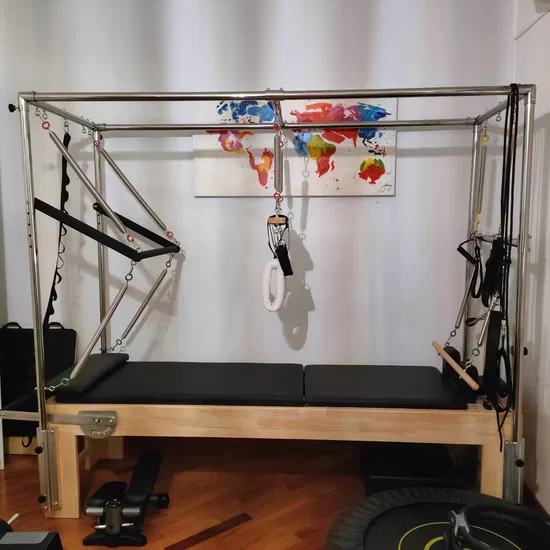
High-End Pilates Studios
Premium aesthetics meet quiet operation for boutique studio environments.

ISO
9001
CE
Certified
OEM
Available
10YR
Warranty
White Aluminum Alloy Pilates Reformer, 2570×730×270mm, 90kg Net Weight — engineered with aluminum alloy carriage rail system for smooth glide and corrosion resistance under continuous studio use; includes long box, jump board, and platform for full-spectrum programming; reinforced frame structure with 3-year warranty coverage. Backed by 15,000㎡ vertically integrated facility with 17-year manufacturing heritage and 3-stage inspection process on every unit.
// Spec Highlights
• Direct from Manufacturer · No Middlemen · Worldwide Shipping
01
// Material
Imported Solid Wood
Premium hardwood frames sourced for density and visual warmth.
02
// Hardware
Medical-Grade Silent
Whisper-quiet pulleys and springs for clinical environments.
03
// Customization
Appearance OEM
Color, upholstery, and branding tailored to your studio.
04
// Service
Layout Design
Free venue planning for studios and rehab institutions.
Every component is selected for longevity, performance, and aesthetic harmony - from imported hardwood frames to silent medical-grade accessories.
// Features
Every unit load-tested before shipping — The White Aluminum Alloy Pilates Reformer undergoes full tension-cycle and carriage-alignment verification on the production floor, not on a sampling basis.
| Parameter | Value |
|---|---|
| Product Type | Pilates Reformer |
| Frame Material | Aluminum Alloy |
| Color | White |
| Accessory | Long Box / Jump Board / Platform |
| Product Dimensions | 2570×730×270mm |
| Net Weight | 90kgs |
| Target User | Adult / Unisex |
| Warranty | 3 Years |
| Logo | Customized |
| Facility Type | Typical Use |
|---|---|
| Commercial Pilates Studio | Group reformer classes with continuous daily scheduling |
| Boutique Fitness Studio | Small-group and semi-private programming |
| Rehabilitation and Conditioning Center | Low-impact therapeutic movement and post-injury recovery |
| Hotel and Resort Wellness Facility | Guest-accessible movement studios with varied user levels |
Carriage drift on a commercial pilates reformer almost always starts at the rail, not the springs.
Many studios invest in reformers marketed as studio grade, only to find carriage wobble developing within the first season of heavy rotation. The issue is rarely the frame itself — it is the rail profile and the way the carriage wheels engage under thousands of eccentric spring cycles. When rail geometry tolerances are loose, lateral play accumulates fast [NEED_CITE: structural alignment tolerances in cyclic-load fitness equipment]. Once the glide path degrades, clients notice the uneven feel immediately, and instructors lose confidence in cueing precision. This White Aluminum Alloy Pilates Reformer addresses that failure point directly through its aluminum alloy carriage rail system, designed to hold alignment under the repetitive loading patterns that define a busy studio schedule.
This reformer covers the full spectrum of Pilates repertoire — supine, prone, seated, and standing sequences — engaging the deep stabilizers, posterior chain, and hip complex through spring-loaded resistance. In a studio layout, it anchors the primary reformer zone and pairs with accessory stations like the Wunda Chair or Cadillac for advanced programming. The commercial pilates reformer suits high-density boutique floors where class throughput demands equipment that holds calibration across back-to-back sessions. Its dimensions accommodate a wide range of user statures, from shorter clients performing footwork to taller practitioners executing full-range long stretch series.
Every reformer session subjects the carriage rail and spring anchor points to hundreds of load-release cycles. The aluminum alloy frame resists corrosion from studio humidity and cleaning agents, but the critical stress zones are the carriage-rail contact interface and the spring attachment hardware. Under daily commercial use, fatigue concentrates where the rail meets the frame end-caps and where the rope pulleys redirect tension [NEED_CITE: fatigue stress concentration in aluminum alloy fitness frames]. Upholstery contact points on the shoulder rests and headrest endure compression cycling that degrades lower-density foam quickly. The powder-coated aluminum surface must also tolerate sweat exposure and frequent wipe-downs without chalking or discoloration over years of service.
The aluminum alloy construction reduces overall unit mass while maintaining rigidity across the 2570mm bed length — a balance that matters when studios need to reconfigure floor layouts or stack units for maintenance. Rail and carriage geometry determines glide consistency far more than spring count alone; a well-machined aluminum rail keeps the carriage tracking true without requiring frequent lubrication. The included long box, jump board, and platform expand programming range without adding separate equipment footprints to the studio floor. Spring configuration and rope routing affect how resistance progresses through each movement, and the sealed pulley system keeps cable wear predictable over maintenance intervals. Net weight at 90kgs reflects a frame substantial enough to resist walking during dynamic jump board work yet manageable for two-person repositioning.
Manufacturers trimming production costs on reformers typically cut corners where buyers cannot see — inside the rail channel, at the spring anchor bolts, and in the rope pulley bearings. A thin-wall rail may feel smooth in the showroom but develops lateral play once the wheel bearings wear grooves into an undersized track. Unsealed pulleys invite chalk dust and sweat residue into the bearing race, accelerating rope fraying and requiring replacement far sooner than the frame warranty covers [NEED_CITE: bearing contamination failure modes in studio fitness equipment]. Low-density upholstery on the shoulder blocks compresses flat within months of daily use, forcing studios to source replacement pads or accept a degraded client experience. Non-standard hardware dimensions mean generic replacement springs and ropes do not fit, locking the studio into expensive proprietary spare parts or early equipment retirement.
The 15,000㎡ vertically integrated facility behind this commercial pilates reformer means the aluminum alloy extrusion, machining, assembly, and testing all happen under one quality chain. Robotic MIG welding on the structural joints produces continuous weld lines that resist the cyclic tension peaks generated during jump board and advanced spring sequences. Every unit carries a 3-year warranty backed by load testing on the production floor before packaging. The 200μm industrial powder coating protects the aluminum surface against studio humidity, cleaning chemicals, and the inevitable contact wear from client footwear and hand placement. OEM private label options allow studio operators to align equipment branding with their visual identity without managing a separate supply chain.
Provide your studio floor dimensions and target class capacity to receive a 2D-3D layout that positions this reformer with proper spacing for instructor circulation and client safety. Specify your average daily session count so we can confirm the structural grade matches your throughput. Indicate any custom color or logo requirements to align the equipment with your studio branding standards.
Q: How do I tell if a Pilates reformer is truly built for commercial studio use?
A: Look beyond marketing labels and check three things: whether the rail material is specified with traceable alloy documentation, whether the frame joints use continuous welds rather than spot welds, and whether the manufacturer load-tests every unit individually before shipping rather than testing a sample batch.
Q: What are the maintenance differences between aluminum alloy and steel rail systems?
A: Aluminum alloy rails resist corrosion naturally and do not require the same anti-rust treatments that steel rails demand in humid studio environments. Aluminum also reduces overall unit weight, making repositioning easier, while maintaining rigidity through proper extrusion profiling rather than sheer mass.
Q: What accessories does a commercial studio need for full reformer programming?
A: A complete setup requires the long box for seated and supine arm work, the jump board for plyometric cardio sequences, and the platform extender for standing balance work. These three accessories cover the full classical and contemporary Pilates repertoire without needing additional standalone equipment.
Q: How often should springs and ropes be replaced under daily commercial use?
A: Springs should be inspected quarterly for loss of tension consistency and replaced when they no longer return to their resting length after loading. Ropes and cables need visual checks for fraying at pulley contact points, with replacement typically required once wear becomes visible through the outer sheath.
Premium aesthetics meet quiet operation for boutique studio environments.
Medical-grade silence and precision for sports & postpartum recovery.
Furniture-grade craftsmanship for premium residential installations.
Compact premium setups for one-on-one and small-group training.
Aesthetic Pilates integration for hybrid wellness studio programming.
Multi-unit deployment with instructor-grade reliability for certification programs.
Tell us about your project. Our team will respond within 24 hours with pricing, customization options, and shipping details.
// Sales Director
William
+86 132 2531 1800
// Export Manager
Bella
+86 198 5412 8032
william@bickfit.com