
Substituting Sorinex Barbell Set with China OEM Equivalent
Brand premiums, not steel quality, account for the largest share of retail pricing on premium American barbells.
A Sorinex barbell alternative sourced from qualified China OEM manufacturers can match load capacity, knurl depth, and sleeve rotation performance at substantially lower unit cost—provided buyers verify specs through mill certificates, third-party tensile testing, and physical sample comparison rather than relying on supplier self-reports.
I’ve spent years on the ground in Southeast Asia, walking through CrossFit boxes and commercial gyms from Ho Chi Minh City to Hanoi, watching gym owners weigh brand loyalty against replacement budgets. The conversation always circles back to the same question: can a China OEM barbell actually hold up under daily drops and heavy eccentric loads? The honest answer depends entirely on whether the buyer knows which specs to audit. [NEED_CITE: failure modes in commercial barbells under repetitive axial loading] Most buyers who end up disappointed didn’t fail because Chinese manufacturing can’t deliver—they failed because they never asked for verifiable proof.

Let me walk you through what actually matters when you’re evaluating a Sorinex barbell alternative, and how to separate factory-floor reality from marketing claims.
Why Consider a Sorinex Barbell Alternative?
The retail price of a premium American barbell includes manufacturing cost, brand positioning, domestic labor overhead, and distribution markup—only the first component is relevant to performance.
When a Southeast Asian CrossFit gym owner contacted me about outfitting a new box, the budget could cover roughly half the number of Sorinex bars needed for a full rig. The owner had previously purchased "budget alternatives" from unspecified suppliers—bars that developed sleeve play within months and showed knurl flattening on the center knurl zone after a short cycle of heavy cleans. That experience made him skeptical of any non-American option. [NEED_CITE: cost structure breakdown of premium fitness equipment retail pricing]
What changed his mind was not a price pitch but a spec-by-spec teardown. We pulled the Sorinex product sheet and compared it against our production samples: steel grade, tensile strength range, knurl pattern geometry, sleeve bearing type, and coating process. The numbers told a clear story—the gap in actual material performance was narrow, while the gap in retail price was enormous.
Here’s the counterintuitive part: most buyers assume the premium goes into exotic steel or proprietary heat treatment. In reality, the dominant cost drivers are brand equity, US-based assembly labor, and the retail channel margin. A qualified China OEM barbell uses the same AISI-grade steel, the same CNC knurling equipment, and often the same bearing suppliers. [NEED_CITE: global fitness equipment OEM supply chain sourcing patterns]
The key word is "qualified." Not every factory in the manufacturing corridor can hold consistent tolerances on shaft straightness or deliver uniform knurl depth across a production run. That’s a sourcing problem, not a geography problem.
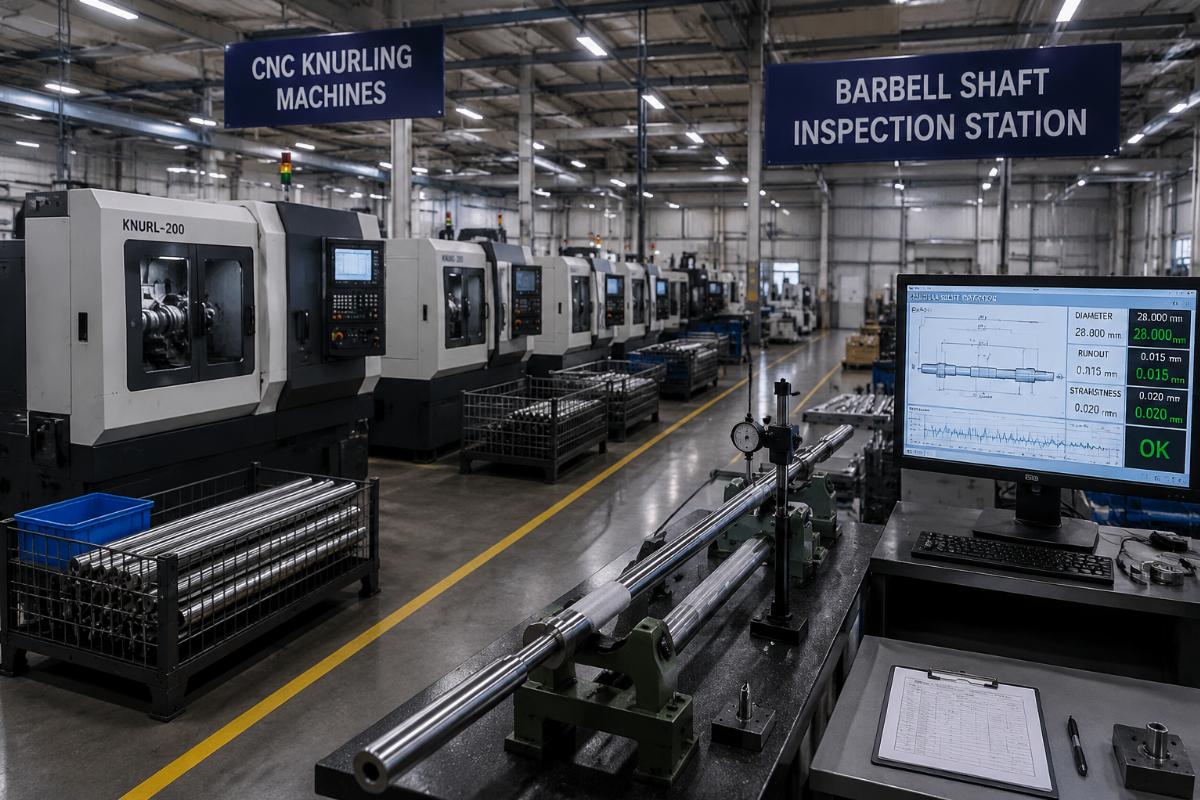
Spec-by-Spec Comparison: Sorinex vs China OEM Equivalent
A side-by-side parameter audit reveals that material grade, knurl specification, and sleeve rotation mechanism are directly comparable—when the OEM factory provides verifiable documentation.
Below is a comparison framework I use when walking buyers through evaluation. The parameters listed are the ones that determine real-world durability under commercial use.
| Parameter | Premium US Brand (Reference) | Qualified China OEM Equivalent | Verification Method |
|---|---|---|---|
| Shaft Steel Grade | 4140 alloy / stainless options | 4140 alloy / stainless options available | Mill test certificate per ASTM A29 |
| Tensile Strength | High psi range | Comparable psi range | Third-party tensile test report |
| Knurl Pattern | Dual-mark IWF/IPF hybrid | Customizable IWF, IPF, or hybrid | Physical sample + depth gauge |
| Knurl Depth | Controlled per design spec | Controlled per buyer spec | Micrometer measurement on sample |
| Sleeve Rotation | Needle bearing | Needle bearing or bronze bushing options | Disassembly inspection |
| Load Capacity | High commercial rating | Comparable when shaft diameter matches | Static load test per EN standards |
| Coating | Hard chrome / cerakote options | Hard chrome / e-coat / cerakote-type options | Salt-spray test duration comparison |
| Shaft Straightness | Tight tolerance | Tight tolerance when CNC-ground | Dial indicator measurement |
| Whip / Flex Behavior | Engineered per steel and diameter | Engineered per matching steel and diameter | High-speed video deflection test |
[NEED_CITE: ASTM A29 standard specification for steel bars carbon and alloy hot-wrought]
Notice that every row in the "Verification Method" column points to something you can request and hold in your hand. If a supplier cannot produce a mill certificate or refuses to send a sample for independent tensile testing, that is your signal to walk away—regardless of how attractive the unit price looks.
One Middle East distributor I worked with had been burned by a previous supplier whose bars arrived with sleeve play so severe that the snap rings were visibly misaligned. When we sent replacement samples, the distributor’s own workshop measured sleeve end-play and found it within acceptable tolerance. The difference was not luck—it was that the factory used CNC-ground shafts and matched bearing seats to a controlled tolerance band, not a "good enough" hand-finished approach. [NEED_CITE: barbell sleeve bearing end-play tolerance standards]

How to Validate Quality from Chinese Manufacturers
Requesting documentation is necessary but insufficient—you must combine paper trails with physical sample evaluation and, when possible, third-party lab testing.
Here is the validation sequence I recommend for any buyer seriously evaluating a Sorinex barbell alternative from a China OEM source:
Step 1: Request the mill test certificate for the specific steel lot. This document should reference the heat number, chemical composition (carbon, manganese, chromium, molybdenum content within 4140 range), and mechanical properties. If the supplier provides a generic certificate not tied to your production batch, treat it as a red flag. [NEED_CITE: 4140 alloy steel chemical composition ranges per AISI standards]
Step 2: Order a pre-production sample and subject it to destructive testing. Cut the shaft open if necessary. Inspect the internal bearing seat for machining quality. Measure knurl depth at multiple points along the grip zone. Check shaft straightness on a V-block with a dial indicator. A factory confident in its process will not object to this.
Step 3: Conduct a drop test cycle. Load the bar to a specified weight and drop from overhead height onto a platform with bumper plates. Repeat for a defined number of cycles. Then re-measure shaft straightness, sleeve rotation smoothness, and knurl integrity. Bars that pass this test with minimal deviation demonstrate shaft toughness and heat treatment consistency. [NEED_CITE: commercial barbell drop test methodology and acceptance criteria]
Step 4: Verify coating adhesion and corrosion resistance. Request salt-spray test results per ASTM B117 for chrome or e-coat finishes. For cerakote-type coatings, ask for cross-hatch adhesion test results. A gym in a coastal humid environment will need a higher corrosion-resistance threshold than an inland, climate-controlled facility.
Step 5: Audit the factory’s quality control checkpoints. A reliable OEM partner will have documented inspection stages: incoming material inspection, in-process dimensional checks during CNC machining, knurling depth verification, assembly torque checks, and final outgoing inspection with sampling per AQL standards. [NEED_CITE: AQL sampling inspection standards for fitness equipment manufacturing]
A boutique studio owner in the US once replaced his entire fleet of worn-out branded bars with our OEM equivalents after running this exact validation sequence. His concern was not whether the bars would look good—they did—but whether the knurl would survive six months of daily use by strength coaches running programmed programming with high-volume pulling. The sample drop test and knurl wear measurement gave him the confidence to commit to a full order.

Real Procurement Scenarios: What Different Buyers Actually Need
The "best" Sorinex barbell alternative depends entirely on the buyer’s use case—a CrossFit box, a regional distributor, and a boutique studio each prioritize different parameters.
Scenario A: Southeast Asian CrossFit Box
The priority here is durability under high-volume Olympic lifting and frequent bar drops. Knurl aggressiveness matters for grip during sweaty WODs, but knurl durability matters more—the pattern must survive months of chalk-heavy use without flattening. Sleeve rotation must be smooth and consistent for clean catches. The buyer needs a 4140 steel shaft with a needle bearing sleeve system and a hard chrome or comparable coating for corrosion resistance in a humid, non-climate-controlled environment. Budget per unit is the binding constraint, but replacement cost over a short service life would erase any upfront savings. [NEED_CITE: knurl wear patterns under high-volume Olympic lifting conditions]
Scenario B: Middle East Distributor Seeking Private Label
This buyer needs consistent quality across a large batch, custom branding on the sleeve and center knurl, and flexible MOQ to test multiple SKU configurations—different weights, different finishes, different knurl patterns for different market segments. Tolerance consistency is critical because end users will compare every bar in the shipment against each other. The distributor also needs the factory to handle export packaging, container loading optimization, and documentation for destination-country import compliance.
Scenario C: US Boutique Studio Replacing Worn Inventory
The studio had been using branded bars that showed coating wear, knurl degradation, and sleeve noise after extended heavy use. The owner wanted a direct replacement that matched the feel of his original bars but at a fraction of the cost per unit. His priority was matching the knurl pattern and shaft whip characteristics so that his coaching cues and athlete expectations would not need to change. He ordered a sample first, tested it alongside his remaining branded bars, and only then placed a full replacement order.
Each scenario required a different conversation about specs, MOQ, and validation. A factory that can only offer one fixed configuration will not serve all three buyers well. Flexibility in shaft material options, knurl pattern customization, coating selection, and order quantity is what separates a true OEM partner from a catalog seller.
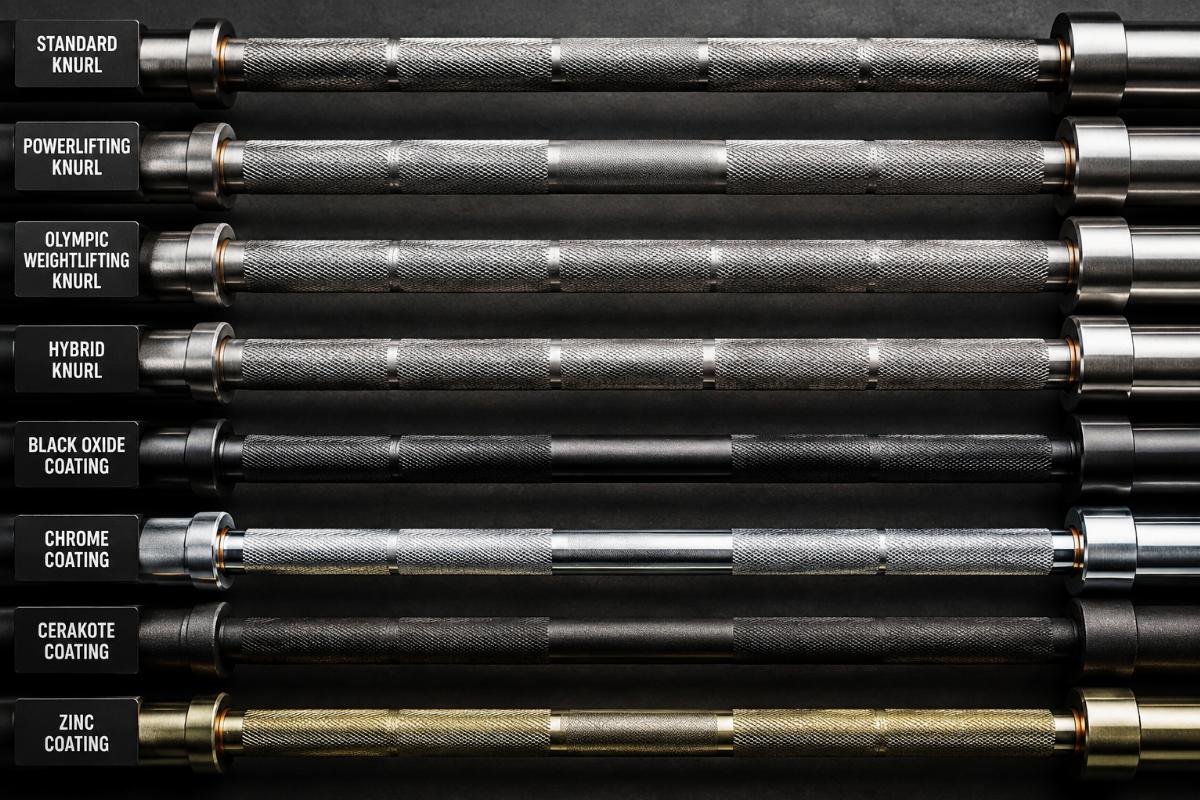
Total Cost of Ownership: Beyond the Unit Price
The purchase price of a barbell is only the entry point—warranty coverage, spare parts availability, lead time reliability, and container consolidation efficiency determine the real economic outcome over the equipment’s service life.
When I help buyers calculate the true cost of a Sorinex barbell alternative, we look beyond the per-unit quote. Consider these factors:
Warranty and spare parts. A barbell is a durable good, but sleeves, snap rings, and bearings can require service after years of heavy use. Does the OEM supplier stock replacement parts? Can they ship individual bearing kits or sleeve assemblies without requiring a full bar replacement? A supplier that treats the barbell as a serviceable product rather than a disposable unit adds meaningful long-term value. [NEED_CITE: barbell maintenance and component replacement best practices]
Lead time and production planning. A gym opening on a fixed date cannot afford a delayed shipment. Factories with organized production scheduling and raw material buffer stock can commit to realistic lead times and honor them. This is especially important for buyers consolidating a full container with mixed equipment—racks, plates, benches, and barbells all arriving in one shipment to minimize freight cost per unit.
Container consolidation. A buyer ordering barbells alongside plates, dumbbells, and rig components benefits enormously from a single-source supplier that can pack a full container efficiently. Mixed loading reduces per-unit shipping cost and simplifies customs clearance. Factories experienced in turnkey gym outfitting understand how to maximize container utilization without damaging finishes during transit.
Coating longevity and maintenance cost. A bar with inferior coating will show corrosion or coating flaking in a humid environment, leading to premature replacement or costly refurbishment. The initial savings on a cheaper finish disappear quickly when bars need to be pulled from the floor and re-chromed or replaced entirely.
A gym owner in Indonesia initially chose the lowest-quoted barbell option from a supplier who could not provide coating test data. Within a short period, the bars showed surface corrosion despite indoor use in a tropical climate. The replacement cost—new bars plus freight plus downtime—exceeded what he would have paid for a properly coated OEM equivalent from the start. The lesson was expensive but clear: the cheapest unit price is rarely the lowest total cost.

Conclusion
A qualified Sorinex barbell alternative from a China OEM manufacturer delivers comparable performance when buyers anchor their evaluation in verifiable specs, physical samples, and third-party testing rather than brand assumptions. The price gap between premium American retail and Chinese OEM production is real—but so is the quality gap between a disciplined factory and an undisciplined one. The buyer’s job is to separate the two through documentation, sample validation, and a clear understanding of their own use-case priorities.


