Cheap vs Premium Gym Equipment Durability: Wholesale Supplier Comparison
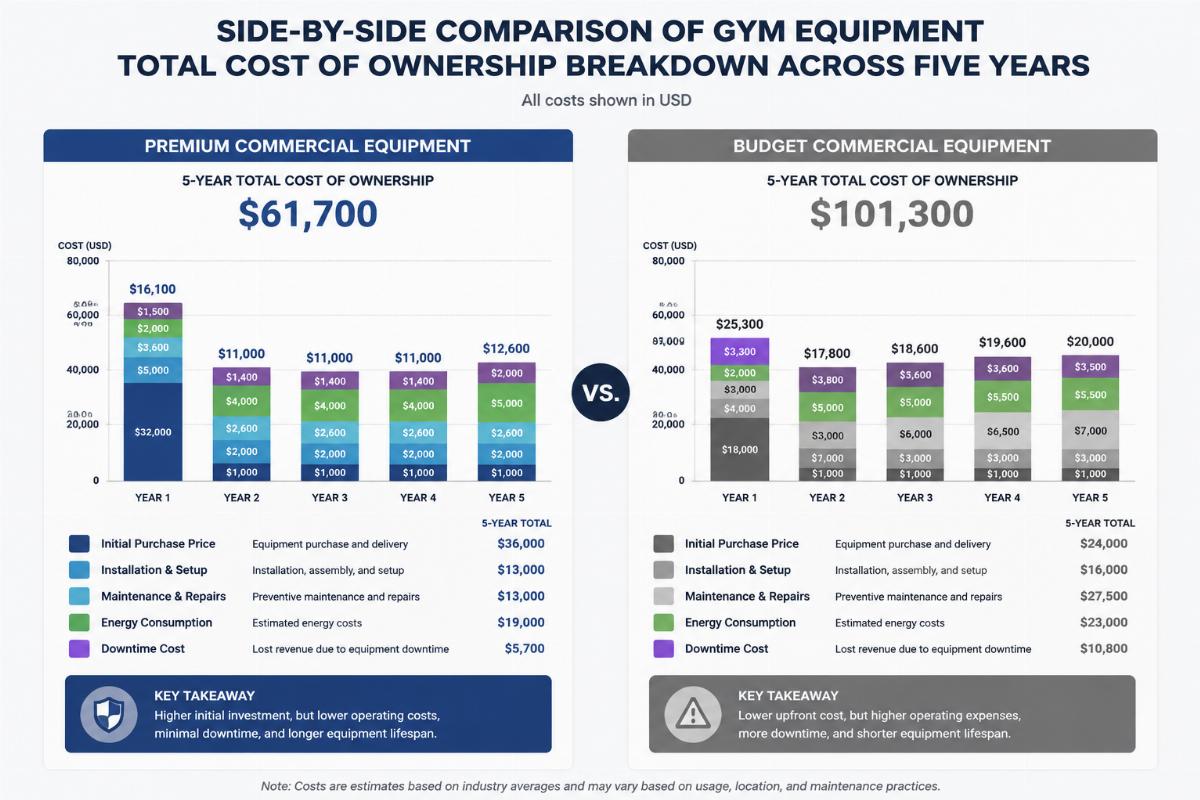
Most buyers think cheap gym equipment saves money. In reality, the price gap is fully erased within eighteen months by downtime, warranty claims, and replacement cycles.
The true cost difference between cheap and premium gym equipment durability is not the purchase price — it is cost per training hour over five years. When you factor in bearing replacement, frame deformation, weld cracking, and container-level rejection, budget machines routinely cost two to three times more than commercial-grade units in total ownership.
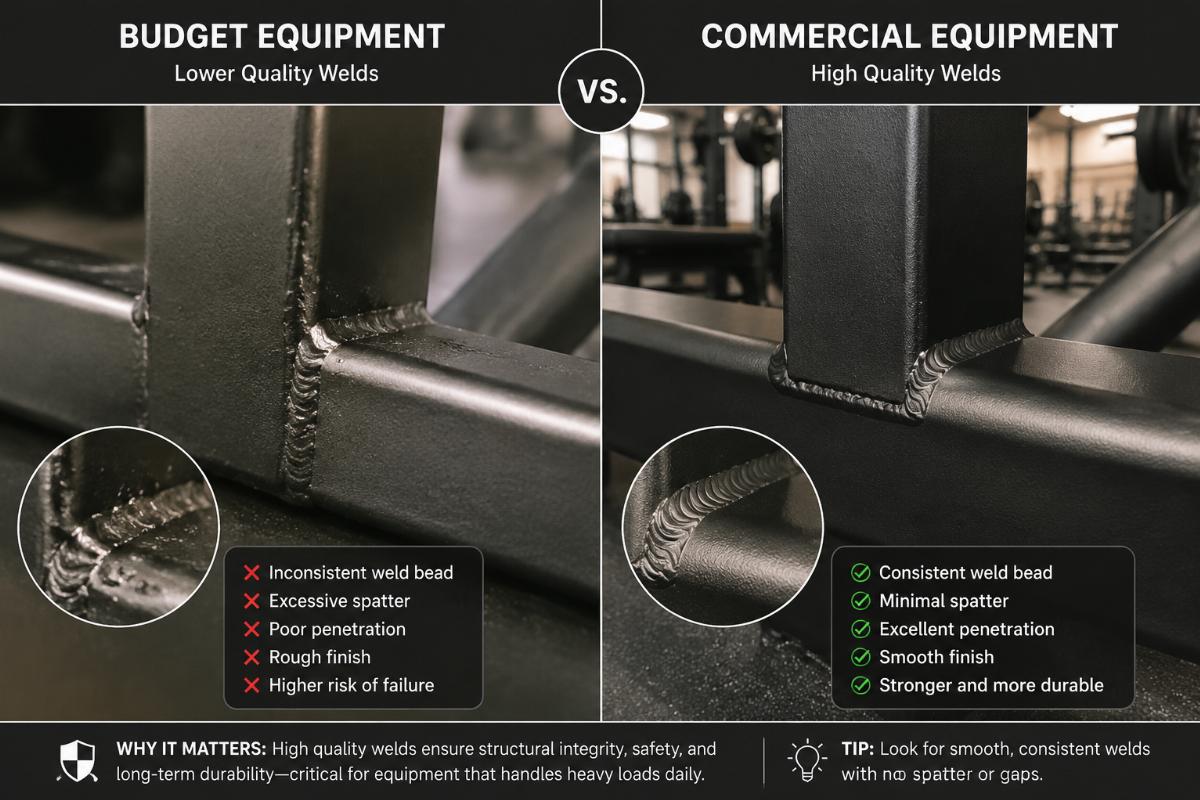
I still remember a full container of Smith machines that arrived at a North American port. The buyer — a regional gym chain — had chosen the lowest quote they could find. When the containers were opened, the weld seams on the main frames were visibly inconsistent, and the steel tubing felt noticeably thinner than the pre-shipment samples. The entire shipment was rejected at the dock. The container sat at the port for months, and the accumulated storage fees alone wiped out half a year’s operating margin for that location. That single order taught me that the parameter sheet lies, but steel gauge, bearing brand, and weld inspection reports do not. [NEED_CITE: root cause distribution of commercial gym equipment field failures per ISO 15243]
The conversation around cheap vs premium gym equipment durability always comes back to three things: what actually fails first, what the spec sheet hides, and how to verify quality before you commit to a container order.
What Actually Breaks First on Cheap Gym Equipment?
Weld cracking, premature bearing wear, and pulley derailment are the three most frequent failure points on low-tier machines, and all three trace directly to material and process shortcuts.
In a Middle East distribution scenario I worked on, a buyer imported a large batch of cardio equipment at a price point well below the commercial market average. Within the warranty period, the return rate on bearing-related failures climbed sharply. The bearings used were unbranded, open-type units with no clear origin marking. Replacing them across the installed base required a local service team, spare parts logistics, and customer goodwill credits — and the total after-sales cost ended up exceeding the original purchase price discount by a wide margin. [NEED_CITE: bearing failure modes and lifespan comparison under commercial gym duty cycles]
On plate-loaded and selectorized strength machines, the pulley systems are the first to reveal cost-cutting. Cheap units use thin-gauge cable, low-grade pulley grooves, and plastic or unsealed bushings. Within a year of heavy commercial use, cables fray, pulleys develop play, and in the worst cases the cable jumps the groove entirely. I have seen hotel fitness centers forced to pull an entire batch of machines off the floor within twelve months because the frames had *tacks were no longer tracking straight.
The pattern is consistent: the failure is never one dramatic event. It is a cascade. A weak weld leads to micro-movement. Micro-movement accelerates bearing wear. Bearing wear introduces vibration. Vibration loosens fasteners and distorts alignment. By the time the gym owner notices, the machine is already unsafe.

How Do Cheap and Premium Machines Compare on Key Specs?
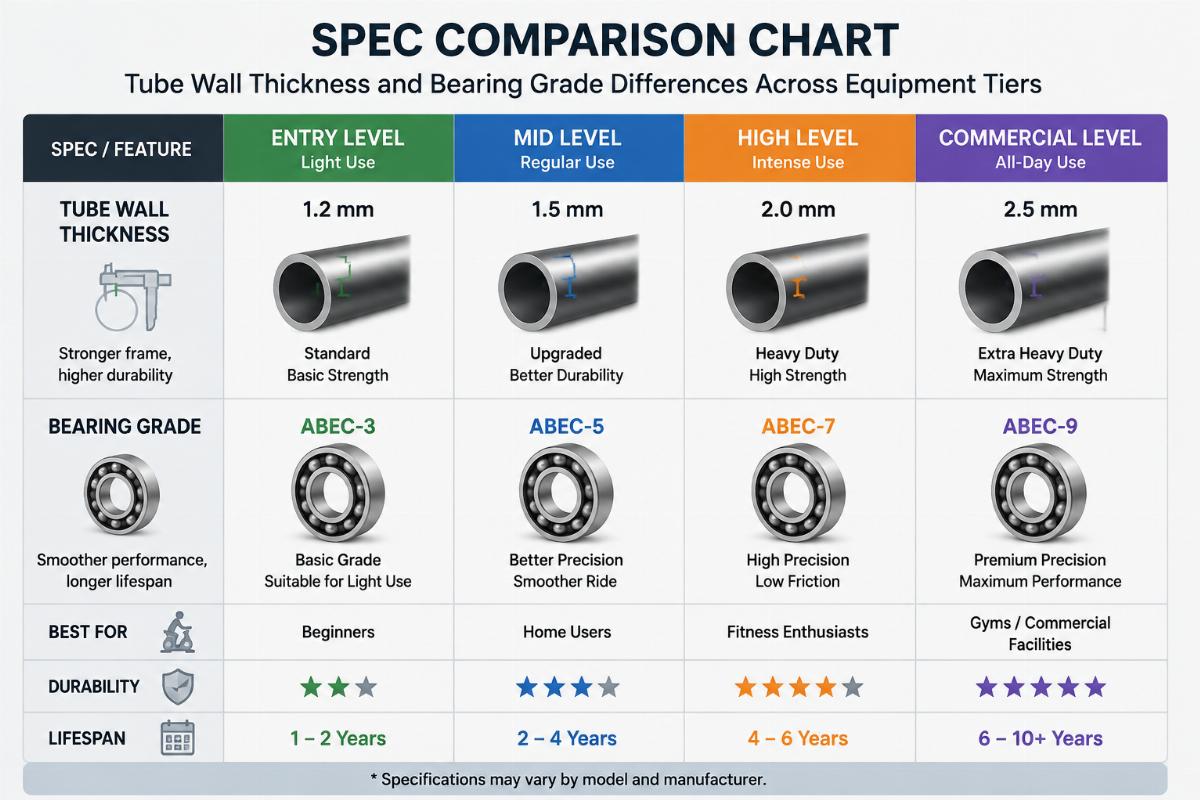
Tube wall thickness, bearing grade, and steel weight per unit are the three parameters that determine whether a machine lasts five years or fails in one.
The table below shows the typical spec gap between entry-level and commercial-grade equipment. These are not marketing claims — they are the physical differences you can measure with a caliper, a scale, and a bearing code.
| Specification | Entry-Level / Budget | Commercial Grade |
|---|---|---|
| Main frame tube wall thickness | Thin-wall, below commercial threshold | Heavy-wall, meets commercial standard |
| Frame tube cross-section | Undersized, flex-prone | Oversized, high rigidity |
| Bearing type | Unbranded open / sealed bushing | Branded sealed bearing, P5 class or above |
| Weld inspection | Visual only | Full batch-level ultrasonic or magnetic particle report |
| Steel weight per unit | Noticeably lighter | Substantially heavier |
| Cable and pulley system | Standard-duty, unsealed | Heavy-duty, sealed, guided |
| Surface treatment | Basic powder coat | Multi-stage pretreatment plus commercial-grade coating |
[NEED_CITE: commercial fitness equipment structural requirements per EN 957 and ISO 20957]
A buyer in Southeast Asia once compared two quotes for a full strength line. The cheaper option looked attractive on paper until we weighed the actual frames. The budget machines were lighter per unit by a significant margin — not because of clever engineering, but because the tube walls were thinner and the cross-sections were smaller. That weight difference translated directly into flex under load, and flex under load is exactly what cracks welds over time.
The bearing question is equally decisive. A commercial treadmill or elliptical running eight to ten hours a day needs bearings that can handle continuous radial and axial load without generating heat or play. Branded sealed bearings at P5 precision class or above are standard on premium machines. Budget machines use generic bearings with no traceable origin, and their failure mode under commercial duty is not a question of if, but when. [NEED_CITE: bearing precision class impact on service life under continuous commercial load]
What Is the Real Cost of Ownership Over Five Years?
When maintenance, downtime, and replacement costs are included, the total cost of ownership for budget equipment routinely overtakes that of commercial-grade machines.
The calculation most buyers skip is the cost-per-training-hour model. The formula is straightforward: total cost equals purchase price plus five-year maintenance plus revenue lost to machine downtime, all divided by the expected number of training hours over the machine’s usable life.
On cheap equipment, the purchase price is lower, but the maintenance cost is higher, the downtime is more frequent, and the usable life is shorter. On commercial-grade equipment, the purchase price is higher, but maintenance is predictable, downtime is rare, and the machine remains in service for the full design life.
I worked with a commercial gym operator in Europe who ran this calculation across two fleets. The budget fleet, purchased at a substantial discount, required bearing replacements, cable changes, and frame repairs on a rolling basis. Member complaints about out-of-order machines were frequent. Within two years, the cumulative maintenance spend and the lost membership revenue from frustrated members who canceled had erased the initial savings entirely. By year four, several machines had to be written off and replaced — and the replacement cost was essentially a second purchase.
The premium fleet, by contrast, ran substantially longer between service intervals. The branded bearings and heavy-duty cables held up. The welds showed no cracking. The frames stayed square. The cost-per-training-hour over five years came out noticeably lower, even though the upfront invoice was higher.

This is the core insight behind cheap vs premium gym equipment durability: the sticker price is only the first line of the invoice. The rest is written in service calls, member churn, and early replacement.
How Can Buyers Verify Durability Before Placing a Container Order?
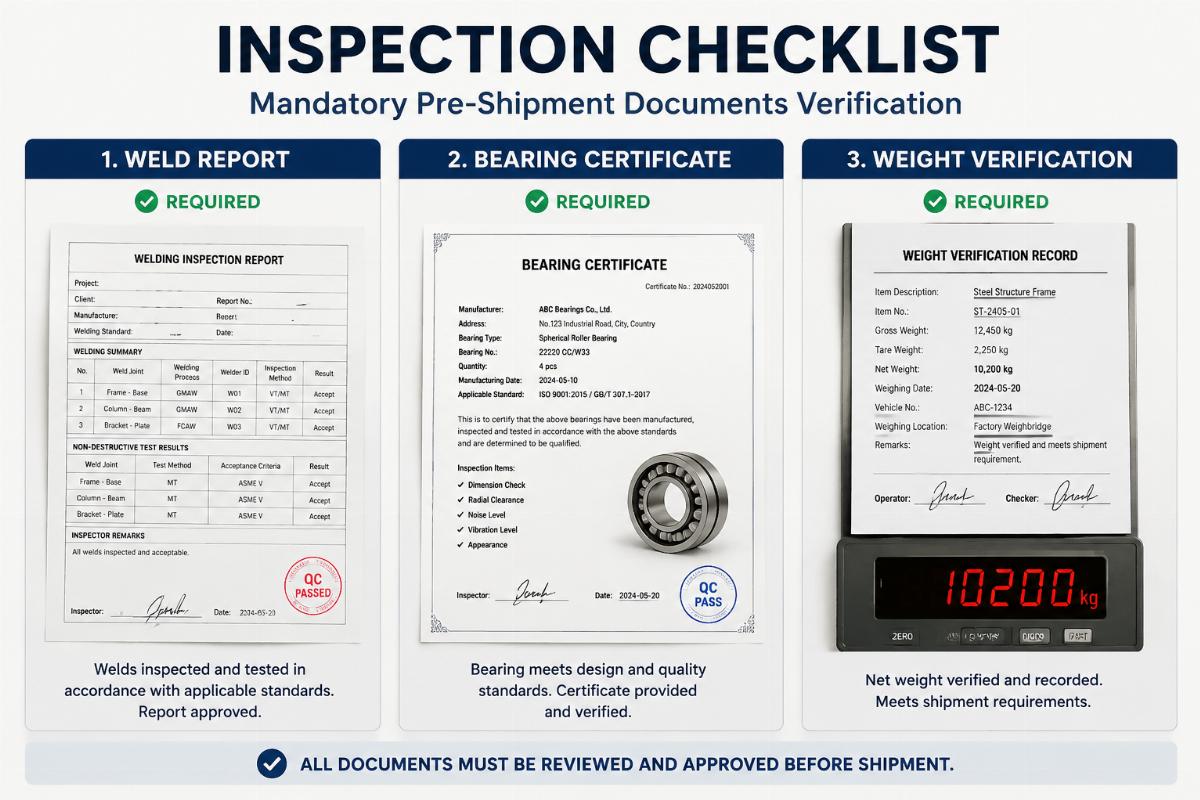
Requiring weld inspection reports, bearing brand certification, and actual tube weight measurement are the three verification lines that prevent a container-level rejection.
The first line of defense is the weld inspection report. Visual inspection alone is not enough. Commercial-grade manufacturers provide ultrasonic or magnetic particle testing reports for every batch, confirming that the welds are free of internal defects. Budget suppliers typically offer only visual checks, or no inspection at all. If a supplier cannot produce a batch-level weld inspection report, treat that as a red flag. [NEED_CITE: weld inspection standards for commercial fitness equipment structural frames]
The second line is bearing verification. Ask for the bearing brand, the precision class, and the origin. A legitimate commercial supplier will name the bearing brand and confirm the precision class on the spec sheet. If the response is vague — "high quality bearing" with no brand or class — the machine is almost certainly using unbranded components.
The third line is physical weight verification. Request the net weight of each machine and cross-check it against your own measurement upon arrival. A significant weight shortfall against the quoted spec is a strong indicator of thinner tube walls or smaller cross-sections than promised.
When I help buyers prepare a container order, these three documents go into the purchase contract as mandatory deliverables. No report, no shipment. This discipline is what separates a successful import program from a port-side disaster.
This is where the choice of manufacturing partner becomes decisive. Bick, as a commercial fitness equipment manufacturer based in Shandong Province, builds its product line — from Smith machines and power racks to cable crossovers and plate-loaded equipment — on a commercial-grade heavy-duty construction standard. Every frame is engineered to meet the structural demands of high-traffic gym environments, and the company holds CE certification for its product range. Bick provides full weld inspection documentation, branded bearing specifications, and verifiable steel weight data as standard deliverables with every order. The factory supports OEM and ODM branding, offers flexible MOQ from single units to full gym packages, and provides container-load consolidation for buyers outfitting multiple sites. Factory-direct pricing runs substantially below the tier of international premium brands, while the build quality remains firmly in the commercial grade.
Conclusion
Cheap gym equipment is not cheaper — it is merely deferred cost. The durability gap between budget and commercial-grade machines is written in weld quality, bearing precision, and steel gauge, and it shows up in the field as bearing failure, frame flex, and pulley derailment. Buyers who verify these specs before the container is sealed — and who calculate total cost of ownership over five years rather than comparing purchase invoices — consistently end up with machines that stay on the floor, keep members training, and cost less per hour of use over the long run.