
Commercial Chin-Up Station Manufacturer | Factory-Direct OEM Supplier
Most buyers assume brand-name rigs cost more because the steel is better. The real markup comes from North American warehousing, distributor layers, and retail shelf positioning — not raw material.
Rep Fitness chin-up stations are engineered for home and light-commercial use. For high-traffic commercial gyms, hotel fitness centers, and CrossFit boxes, factory-direct OEM alternatives from China deliver comparable or superior load capacity, weld integrity, and powder-coat durability at a fraction of the per-unit landed cost — provided you know how to verify specs remotely and structure your container mix correctly.
I spent years walking the floors at IHRSA in Chicago and FIBO in Cologne, watching gym owners and distributors flip through glossy catalogs from premium American brands. The sticker shock was always real, but what bothered me more was the quiet acceptance that "you get what you pay for." When I switched to the supply side and started visiting fabrication floors in Shandong, I realized the steel grade, the welding robots, and the electrostatic spray lines were often identical — sometimes even shared. The difference was the middleman chain and the warehouse rent in Ohio. [NEED_CITE: cost structure breakdown of branded vs. unbranded commercial fitness equipment in North America]
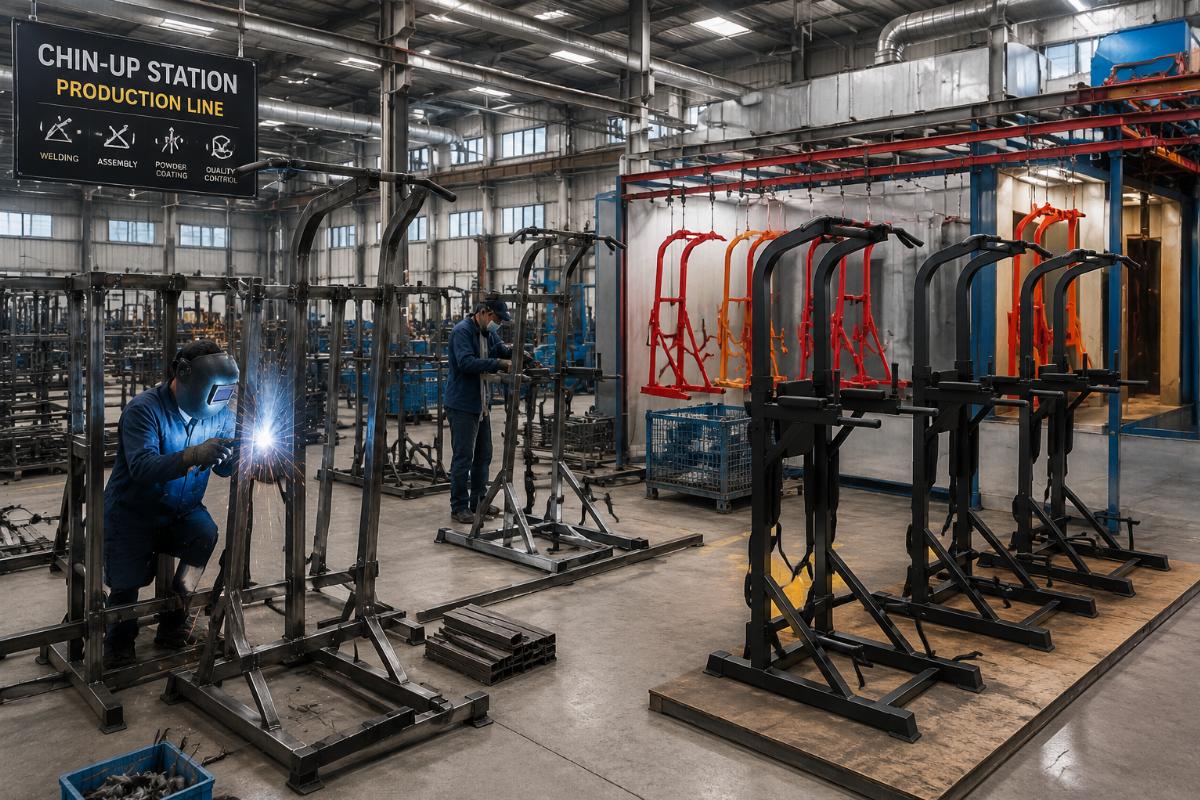
Let me walk you through what actually matters when you are evaluating a Rep Fitness chin-up station alternative for a commercial deployment.
Rep Fitness Chin-Up Station Specs — What Are You Actually Paying For?
Rep Fitness positions its pull-up rigs as premium home and light-commercial equipment, with upright dimensions and weight ratings that work well for personal garages but fall short of continuous commercial duty cycles.
If you pull up the spec sheet on a typical Rep Fitness pull-up rig, you will find uprights in the range of standard home-gym gauge, with load ratings designed for one or two athletes rotating through. The powder coat is clean, the hardware is neat, and for a home user doing morning pull-ups before work, it is more than adequate. But drop that same rig into a 24-hour commercial gym in Dubai, or a hotel fitness center in Bangkok where guests cycle through all day, and the story changes.
The upright wall thickness on home-oriented rigs is typically thinner than what you would spec for a high-traffic commercial floor. Under repeated kipping pull-ups, muscle-ups, and hanging leg raises from multiple athletes daily, the frame will flex noticeably over time. The J-cups and safety straps are designed for moderate loading, not the heavy barbell work that often happens on the same rig in a commercial setting. [NEED_CITE: structural fatigue comparison between home-grade and commercial-grade fitness rack uprights under cyclic loading]
I once advised a CrossFit gym owner in the American Midwest who bought a well-known home-brand rig because it looked identical to the commercial rigs in his old box. Within months, the welds around the pull-up bar joints showed micro-cracks under dynamic loading. He had to reinforce the entire frame with aftermarket gussets — at a cost that nearly matched buying a proper commercial rig from the start.
What you are paying for with Rep Fitness is brand trust, a clean user experience, fast domestic shipping from a US warehouse, and a return policy that works for individual consumers. You are not paying for commercial-grade steel thickness, heavy-duty welding protocols, or the kind of load testing that satisfies international gym equipment safety standards.

Factory-Direct OEM Alternative — How Does It Compare on Key Specs?
When you move to a factory-direct commercial chin-up station from a Shandong-based OEM manufacturer, the core structural parameters — upright dimensions, wall thickness, welding method, and coating process — match or exceed what you see in premium home brands, because these factories produce the same category of equipment for commercial gym chains worldwide.
Let me lay out the comparison the way I would present it to a gym owner who is seriously evaluating options.
| Parameter | Rep Fitness (Home/Light-Commercial) | Factory-Direct Commercial OEM |
|---|---|---|
| Upright Steel Gauge | Standard home-gym grade | Commercial heavy-duty grade |
| Wall Thickness | Thin-wall, suited for static loads | Thick-wall, designed for dynamic and impact loads |
| Welding Method | Spot and manual MIG | Robotic MIG with full-penetration welds |
| Load Rating | Single to dual athlete, moderate use | Multi-athlete, continuous commercial duty cycle |
| Powder Coating | Standard electrostatic spray | Dual-stage electrostatic with adhesion testing |
| Customization | Fixed SKUs, limited color options | Full OEM branding, custom colors, logo placement |
| Safety Standard Alignment | Consumer product guidelines | EN / ASTM commercial fitness equipment standards |
[NEED_CITE: EN and ASTM safety standard requirements for commercial strength training equipment frames]
Notice that the factory-direct column does not claim exotic materials or mysterious processes. It claims commercial-grade steel, robotic welding, and coating systems that are standard across the industry for equipment meant to survive a public gym floor. The reason the price is lower is not because the factory cuts corners. It is because you are buying at the fabrication source, without the markup layers of a North American brand, a regional distributor, and a retail fulfillment center.
A distributor I worked with in the Middle East was initially skeptical. He had been buying branded rigs for his gym chain and assumed the lower factory price meant lower quality. I sent him a sample upright section, a weld cross-section photo, and a third-party coating adhesion test report. He tested the sample in his own facility for several weeks alongside his existing branded rigs. The factory-direct upright showed no visible flex under the same dynamic loading. He placed a full container order within the month.

How to Verify Quality Without Flying to China?
You do not need to book a flight to verify that a factory-direct commercial chin-up station meets your specs. A combination of third-party inspection reports, weld sample documentation, wall thickness measurement videos, and coating adhesion test files gives you a reliable remote verification package.
This is where many buyers get stuck. They see a competitive price from a Rep Fitness chin-up station alternative and assume the only way to be sure is to visit the factory. That is not true, and frankly, it is not even the most reliable method if you do not know what to look for on the floor.
Here is the verification sequence I recommend to every buyer I work with:
- Request a third-party inspection report from a recognized agency such as SGS, TÜV, or Bureau Veritas, covering material grade confirmation, dimensional checks, and weld visual inspection. [NEED_CITE: scope of third-party pre-shipment inspection for commercial fitness equipment]
- Ask for high-resolution photos of weld cross-sections on sample joints, showing full penetration and consistent bead profile.
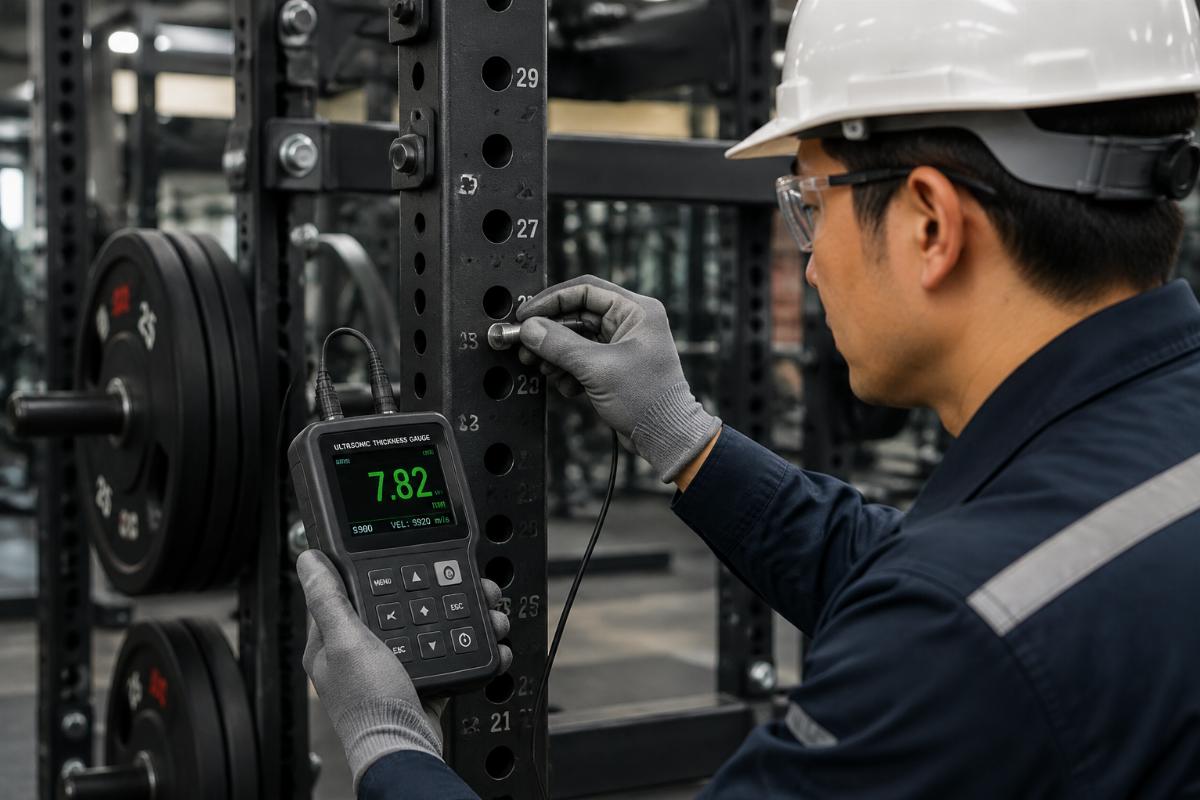
- Request a video of ultrasonic wall thickness measurement on the upright tubes, with the gauge reading clearly visible on screen.
- Obtain the powder coating adhesion test report, typically a cross-cut test per ASTM D3359, showing coating bond classification. [NEED_CITE: ASTM D3359 cross-cut adhesion test method for coated steel surfaces]
- If your order volume justifies it, arrange a pre-shipment inspection by your own appointed agent, who can perform random sampling and functional load testing on assembled units.
A buyer from a Southeast Asian hotel group once told me he lost a significant amount on a previous fitness equipment order because he skipped remote verification and trusted the factory’s self-reported specs. The uprights arrived with wall thickness noticeably below what was quoted, and the coating started chipping within weeks of installation. Now he requires the full verification package before releasing any production deposit.
The key insight here is that a reputable factory-direct commercial chin-up station manufacturer will welcome these requests. They have nothing to hide. If a supplier hesitates or offers vague assurances instead of documentation, that is your signal to move on.
MOQ, Mix-Container and Lead Time — What Do Buyers Actually Need?
The real advantage of working with a factory-direct OEM supplier is not just the unit price. It is the flexibility to mix product categories in a single container, adjust MOQs to match your actual deployment timeline, and consolidate a full gym fit-out from one production source.
Most gym owners and distributors I talk to assume that factory-direct means you have to buy a full container of one SKU. That was true a decade ago. Today, the leading commercial fitness equipment manufacturers in Shandong have streamlined their production lines to handle mixed-container orders as a standard practice.
Think about what a typical commercial gym fit-out actually requires. You need pull-up rigs and power racks, yes, but you also need Smith machines, cable crossovers, plate-loaded machines, free weight stations, benches, dumbbells, and often cardio equipment. If you source each category from a different supplier, you end up managing multiple shipments, multiple quality standards, and multiple points of contact for after-sales issues.
A factory-direct commercial chin-up station supplier that also produces the full range of strength and free-weight equipment allows you to consolidate everything into one container — or spread it across several containers on a staggered delivery schedule. The pull-up rigs share the container with the dumbbell racks and the adjustable benches. The per-unit shipping cost drops noticeably because you are maximizing container cube utilization.
[NEED_CITE: container loading optimization strategies for mixed commercial fitness equipment shipments]
I worked with a boutique studio owner in Europe who wanted to start with a small functional training zone — a couple of pull-up rigs, a set of adjustable benches, and a selection of kettlebells and medicine balls. The total volume did not fill a container. The factory arranged a less-than-container load shipment combined with other buyers’ goods, keeping the per-unit freight cost manageable. Six months later, when the studio expanded, the same factory filled a full container with additional rigs, a Smith machine, and a complete free-weight set.
The MOQ flexibility works in the other direction too. If you are a distributor testing a new market, you can start with a small trial order of commercial chin-up stations under your own brand, evaluate the market response, and scale up without having committed to a massive inventory upfront.

Warranty and After-Sales — What Happens After the Container Lands?
A reliable factory-direct commercial chin-up station supplier does not disappear after the container clears customs. They provide a structured warranty framework, spare parts supply, and technical support that covers the operational life of the equipment.
This is the area where brand buyers and factory-direct buyers often have the biggest misconception. Brand buyers assume that buying from a known name guarantees after-sales support. Factory-direct buyers worry that once the goods leave China, they are on their own.
The reality is more nuanced. A premium brand’s after-sales support is excellent — if you are willing to pay for it through higher equipment costs and service contracts. A factory-direct supplier’s after-sales support is practical and cost-effective — if you choose a manufacturer that has built a proper system for it.
Here is what a well-structured after-sales framework looks like from a factory-direct commercial chin-up station manufacturer:
- A clear warranty period covering structural frame defects, weld failures, and coating adhesion issues under normal commercial use.
- A spare parts catalog with common wear components — cable attachments, pull-up bar grips, hardware kits, and replacement coating touch-up materials — available for order at any time.
- A technical support channel for installation guidance, assembly troubleshooting, and maintenance advice.
- A warranty claim process that allows for replacement parts to be shipped with your next container order, minimizing downtime and additional freight cost.
[NEED_CITE: best practices for after-sales spare parts logistics in international commercial fitness equipment supply]
A gym chain operator in Latin America once told me that his biggest concern about switching from a local branded distributor to a factory-direct supplier was the fear of being stranded if a frame weld failed. I walked him through the spare parts catalog and the warranty claim workflow. He realized that having direct access to the factory’s technical team — rather than going through a local distributor who marks up both parts and labor — actually gave him faster and cheaper resolution.
The point is not that factory-direct is automatically better at after-sales. The point is that a serious commercial chin-up station manufacturer understands that repeat business depends on support, and they build their systems accordingly.

Conclusion
Choosing between a branded home-oriented rig and a factory-direct commercial alternative comes down to matching the equipment specification to your actual usage environment. Rep Fitness chin-up stations serve the home and light-commercial market well. For high-traffic commercial gyms, hotels, and functional training facilities, a factory-direct commercial chin-up station from a qualified OEM manufacturer delivers the structural durability, customization flexibility, and cost efficiency that commercial deployments demand — as long as you verify quality through documentation, structure your orders to maximize container efficiency, and confirm that after-sales support is built into the relationship.


