
Commercial Gym Equipment Supplier from China Factory Direct for Bangladesh
Heavier steel does not automatically mean stronger frames—wall thickness and welding technique determine load capacity, not gross weight.
When sourcing from a fitness equipment supplier for Bangladesh, the key to avoiding the "cheap-and-bad" trap lies in verifying commercial-grade steel wall thickness, CE certification compliance, and maritime-grade rust protection—never accept home-grade or refurbished components marketed at commercial prices.
I still remember the service call in Riyadh: a gym owner emailed three months after delivery saying the selectorized pin inserts on his Smith machine had seized solid. I flew out, opened the side panels, and found the guide rod shafts corroded as if spot-welded in place. That container had sat in a port yard for weeks under extreme heat and humidity, and the guide rods had zero anti-corrosion treatment. We ended up air-shipping a full crate of replacement parts. After that, every export shipment leaving our Shandong facility got upgraded to galvanized guide rods plus vacuum-sealed wrapping. Bangladesh’s humidity levels rival the Gulf coast, and if containers clear Chittagong or Dhaka’s inland depot with delays, poorly protected gear arrives as a complaint letter waiting to happen [NEED_CITE: Bangladesh port average cargo dwell time statistics].
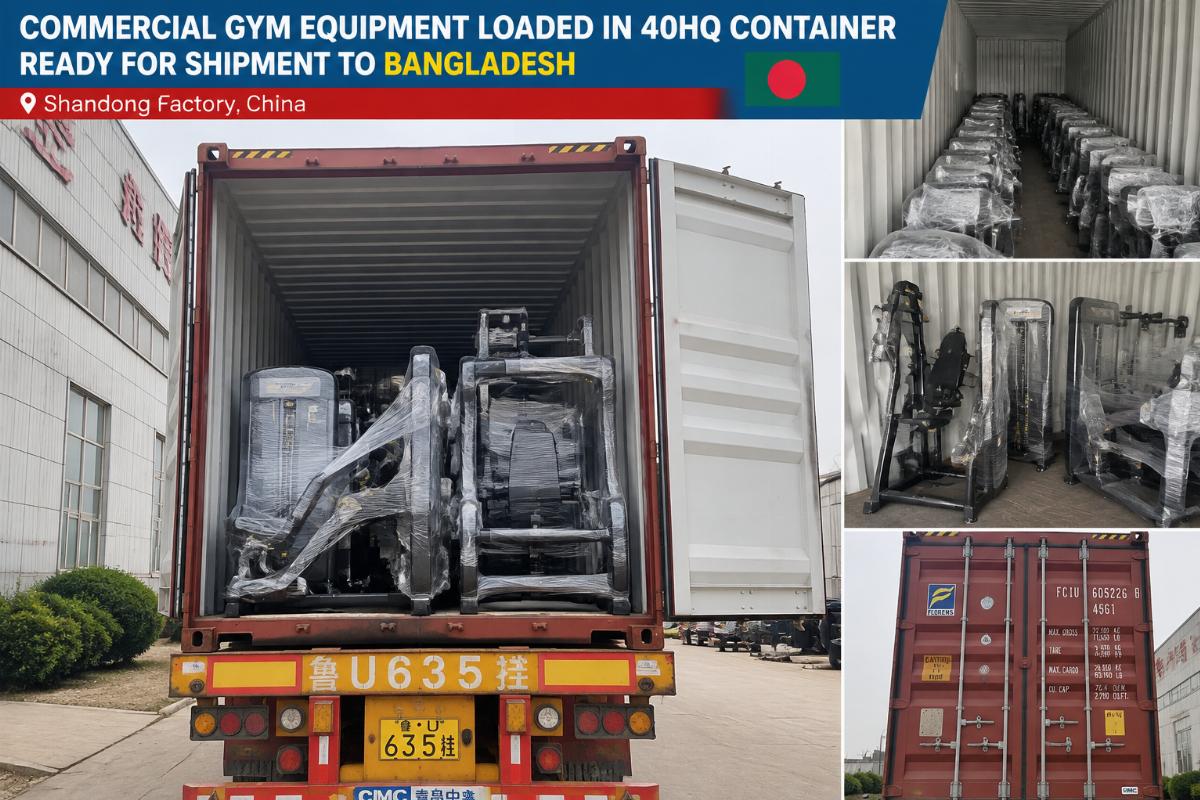
For buyers evaluating a fitness equipment supplier for Bangladesh, the rest of this guide walks through specification benchmarks, product mix strategy, rust-proofing standards, and container logistics—based on real shipment experience rather than brochure promises.
How Do You Spot Commercial-Grade Quality Without Visiting the Factory?
The single most reliable indicator is the steel tube wall thickness paired with certified welding standards, not the machine’s total weight. Many buyers assume a heavier machine is more durable. In reality, manufacturers can add cast-iron base plates or oversized shrouds to inflate weight without improving structural integrity. What matters is the frame tube specification and whether the welding process meets recognized safety codes.
| Parameter | Commercial Grade | Light-Commercial / Home-Grade | Unverified / Refurbished |
|---|---|---|---|
| Frame tube wall thickness | 3 mm minimum, cold-rolled | 1.5–2 mm typical | Inconsistent or unknown |
| Welding standard compliance | EN ISO 3834 / ASTM-aligned | Partial or self-declared | Not provided |
| Load testing documentation | Third-party certified | Sample-level only | None |
| Surface treatment | Electrostatic powder coat, multi-stage | Single-stage spray | Touch-up paint or uncoated |
| Guide rod / pin material | Galvanized or chrome-plated | Bare mild steel | Rust-prone, uncoated |
| Cable tensile rating | Rated for commercial cyclic use | Light-duty rating | Not verifiable |
When a fitness equipment supplier for Bangladesh provides test certificates referencing EN 957 or equivalent ASTM standards, you can independently verify the certification body through public databases [NEED_CITE: EN 957 stationary training equipment certification verification method]. If the supplier cannot produce third-party test reports and only shows in-house inspection sheets, treat the commercial-grade claim with caution.
A gym chain operator in South Asia once received a mixed container where half the plate-loaded machines used 2 mm tubes instead of the agreed 3 mm. The machines looked identical externally. The discrepancy was caught only when a technician measured the tube at the weld joint during installation. The supplier had substituted lighter tubes on a production run to cut material costs. This kind of swap is invisible in photos and spec sheets—it requires either a factory audit or a contractual clause tying payment release to third-party inspection before loading.

Conclusion: Demand third-party certification documentation and specify minimum wall thickness in your purchase contract. Weight alone is a misleading proxy for durability.
What Is the Most Cost-Effective Equipment Mix for a Bangladesh Gym?
A commercial treadmill package combined with a Smith machine and a dedicated free-weight zone delivers the highest member retention per dollar invested, and buying the full mix in consolidated container loads cuts landed costs significantly compared to sourcing each category separately.
The typical Bangladesh commercial gym serves a membership base that expects both cardiovascular options and serious strength training. Hotel and apartment fitness rooms, by contrast, prioritize compact footprints and low maintenance. Understanding this distinction shapes your order composition.
For a full commercial gym floor, the proven allocation follows a rough ratio: cardiovascular equipment occupies roughly one-third of the floor and budget, selectorized and plate-loaded strength machines take another third, and free weights plus functional training fill the remainder. This balance keeps membership churn low because members can complete full-body routines without waiting for equipment.
A fitness equipment supplier for Bangladesh who offers turnkey package deals can consolidate cardio, strength, and free-weight items into a single container order. This consolidation matters because mixed loading maximizes cubic utilization—a 40HQ container can hold a complete gym setup for a mid-size facility when items are nested and palletized correctly [NEED_CITE: container loading optimization methods for mixed fitness equipment].
| Equipment Category | Typical Models | Floor Space Demand | Maintenance Frequency |
|---|---|---|---|
| Cardiovascular | Commercial treadmills, ellipticals, spin bikes | High | Regular belt and electronics checks |
| Selectorized Strength | Smith machines, cable crossovers, lat pulldown | Moderate | Cable and pulley inspection |
| Plate-Loaded | Chest press, leg press, shoulder press | Moderate | Pivot bearing and seat pad checks |
| Free Weights | Dumbbells, barbells, plates, benches | Low | Knurling and plate coating inspection |
| Functional Training | Functional trainers, battle ropes, plyo boxes | Low to Moderate | Rope and anchor point checks |
A boutique studio owner in Dhaka initially ordered only cardio equipment from an overseas supplier, then had to source strength equipment separately months later. The second shipment incurred full customs clearance costs again, and the container arrived only partially filled—paying for air space. Switching to a single-source fitness equipment supplier for Bangladesh who could bundle the entire studio setup into one consolidated order eliminated the duplicate logistics cost and ensured matching aesthetics across the floor.

Conclusion: Bundle your cardio, strength, and free-weight orders with one supplier to maximize container utilization and minimize duplicate import costs.
How Do Reputable Factories Prevent Rust During 40-Day Sea Shipments?
Vacuum-sealed packaging combined with galvanized guide rods and pivot pins is the baseline standard for any fitness equipment supplier for Bangladesh shipping through tropical maritime routes—surface oil alone cannot survive extended high-humidity container transit.
The journey from a Shandong production facility to Dhaka’s inland container depot typically takes well over a month on the water, plus additional days for port handling and customs clearance. Inside a sealed steel container sitting under tropical sun, internal temperatures can climb dramatically, and condensation cycles occur daily as the container heats and cools. This environment is brutal for untreated metal components.
Many buyers assume that a coat of grease or oil on moving parts is sufficient rust protection. It is not. Oil migrates, attracts dust, and breaks down under temperature cycling. The components that fail first in high-humidity transit are precisely the ones that matter most for machine function: guide rods on selectorized machines, pivot pins on plate-loaded equipment, and bearing surfaces on cable pulleys.
A responsible fitness equipment supplier for Bangladesh will implement a layered protection approach:
- Galvanized or chrome-plated guide rods and shafts provide a permanent corrosion-resistant barrier that does not degrade during transit or normal gym use.
- Vacuum-sealed polyethylene wrapping around each machine or component eliminates ambient moisture contact during the ocean leg. Desiccant packets placed inside the sealed bag absorb residual trapped humidity.
- Stainless steel or zinc-plated fasteners on exposed bolts and adjustment knobs prevent surface rust that creates a poor first impression at unboxing.
- Container-level moisture control using bulk desiccant hanging strips inside the shipping container reduces the overall humidity environment during transit [NEED_CITE: container desiccant best practices for tropical sea freight].
A distributor in East Africa once received a container where the supplier had relied solely on cosmoline grease on guide rods, with no vacuum wrapping. By the time the container was unpacked, the grease had emulsified with condensed moisture into a corrosive paste. Every selectorized machine in the shipment required complete guide rod replacement before the equipment could be installed. The replacement parts cost more than the original rust-prevention upgrade would have added to the order.
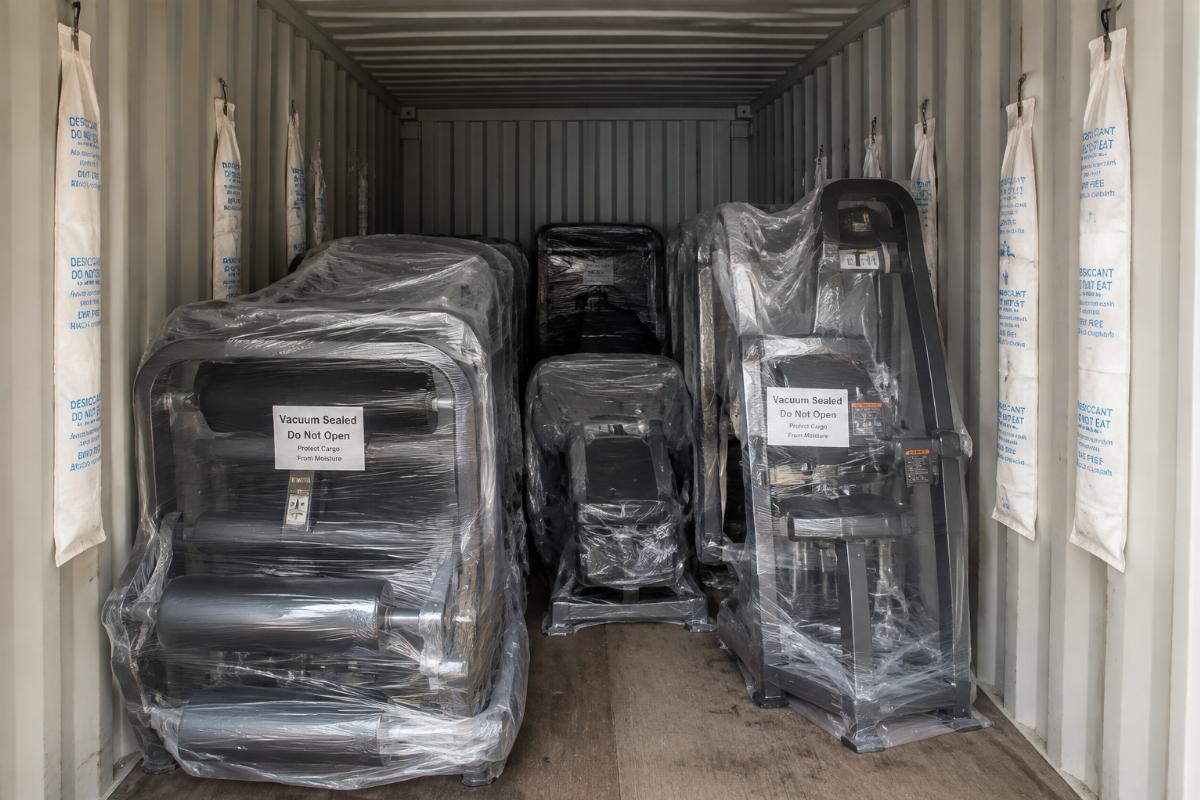
Conclusion: Verify that your supplier uses galvanized components and vacuum-sealed packaging as standard—not as a paid upgrade. Oil-only protection fails in tropical maritime conditions.
How Do You Manage Container Consolidation and Customs Clearance for Bangladesh?
Pre-clearing HS code classifications and maximizing 40HQ cubic utilization through mixed-item loading are the two most impactful steps a fitness equipment supplier for Bangladesh can take to reduce your total landed cost.
Importing fitness equipment into Bangladesh involves navigating customs classification, duty assessment, and documentation requirements that differ from other South Asian markets. Misclassified items can trigger duty reassessments, delays, and storage surcharges at the port.
The first step is confirming the correct HS code for each equipment category before the order is finalized. Cardiovascular machines, strength machines, and free weights each fall under different tariff headings, and duty rates vary accordingly [NEED_CITE: Bangladesh customs tariff schedule for fitness and sports equipment HS codes]. A knowledgeable fitness equipment supplier for Bangladesh will provide detailed HS code recommendations and commercial invoice descriptions that align with Bangladesh customs expectations.
The second step is container loading optimization. A 40HQ container offers substantial cubic capacity, but fitness equipment comes in wildly different dimensions—a commercial treadmill boxes out significantly more volume than a set of adjustable dumbbells. Strategic loading sequences nest smaller items inside or around larger equipment cavities. Plate-loaded machines can be loaded with weight plates stored inside the frame. Benches and racks can be partially disassembled to flatten their profile.
| Logistics Step | Key Action | Risk if Overlooked |
|---|---|---|
| HS code pre-classification | Confirm codes with customs broker before production | Duty reassessment and penalties |
| Commercial invoice alignment | Match invoice descriptions to HS code terminology | Documentation rejection at customs |
| Container load planning | Nest smaller items within larger equipment cavities | Paying for unused cubic capacity |
| Pre-shipment inspection | Third-party verification before container sealing | Undetected quality issues post-arrival |
| Documentation package | Packing list, certificate of origin, test reports | Clearance delays and storage fees |
A hotel developer outfitting multiple properties across Bangladesh found that ordering identical equipment sets for each location separately resulted in multiple partial containers. By consolidating orders across three hotel sites into a single shipment plan coordinated by their fitness equipment supplier for Bangladesh, they filled each container to near-maximum capacity and reduced per-unit freight costs substantially. The supplier handled the load plan, ensuring that heavy items were distributed evenly for weight balance and fragile components were protected by surrounding structures.

Conclusion: Coordinate HS code classification and mixed-item container loading with your supplier before production begins—these two steps have the largest impact on your final per-unit landed cost.
Conclusion
Sourcing commercial gym equipment from China for the Bangladesh market succeeds when buyers verify structural specifications, choose consolidated turnkey packages, demand proper maritime rust protection, and plan customs logistics before production starts. A fitness equipment supplier for Bangladesh who treats these four areas as standard practice—not optional upgrades—will deliver equipment that arrives ready to install and built to withstand years of heavy commercial use.


