
Commercial Treadmill Price in Pakistan: 2026 Complete Buyer Guide
The sticker price on a commercial treadmill in Lahore or Karachi tells you almost nothing about what you will actually pay over its service life.
Commercial treadmill price in Pakistan for standard gym-grade units ranges from budget-tier imports to premium branded machines, but the real cost drivers are motor continuous horsepower, running deck thickness, frame steel gauge, and electronics architecture. Buyers who understand these four cost blocks can identify whether a quotation reflects genuine manufacturing value or inflated middleman margins.
I started on the welding floor where treadmill frames came together tube by tube, and later moved to the export desk handling inquiries from South Asia, the Middle East, and Africa. A gym owner in Dhaka once asked me why his quoted commercial treadmill price in Pakistan was nearly double what a local distributor offered for what looked like the same machine. When I pulled both spec sheets side by side, the cheaper unit listed peak horsepower where the pricier one specified continuous duty horsepower, used a single-layer deck board where the other used a double-layer phenolic-coated deck, and had no documented spare parts availability. The surface-level price gap vanished once we calculated expected motor replacement frequency and downtime losses. That kind of comparison is what separates a workable procurement decision from an expensive mistake. [NEED_CITE: continuous horsepower versus peak horsepower definitions per IEC motor rating standards]
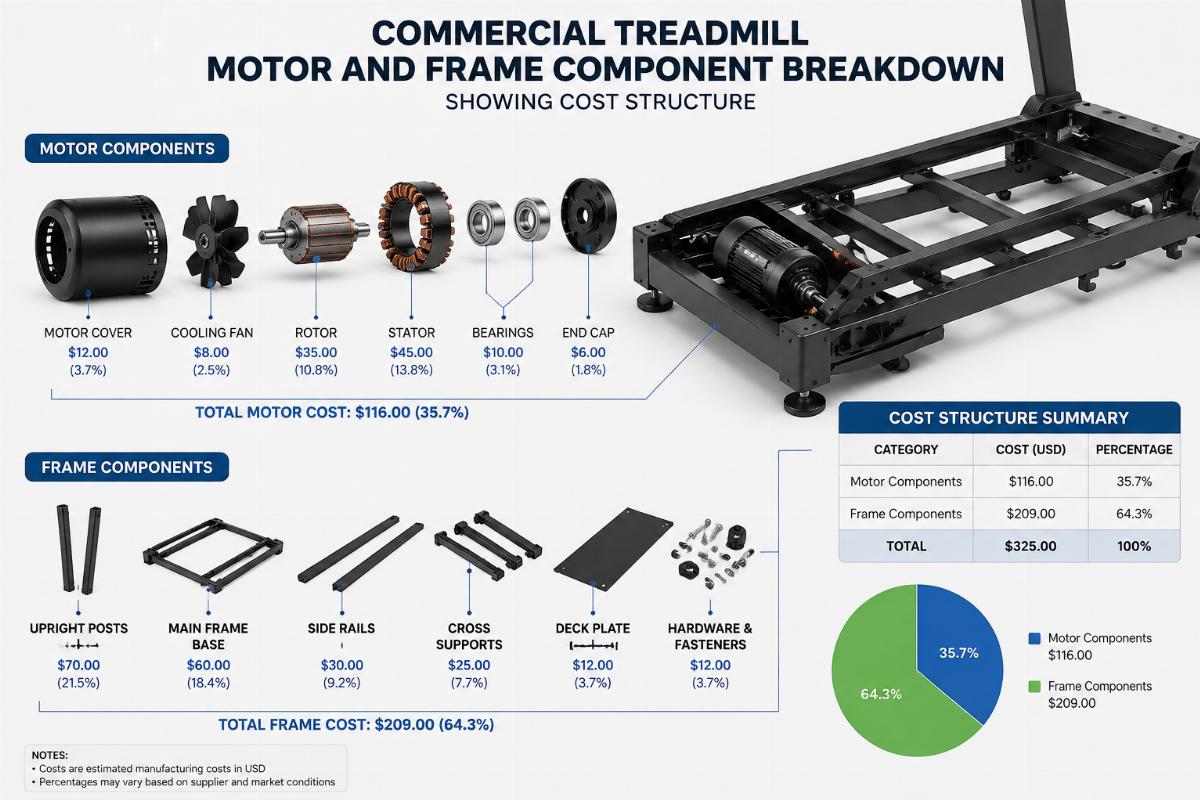
Understanding how these cost elements stack up requires walking through each one in detail, because the commercial treadmill price in Pakistan you see on a quotation is ultimately the sum of decisions made at the factory level long before the machine reaches your gym floor.
What Factors Actually Drive Commercial Treadmill Prices in Pakistan?
Motor, running deck, frame steel, and electronic control board together account for the overwhelming majority of a commercial treadmill’s manufacturing cost. Everything else, including console features, upholstery, and packaging, sits in the remaining portion. Buyers who focus on cosmetic upgrades while ignoring these four structural cost blocks routinely end up with machines that look right but fail prematurely under commercial usage patterns.
The motor is the single largest cost component. What matters is not the peak horsepower number printed on the side panel, but the continuous duty horsepower rating that reflects what the motor can sustain during hours of daily operation without thermal degradation. A motor rated for continuous duty at a moderate level will outlast and outperform a motor boasting a higher peak figure that can only sustain that output briefly. [NEED_CITE: motor thermal class and duty cycle ratings per NEMA standards]
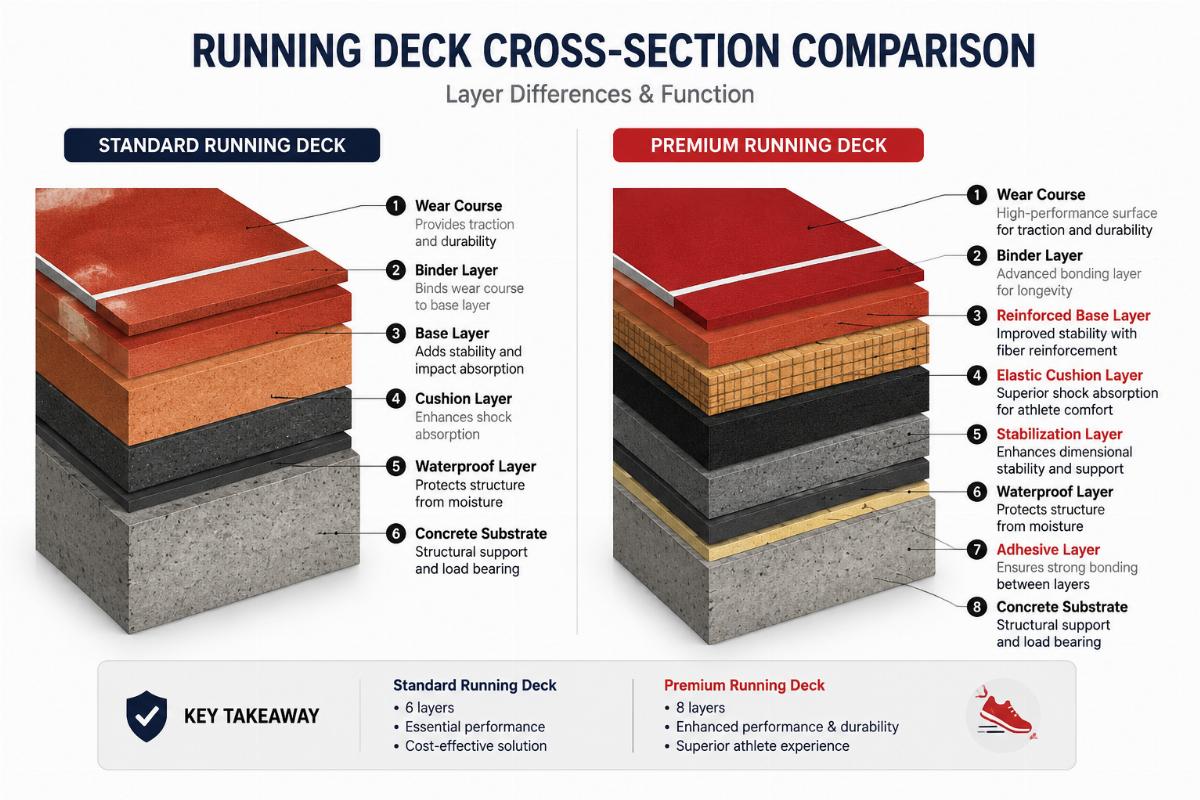
The running deck is the second critical cost driver. Commercial treadmills require a multi-layer deck with a phenolic or similar low-friction coating between the belt and the board. Single-layer decks found on budget units generate excessive heat and wear through the belt rapidly, creating a recurring consumable cost that compounds over time. The deck also determines the shock absorption characteristics that affect both user comfort and joint stress on the treadmill’s own bearings.
Frame construction separates machines that survive a decade of commercial use from those that develop structural flex within a few years. The relevant factor is not overall machine weight, which can be artificially inflated with concrete fill blocks, but the steel tube wall thickness and the welding methodology at joint intersections. Machines built with adequately thick rectangular steel tubing and continuous welds at stress points maintain alignment under heavy dynamic loads, while thinner frames with spot welds gradually distort, causing belt tracking issues and uneven deck wear. [NEED_CITE: structural frame testing requirements per EN 957-6 stationary training equipment standard]
The electronic control board integrates motor speed regulation, incline actuator control, and console communication. Lower-cost boards use generic components without adequate thermal protection or voltage surge tolerance, making them vulnerable in environments where mains power fluctuates. This is particularly relevant in many Pakistani cities where voltage stability varies significantly.
| Cost Component | Budget Tier | Standard Commercial | Premium Commercial |
|---|---|---|---|
| Motor Rating Disclosure | Peak HP only | CHP stated with thermal class | CHP with independent certification |
| Deck Construction | Single layer | Double layer with coating | Multi-layer with replaceable surface |
| Frame Steel Gauge | Thin wall, spot welds | Standard wall, continuous welds | Heavy wall, reinforced joints |
| Control Board | Generic, no surge protection | Standard with basic protection | Surge-rated with thermal management |
| Spare Parts Availability | Self-reported / Not provided | Sample-level | Full batch-level |
A hotel fitness center operator in Islamabad once compared two quotations for a compact commercial treadmill package. The lower-priced option saved noticeably on the initial invoice but used a deck design that required belt replacement within a fraction of the service interval of the higher-spec unit. When maintenance frequency and belt procurement lead times were factored in, the total cost of ownership over a multi-year period reversed the apparent savings entirely.
How Do Price Ranges Compare Across Quality Tiers?
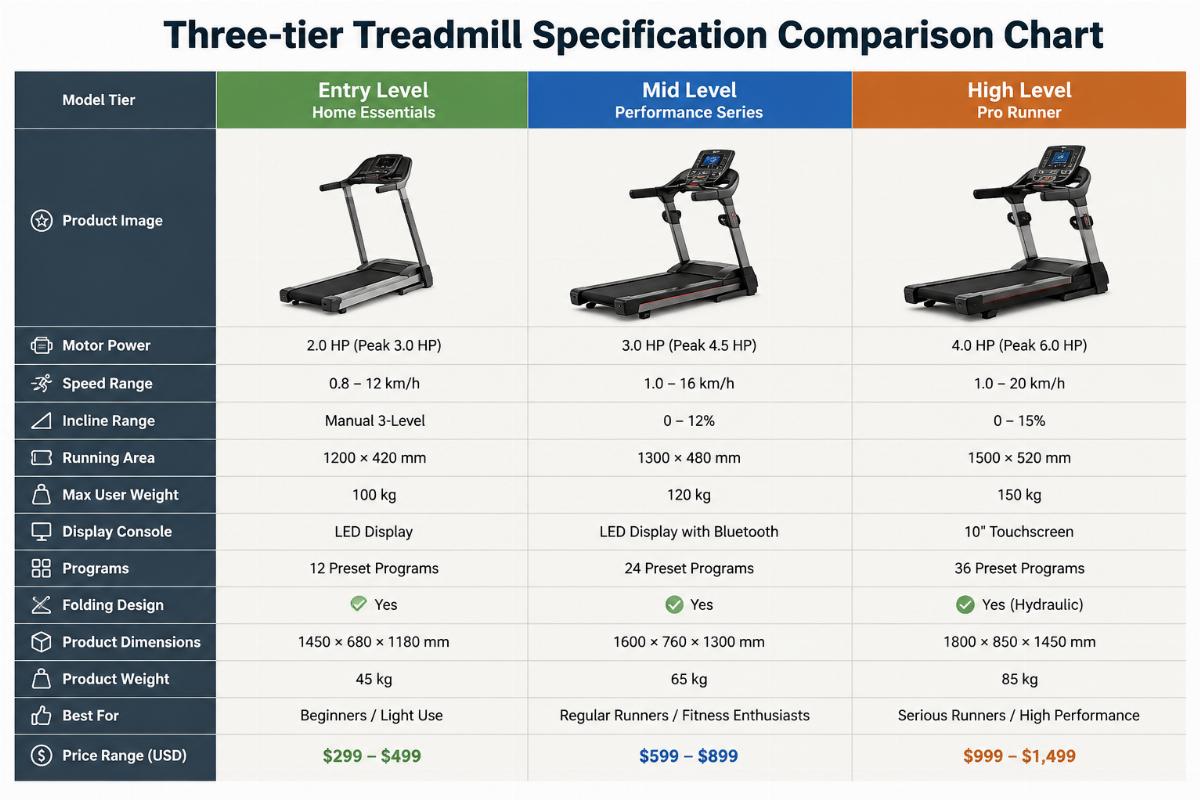
Commercial treadmill price in Pakistan segments clearly into light commercial, standard commercial, and heavy-duty commercial tiers, each defined by component specifications rather than marketing labels. Understanding which tier matches your actual usage pattern prevents both overspending on unnecessary capacity and underspending that leads to premature replacement.
Light commercial machines serve environments with moderate daily usage, such as boutique studios, hotel fitness rooms with limited guest traffic, or apartment complex gyms. These units use motors in the lower continuous horsepower range, standard single-across or double-layer decks, and frames designed for extended walking and light jogging rather than sustained high-speed running. The commercial treadmill price in Pakistan for this tier sits at the entry end of the spectrum and can be appropriate when usage intensity is genuinely low.
Standard commercial machines are the workhorses of full-service gyms and fitness centers. They feature motors with higher continuous duty ratings, multi-layer decks with low-friction coatings, heavier frame construction, and control boards designed for thermal endurance during long operating sessions. This tier handles the majority of commercial gym traffic patterns and represents the point where component quality begins to meaningfully extend service intervals. [NEED_CITE: commercial gym equipment usage intensity classification per fitness industry association guidelines]
Heavy-duty commercial machines are engineered for high-traffic facilities, athletic training centers, and environments where users run at high speeds for extended periods. These units incorporate the largest continuous duty motors, the thickest deck constructions, the most robust frame geometries, and the most sophisticated electronic control systems. The commercial treadmill price in Pakistan for this tier is the highest, justified only when the facility’s usage profile genuinely demands that capacity.
| Specification Dimension | Light Commercial | Standard Commercial | Heavy-Duty Commercial |
|---|---|---|---|
| Motor Continuous Duty | Lower range | Mid range | Upper range |
| Deck Layers | Single or basic double | Multi-layer coated | Reinforced multi-layer |
| Frame Wall Thickness | Standard | Heavy | Reinforced heavy |
| User Weight Capacity | Moderate | High | Maximum |
| Intended Daily Usage | Several hours | Extended hours | Near-continuous |
| Spare Parts Support | Sample-level | Standard | Full batch-level |
A fitness chain operator in Faisalabad was initially drawn to a light commercial quotation because the per-unit commercial treadmill price in Pakistan appeared substantially lower. However, the facility’s actual traffic pattern involved back-to-back users running at elevated speeds throughout operating hours. Within a short operational period, the light commercial units showed deck wear and motor thermal stress that the standard commercial tier would have handled without issue. The eventual replacement cost and downtime exceeded what a correct initial tier selection would have required.
What Hidden Costs Should Pakistani Buyers Budget For?
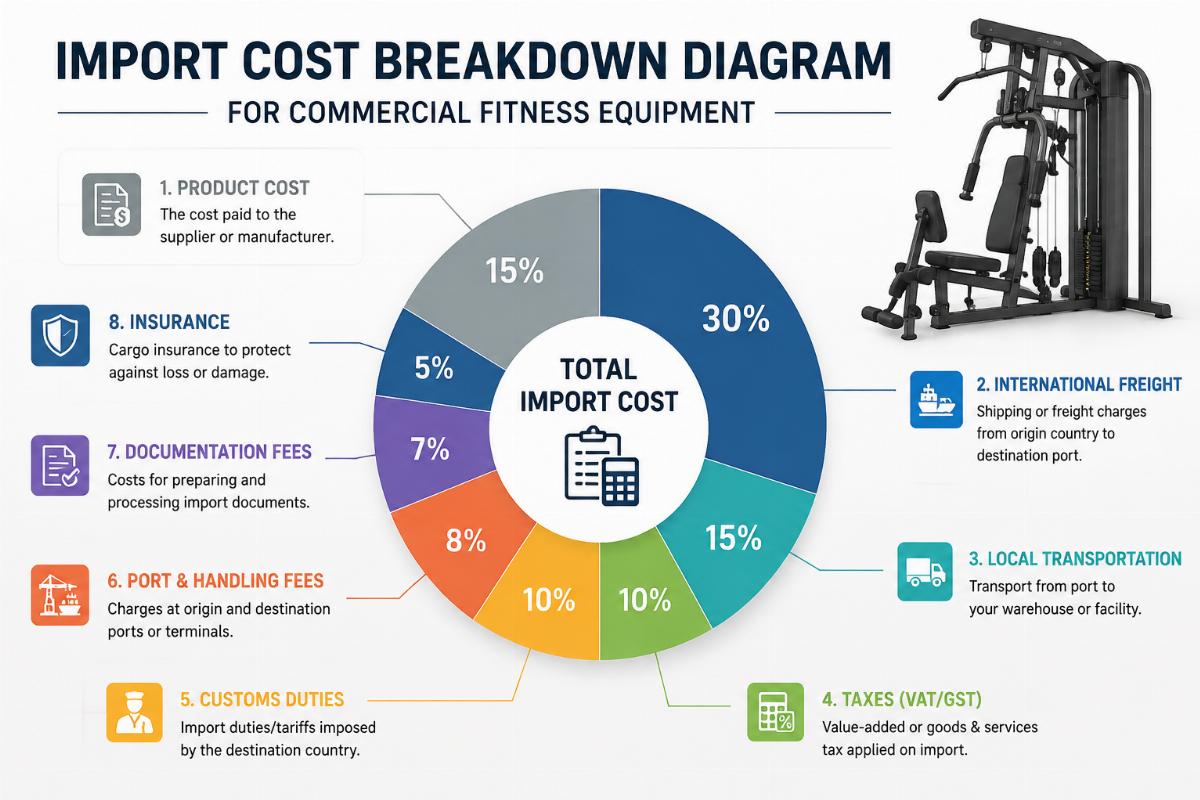
The invoice price of an imported commercial treadmill is only the starting point of total acquisition cost. Import duties, ocean freight, customs clearance, voltage adaptation, and spare parts inventory all add to the final figure, and buyers who budget only for the machine price routinely encounter shortfalls that delay facility opening or strain operating cash flow.
Pakistan’s import duty structure for fitness equipment applies specific tariff headings that determine the duty rate applied at customs. The exact rate depends on how the equipment is classified and whether any preferential trade arrangements apply to the origin country. [NEED_CITE: Pakistan customs tariff schedule classification for fitness and gym equipment] Buyers should confirm the applicable HS code and duty rate with their clearing agent before finalizing a purchase order, as the duty component can represent a meaningful portion of the landed cost.
Ocean freight from manufacturing origins in China to Karachi or Lahore involves container load planning that directly affects per-unit freight cost. A full container load spreads the freight cost across the maximum number of units, while less-than-container shipments carry a substantially higher per-unit freight burden. Consolidation strategies that combine treadmills with other equipment types in a single container can optimize freight efficiency for buyers outfitting complete facilities.
Voltage adaptation is a frequently overlooked cost item. Pakistan’s mains supply operates at a specific voltage and frequency standard, and commercial treadmills manufactured for other markets may require transformer or control board modification to operate safely and maintain warranty validity. Running equipment on incorrect voltage without adaptation risks immediate electronic component failure and voids manufacturer warranty coverage.
Spare parts inventory represents an ongoing cost that scales with fleet size and usage intensity. Maintaining a working stock of belts, deck surfaces, drive keys, and control board components prevents extended equipment downtime when wear items reach end of life. Facilities that operate without a spare parts buffer face downtime measured in weeks while replacement components are sourced internationally.
| Hidden Cost Category | Budget Consideration |
|---|---|
| Import Duty | Confirm HS code and applicable rate before order |
| Ocean Freight | Full container versus less-than-container planning |
| Customs Clearance | Agent fees, documentation, port handling |
| Voltage Adaptation | Transformer or board modification if required |
| Spare Parts Buffer | Belts, decks, drive components, boards |
A distributor in Lahore once imported a batch of treadmills without confirming voltage compatibility with local mains supply. Several units experienced control board failures within weeks of installation. The replacement board procurement and shipping timeline left those machines idle for an extended period, during which the distributor faced member complaints and reputational damage at the gyms they supplied. The total cost of that voltage oversight, including replacement boards, emergency shipping, and lost client confidence, substantially exceeded what a pre-shipment voltage verification would have required.
How to Source Directly from Chinese Manufacturers?
Sourcing commercial treadmills directly from Chinese factories eliminates intermediary margins that typically inflate the commercial treadmill price in Pakistan by a substantial portion, but successful direct sourcing requires verifying manufacturing credentials, after-sales infrastructure, and spare parts commitment.
Factory verification begins with confirming that the supplier operates actual manufacturing facilities rather than functioning as a trading company fronting factory products. Requesting video documentation of production lines, welding stations, and assembly areas provides evidence of manufacturing capability. Certification documentation, including CE marking for European market compliance and any applicable ISO quality management system certificates, should be independently verifiable rather than self-declared. [NEED_CITE: CE marking requirements for fitness equipment under applicable EU directives]
After-sales infrastructure is the differentiator between a supplier who can deliver machines and a supplier who can support them over their service life. A credible manufacturer maintains documented spare parts inventory, offers technical support accessible across time zones, and can provide replacement components within a defined timeline. Suppliers who cannot articulate their spare parts availability and technical support structure pose significant operational risk, regardless of how competitive their initial pricing appears.
Order flexibility matters for buyers at different stages of facility development. Some manufacturers require minimum order quantities that suit large distributors but exclude gym owners outfitting a single location or hotels adding a small fitness room. Manufacturers who accommodate orders ranging from single units to full facility packages serve a broader buyer base and allow customers to start with appropriate quantities and scale as needed.
OEM and ODM capability allows buyers to establish branded equipment lines or customize specifications for particular market requirements. This includes console branding, color scheme customization, and specification adjustments for local voltage or usage conditions. Manufacturers with established OEM processes can integrate buyer branding while maintaining consistent quality control across production runs.
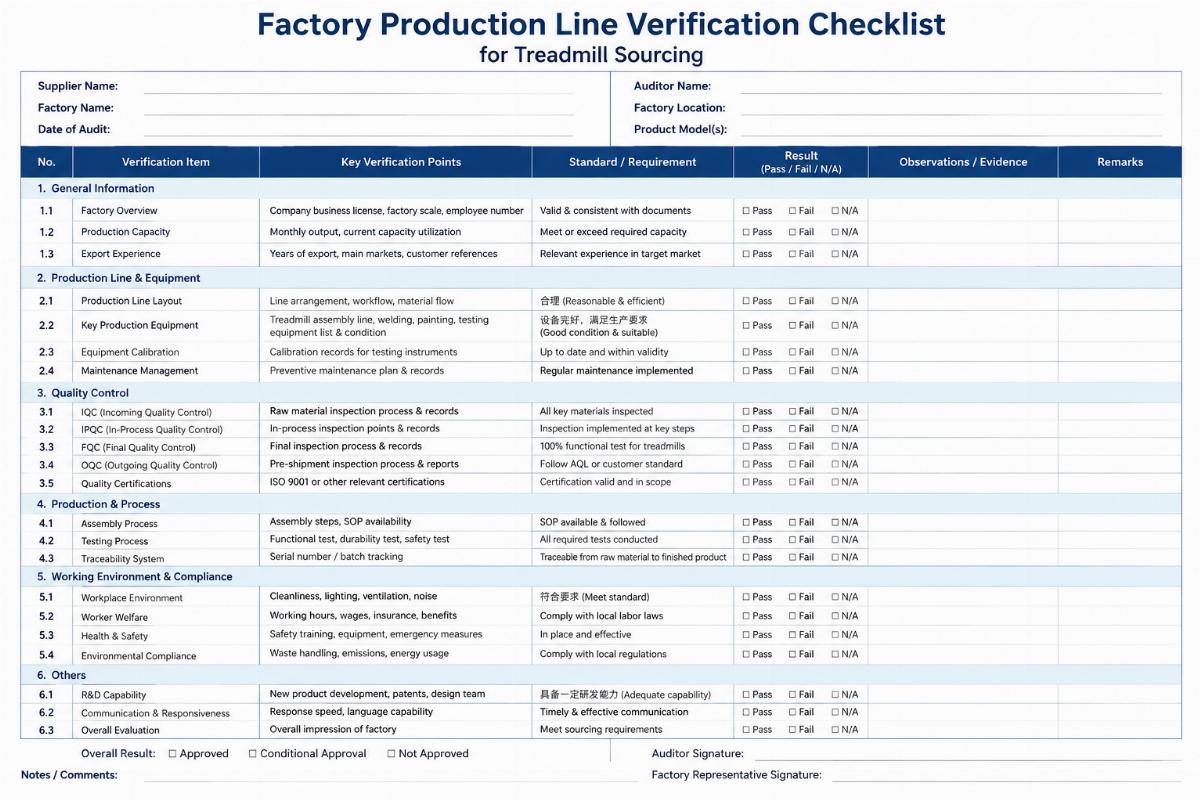
A gym owner in Multan initially sourced through a local intermediary and paid a commercial treadmill price in Pakistan that included multiple margin layers. After experiencing spare parts procurement delays that left machines idle, he shifted to direct factory sourcing. The direct relationship provided transparent spare parts ordering, technical support access, and a per-unit cost reduction that funded additional equipment for the facility’s expansion phase. The transition required initial due diligence on factory credentials and communication establishment, but the long-term operational and financial benefits were substantial.
Conclusion
The commercial treadmill price in Pakistan reflects component quality, import logistics, and supply chain structure far more than it reflects the brand name on the console. Buyers who evaluate motor continuous duty ratings, deck construction, frame steel specifications, and total landed cost including duties and freight make procurement decisions that hold up over years of commercial operation rather than months. Direct factory sourcing with verified manufacturing credentials and documented spare parts commitment provides the most reliable path to sustainable equipment ownership.


